Category: Tours

  • De Vaga en Veracruz, Tierra Jarocha :: Vacation Wanderings in Veracruz, Part II

    La Jicarita Hotels.com
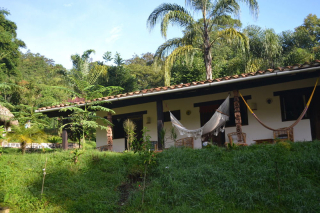
    After leaving Puerto de Veracruz, our next stop was the town of Coatepec, high in the coffee-producing mountains of central Veracruz state. We stayed just outside the town, at Eco-Hotel La Jicarita (hee-cah-REE-tah).  The property at La Jicarita is beautiful, planted with native trees and flowers (and shade-grown coffee).  You'll find hiking paths, a swimming pool, and delicious Veracruz breakfasts (not included in the room cost).  Although the rooms and bathrooms are fairly primitive, the beds are quite comfortable.  The rooms are inexpensive and the management works hard to please guests.  The photo, courtesy Hotels.com, is the outside of the room where I actually stayed.

    Coatepec is just about equidistant between Xalapa (the Veracruz state capital) and Xico (a charming provincial town known for its mole), and was an ideal place to stay in order to visit all three towns.  
    Xalapa Meso?n de los Alfe?rez
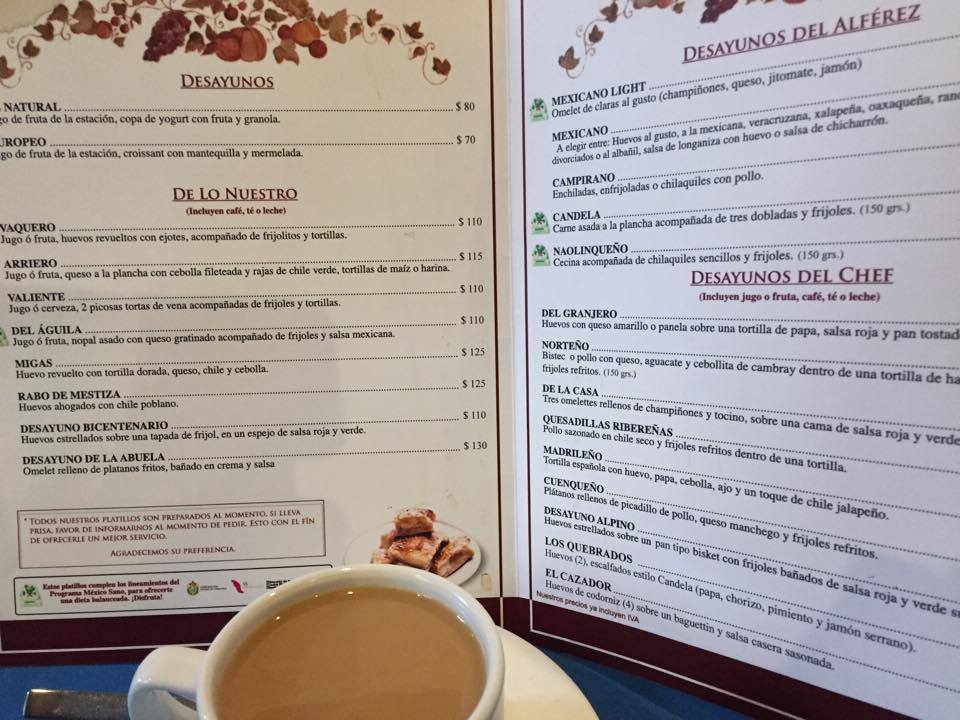
    Before the trip, several friends who are from the Xalapa area recommended with great enthusiasm the breakfasts at the Hotel Mesón de Alférez, in Xalapa.  The restaurant is charming and service was attentive, but what we ate left something to be desired.  There was nothing exactly wrong with it, but we had hoped, given the high recommendations, that the food would be more regional and of higher quality.
    Cabeza Olmeca 3 dic 2016 2
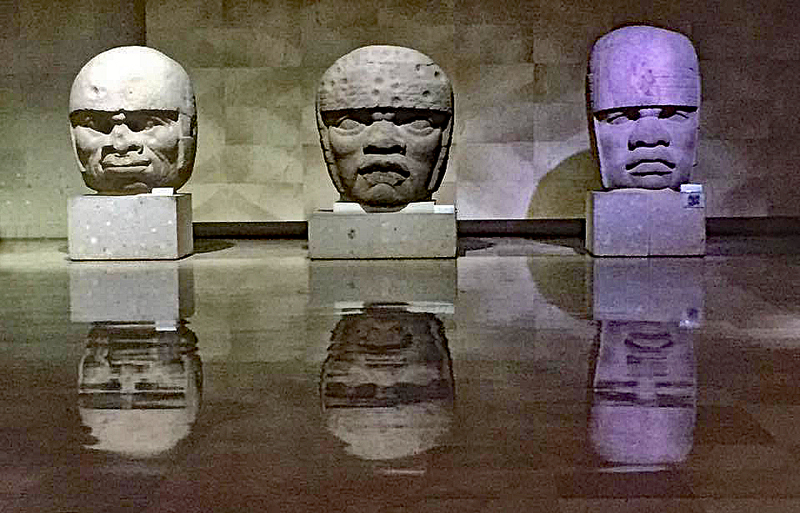
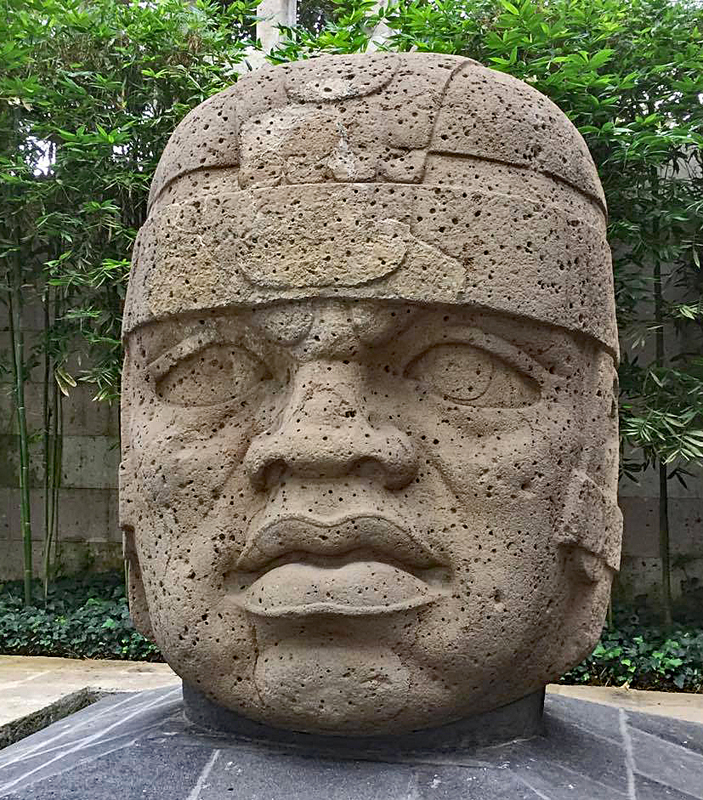
    After we finished breakfast in Xalapa, we went to the Xalapa Museo de Antropología primarily to see the display of colossal Olmec heads. The heads, carved of basalt and estimated to date between 1400 and 900 B.C.E.,  range in height from just under five feet to just over eleven feet and weigh between six and fifty tons apiece.  Seventeen–or possibly 18–heads are known to exist.  The color variation in the photo is due to the lighting of the displays.
    Olmec_Heartland_Overview_4.svg copy
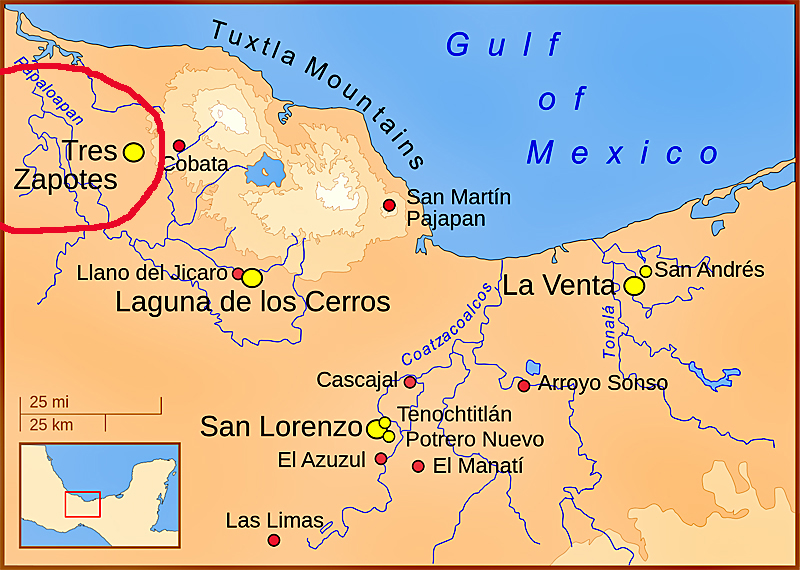
    The original Olmec head comes from Tres Zapotes, Veracruz, a town near the Papaloapan River (upper left in the map).  The area in the map is the original Olmec territory.  According to archeological notes seen in the Xalapa museum, the American archeologist M. W. Stirling and his team found the head face up at the bottom of a canyon in 1938.  Some scholars dispute this version of the find, and some say that a Mexican traveler accidentally discovered the first known Olmec head in 1861, but that the find was kept secret until the mid-1940s.     
    Cabeza Olmeca 1 Dic 2016 2
    Each of the heads is a portrait of a distinctly different Olmec man; each wears a helmet.  Theories about who these men were (warriors, rulers, ballplayers–one now-debunked theorist even believed that they might be Africans) have never been proven.  The Olmecs brought the basalt used to sculpt the heads as many as 150 kilometers to the site where carving took place, dragging the raw stone with ropes and rudimentary wheels.
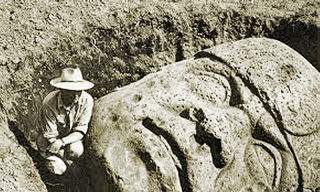
    Olmec Head Excavation
    Excavation of a  monumental Olmec head.  The photo appears to be original, but the website where Mexico Cooks! found it is full of astonishing and probably inaccurate and misleading information.  Read at your own risk.  Photo courtesy MessagetoEagle.com.  

    Writing the basic description of the Olmec heads is merely reporting data.  The personal impact of standing in front of these giants is extraordinarily moving and difficult to put into words.  Once we were on the street, we saw that the faces carved in stone and many present-day faces of the area men and women are the same as these colossals: strong, individual personalities in ancient stone and in modern-day flesh and bone.  
       
    El Resobado Exterior 12-17
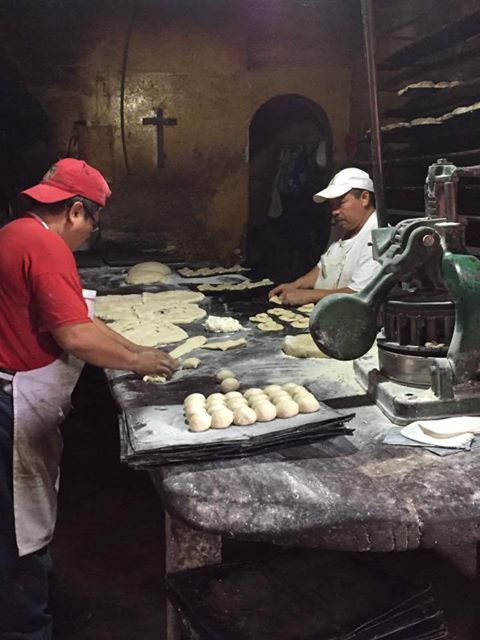
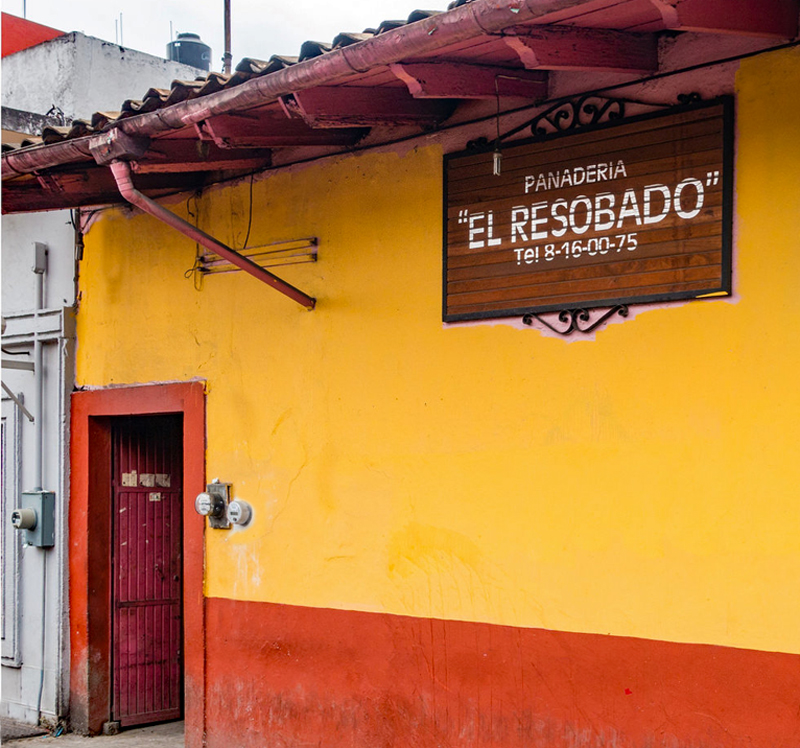
    While in Coatepec, we had the great pleasure of a visit to Panadería El Resobado, one of the few remaining commercial bakeries in Mexico using wood-fired ovens. The bakery opened for business more than a century ago; its ovens have not been allowed to cool in more than 25 years.   
    Coatepec Panaderi?a Resobada
    We were completely entranced with El Resobado. The bakery is faithful to its traditions: to make delicious bread with the flour, sugar, and yeast, the basic ingredients. People say that the best breads at El Resobado are the conchas (shells)–and that if you should be stricken with hunger in the middle of the night, don't worry: the bakery is open 24 hours a day!  

    Coatepec Panaderi?a Resobada 4
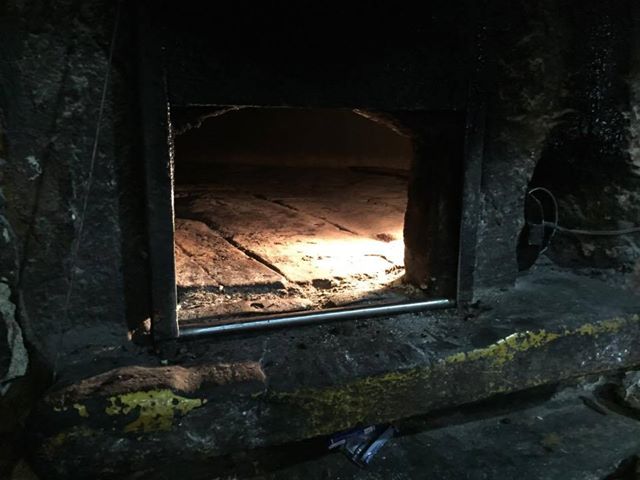
    One of the several ovens at El Resobado, ready for baking the next load of bread.  To judge the oven temperature, the skilled bakers stick their hands and forearms in–the bakers' experience is so great that they don't need oven thermometers.
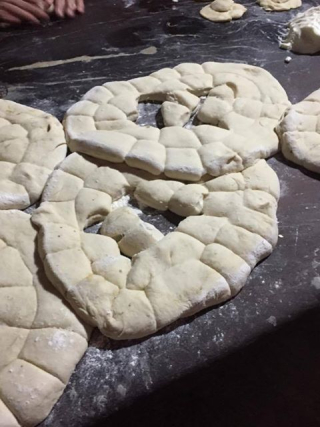
    Coatepec Panaderi?a Resobada 3
    Bread dough, kneaded, shaped, cut, and ready to be separated for baking.
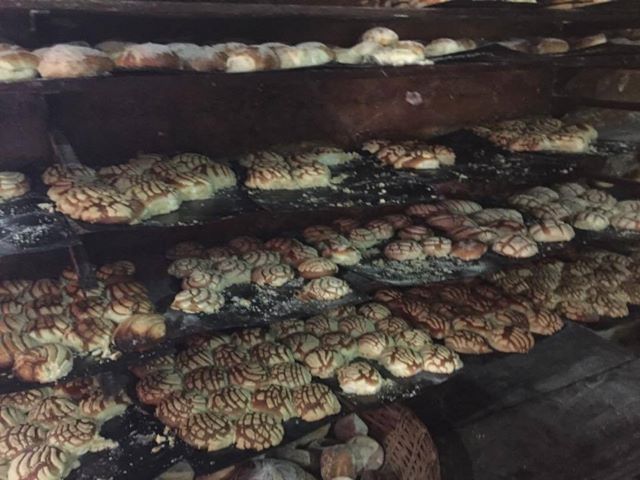
    Coatepec Panaderi?a Resobada 6
    Shelves at El Resobado, loaded with hot, fresh-from-the-oven conchas.  We bought a huge bag of many kinds of bread; we were struck by the unusual smokiness of what we tried.  
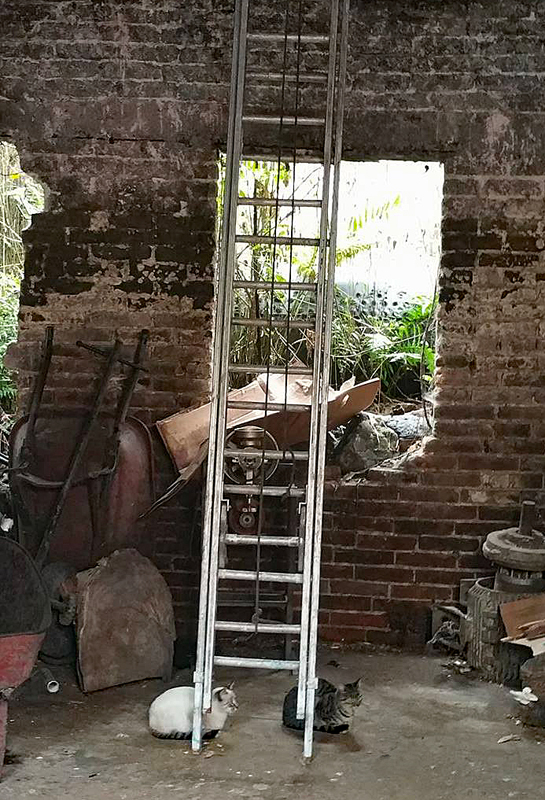
    Baker Kitties Ladder Pamela 2
    Some of the many cats that live at El Rebosado.  We were a group of crazy cat ladies and truly appreciated their gentle feline presence.  The bakery is a mouse-free zone! Photo courtesy Pamela Gordon.
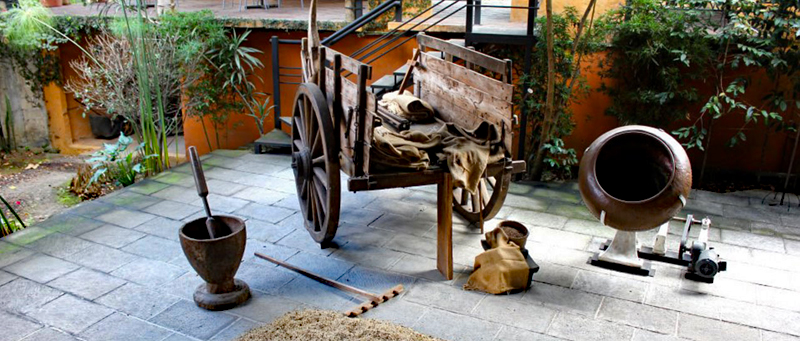
    Museo El Cafetal
    Also in Coatepec, we visited Museo El Cafetal to see the process of growing, harvesting, roasting, and grinding Veracruz's high altitude, shade-grown coffee.  Museum admission charge is 40 pesos and worth every centavo. Photo courtesy Museo El Cafetal. 
    Veracruz El Grande Coffee Museum 2
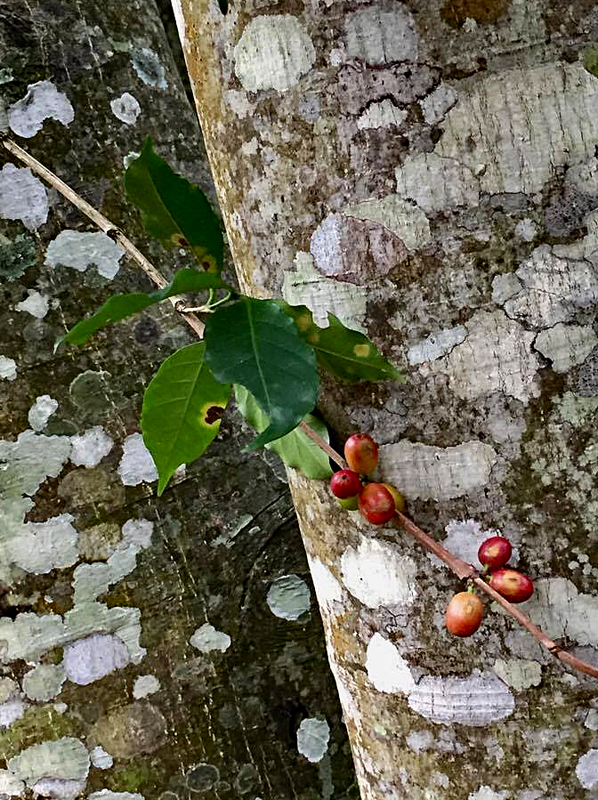
    Coffee beans against a tree trunk at the Museo El Cafetal. Photo by Mexico Cooks!.
    Coatepec Museo de Orquidea
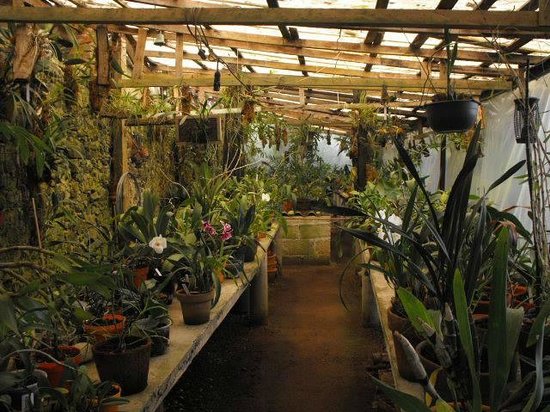
    Coatepec also boasts an orchid museum–a private collection in a private home.  This photo shows less than a quarter of the collection.  

    After two nights in Coatepec, we moved on to Casitas, on the Gulf of Mexico.  We'd had some drizzle in Coatepec, but we arrived in Casitas to discover that the coast had suffered a tremendous storm the night before.  Although we'd been looking forward to sunshine, the beach, and the humid heat that Veracruz is famous for, instead we had grey skies, churned-up Gulf water, and weather unsuitable for swimming.  

    We settled for driving to nearby San Rafael, which has the reputation of being a French-influenced town due to French settlement there in the 1840s.  We asked every adult on the streets about how to find a hint of Frenchness, but nobody knew.    
    Carniceri?a San Rafael 2
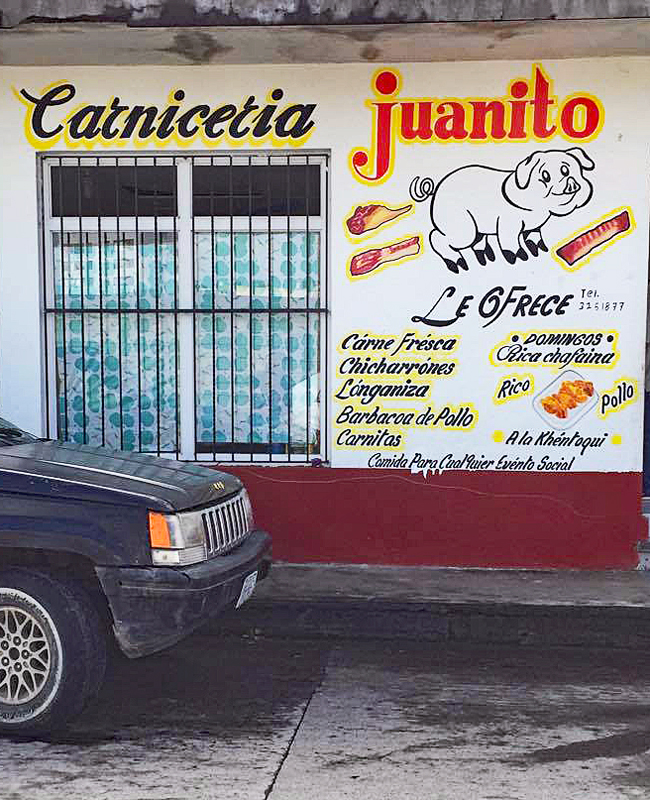
    Here's what we did find: a carnicería (butcher shop) with a really wonderful sign.  Click on the photo to enlarge it for a better view; the sign painter had a field day with accents!  Two charming young women behind the butcher counter let us taste their version of carnitas.  Verdict: not bad for Veracruz, but definitely not carnitas from the state of Michoacán, where carnitas originated.

    Next week, come with Mexico Cooks! to Papantla, Veracruz, where we investigated regional food and vanilla.  We'd planned to stay one night and ended by staying three!  We had a marvelous time and truly wanted to stay even longer.

    Looking for a tailored-to-your-interests specialized tour in Mexico? Click here to see new information: Tour

  • De Vaga en Veracruz, Tierra Jarocha :: Vacation Wanderings in Veracruz, Part I

    Veracruz Faro en la Puerta 2
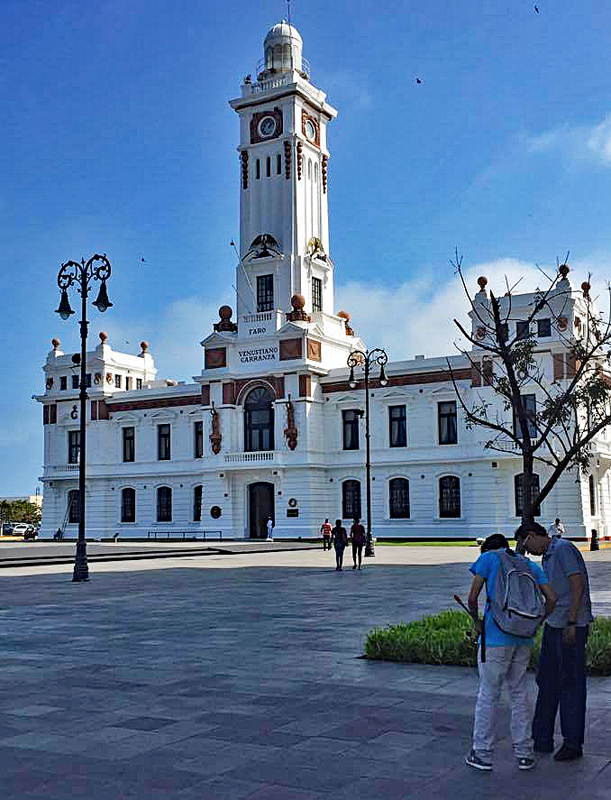
    On the malecón (pier) in the port of Veracruz.  Mexican president Venustiano Carranza used this lighthouse building, built at the turn of the 20th century, as the Palacio Nacional (federal government offices) from 1914 to 1915. During that short period, the city of Veracruz was the nation's capital. Today, the Faro Venustiano Carranza (lighthouse of Venustiano Carranza) serves as part of Mexico's naval headquarters. All photos by Mexico Cooks! unless otherwise noted.

    Port Veracruz
    Directly across the street from the lovely old building in the photo above, the hyper-modern port of Veracruz receives and sends enormous quantities of goods to and from everywhere in the world.

    Vacation!  And not just vacation, but vacation in Veracruz, one of Mexico's most beautiful states–I was so excited at the prospect of re-visiting the Puerto de Veracruz (port city), where I had not been since about 1994.  Two friends and I carefully chose two weeks for travel that would not be too hot, not be too humid: the temperatures along the Veracruz coast can range as high as more than 100ºF, with humidity equally high. Even during the second and third weeks of December, the high temperatures were in the mid-80s and the humidity was in that same range or higher.  Did we get used to it?  Not so much, but we definitely enjoyed a most fascinating trip together.  From the Puerto to the mountain towns of Xalapa, Coatepec, and Xico, and from the Córdoba flanks of the Pico de Orizaba (Mexico's highest mountain, an inactive volcano) to Papantla, the land of vanilla's origin, we traveled and learned.  And ate. And ate some more. Come along!

    Veracruz La Parroquia Sign 2
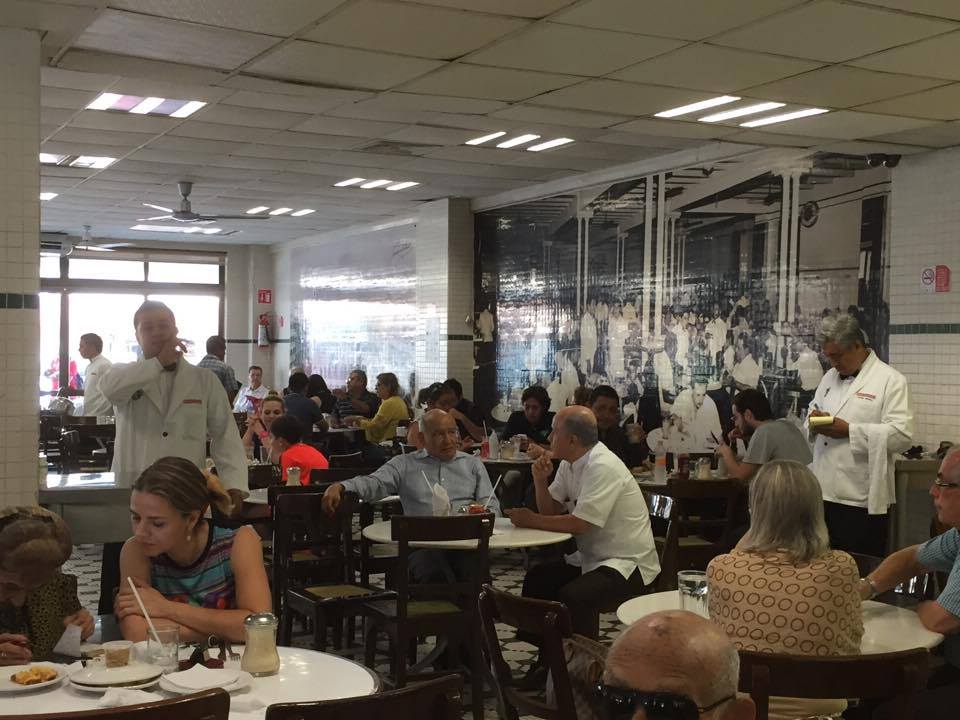
    One of our group seriously craved and insisted on breakfast at La Parroquia.  In researching the trip, I'd read that this old-time restaurant was muy de caída (had gone a long way down hill), but oh my goodness, our first breakfast in Veracruz was fantastic.

    Veracruz La Parroquia Lechero 2
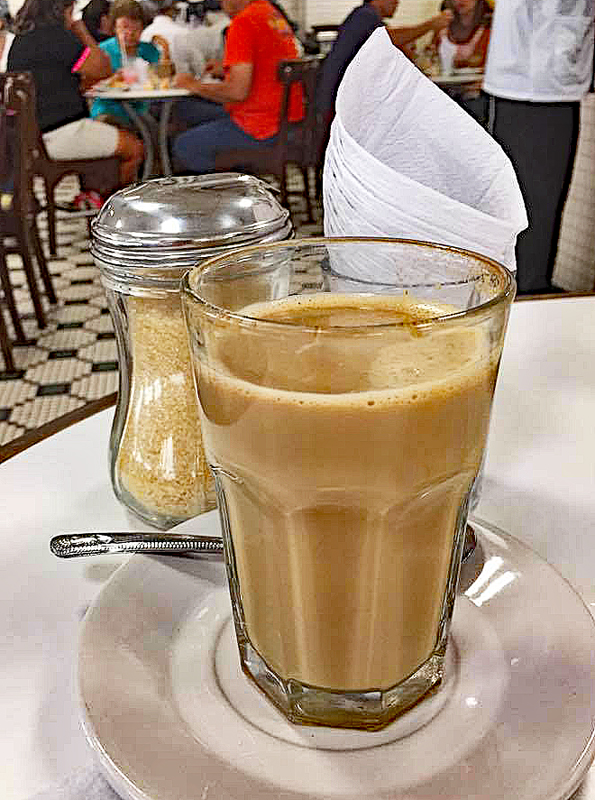
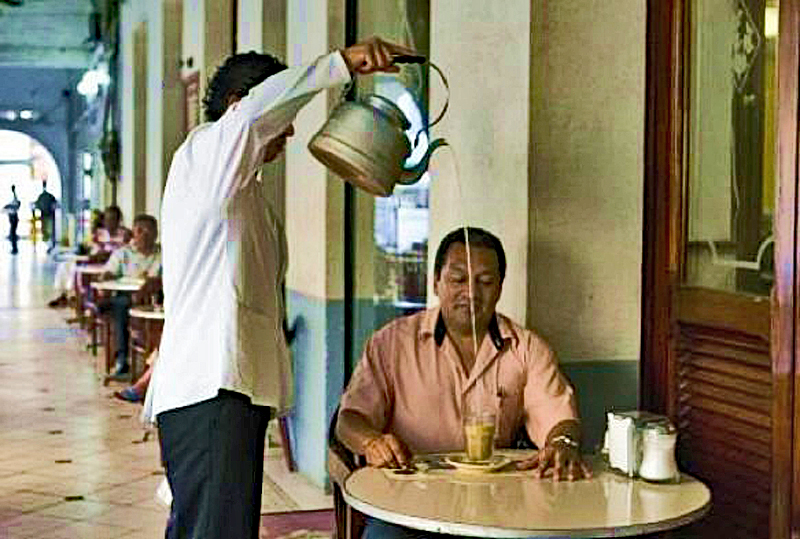
    La Parroquia is most noted for its ritual lechero–freshly brewed Veracruz-grown coffee, poured from on high to the level you prefer in your glass, the glass then filled (again, from on high) with steaming hot milk.  This first morning, the coffee wowed all three of us.
    Veracruz-cafe-la-parroquia
    Hot milk from the heights!  Photo courtesy Mexico Destinos.

    Veracruz La Parroquia Comensales
    The place was jam-packed for breakfast; there was no sign of a down-hill slide in quality or quantity the late-morning we were at La Parroquia.  Best of all, our server, don Galindo, was a real treasure-trove of knowledge about the area.  He directed us to–well, we'll go there next week on Mexico Cooks!.

    Veracruz La Parroquia Tortilla Especial 2
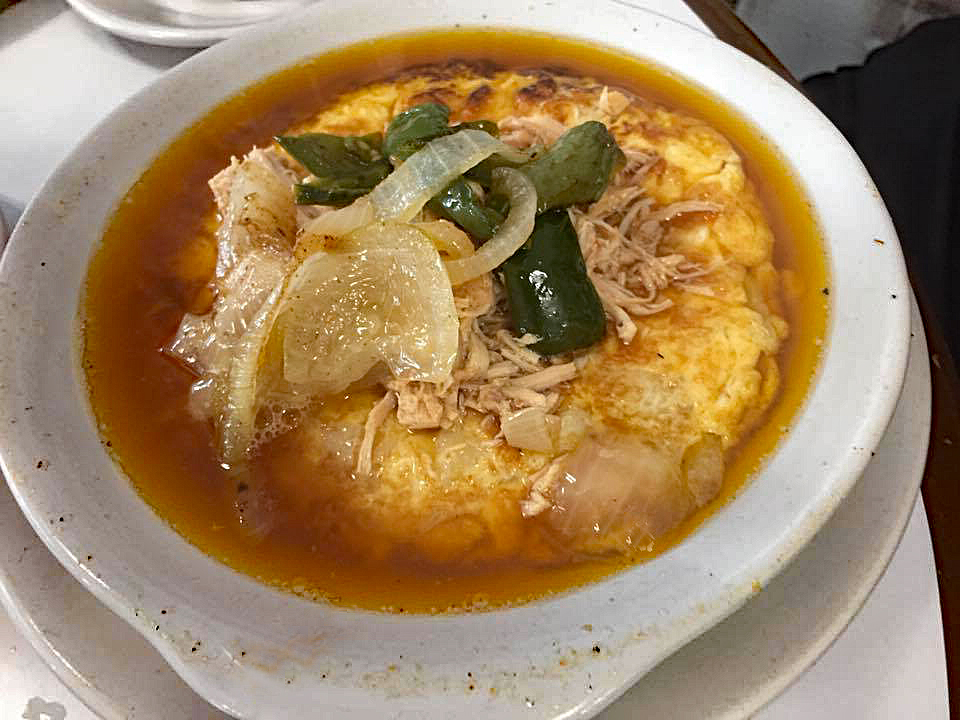
    Among many other regional specialties on the breakfast menu, the house special tortilla parroquia intrigued us. It's a tortilla española (Spanish-style omelet with egg and potato), cooked and then submerged in rich turkey broth. It's topped with shredded turkey, grilled onion, and chile serrano toreado (lightly fried in oil until the skin blisters and the chile is soft).  Doesn't it sound odd?  We were entranced by the flavor combination!  Just writing about it makes me want another one right now!  

    Veracruz Gorda Negra La Parroquia
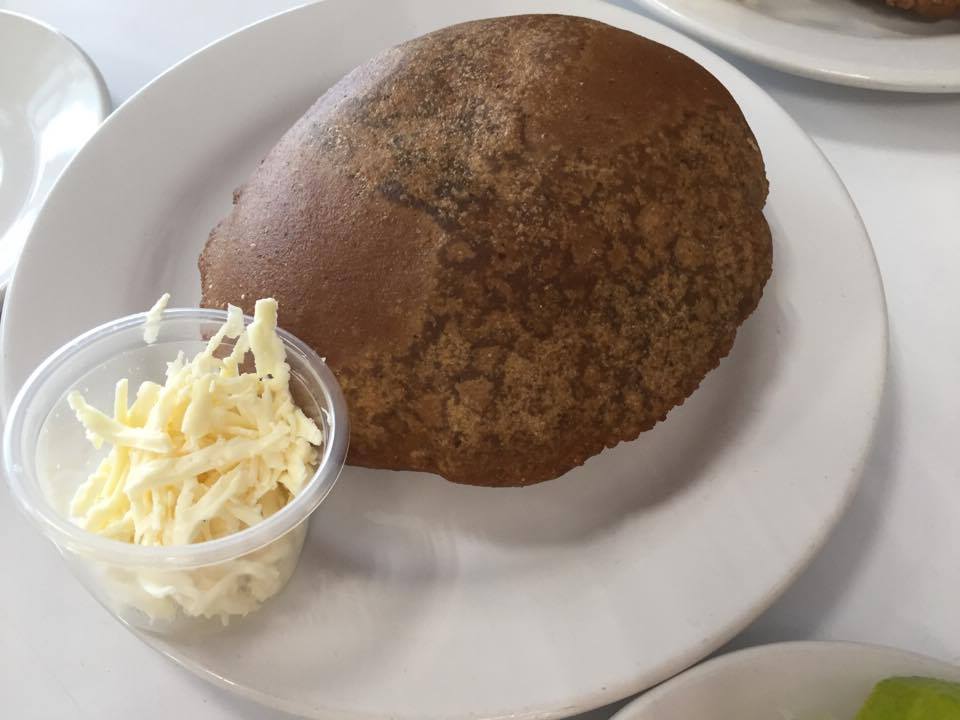
    Gorda negra with cheese, from La Parroquia.

    We also requested other Parroquia specialties: gordas negras (corn tortilla dough combined with finely ground cooked black beans), patted out or pressed to form tortillas a bit thicker than usual.  These are then fried in oil until they inflate and are served with salsa and cheese or cream. We also ordered gordas dulces (corn dough mixed with a little flour, a pinch of baking soda, and quite a bit of brown sugar), patted out and fried the same as the gordas negras, and served with thick grated mild white cheese and salsa.  We also asked for what turned out to be a perfect plate of huevos motuleños, specialty of the Yucatán peninsula.  We relished everything, shared among us, along with freshly squeezed super-sweet orange juice (the state of Veracruz produces nearly 40% of the oranges grown in Mexico) plus a second glass of lechero filled us to the brim.

    Veracruz Zo?calo Danzo?n 2
    That night, we enjoyed watching danzón in the Puerto de Veracruz zócalo.  The group of both dancers and spectators was small but happy. Danzón is the official dance of Cuba and also very, very popular in Mexico.  

    [youtube=https://www.youtube.com/watch?v=OyfVkRTSsZw&w=560&h=315]
    Just to show you the dance form, here's a danzón video from Guadalajara, where one can danzón (or take inexpensive danzón classes) every Sunday evening in the plaza just in front of the Templo Expiatorio, at the corner of Calle López Cotilla and Av. Enrique Díaz de León.  

    Mandinga Alvarado Puente 2
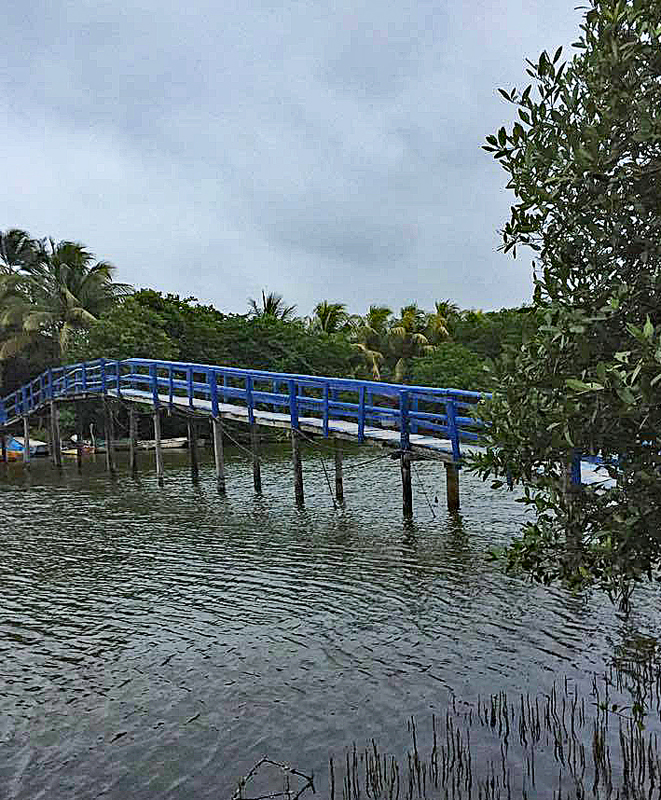
    In our meanderings close to the port city, we happened upon an island restaurant in tiny Mandinga-Alvarado. "Happened upon" is, of course, a euphemism for "asked everybody in the general area where to find it".  Once we found the town of Mandinga, population approximately 1500, we stopped at the town taxi stand and asked a cabbie for directions to the restaurant, Isla Paraíso.  He had no idea! Another fellow approached the car and said he'd guide us; he went running down the street ahead of our car and led us right to this bridge.  We walked across into a world apart: Isla Paraíso opened nearly 40 years ago and is still going strong.  

    Mandinga Crassostrea virginica
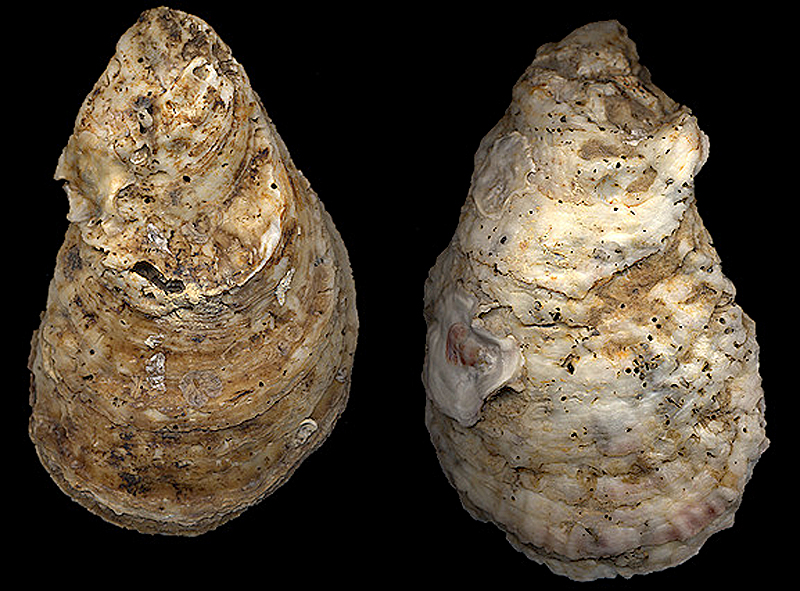
    Mandinga is famous world-wide for its oysters.  The oyster (Crassostrea virginica) is harvested throughout the entire Eastern coast of North America, from the Gulf of St. Lawrence in Canada to the Gulf of Mexico, including huge daily harvests from the Mandinga lagoon.  Of course we had to eat a plateful.

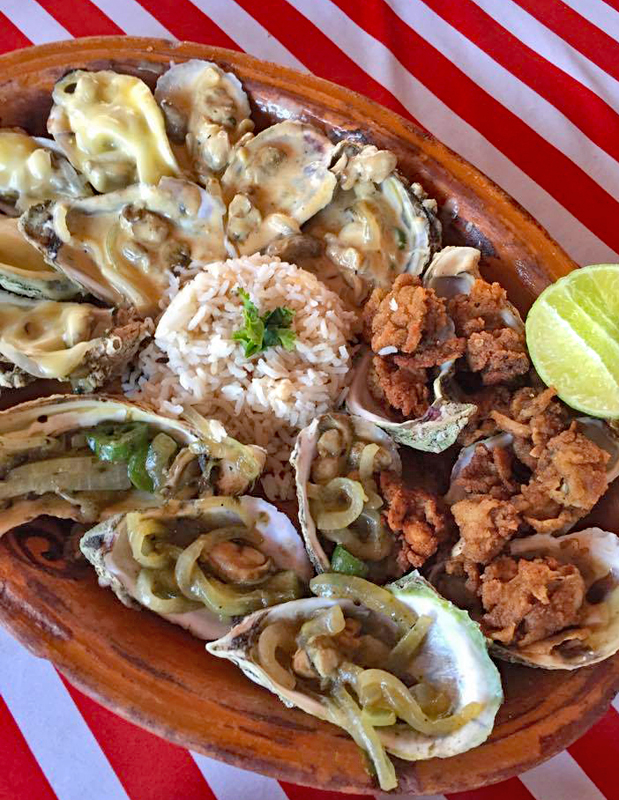
    Mandinga Alvarado Ostiones 2
    The specialty of the house at Restaurante Isla Paraíso, oysters cooked in various ways and, in this case, served as an appetizer.

    Mandinga Alvarado Patsy
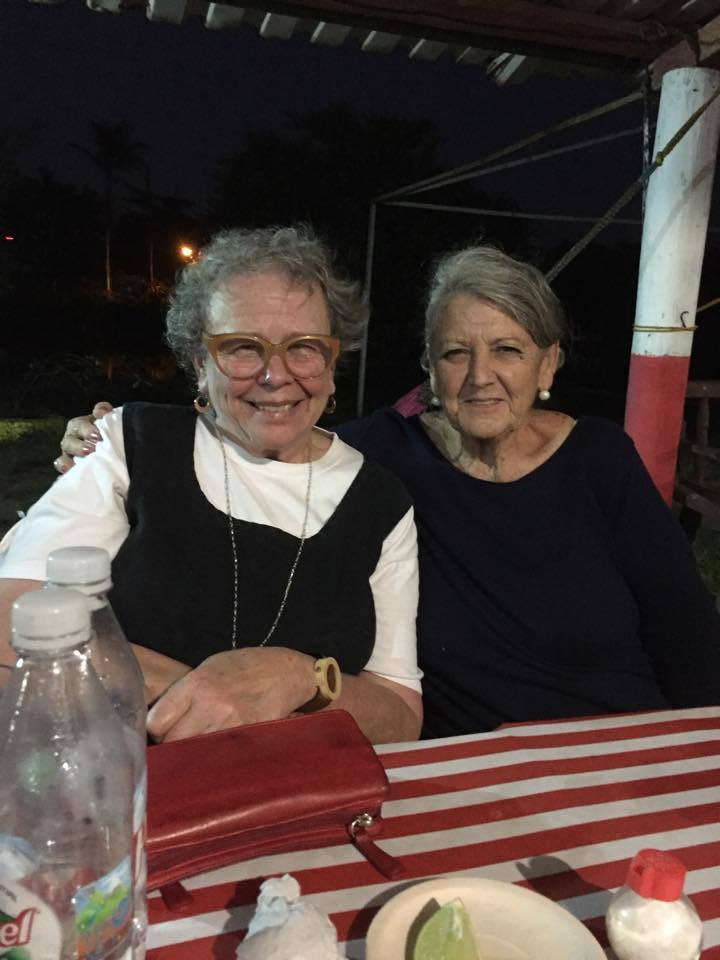
    The restaurant owner, Patricia Waters Mújica, is British. Her Mexican husband, who passed away just a few years ago, met her in England and moved her and their family to Puebla, then to Australia, then to the Puerto de Veracruz–and ultimately to Mandinga, after many fascinating life adventures.  They opened the restaurant, and Patsy has lived in tiny Mandinga all that time, raising their two daughters and running the restaurant. It was a delight to spend the afternoon and evening hearing her story.  

    Veracruz La Parroquia Motulen?os 2
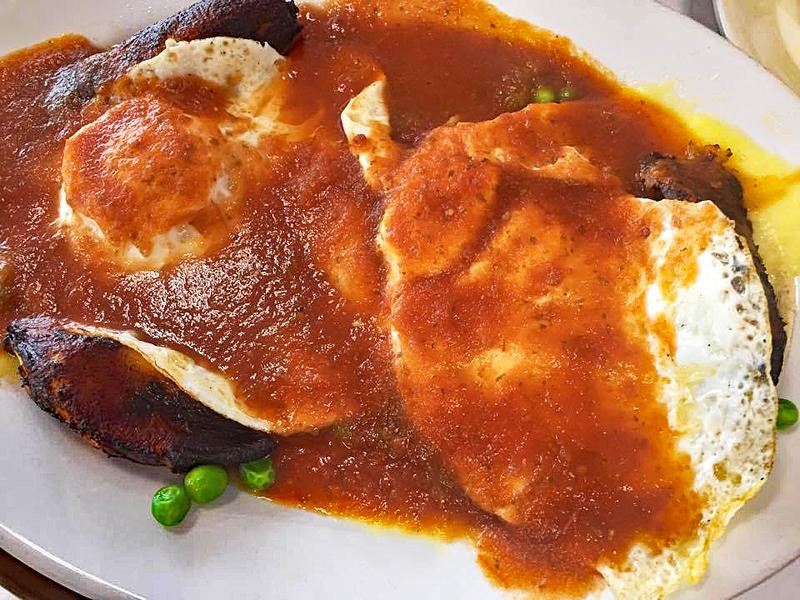
    Our last morning in the Puerto de Veracruz, we once again had breakfast at La Parroquia.  This time, the restaurant unfortunately lived up to its current way-down-hill reputation.  Almost everything we ordered, including this repeat plate of huevos motuleños, was far, far below the quality of what we ate the first morning.  Even the coffee was disappointing. We shared the opinion that had this been our initial breakfast, we wouldn't have returned.  

    Next week, come back for much more de vaca y de vaga (vacation and wandering around) in central Veracruz.

    Looking for a tailored-to-your-interests specialized tour in Mexico? Click here to see new information: Tours

  • Popcorn, The Original Mexican Corn. Maíz Palomero, El Máiz Original de México

    This article originally published in Mexico Cooks! on January 21, 2017.  Due to world political events beyond our control, very few people initially read it. Welcome us back today, just as we welcome you back, with a second opportunity to learn about this urgently important movement in Mexico!

    Cosecha unpopped-popcorn
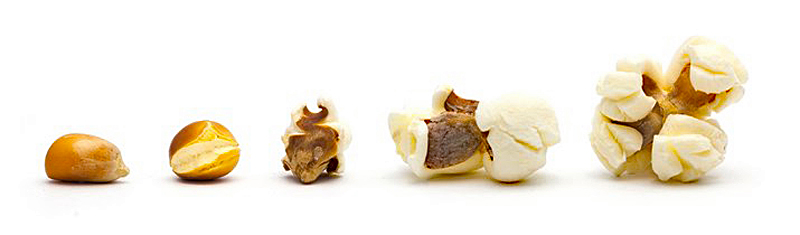
    From the un-popped kernel to the fully popped microwave-able snack treat, popcorn's evolution is many millennia old.  Popcorn was the first corn in Mexico, domesticated at least 5000 years before the common era. In other words, the cultivation of popcorn is at least 7,000 years old–and probably closer to 11,000 years old!

    Logo Organizacion Tortilla
    The non-profit organization Tortilla de Maíz Mexicana, founded by my dear friend Rafael Mier, celebrated its first birthday on November 17, 2016.  In the single year of its existence, the group has gathered together more than 153,000 followers on Facebook.  Every one of these followers, people from all over Mexico, from Guatemala, and from other countries in Central and South America, is nervous about the decline of the tortilla, the possible loss of Mexico's native corns as well as those where they live, and the near-extinction of popcorn: Mexico's original corn. Here's the link to the group; please join! Tortilla de Maíz Mexicana

    Update: just prior to publication of this article, membership in the Facebook group Tortilla de Maíz Mexicana jumped to over 200,000 members!  There is plenty of room for more, join up!

    Two Ears Mai?z Palomero 25-9-16
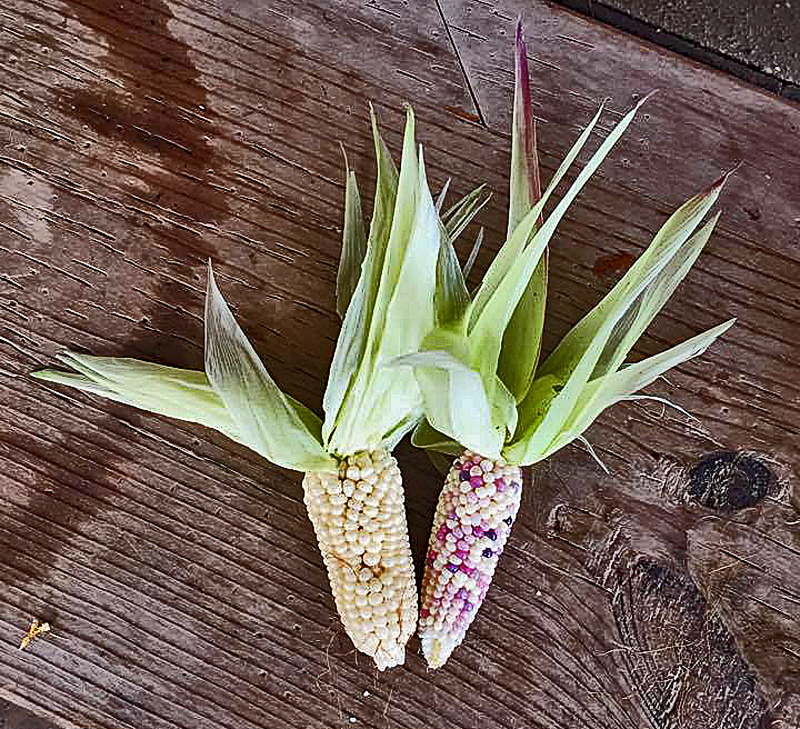
    Two of the first beautiful ears of maíz palomero toluqueño (popcorn from Toluca, Mexico) that the preservation team harvested in late September, 2016. 

    Cosecha Rafael Mier Canasta
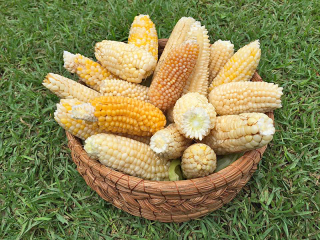
    This basket is filled to overflowing with maíz palomero (Mexican popcorn), seed sourced and sown in the State of Mexico by my colleague maestro Rafael Mier and his team of assistants: harvested on September 25, 2016, a day to remember.  The thrill of being just a tiny part of this project makes my heart skip a beat! 

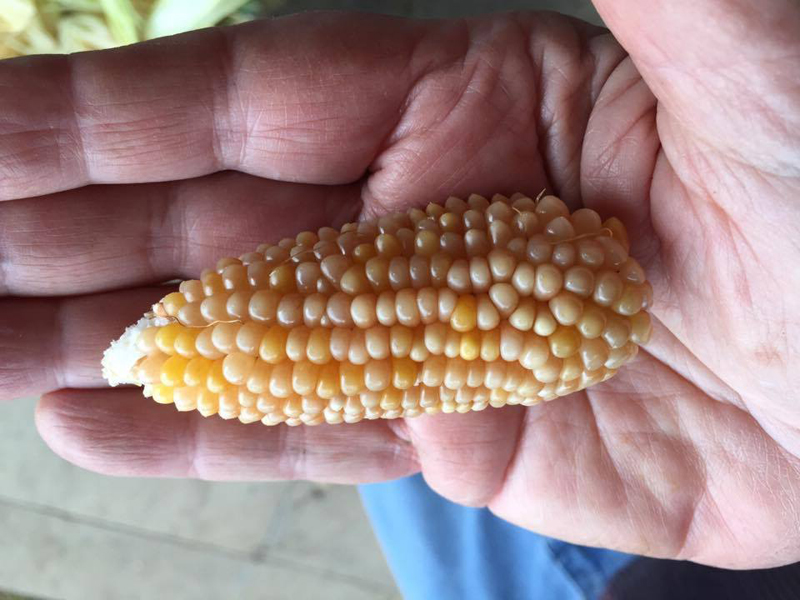
    Mai?z Palomero 25-9-2016
    One ear of maíz palomero rests in the palm of my hand. The photo gives you a good idea of the size of these ears; compared to the size of USA-grown hybrid ears, these are tiny.  USA growers have hybridized popcorn to give a large ear that yields more popcorn in a smaller planting area. Popcorn, however, has been hybridized, not genetically modified. There is NO GMO popcorn.  Think otherwise? Google is your friend!

    Obtaining the popcorn seed was the result of an exhaustive investigation in which he traveled to different small towns around Toluca (in years gone by, a tremendous source of Mexican popcorn) to obtain the grain. To Mier's great surprise, almost no one had kept any seed from former plantings.  Popcorn truly was on the verge of extinction.  Mier explained, "The United States is the leader in popcorn production, the popcorn business in that country has dedicated itself hugely to the grain’s development. Mexico could have the power. We are only lacking programs that push a viable cultivation of the varieties that are in Toluca, Chihuahua, and Jalisco. With those, we could satisfy the national demand.”

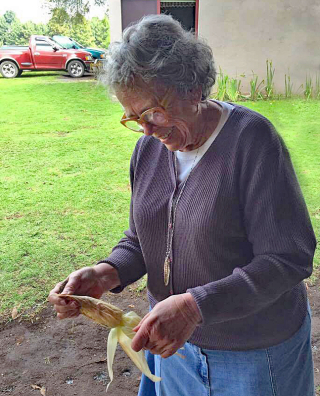
    Cosecha Cristina Mai?z 4A
    Here's Mexico Cooks! as part of the very first harvest of Mexican-grown popcorn in the grand project of saving this original Mexican corn from extinction.  I was so, so excited to peel back the green husks of this ear of popcorn, harvested just moments earlier, and see the tiny ears grown from 50-year-old seed.  Yes!  CIMMYT (International Maize and White Improvement), an international seed bank with research facilities near Mexico City, gave Maestro Rafael enough banked, refrigerated seed to plant several small parcelas (sections of land) with popcorn.

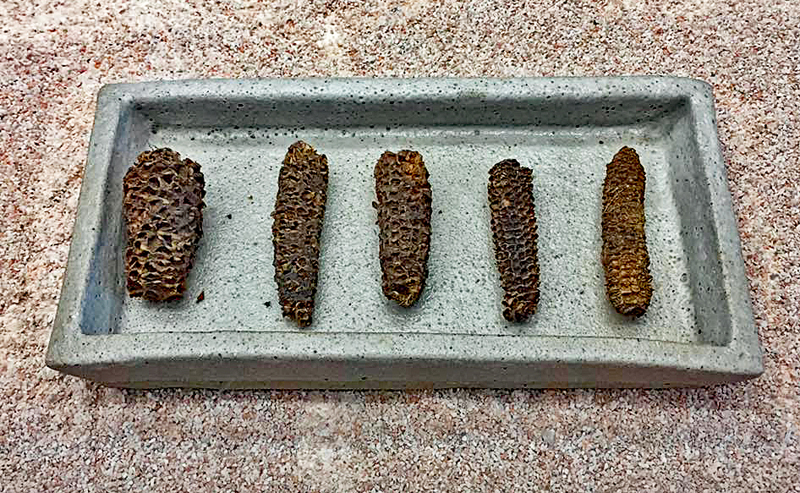
    Olotes Palomeros Tehuacán_edited-1
    These tiny dehydrated olotes (corn cobs)–each measures two to three inches long–were discovered in 1965 in the cave near Coxcatlán, Puebla, and are on daily exhibit at the Tehuacán (Puebla) Museo del Maíz (Corn Museum). For more information about this cave and its agricultural and archeological importance, please see Mexico Cooks!' article dated October 1, 2016.  These corn cobs are carbon-dated to approximately 5,000 B.C.E. All photos copyright Mexico Cooks! unless otherwise noted.

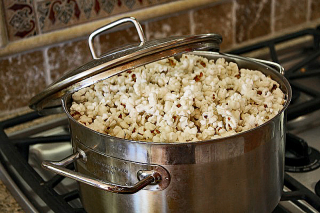
    Popcorn in Pot
    One huge pot filled with popcorn, a direct descendent of Mexico's very first corn: maíz palomero (popcorn). Today, many thousands of years after Mexico's great-great-a thousand times-great-grandparents domesticated maíz palomero, 95% of all popcorn grows north of the Mexican border.  Popcorn has crossed the border into the United States of America and become one of the USA's most popular exports.  Photo courtesy Lori Lange.

    Popcorn is a simple food that we associate with snacking and with moments of entertainment. Who doesn’t want some buttered, salted popcorn at the movies, or while enjoying a day at the fair? Long ago in what is now Mexico, popcorn was already a treat: they were called “corn flowers” and according to the 16th century chronicles of Fray Bernadino de Sahagún, popcorn was sold in what is now Mexico’s plazas and was used as necklaces and in rituals. People did eat it, of course, but its consumption was not recreation-based.  

    [youtube=https://www.youtube.com/watch?v=DbBgT62f3W4&w=560&h=315]
    In this beautiful and evocative video, Maestro Rafael explains what has happened to Mexico's maíz palomero and what he and others, including myself, are doing to save Mexican popcorn from extinction.  Even if you don't understand Spanish, you'll be able to watch the process of planting and harvest.  Video courtesy Rafael Mier.

    Mai?z Palomero Invitacio?n
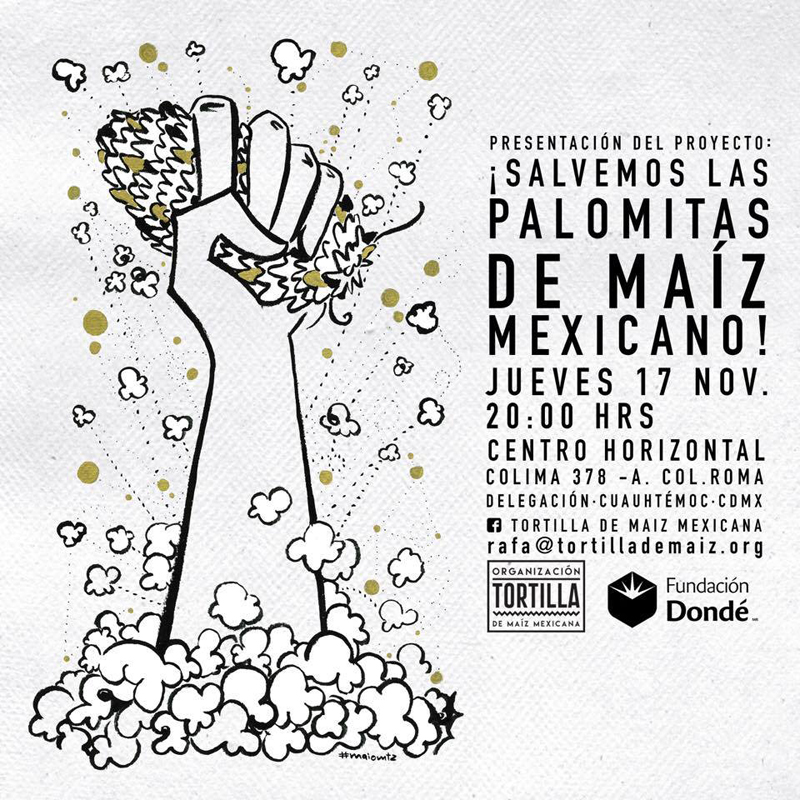
    Despite the fact that Mexico is the country of origin of all corns, including popcorn, less than 2% of the popcorn eaten in Mexico today is grown here. The enormous majority comes from the United States of America, with a much smaller amount imported from Argentina. “In Mexico, over time we’ve lost the planting of this corn,” comments Rafael Mier. “Sowing popcorn is difficult work now because our native seed is all but extinct,” he says. He and his team are working every day to reverse Mexican popcorn's slide into extinction. Photo: invitation to the November 17, 2016 public presentation of the popcorn project.  

    The best way to get involved in this project is to join the Facebook group Tortilla de Maíz Mexicana.  If you'd rather not use Facebook, subscribe to Mexico Cooks!.  How? Look at the right-hand side of this page: you'll see a box titled, Share Mexico Cooks with Your Friends. In that box, there's a link called, "Subscribe to this blog's feed". Click on that, then follow the simple instructions. Mexico Cooks! will arrive in your email inbox every Saturday morning at about ten o'clock.

    We look forward to having you as part of the Mexican popcorn and tortilla team!  During 2017, Mexico Cooks!' 11th consecutive year on line, you'll see a lot more about what we're doing in this initiative.

    Looking for a tailored-to-your-interests specialized tour in Mexico? Click here to see new information: Tours

  • Mexico Cooks! Takes a Short Break :: Mexico Cooks! Toma un Descansito

    Mai?z Dr. Atl 1
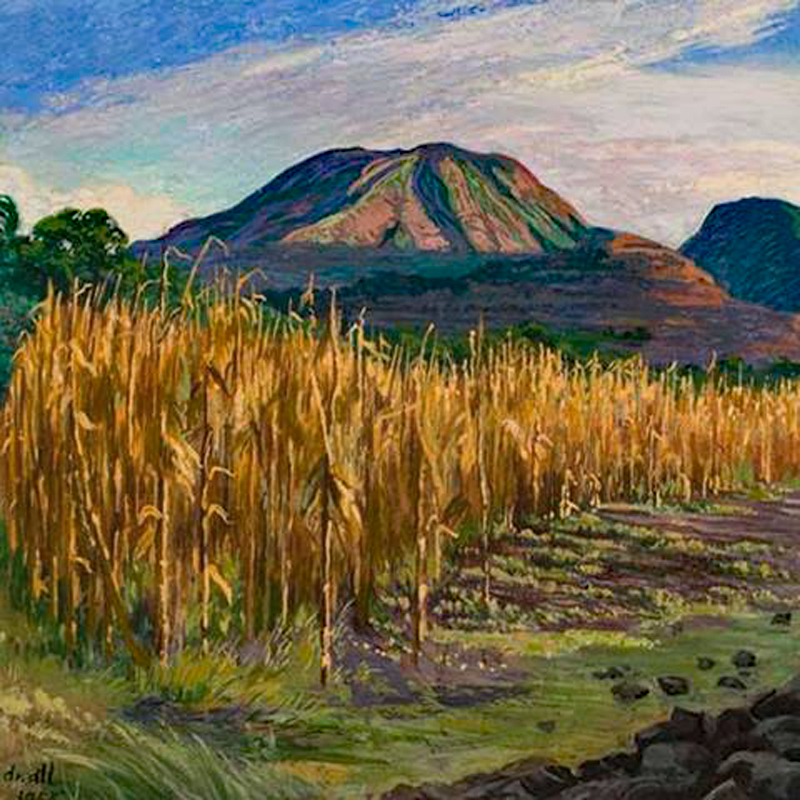
    El Maizal (the corn field), 1955.  Painter: Gerardo Murillo, AKA Dr. Atl.

    Dear readers, the time between November 8, 2016 and today has taken a toll on our world, no matter where each of us stands along the political spectrum.  Mexico Cooks! has decided to take a month away from writing about Mexican food in order to devote more time to some other important cross-border issues.

    While I'm away, please look around for informative and fun articles both old and new in the Mexico Cooks! archives.  There are literally hundreds to read.

    I'll be back here on March 4, 2017, and thank you for your understanding.  I look forward to seeing all of you then.

    Looking for a tailored-to-your-interests specialized tour in Mexico? Click here to see new information: Tours

  • Mexico Cooks! Takes a Short Break :: Mexico Cooks! Toma un Descansito

    IMG_7232
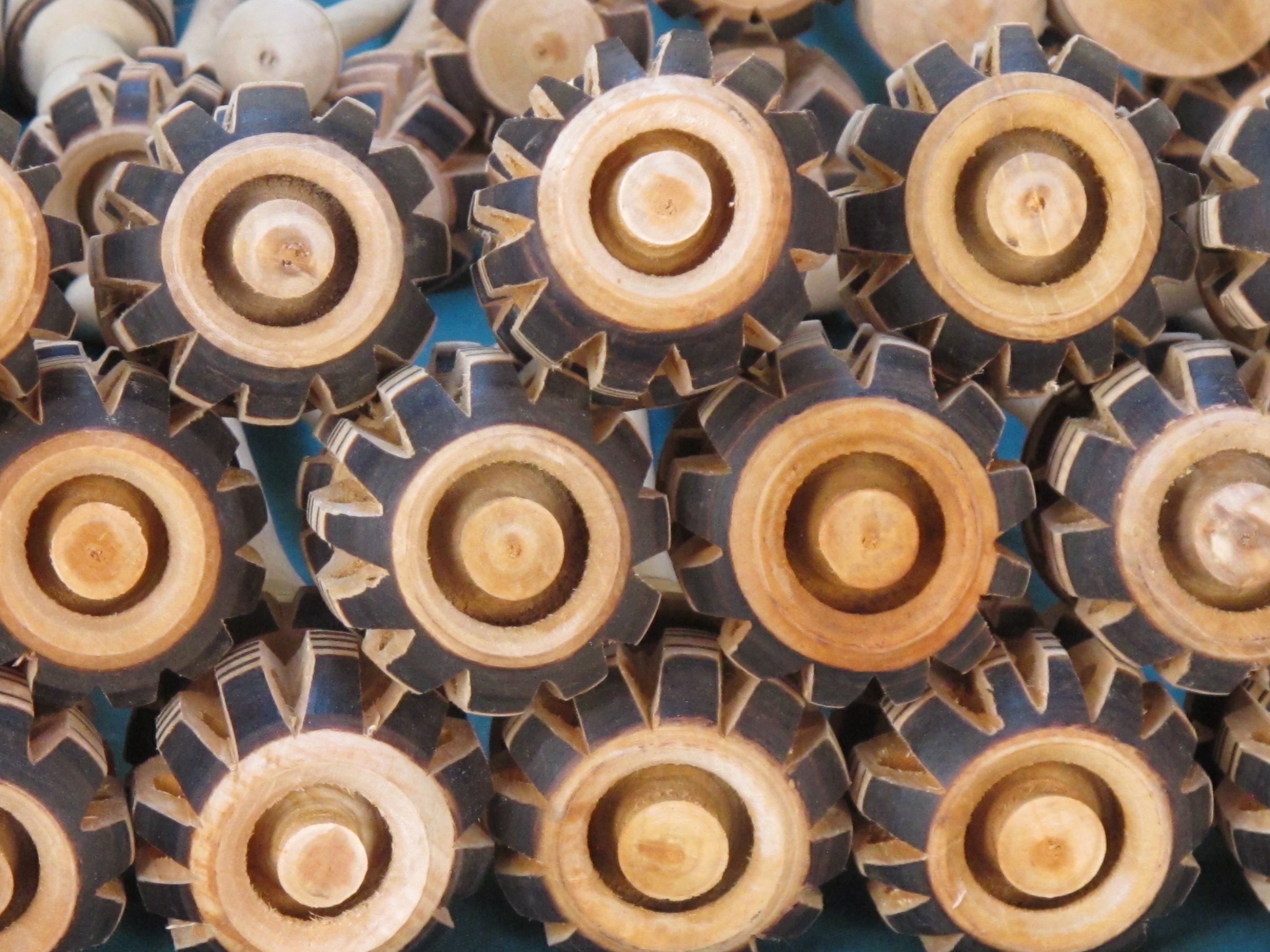
    Molinillos (hand-held wooden chocolate frothers), Mercado de Tlacolula, Oaxaca, Mexico.

    Dear readers, the time between November 8, 2016 and today has taken a toll on our world, no matter where each of us stands along the political spectrum.  Mexico Cooks! has decided to take a month away from writing about Mexican food in order to devote more time to some other important cross-border issues.

    While I'm away, please look around for informative and fun articles both old and new in the Mexico Cooks! archives.  There are literally hundreds to read.

    I'll be back here on March 4, 2017, and thank you for your understanding.  I look forward to seeing all of you then.

    Looking for a tailored-to-your-interests specialized tour in Mexico? Click here to see new information: Tours

  • Mexico Cooks! Takes a Short Break :: Mexico Cooks! Toma un Descansito

    Mariachi Cerdo Mercado
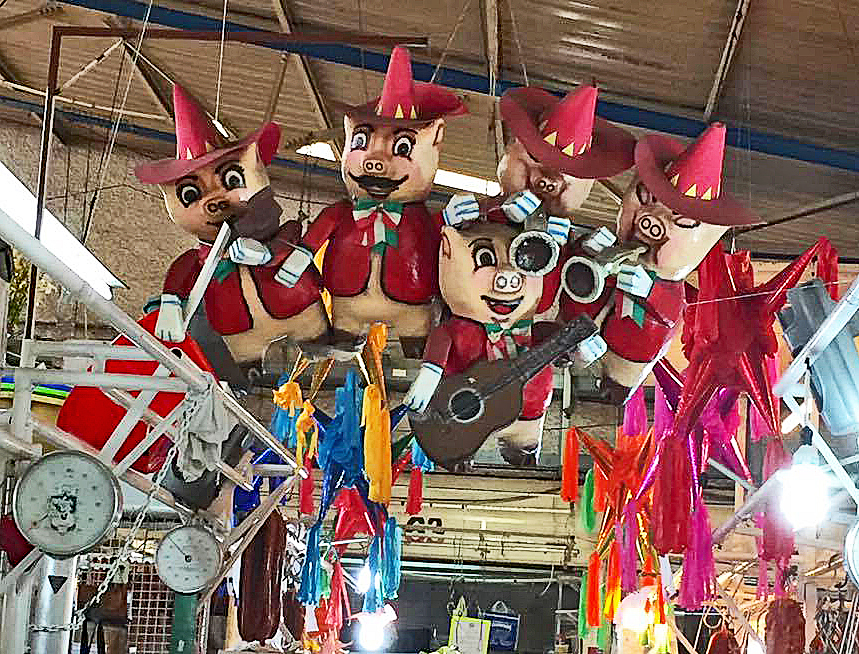
    Mariachi pigs, Mercado de Jamaica, Mexico City.

    Dear readers, the time between November 8, 2016 and today has taken a toll on our world, no matter where each of us stands along the political spectrum.  Mexico Cooks! has decided to take a month away from writing about Mexican food in order to devote more time to some other important cross-border issues.

    While I'm away, please look around for informative and fun articles both old and new in the Mexico Cooks! archives.  There are literally hundreds to read.

    I'll be back here on March 4, 2017, and thank you for your understanding.  I look forward to seeing all of you then.

    Looking for a tailored-to-your-interests specialized tour in Mexico? Click here to see new information: Tours

  • Mexico Cooks! Takes a Short Break :: Mexico Cooks! Toma un Descansito

    We Make America Debra Pearlman Out Loud
    We Make America.  Photo courtesy Debra Pearlman.
     
    Dear readers, the time between November 8, 2016 and today has taken a toll on our world, no matter where each of us stands along the political spectrum.  Mexico Cooks! has decided to take a month away from writing about Mexican food in order to devote more time to some other important cross-border issues.

    While I'm away, please look around for informative and fun articles old and new in the Mexico Cooks! archives.  There are literally hundreds to read.

    I'll be back here on March 4, 2017, and thank you for your understanding.  I look forward to seeing all of you then.

    Looking for a tailored-to-your-interests specialized tour in Mexico? Click here to see new information: Tours

  • Celebrating February 2: The Christ Child on Candlemas Day in Mexico

    Niños Dios de Colores Mercado Medellín
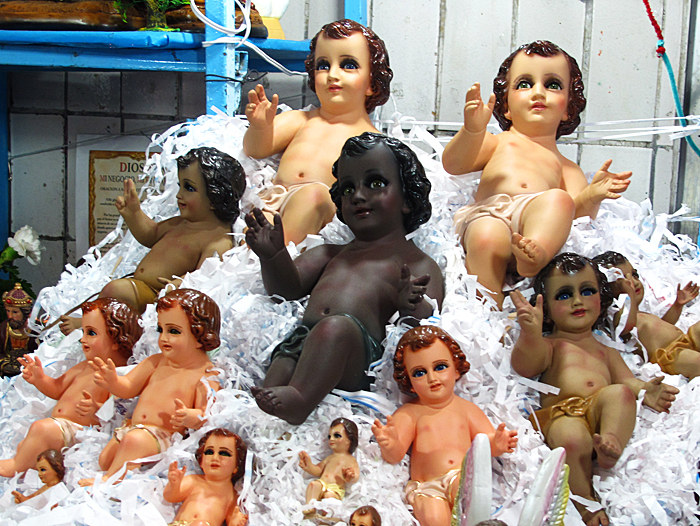
    Niños Dios: one Christ Child, many colors: ideal for Mexico's broad range of skin tones. Mercado Medellín, Colonia Roma, Mexico City. 

    For about a month prior to Christmas each year, the Niño Dios (baby Jesus) is for sale everywhere in Mexico.  Mexico Cooks! took this photograph in 2013 at the annual tianguis navideño (Christmas market) in front of the Mercado Medellín, Colonia Roma, Mexico City.  These Niños Dios range in size from just a few inches long to nearly the size of a two-year-old child.  They're sold wrapped in only a diaper.

    When does the Christmas season end in your family?  When I was a child, my parents packed the Christmas decorations away on January 1, New Year's Day.  Today, I like to enjoy the nacimientos (manger scenes), the Christmas lights, and the tree until the seventh or eighth of January, right after the Día de los Reyes Magos (the Feast of the Three Kings).  Some people think that date is scandalously late.  Other people, particularly my many Mexican friends, think that date is scandalously early.  Christmas in Mexico isn't over until February 2, el Día de la Candelaria (Candlemas Day), also known as the Feast of the Presentation.

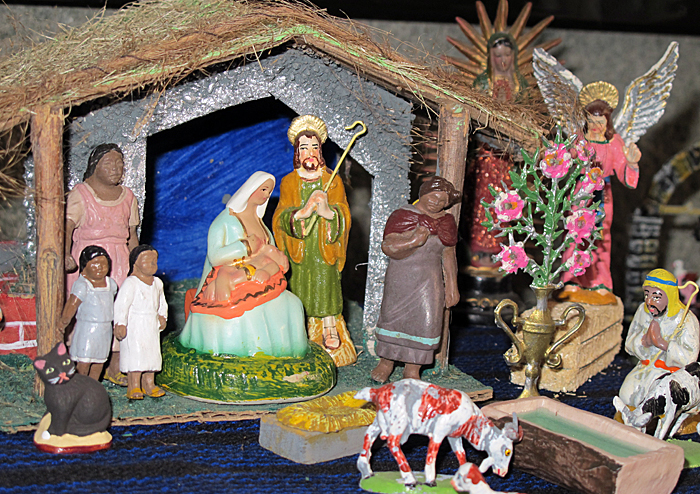
    Nacimiento Misterio 1
    The Holy Family, a shepherd and some of his goats, Our Lady of Guadalupe, an angel, a little French santon cat from Provence, and some indigenous people form a small portion of Mexico Cooks!' nacimiento.  Click on the photo to get a better look.  Note that the Virgin Mary is breast feeding the infant Jesus while St. Joseph watches over them.

    Although Mexico's 21st century Christmas celebration often includes Santa Claus and a Christmas tree, the main focus of a home-style Christmas continues to be the nacimiento and the Christian Christmas story.  A family's nacimiento may well contain hundreds–even thousands–of figures, but all nacimientos have as their heart and soul the Holy Family (the Virgin Mary, St. Joseph, and the baby Jesus).  This centerpiece of the nacimiento is known as el Misterio (the Mystery).  The nacimiento is set up early–mine is always out at the very beginning of December–but the Niño Dios does not make his appearance until the night of December 24, when he is sung to and placed in the manger.

    Niño Dios Grupo Vestido
    Niños Dios at Mexico City's Mercado de la Merced.  The figures are dressed as hundreds of different saints and representations of holy people and ideas.  The figures are for sale, but most people are only shopping for new clothes for their baby Jesus.  All photos copyright Mexico Cooks! except as noted.

    Between December 24, when he is tenderly rocked to sleep and laid in the manger, and February 2, the Niño Dios rests happily in the bosom of his family.  As living members of his family, we are charged with his care.  As February approaches, a certain excitement begins to bubble to the surface.  The Niño Dios needs new clothing!  How shall we dress him this year?

    Niño Dios Ropa Tejida
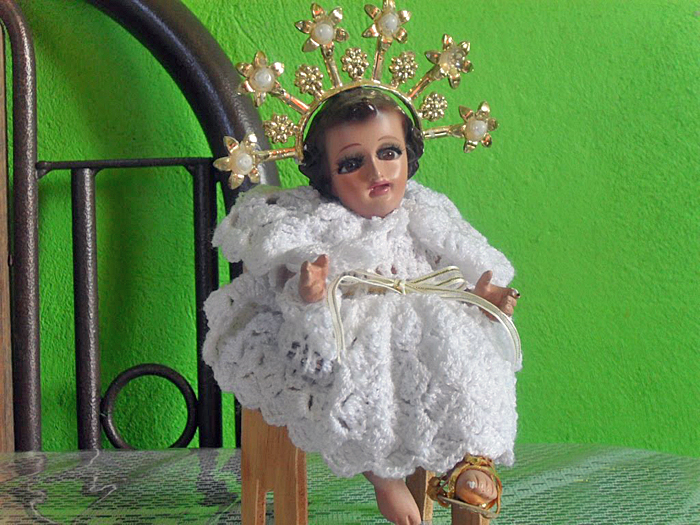
    The oldest tradition is to dress the Niño Dios in hand-crocheted garments.  Photo courtesy Manos Mexicanos

    According to Christian teaching, the Virgin Mary and St. Joseph took the baby Jesus to the synagogue 40 days after his birth to introduce him in the temple–hence February 2 is also known as the Feast of the Presentation. What happy, proud mother would wrap her newborn in just any old thing to take him to church for the first time?  I suspect that this brand new holy child was dressed as much to the nines as his parents could afford.  

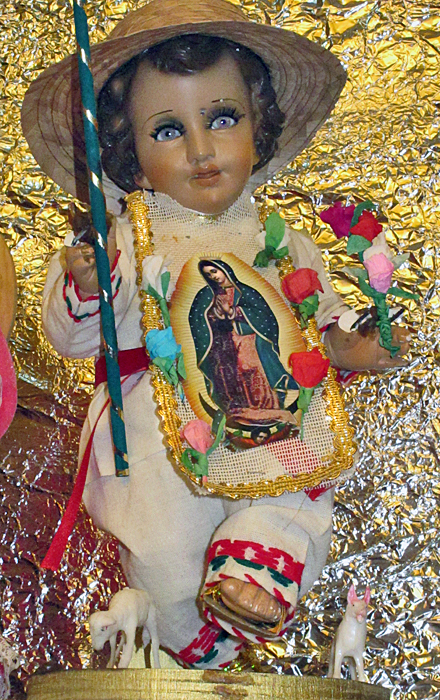
    Niño Dios San Juan Diego
    The Niño Dios dressed as San Juan Diego, the indigenous man who brought Our Lady of Guadalupe to the Roman Catholic Church.

    Every February 2, churches are packed with men, women, and families carrying their Niños Dios to church in his new clothes, ready to be blessed, lulled to sleep with a sweet lullaby, and tucked gently away till next year.

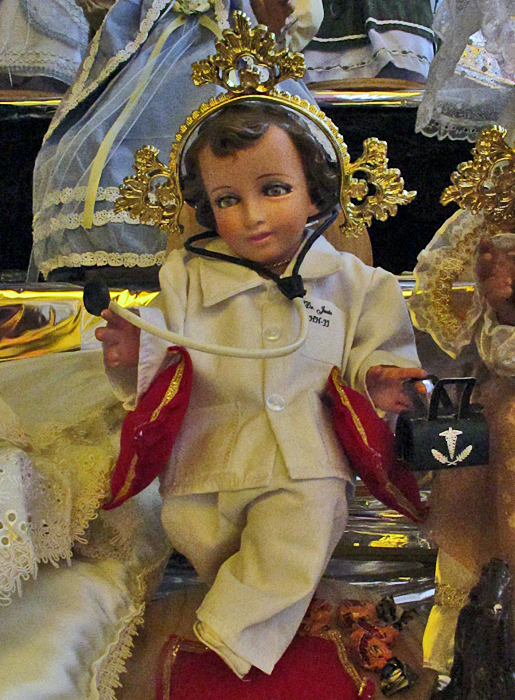
    Niño Dios Doctor
    The Niño Dios as el Santo Niño Doctor de los Enfermos (the Holy Child, doctor of the sick).  He has his stethoscope, his uniform, and his doctor's bag.  This traditionally dressed baby Jesus has origins in mid-20th century in the city of Puebla.

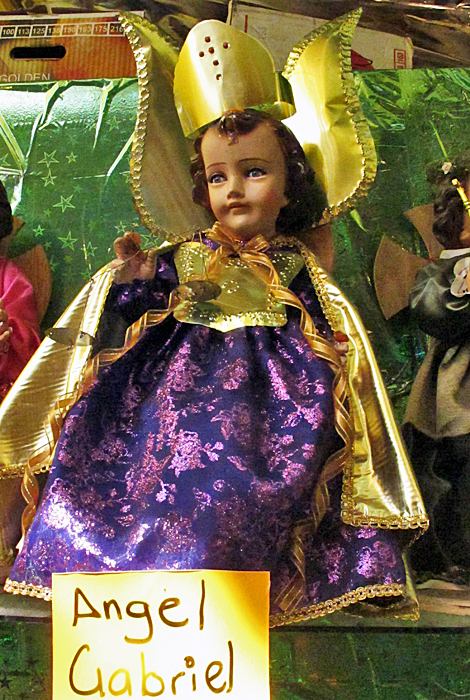
    Niño Dios Ángel Gabriel
    Every year new and different clothing for the Niño Dios comes to market.  A few years ago, the latest fashions were those of the Archangels–in this case, the Archangel Gabriel.

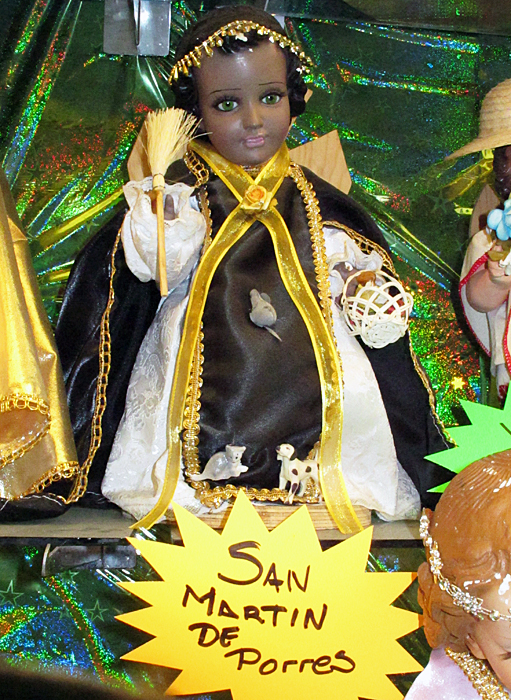
    Niño Dios San Martín de Porres
    The Niño Dios dressed as Peruvian San Martín de Porres, the patron saint of racially mixed people and all those seeking interracial harmony.  He is always portrayed holding a broom.

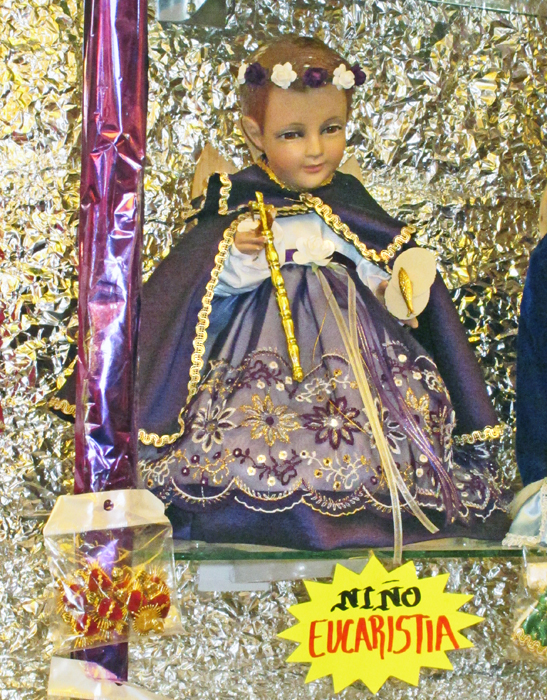
    Niño Dios de la Eucaristía
    Niño Dios de la Eucaristía (Holy Child of the Eucharist).

    Niño Dios San Benito
    Niño Dios dressed as San Benito, the founder of the Benedictine Order.

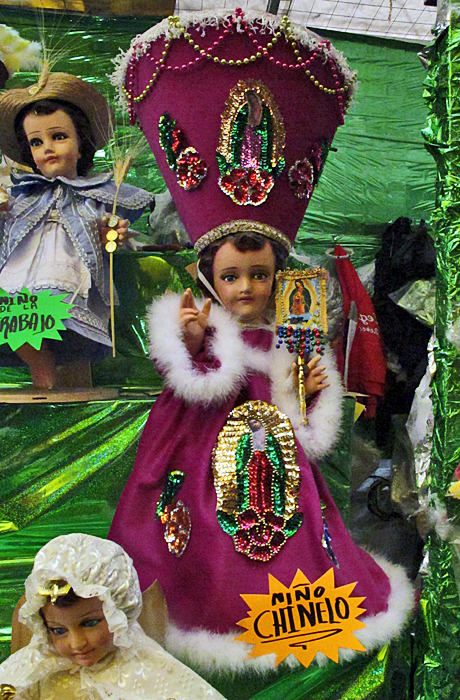
    Niño Dios del Chinelo
    Niño Dios dressed as a Chinelo (costumed dancer from the state of Morelos).

    Niño Dios de la Abundancia
    Niño Dios de la Abundancia (Holy Child of Abundance).

    The ceremony of removing the baby Jesus from the nacimiento is called the levantamiento (lifting up).  In a family ceremony, the baby is raised from his manger, gently dusted off, and dressed in his new finery.  Some families sing:

    QUIERES QUE TE QUITE MI BIEN DE LAS PAJAS, (Do you want me to brush off all the straw, my beloved)
    QUIERES QUE TE ADOREN TODOS LOS PASTORES, (Do you want all the shepherds to adore you?)
    QUIERES QUE TE COJA EN MIS BRAZOS Y CANTE (Do you want me to hold you in my arms and sing)
    GLORIA A DIOS EN LAS ALTURAS.  (Glory to God on high).

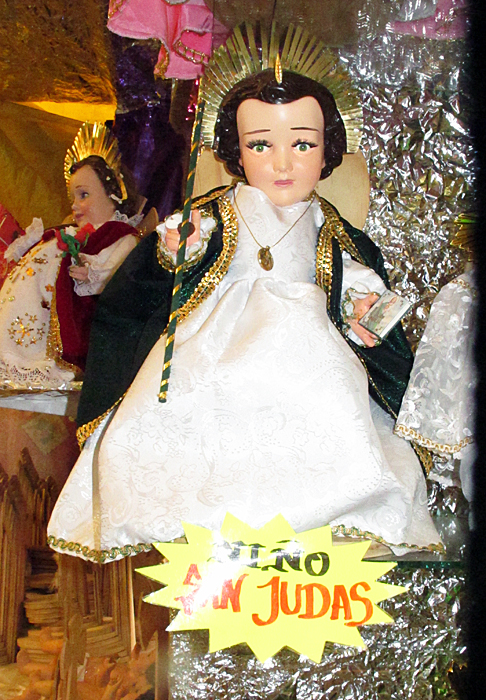
    Niño Dios San Judas Tadeo
    One of the most popular 'looks' for the Niño Dios in Mexico City is that of San Judas Tadeo, the patron saint of impossible causes.  He is always dressed in green, white, and gold and has a flame coming from his head.

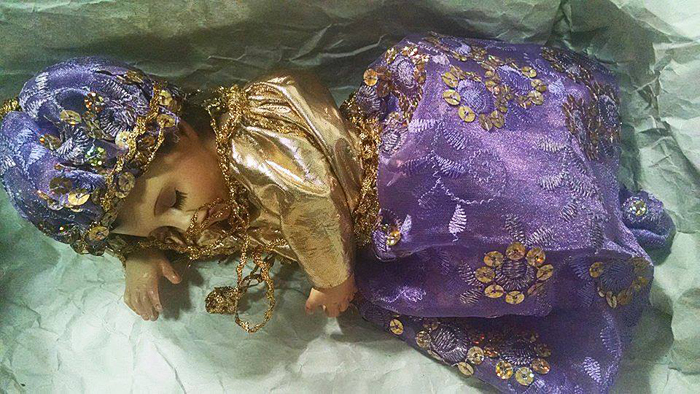
    Niño Dios Vestido
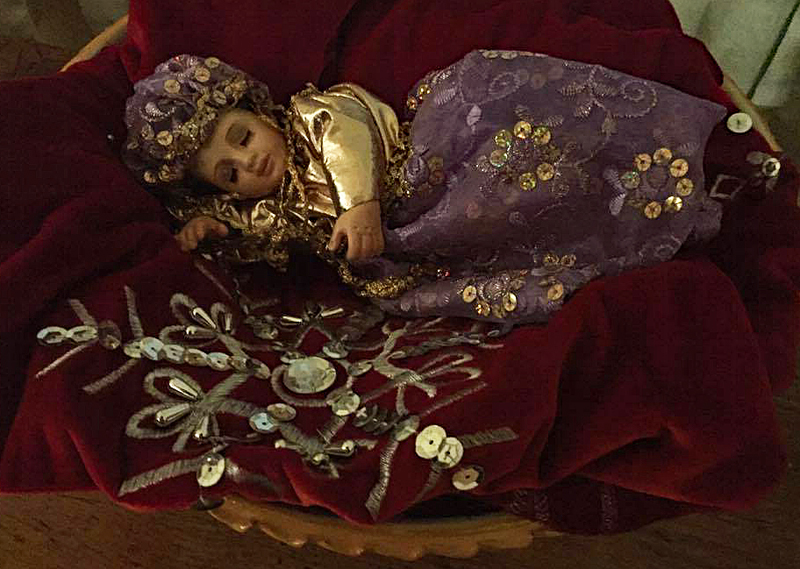
    Mexico Cooks!' very own Niño Dios.  He measures just 7" from the top of his head to his wee toes.  His purple and gold finery is very elegant.

    [youtube=://www.youtube.com/watch?v=h4rcQDmyffo&w=420&h=236] 
    This lovely video from Carapan, Michoacán shows both the gravity and the joy (and the confetti!) with which a Niño Dios is carried to the parish church.

    Carefully, carefully carry the Niño Dios to the parish church, where the priest will bless him and his new clothing, along with you and your family.  After Mass, take the baby Jesus home and put him safely to rest till next year's Christmas season.  Sweet dreams of his next outfit will fill your own head as you sleep that night.

    Looking for a tailored-to-your-interests specialized tour in Mexico? Click here to see new information: Tours

  • Popcorn, The Original Mexican Corn. Maíz Palomero, El Máiz Original de México.

    Cosecha unpopped-popcorn
    From the un-popped kernel to the fully popped microwave-able snack treat, popcorn's evolution is many millennia old.  Popcorn was the first corn in Mexico, domesticated at least 5000 years before the common era. In other words, the cultivation of popcorn is at least 7,000 years old–and probably closer to 11,000 years old!

    Logo Organizacion Tortilla
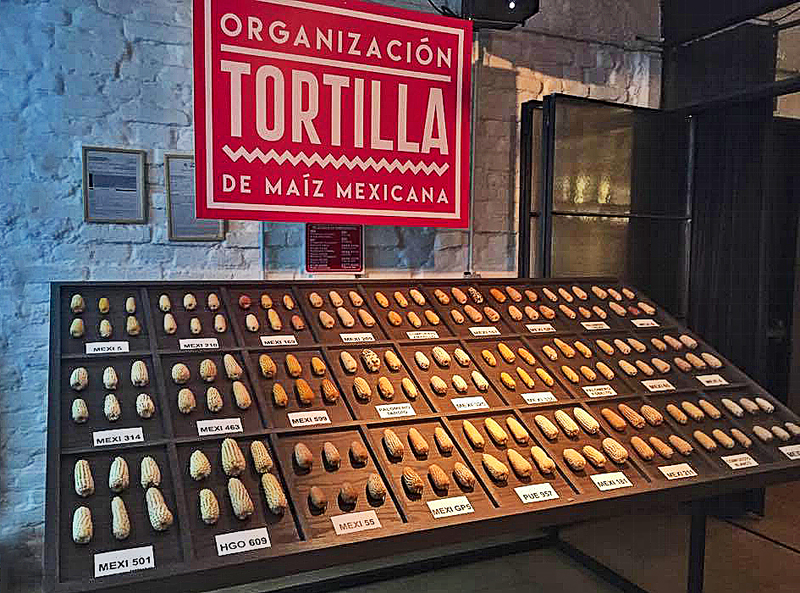
    The non-profit organization Tortilla de Maíz Mexicana, founded by my dear friend Rafael Mier, celebrated its first birthday on November 17, 2016.  In the single year of its existence, the group has gathered together more than 153,000 followers on Facebook.  Every one of these followers, people from all over Mexico, from Guatemala, and from other countries in Central and South America, is nervous about the decline of the tortilla, the possible loss of Mexico's native corns as well as those where they live, and the near-extinction of popcorn: Mexico's original corn. Here's the link to the group; please join! Tortilla de Maíz Mexicana

    Update: just prior to publication of this article, membership in the Facebook group Tortilla de Maíz Mexicana jumped to over 200,000 members!  There is plenty of room for more, join up!

    Two Ears Mai?z Palomero 25-9-16
    Two of the first beautiful ears of maíz palomero toluqueño (popcorn from Toluca, Mexico) that the preservation team harvested in late September, 2016. 

    Cosecha Rafael Mier Canasta
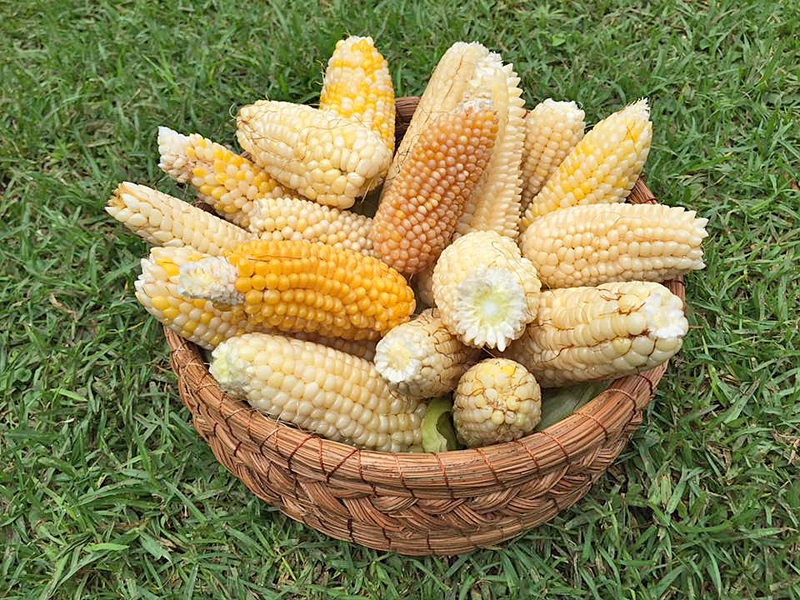
    This basket is filled to overflowing with maíz palomero (Mexican popcorn), seed sourced and sown in the State of Mexico by my colleague maestro Rafael Mier and his team of assistants: harvested on September 25, 2016, a day to remember.  The thrill of being just a tiny part of this project makes my heart skip a beat! 

    Mai?z Palomero 25-9-2016
    One ear of maíz palomero rests in the palm of my hand. The photo gives you a good idea of the size of these ears; compared to the size of USA-grown hybrid ears, these are tiny.  USA growers have hybridized popcorn to give a large ear that yields more popcorn in a smaller planting area. Popcorn, however, has been hybridized, not genetically modified. There is NO GMO popcorn.  Think otherwise? Google is your friend!

    Obtaining the popcorn seed was the result of an exhaustive investigation in which he traveled to different small towns around Toluca (in years gone by, a tremendous source of Mexican popcorn) to obtain the grain. To Mier's great surprise, almost no one had kept any seed from former plantings.  Popcorn truly was on the verge of extinction.  Mier explained, "The United States is the leader in popcorn production, the popcorn business in that country has dedicated itself hugely to the grain’s development. Mexico could have the power. We are only lacking programs that push a viable cultivation of the varieties that are in Toluca, Chihuahua, and Jalisco. With those, we could satisfy the national demand.”

    Cosecha Cristina Mai?z 4A
    Here's Mexico Cooks! as part of the very first harvest of Mexican-grown popcorn in the grand project of saving this original Mexican corn from extinction.  I was so, so excited to peel back the green husks of this ear of popcorn, harvested just moments earlier, and see the tiny ears grown from 50-year-old seed.  Yes!  CIMMYT (International Maize and White Improvement), an international seed bank with research facilities near Mexico City, gave Maestro Rafael enough banked, refrigerated seed to plant several small parcelas (sections of land) with popcorn.

    Olotes Palomeros Tehuacán_edited-1
    These tiny dehydrated olotes (corn cobs)–each measures two to three inches long–were discovered in 1965 in the cave near Coxcatlán, Puebla, and are on daily exhibit at the Tehuacán (Puebla) Museo del Maíz (Corn Museum). For more information about this cave and its agricultural and archeological importance, please see Mexico Cooks!' article dated October 1, 2016.  These corn cobs are carbon-dated to approximately 5,000 B.C.E. All photos copyright Mexico Cooks! unless otherwise noted.

    Popcorn in Pot
    One huge pot filled with popcorn, a direct descendent of Mexico's very first corn: maíz palomero (popcorn). Today, many thousands of years after Mexico's great-great-a thousand times-great-grandparents domesticated maíz palomero, 95% of all popcorn grows north of the Mexican border.  Popcorn has crossed the border into the United States of America and become one of the USA's most popular exports.  Photo courtesy Lori Lange.

    Popcorn is a simple food that we associate with snacking and with moments of entertainment. Who doesn’t want some buttered, salted popcorn at the movies, or while enjoying a day at the fair? Long ago in what is now Mexico, popcorn was already a treat: they were called “corn flowers” and according to the 16th century chronicles of Fray Bernadino de Sahagún, popcorn was sold in what is now Mexico’s plazas and was used as necklaces and in rituals. People did eat it, of course, but its consumption was not recreation-based.  

    [youtube=https://www.youtube.com/watch?v=DbBgT62f3W4&w=560&h=315]
    In this beautiful and evocative video, Maestro Rafael explains what has happened to Mexico's maíz palomero and what he and others, including myself, are doing to save Mexican popcorn from extinction.  Even if you don't understand Spanish, you'll be able to watch the process of planting and harvest.  Video courtesy Rafael Mier.

    Mai?z Palomero Invitacio?n
    Despite the fact that Mexico is the country of origin of all corns, including popcorn, less than 2% of the popcorn eaten in Mexico today is grown here. The enormous majority comes from the United States of America, with a much smaller amount imported from Argentina. “In Mexico, over time we’ve lost the planting of this corn,” comments Rafael Mier. “Sowing popcorn is difficult work now because our native seed is all but extinct,” he says. He and his team are working every day to reverse Mexican popcorn's slide into extinction. Photo: invitation to the November 17, 2016 public presentation of the popcorn project.  

    The best way to get involved in this project is to join the Facebook group Tortilla de Maíz Mexicana.  If you'd rather not use Facebook, subscribe to Mexico Cooks!.  How? Look at the right-hand side of this page: you'll see a box titled, Share Mexico Cooks with Your Friends. In that box, there's a link called, "Subscribe to this blog's feed". Click on that, then follow the simple instructions. Mexico Cooks! will arrive in your email inbox every Saturday morning at about ten o'clock.

    We look forward to having you as part of the Mexican popcorn and tortilla team!  During 2017, Mexico Cooks!' 11th consecutive year on line, you'll see a lot more about what we're doing in this initiative.

    Looking for a tailored-to-your-interests specialized tour in Mexico? Click here to see new information: Tours

  • Looking Back Through 2016, Part Two :: Una Mirada Hacia Atras 2016, Segunda Parte

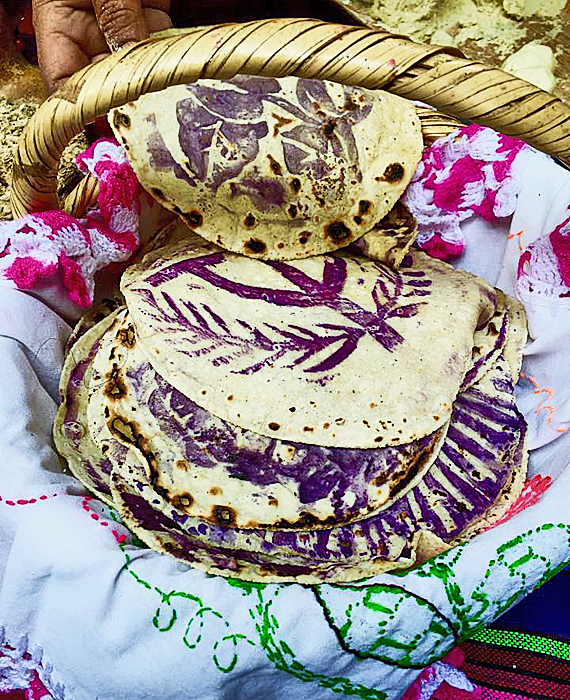
    Ceremonial Tortillas from Guanajuato
    Ceremonial tortillas from the state of Guanajuato, made only in the Otomí communities of that state as food for certain ritual occasions. These were served at Restaurante Azul Condesa during July 2016, when Guanajuato's cuisine was featured for the month at the restaurant. They became so deservedly popular that the restaurant has continued to offer them.  The tortillas, made of nixtamalized corn masa (dough), are shaped, pressed, and cooked on one side on a comal (griddle). They are then flipped and stamped with a hand-carved wooden stamp that has been dipped in muicle, a liquid vegetable dye made from a wild plant.

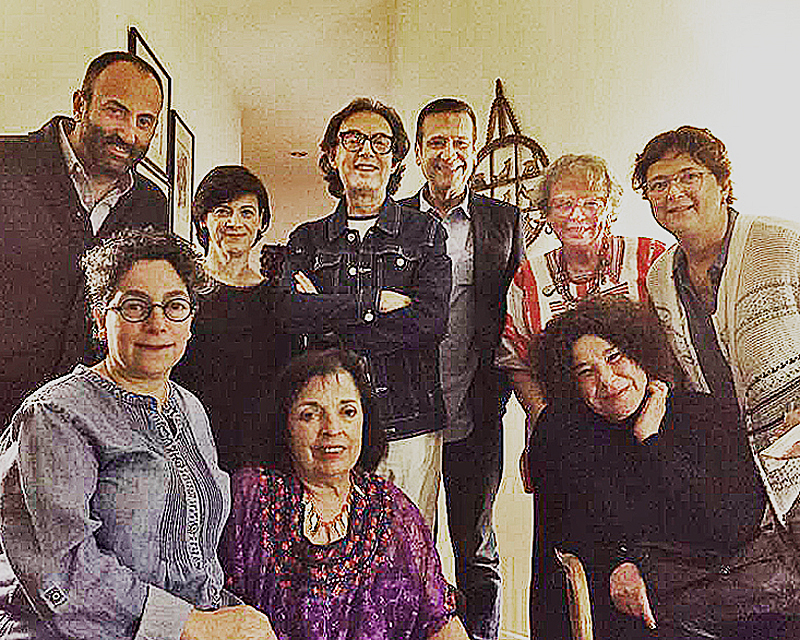
    Evento Zarela Group 1
    In mid-July, it was my tremendous honor to host an evening in honor of Zarela Martínez (seated, center), who in 1987 opened Zarela, a Mexican restaurant that is credited as being a pioneer of regional Mexican cuisine in New York City.  She is the author of several wonderful cookbooks, including Food from My Heart: Cuisines of Mexico Remembered and Reimagined (1995) (nominated for Best International Cookbook of the Year, James Beard Foundation); The Food and Life of Oaxaca: Traditional Recipes from Mexico's Heart (1997); and Zarela's Veracruz (2001). Some of the guests surrounding Zarela are: (seated) Celia Marín Chiunti and Rosa María Villareal; (standing from left) Rafael Mier, Marisa Zannie, Pedro Luis de Aguinaga, Mexico Cooks!, and Sonia Ortiz. 

    LaLa Taxidermy Javali?
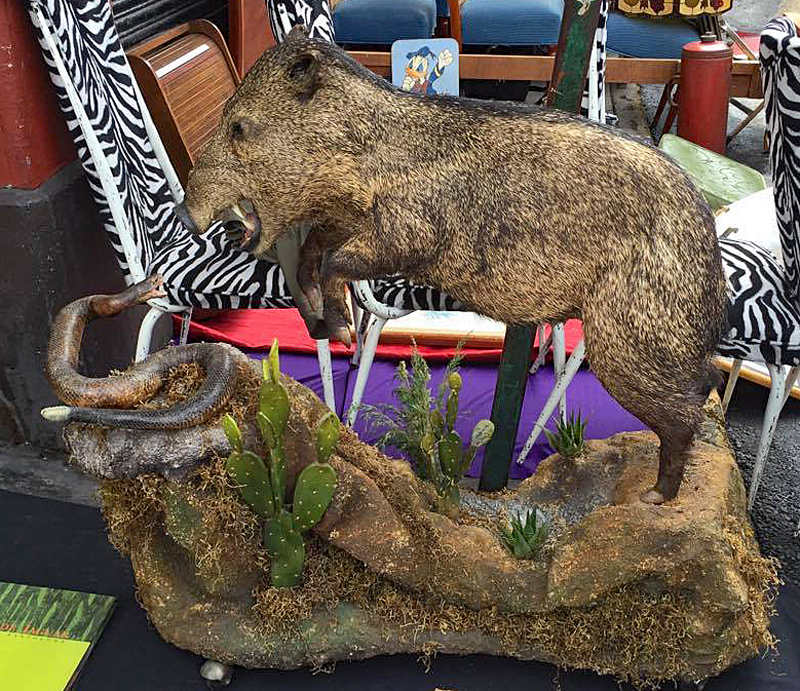
    As a frequent visitor to a local tiradero (slang for flea market–literally, garbage dump), Mexico Cooks! has bought many wonderful old things for decorating the home place. This is not one of them.  In August, a friend asked me to photograph this tableau of a javalí (wild boar) and rattlesnake for her nephew, a fan of taxidermy. One can buy anything from a silver ring to–well, a stuffed javalí–at this flea market.

    Flaneur Grafito Gato July 2016
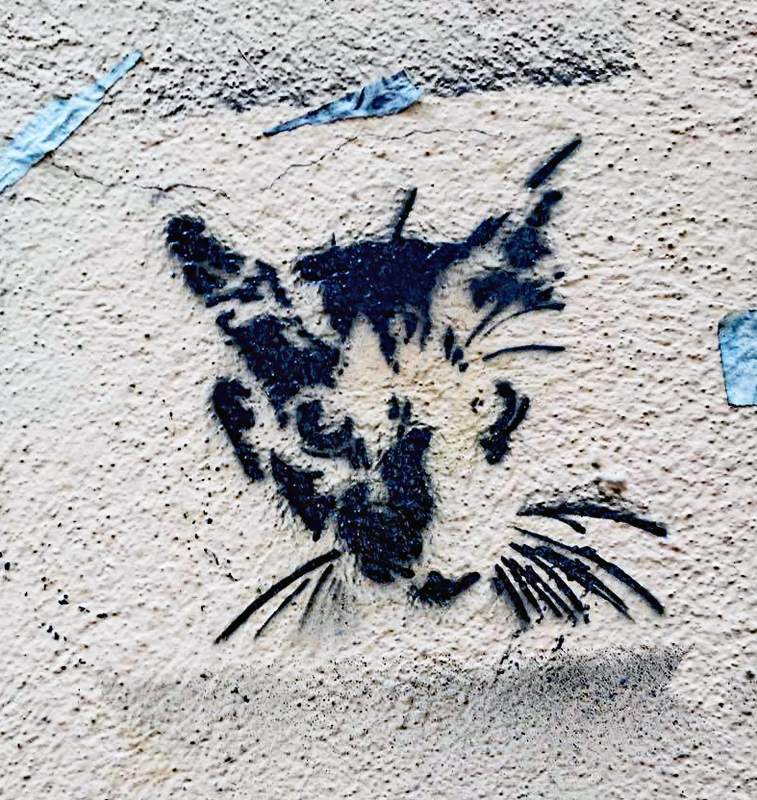
    I often go out looking for interesting graffiti, and almost always find something fun.  This cat face, stenciled onto a wall close to my home, looks very much like Risa, my tortoiseshell kitten.

    [youtube=https://www.youtube.com/watch?v=vtqVC3NaCLM&w=560&h=315]
    An event in Mexico City at the end of August brought several cocineras tradicionales (traditional cooks) to visit from Michoacán.  This woman spent most of the day pat-pat-patting truly hand-made tortillas to serve to the public along with home-style food.  The gentle rhythm of her hands against the masa (corn dough) coupled with the laughter of other cooks made me feel like I was home again in Michoacán.  Listen as she pats out the tortilla; imagine the smell of woodsmoke.  Both are still iconic to rural Mexico.

    Tehuaca?n Market Bag
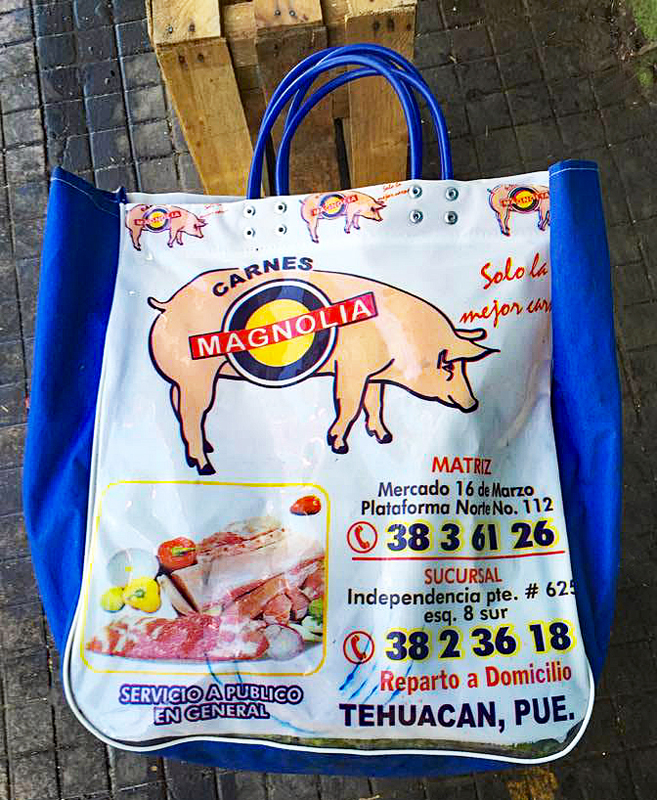
    This hard-working market bag advertises a butcher shop in Tehuacán, Puebla.  No recap of the year 2016 could be complete without at least one mention of the life-changing weekend I spent in this south-central part of Mexico.  Remember the Mexico Cooks! article about the cave where…well, re-read it here: Corn, An Ancient Gift from Mexico to Feed the World. Chills still run up the back of my neck when I think about gazing into this small hollow space, a shelter in the mountain.

    Flaneur Domo Bellas Artes Los Folkloristas Sept 2016
    Early September took us to the Palacio de Bellas Artes (Fine Arts Palace) in downtown Mexico City.  The traditional music group Los Folkloristas celebrated its 50th anniversary here.  A good friend is a member of the group and made certain that another friend and I had great seats, a couple of levels below the glorious stained-glass dome.

    Laura Esquivel con Cristina 1A
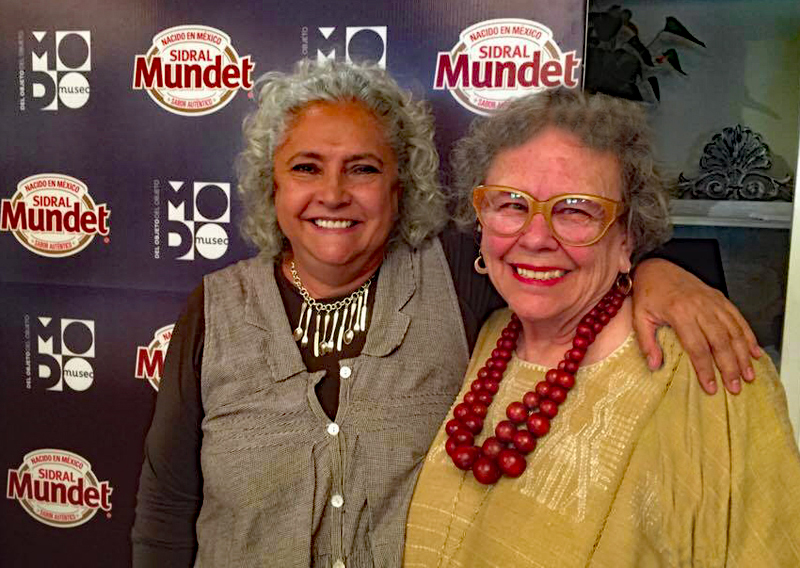
    Sometimes a person can't help being ecstatic.  Meeting Laura Esquivel (author of the extraordinary and ground-breaking Like Water for Chocolate, among other wonderful books) near the end of September was a real highlight of my year.  She was part of the press conference for the MODO exhibition Del Plato a la Boca–the beautifully curated, kitchen-oriented show will be at the museum through February 2017. Don't miss it.

    Toluca October Cosmovitral copy
    Mid-October took me to Toluca, in the State of Mexico, to see the Cosmovitral.  The Cosmovitral is a beautiful stained glass-enclosed botanical garden.  The group Aztec Explorers, which organizes mostly day tours for people new to Mexico City or the surrounding area, invited me to come along to see the kind of work they do.  The tour company advertises primarily to people who live in or near Mexico City and want to make friends with others while enjoying an overview of sites they've heard about and want to see.  If this sounds like a day that suits your style, you'll enjoy the inexpensive tours that Lilia and Peter give.  By all means tell them Mexico Cooks! sent you.

    Super Moon Oct 15 2016 1A
    Remember the gorgeous October 15, 2016 super moon?  I took this shot with my cellular phone, from my bathroom window!  Moon over Mexico City, a lucky shot indeed.

    LaLa Altar 1 10-30-2016
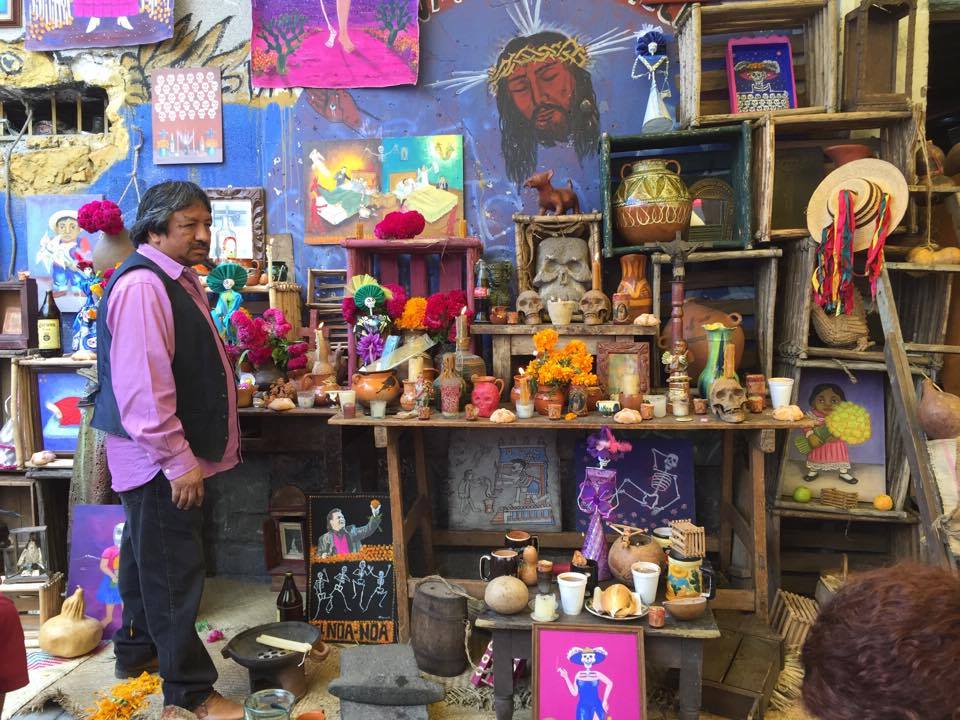
    For November 2, Día de Los Muertos, Mexico Cooks! took a small group of tourists to that flea market I mentioned above–no taxidermy this time, though. Alfredo Vilchis Roque, who is proclaimed as "the Da Vinci of the market", built an altar for Day of the Dead 2016.  Click on any of the photographs for a larger view.  Sr. Vilchis, whose work has been exhibited at the Louvre and is sold at a Paris gallery (among others), was generous enough to point out several fascinating aspects to the altar.  Look, for example, just at knee level and in front of him: there's a tribute to Juan Gabriel, Mexico's world-famous singer and idol, who died on August 28, 2016.

    Evento 17-11-2016 Salvemos el Mai?z Palomero Mexicano 2
    November 17, 2016, marked the launch of a program called Salvemos el Maíz Palomero de México (Let's Save Mexican Popcorn).  Part of the project for the preservation of Mexico's native corns in general as well as for the preservation of the tortilla made of nixtamalized corn, the popcorn event was particularly designed to bring the near-extinction of Mexico's original corn to the attention of the press.  It was a tremendous success; even Aristegui Noticias, the foremost news in Mexico shown on CÑÑ (CNN in Spanish), picked up the story and broadcast it to the Spanish-speaking world.  You'll be reading a lot more about this multi-faceted project in the weeks and months to come, right here at Mexico Cooks!.

    Nin?o Dios
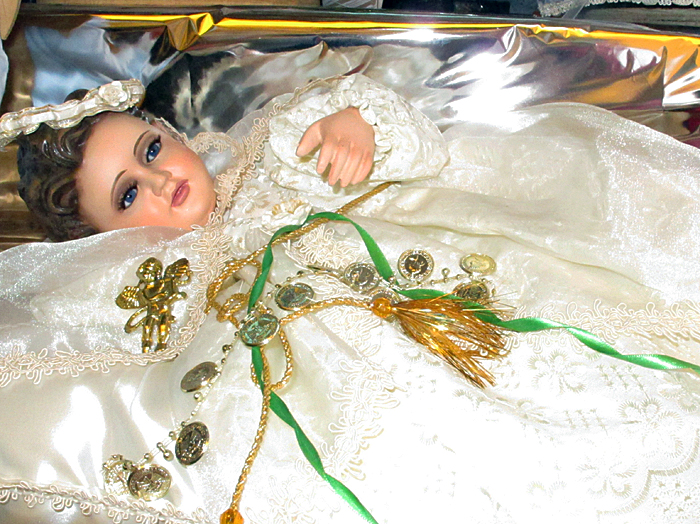
    Whatever your faith, may the New Year bless you with abundance in all things, especially joy and peace.  From our house to yours, we wish you a blessed 2017.

    Looking for a tailored-to-your-interests specialized tour in Mexico? Click here to see new information: Tours