Category: Mexican Tourism

  • Old News–But Still Fun: London Times Votes Mexico Cooks! World’s No. 1 Food Blog!

    Originally published in December 2008, when this was brand new news, this is still a marvelous tribute to what Mexico Cooks! is all about: qué viva México!

    Gemelitas 1
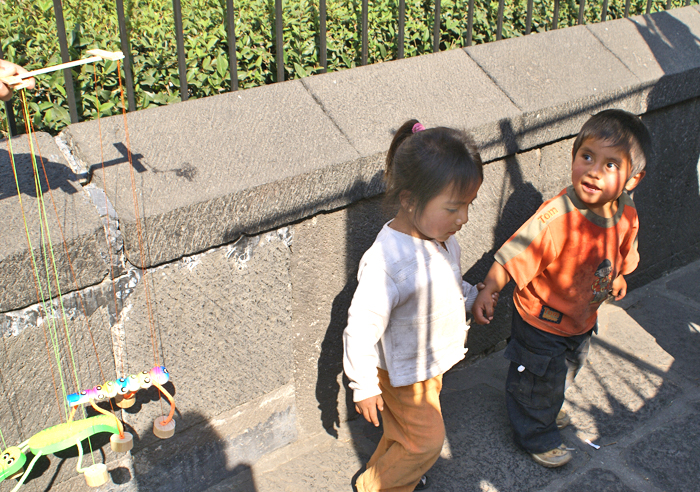
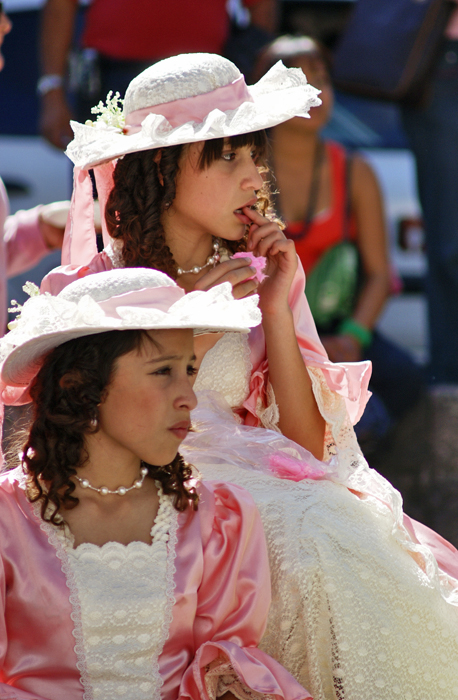
    Lovely young gemelitas (identical twins) in Porfiriato-era fancy dress at a recent Sunday event in Morelia.  The Porfiriato dates from 1875 to 1910, the period when Porfirio Díaz was president of Mexico.

    The venerable Times (the London, England, Times) has named Mexico Cooks! the Number One food blog in the world.  According to the author of the article, there are more than 10,000 food blogs currently on the Internet–and we're the top.

    Just click on the link to read the full article, which appeared in The Times on November 27, 2008.

    Top 10 Food Blogs from Around the World

    London Times Online Logo

    TOP 10 FOOD BLOGS

    1) Mexico Cooks - Cristina Potters’s knowledge of Mexican food is matched only by her passion for her adopted home. The best starting point for anyone who wants to learn more about the varied cuisine of this extraordinary country.

    2) Eating Asia - Robyn Eckhardt knows more about the food of South East Asia than anyone I have ever encountered. Check out a recent post on The Philippines for an example of superb food writing.

    3) Silverbrow on food - The quirky journal of a man whose eating is restricted by the Jewish rules of Kashrut, the author still seems to pack away plenty of food and writes about it very well.

    4) Grab your fork - All food bloggers should aspire to be as good as Helen Yee. Her wonderful website, mainly about Sydney is a daily read for me even if she is discussing places halfway across the world.

    5) Chocolate and zucchini - Clotilde Dusoulier’s online presence remains the ne plus ultra of French food blogs and has been supported by the recent publication of books based on her experiences of shopping, eating and cooking in Paris.

    (Click the above link to Top 10 Food Blogs from Around the World for the next five blogs.)

    To say that Mexico Cooks! all but fell off her chair when The Times emailed with this news is an understatement.  We're still grinning and more than a bit dazzled. 

     Outdoor Kitchen
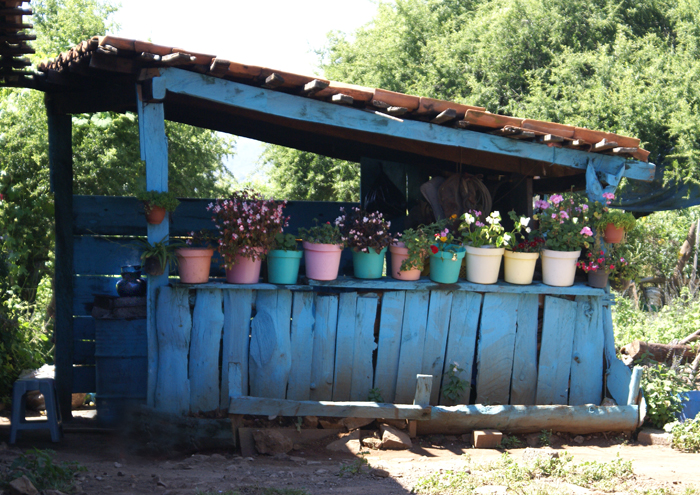
    Outdoor kitchen, San José de las Torres, Michoacán

    You might like to have a look at what my cyber-friend Steve Cotton had to say about all this on his blog, Same Life–New Location.  Thanks, Steve!

    Viva Times de Londres Viva Mexico Cooks!  And viva, qué viva México!

    Looking for a tailored-to-your-interests specialized tour in Mexico? Click here: Tours.

  • Viernes Santo Procesión del Silencio :: Good Friday Procession of Silence, Morelia

    Drummers
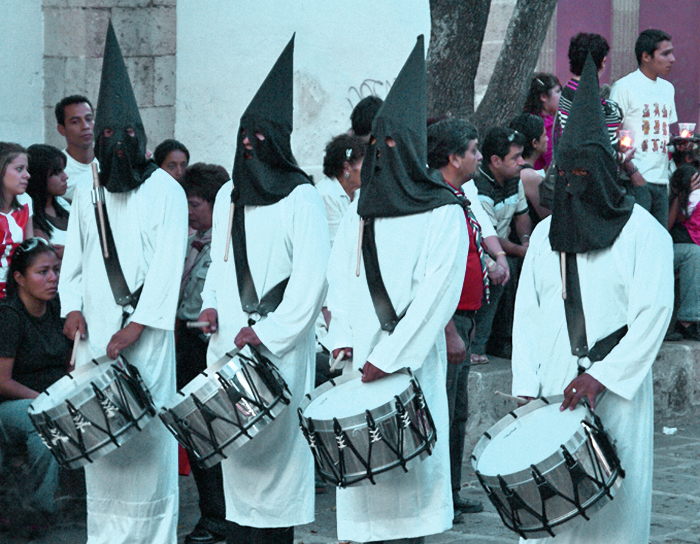
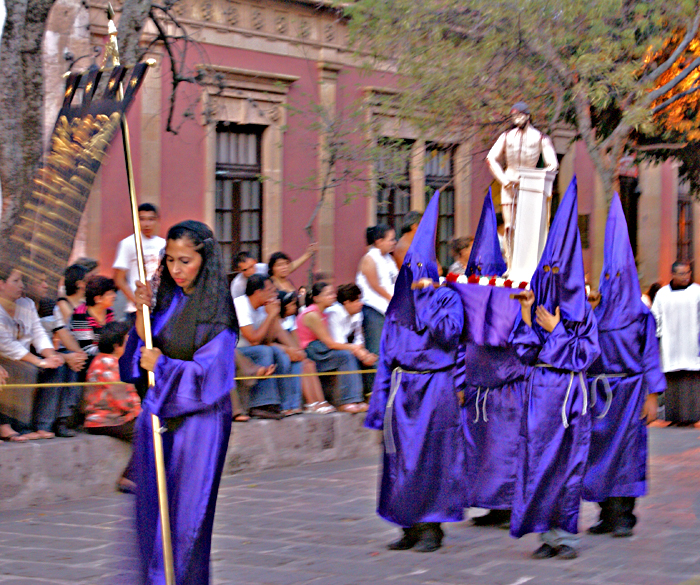
    Hooded drummers marked the beat of Morelia's penitential Procesión del Silencio: Good Friday's silent procession commemorating both the crucifixion of Christ and his Mother's grief.  Only the drumbeat broke the silence along the route.

    Dolores 1
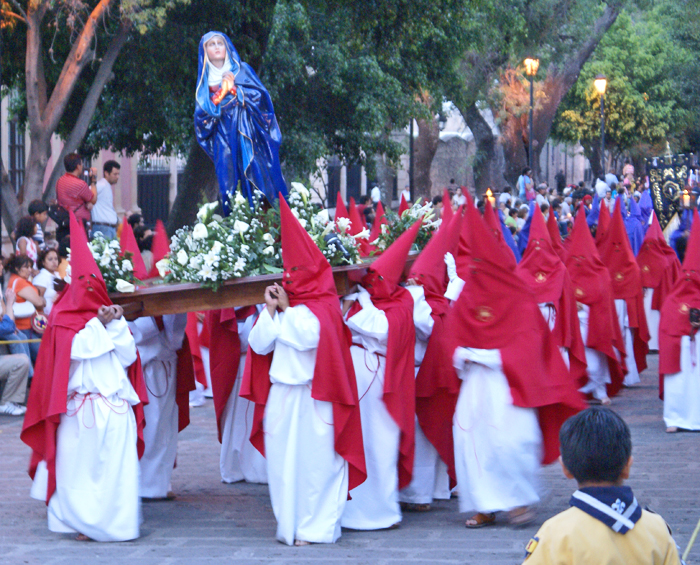
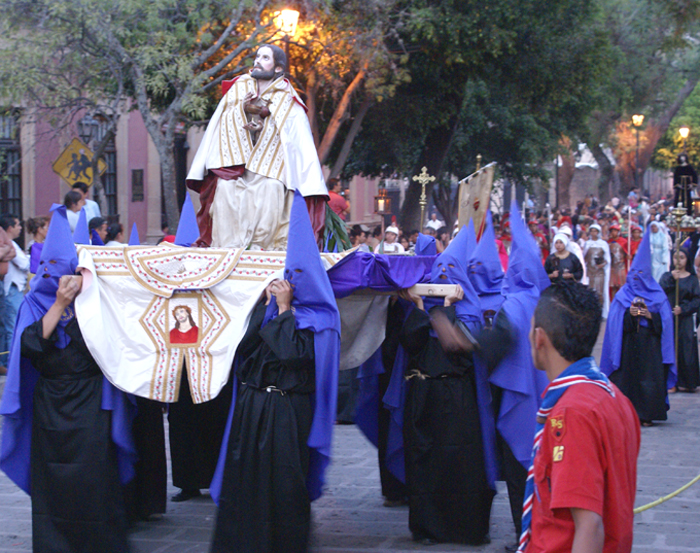
    Nuestra Señora de Dolores (Our Lady of Sorrows).  Hooded members of various Catholic confraternities (religious organizations founded in Europe in the 15th Century) carry these life-size statues on their wooden platforms approximately three kilometers through Morelia's Centro Histórico.

    Rezando en la Huerta
    Jesus during la Oración en el Huerto (praying in the Garden of Gethsemane), just prior to his arrest on Holy Thursday night.  Boy Scouts (the young man in red at the right of the photo) hold the protective rope all along the route of the procession.

    Cristo en el Pilar
    El Señor del Pilar (the Lord of the Column) depicts Jesus, bound to a column, and whipped by Roman soldiers after his conviction.

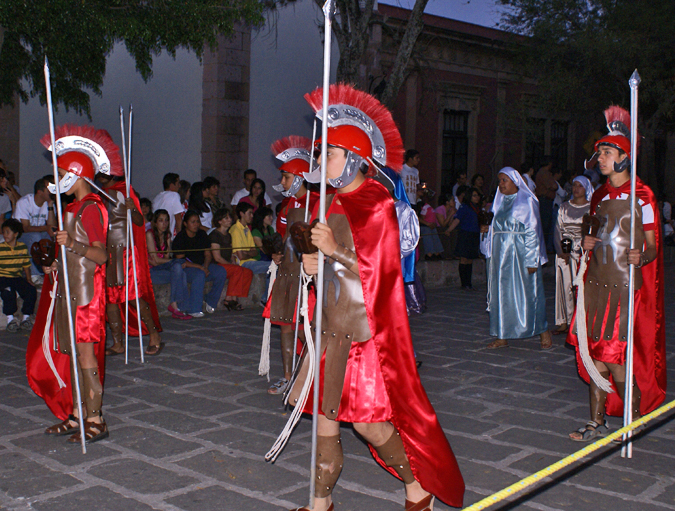
    Soldados Romanos
    Roman soldiers.

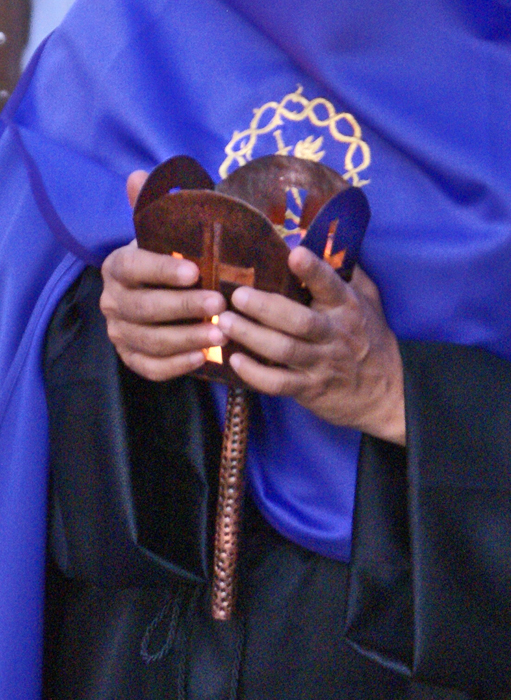
    Veladora 2
    The majority of Morelia's Procesión del Silencio takes place after dark, by candlelight.  

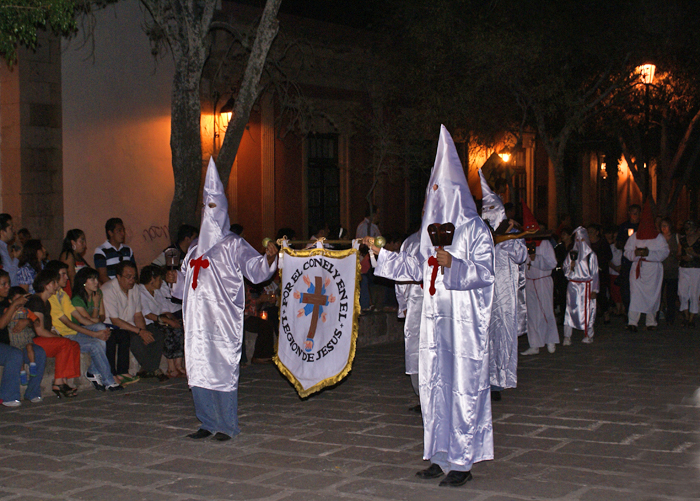
    Legion de Jesús
    The Legion of Christ carry their banner and their lamps.  The Procesión del Silencio lasts about four hours.  During that time, all of Morelia's Centro Histórico is closed to vehicular traffic.

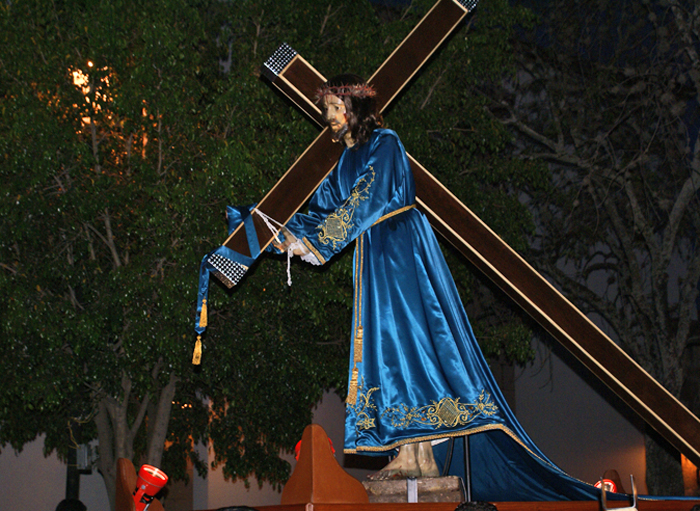
    La Cruz a Cuestas
    Jesus carries the cross a cuestas (on his back) to Calvary.  More than 50,000 spectators stood along the entire route of Morelia's Procesión del Silencio.

    Cargando la Cruz 2
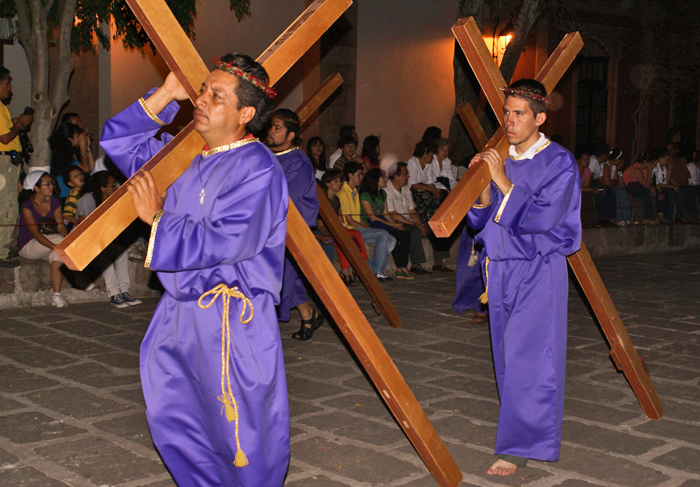
    Penitents from one of Morelia's confraternities carry their crosses the length of the procession.  Many march barefoot through the city streets.  The procession celebrated its thirty-third anniversary this year.

    Cristo en la Cruz
    Robed and hooded members of another Catholic confraternity carry a small image of the crucified Christ.  Hoods cover the faces of those who march as a sign of penitence.

    Antorchas
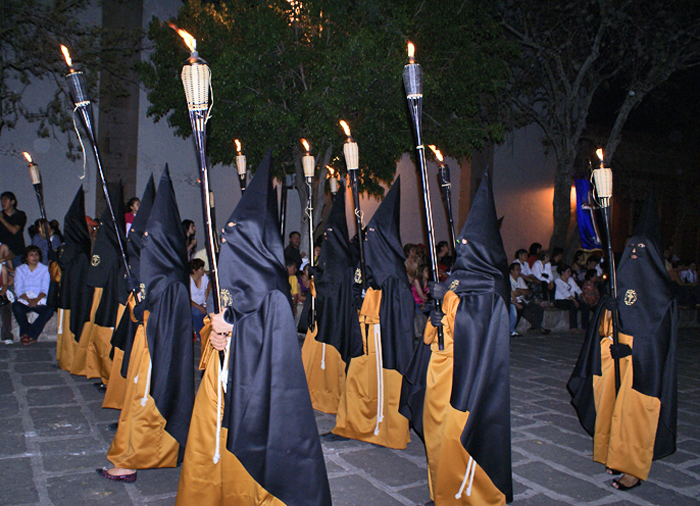
    Clothed in gold and black, these marching penitents carry huge metal torches.

    Cristo Muerto
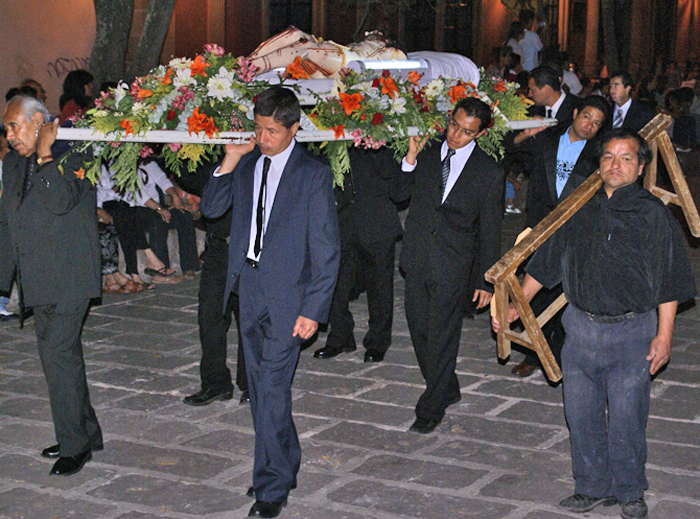
    Six men of all ages carry Cristo Muerto (the dead Christ), while six others follow as relief when the burden of the image, the platform, the lights, and the flowers becomes too heavy.  The man at the far right of the photo carries one of two saw horses used to support the platform during occasional pauses in the procession.

    Nuestra Señora de Soledad
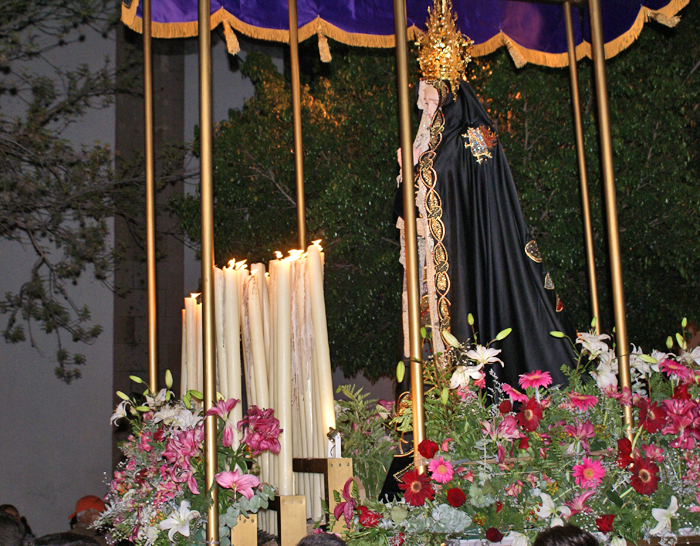
    At the end of the Procesión del Silencio, la Virgen de la Soledad (Our Lady of Solitude) follows the body of her crucified Son.  The platform bearing her image holds burning candles, a purple and gold velvet canopy, and banks of fresh flowers.

    Looking for a tailored-to-your-interests specialized tour in Mexico? Click here: Tours.

  • Abigail Mendoza Ruiz and Restaurante Tlamanalli: Food for the Gods in Teotitlán del Valle, Oaxaca

    Zaachila Chocolate
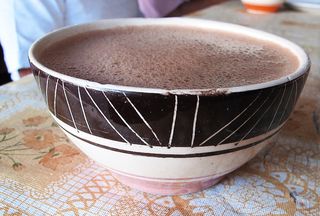
    Emblematic of Oaxaca: chocolate caliente (hot and foamy hand-ground hot chocolate) prepared in water and served in a bowl. Zaachila market, Oaxaca.

    There's much more to Oaxaca's magic than simply its capital city, which is of course fantastic in its own right.  Driving in any direction from the city, twisting two-lane roads lead to small towns; each town has a weekly market, and each market has beauties of its own.
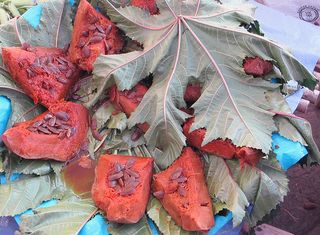
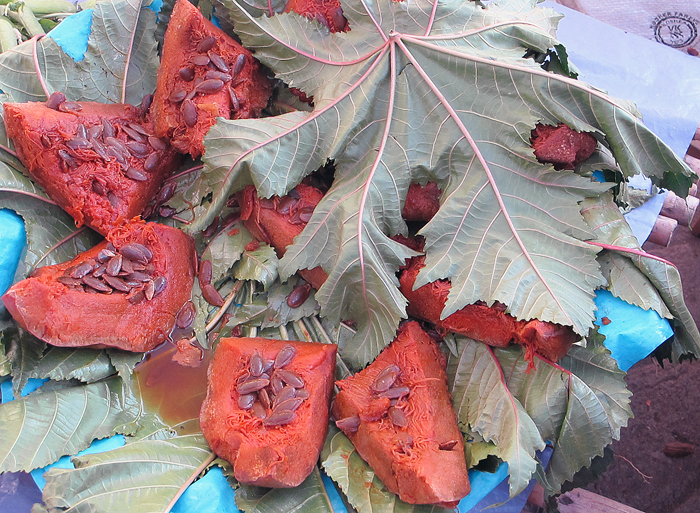
    Zaachila Calabaza en Tacha con Hoja
    At the Zaachila Friday market, a vendor sold calabaza en tacha (squash cooked in brown sugar syrup) covered with a leaf to keep insects away and maintain the squash fresh and ready to eat.
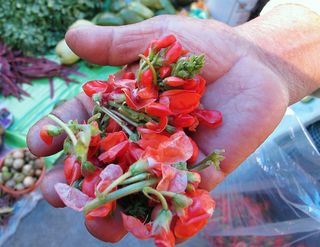
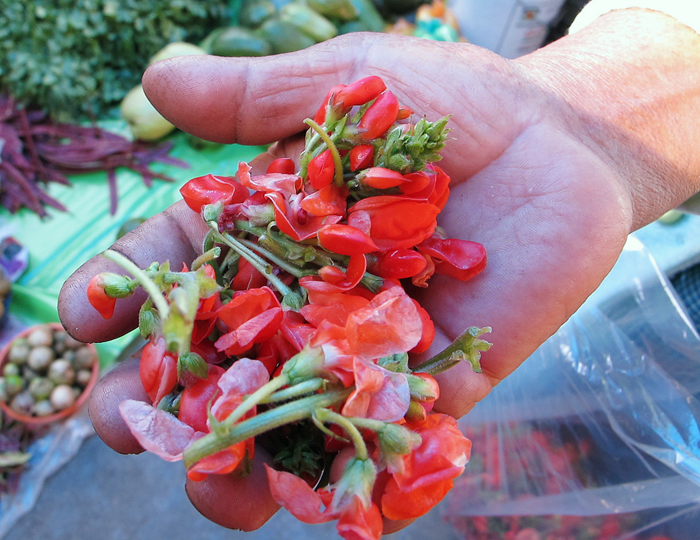
    Zaachila Flor de Frijolón
    Another vendor offered flor de frijolón (the red flowers of a large, black, local bean known elsewhere as ayocote negro).
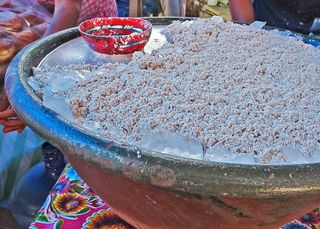
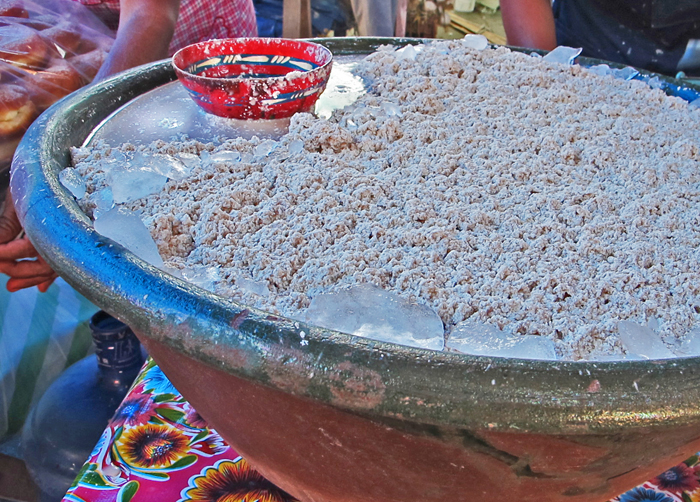
    Zaachila Tejate
    Tejate, Oaxaca's emblematic cold, foamy, and refreshing chocolate beverage, scooped out of this clay bowl with a red-lacquered jícara into the size cup you prefer: small, medium, or large.  

    When Mexico Cooks! traveled recently to Oaxaca, joyous anticipation and a letter of introduction were stowed among my baggage.  For years I had read about and admired (albeit from afar) Abigail Mendoza Ruiz and her sisters, but we had never met.  This trip would fix that: two days after my scheduled arrival, we had an appointment for comida (Mexico's main meal of the day) at the Mendoza sisters' Restaurante Tlamanalli in Teotitlán del Valle.  The restaurant's name, a Náhuatl word, means several things: it's the name of the Zapotec kitchen god, it means abundance, and it means offering.  For me, newly arrived in Teotitlán del Valle, the word Tlamanalli meant, 'you are about to have the experience of a lifetime'.

    Teotitlán del Valle is best known as the principal Oaxaca rug-weavers' town. Among its five to six thousand inhabitants, the majority weaves wool to make lovely rugs and also combines the weaver's tasks with agricultural work, growing both marketable and personal-use corn and other vegetables plus raising poultry for personal use.

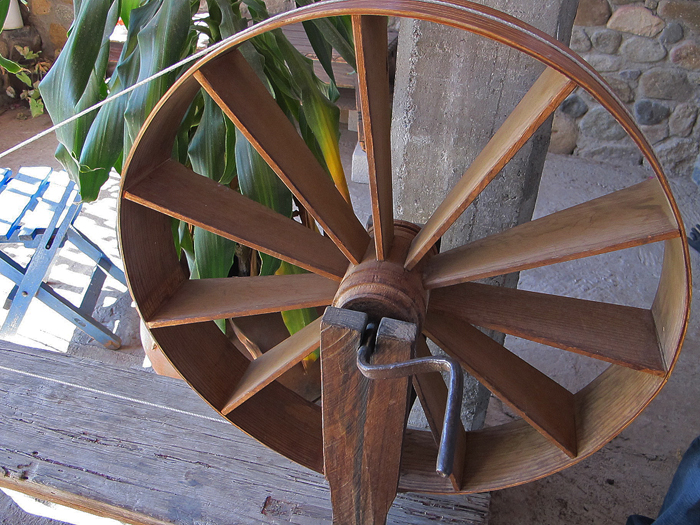
    Rueca Detalle
    Detail of the rustic wooden rueca (spinning wheel) used  by the Teotitlán del Valle rugmakers for spinning fine wool yarns.  
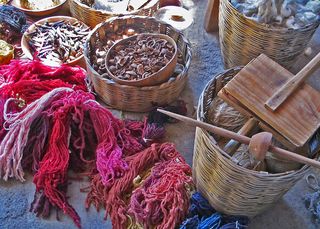
    Taller de tejedor
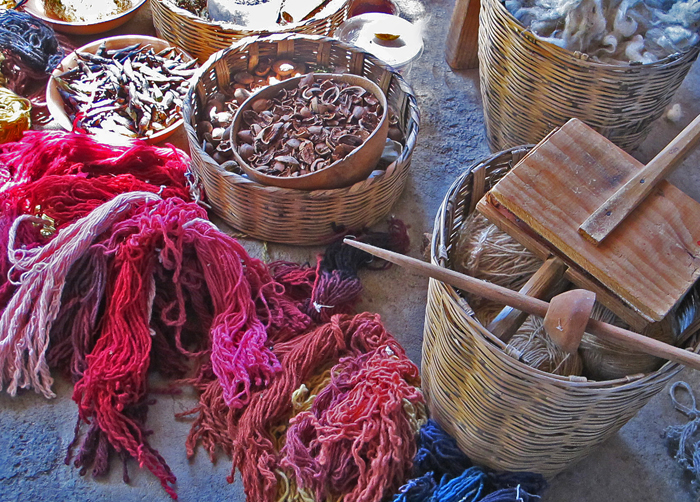
    Shown in this group of Oaxaca-made baskets: a flat double comb for carding wool, a pointed spindle, and various natural coloring agents, along with hanks of wool which demonstrate just a few of the colors used in Oaxacan wool rugs.

    Not only are the Mendoza Ruiz sisters extraordinary regional cooks, they and their siblings are also well-known rug weavers.  Their parents, Sra. Clara Ruiz and don Emilio Mendoza (QEPD), gave this world a group of supremely gifted artisans, all of whom learned the weavers' traditions at their parents' knees.
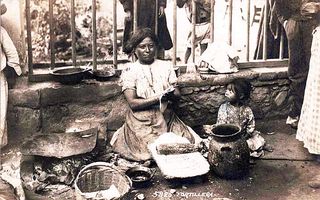
    Woman and Child Making Tortillas

    Abigail Mendoza started learning kitchen traditions as a five-year-old, as the first daughter of the family, watching her mother grind nixtamal (dried native corn soaked and prepared for masa (dough).  In the postcard above, the little girl (who is not Abigail) watches seriously as the woman we imagine to be her mother pats a tortilla into its round shape.  

    By the time she was six years old, Abigail was in charge of sweeping the kitchen's dirt floor, gathering firewood, and making the kitchen fire.  At age seven, she told her mother, "I'm ready to grind corn on the metate," (volcanic rock grinding stone, seen in the center of the photograph above), but she wasn't yet strong enough to use her mother's large stone.  She was barely able to lift its metapil (stone rolling pin).  She eagerly awaited the purchase of a metate small enough for her use.  Doña Clara taught her to grind the home-prepared nixtamal, pat-pat-pat the tortilla dough into perfect thin rounds, and bake them on the comal (wood-fired griddle made of clay).
    Las Hermanas Mendoza
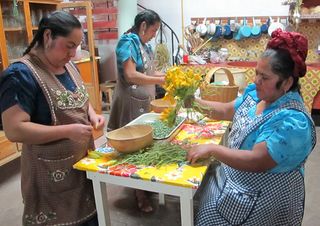
    Abigaíl Mendoza Ruiz, the internationally known and much-traveled Zapoteca cook, best loves preparing meals in her home kitchen and her restaurant kitchen in Teotitlán del Valle, Oaxaca.  Here, she's pictured in the beautiful open kitchen of Tlamanalli, the restaurant where she and her sisters Rufina and Marcelina (pictured above) create their culinary alchemy.  

    Abigail Mendoza is at once filled with light and filled with mystery.  Luminous as her joy-filled personality, her smile lights up any room she enters.  She is a woman of deep faith, a subscriber to the mysteries of dreams, a believer in spirit worlds both before and after life, a strong believer both in human relationships along life's horizontal and the vertical relationship of God with humanity.  Formally educated only through primary school, she holds intense wisdom borne of deep meditation on the nature of life, both spiritual and physical.

    In her extraordinary book Dishdaa'w, Abigail reveals her life story, her philosophies, and a good part of her soul.  The Zapotec title of her biography (transcribed and organized by Concepción Silvia Núñez Miranda) means "the word woven into the infinite meal".  And what does that mean?  Food itself has a soul, the soul is transmitted in food's preparation and its ingestion.  We are all part of the whole, and the whole is part of each of us.
    Abigail Mendoza Oaxaca 2014
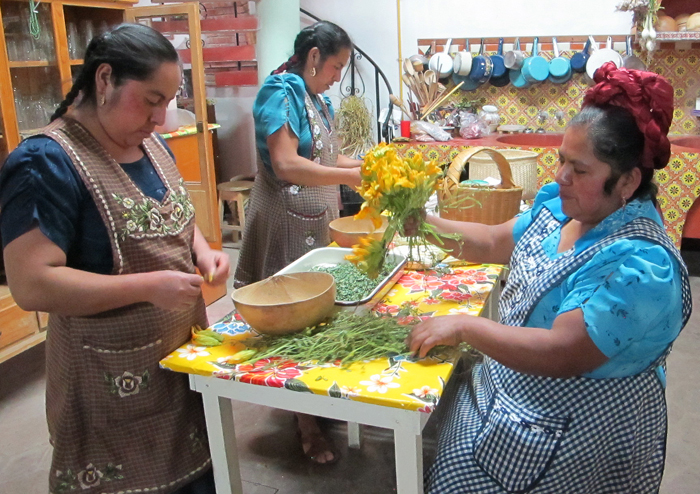
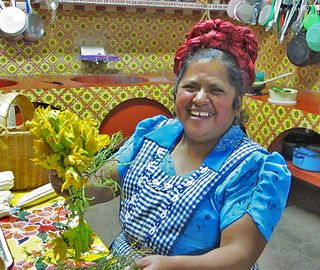
    In her restaurant's large kitchen, Abigail is the sun itself.  Hair braided  with traditional Zapotec ribbons into a royal crown, she's holding a fistful of freshly picked flor de calabaza (squash flowers).

    What did we do, Señorita Abigail and I?  We talked, we laughed, we discovered who our many friends in common are, we swapped kitchen lore and recipes, we gossiped (just a little, and in the best possible way), and we each felt like we had met yet another sister, a sister of the kitchen.  

    And then she asked what we would like to eat.  After stumbling around in a maze of I-don't-know-what-to-request, I suggested that she simply bring us her personal choices from the day's menu.
    Carta Tlamanalli
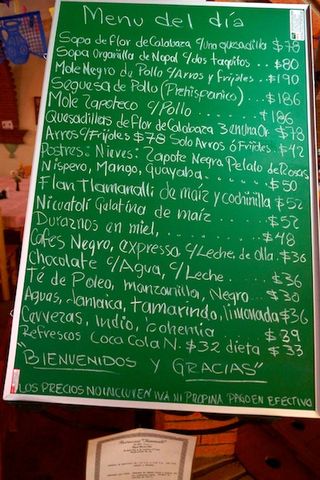
    Menu for the day, Restaurante Tlamanalli.  The dishes are not inexpensive, but ye gods: save up, if you must, and go.  You will never regret it.
    Botanas en Charola
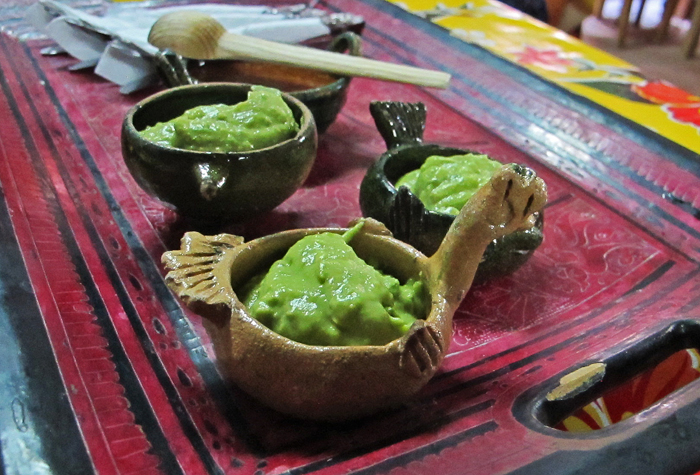
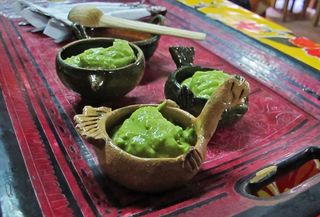
    First came made-on-the-spot creamy guacamole, in tiny turkey-shaped clay dishes and accompanied by a small bottle of local mezcal amd a wee dish of roasted, seasoned pepitas (squash seeds).
    Abigail Mole with Chicken
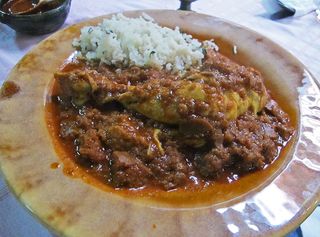
    Mole zapoteco con pollo (Zapotec-style mole with chicken).  Each of our dishes was accompanied by freshly made tortillas, hot from the comal (griddle).
    Segueza de Pollo con Maíz
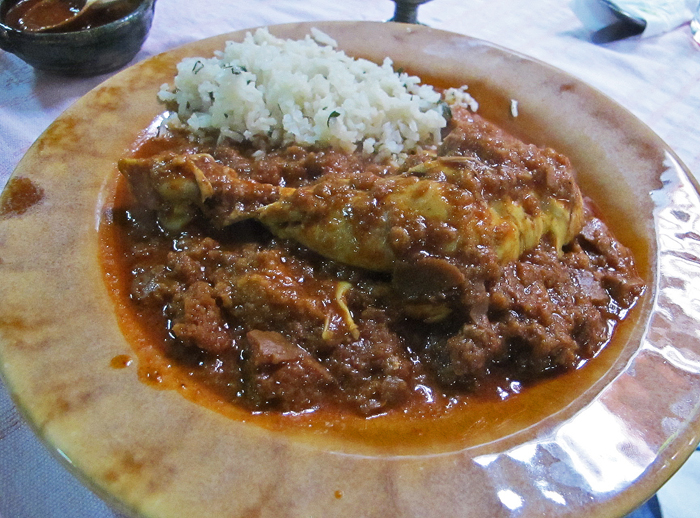
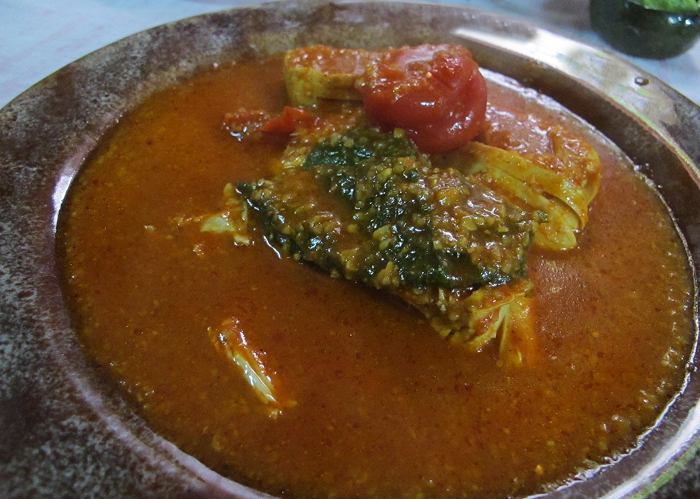
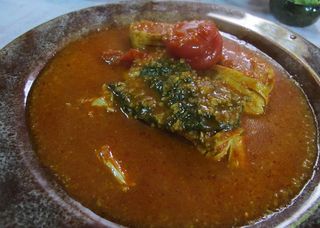
    Pre-hispanic segueza de pollo (breast of chicken in tomato and chile sauce with dried corn and hoja santa).  If I should ever be in Oaxaca and in a position to choose one last meal, this would be it.

    Hoja Santa
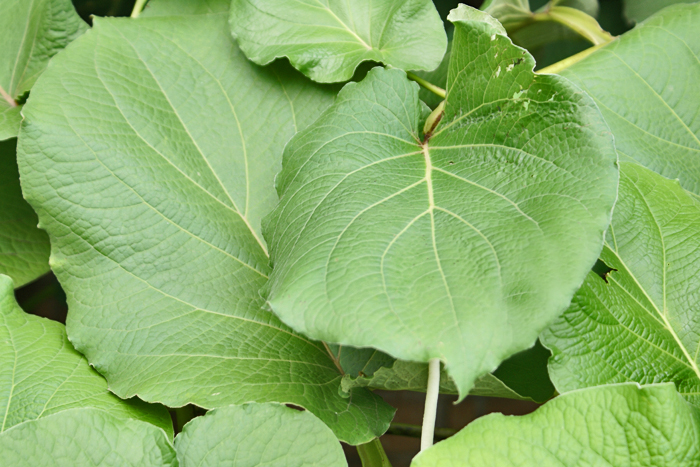
    The herb hoja santa is added to the sauce just before serving and gives a delicate anise flavor to the segueza de pollo.
    Zaachila Jitomate Riñón
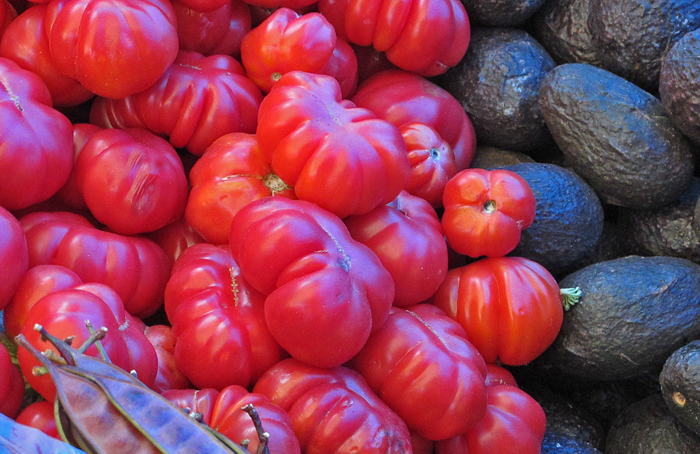
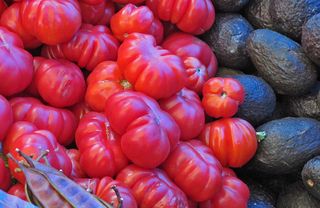
    Oaxaca's heirloom jitomate riñón (kidney-shaped tomatoes) is used for creating the intense and deeply tomato-flavored sauce for the segueza.   
    Altar Casera Preciosa Sangre de Cristo
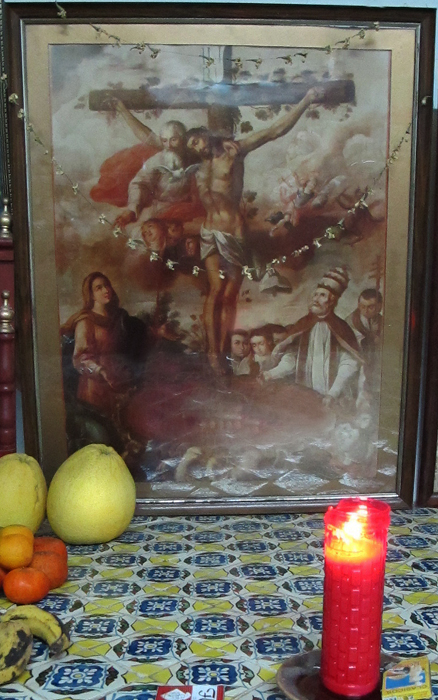
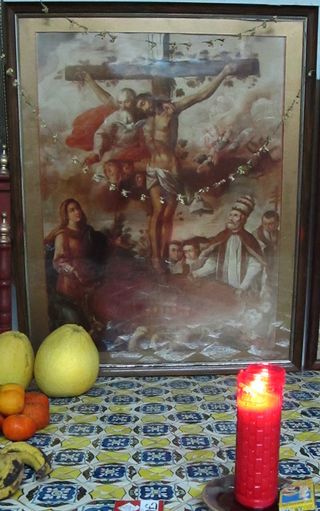
    When we finished our meal, the Mendoza sisters and doña Clara invited Mexico Cooks! to visit their private kitchen altar, devoted to the Preciosa Sangre de Cristo (Precious Blood of Christ), whose feast day is a major holiday in Teotitlán del Valle and for whom the parish church is named.  The home altar has offerings of seasonal fruits as well as perpetually-burning candles.

    Mexico Cooks! will go back to Oaxaca, back to Teotitlán del Valle, and back to Restaurante Tlamanalli.  After all, I want to visit my new sister–she's a constant inspiration and the best Oaxacan cook I know.

    Looking for a tailored-to-your-interests specialized tour in Mexico? Click here: Tours.
  • Oaxaca De Mis Amores :: Mexico Cooks! (Finally) Falls in Love

    Santo Domingo Through the Window
    La bella Lula'a…beautiful Oaxaca, as said in the indigenous Zapotec language. You are looking through a window toward the Capilla del Rosario (Chapel of the Rosary) dome and bell tower, part of the Templo Santo Domingo.

    Oaxaca Santo Domingo San Pedro Sonríe
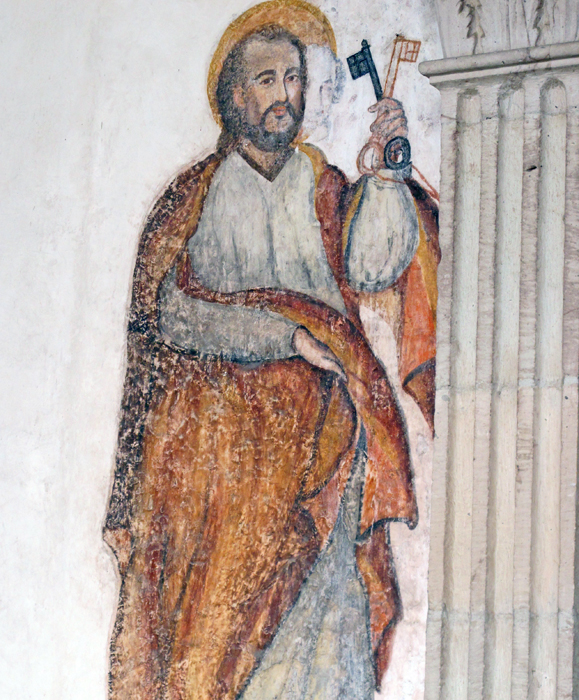
    This image of St. Peter (easy to identify because he is almost always depicted holding the keys of the kingdom) in Oaxaca's Templo Santo Domingo wears a tiny but knowing smile: he gets to live in Oaxaca!

    Mexico Cooks! has visited Oaxaca and written several times about the city and its attractions, about the interesting differences of the city's markets from those of long-familiar central Mexico, the palate-tease of regional foods, a dream made real in another Oaxaca town.  I had a good time, several times.  But it didn't hit me, the loving lightning bolt of Oaxaca didn't strike me, until my most recent (notice I don't say last) trip to the city.

    Oaxaca Mercado 20 de noviembre Mandarinas
    Winter is mandarina (tangerine) season in Mexico.  These, vendor-stacked in pyramids outside Oaxaca's Mercado 20 de noviembre, caught late January light and presto! they turned into still life magic.

    Those non-descript nouns and pallid adjectives (attractions, interesting) in the first paragraph tell the tale of how I felt about Oaxaca, until now. Where's the punch?  The truth is, I just didn't get the thrill of Oaxaca, no matter how many visits I made.  And then this time: YOWZA!  I got it–or better said, it got me.  Oaxaca, how could I have been so blind? 

    Templo Sta María de Tule
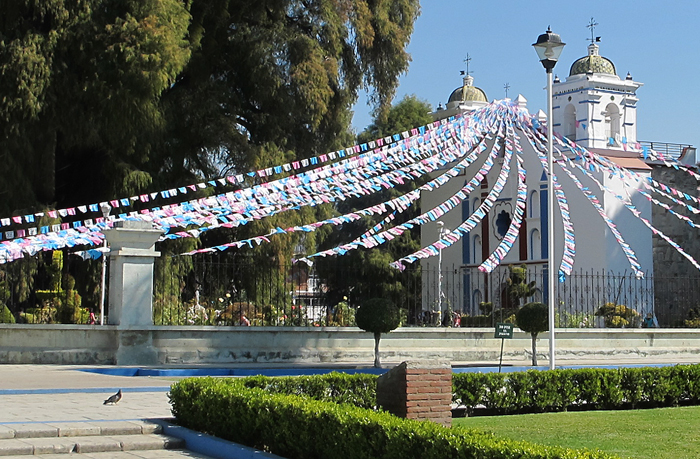
    Templo Santa María de la Asunción (Church of St. Mary of the Assumption), the town parish in Santa María del Tule, just outside the city of Oaxaca. A small part of the famous ahuehuete tree, more than 2,000 years old, is visible on the left side of the photo. 

    Santa María de Tule
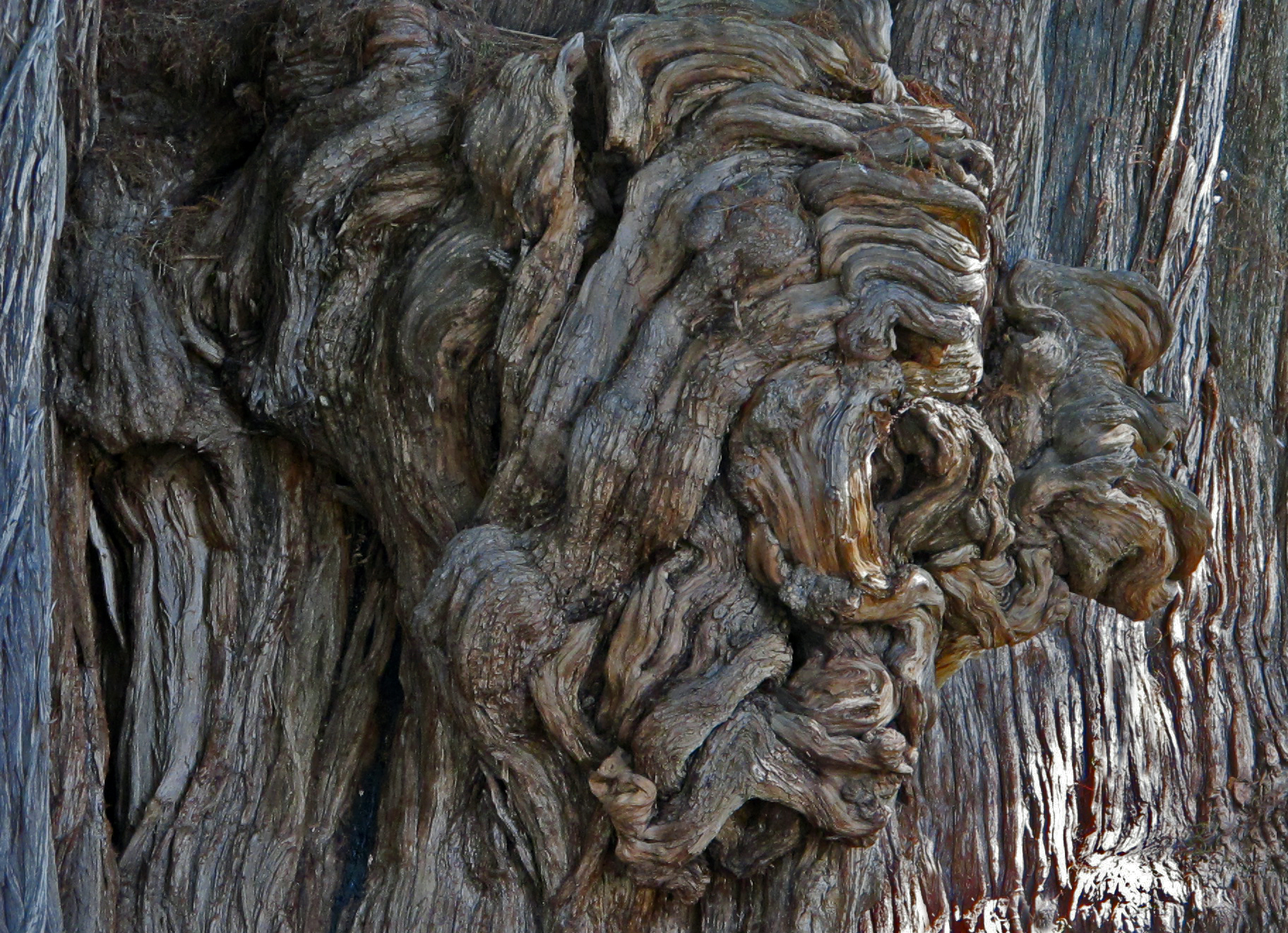
    The photo shows a knot more than five feet in diameter on the trunk of the ancient and enormous ahuehuete tree at the town Santa María de Tule.  The knots have names–they're called everything from 'the elephant' to 'Carlos Salinas's ears'.  At one time people believed that this behemoth was actually several trees, but it has been proven to be only one trunk measuring more than 30 feet in diameter. 

    What I once thought about Oaxaca has always been like at first sight, and second sight, and third, and so on.  It's been similar to going to the movies with a friend and then POW, out of the blue, right between the eyes, it's so long just friends, you're panting for a goodnight kiss.  

    Oaxaca Mercado 20 de noviembre Limpiando Frijol
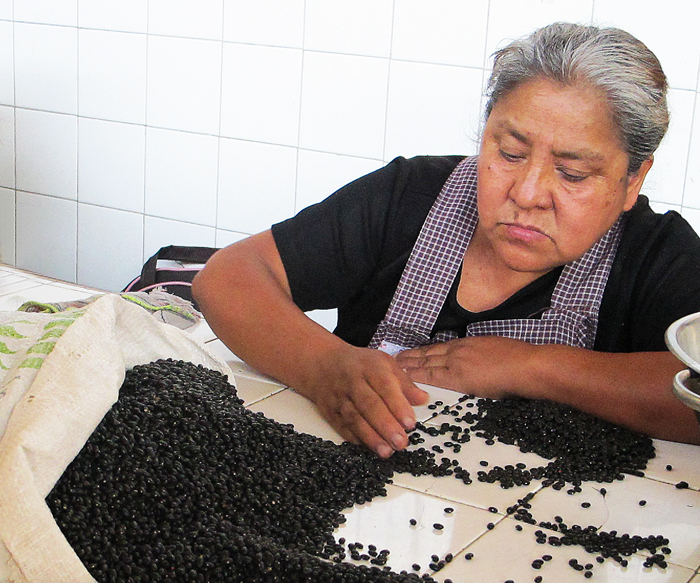
    This woman, who sells dried chiles, beans, and spices at Oaxaca's Mercado 20 de noviembre, is cleaning frijol (dried black beans).  You can see the white costal (large bag) at the left side of the photo.  She picks out as many stones and twigs as she can find, but once you get the beans home, you'll need to sort through them again.  Note: dried beans of any kind for sale in a market are called frijol.  Once you cook them, they are frijoles.

    Oaxaca Piedritas de Frijol
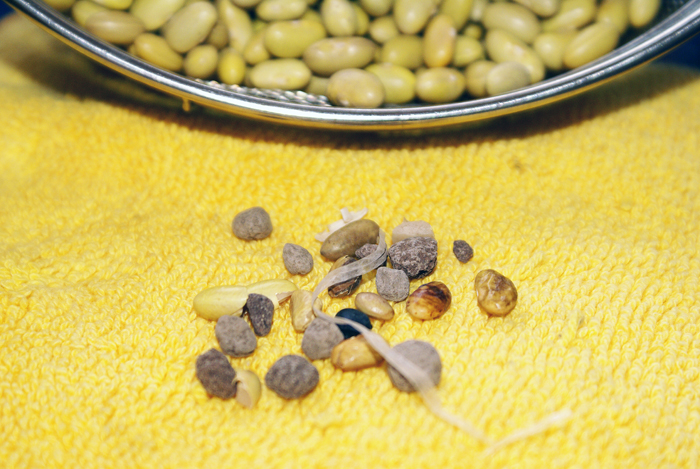
    These stones and pieces of debris are typical of what you might find in any kind of newly purchased beans, whether from a bag you bought at a supermarket or bulk beans from a market.  The beans in the photograph above are peruanos (so-called Peruvian beans).

    Oaxaca Chapulines
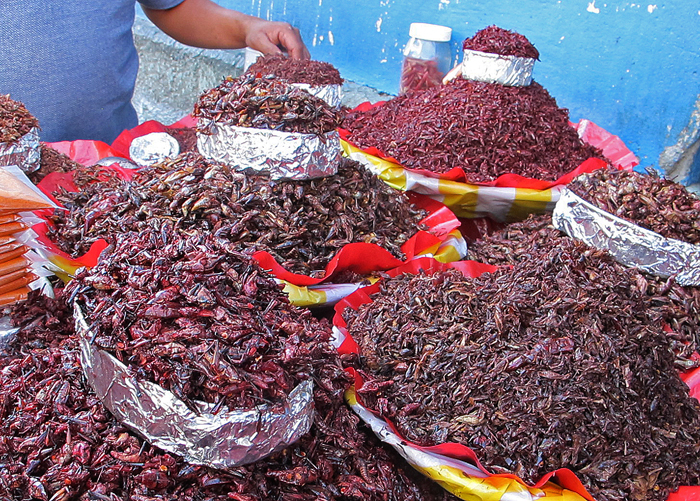
    This market stand is loaded with chapulines (grasshoppers), an iconic snack from Oaxaca.  Seasoned with garlic or chile, these are really delicious.  Mexico Cooks! prefers the tiny ones (at the top of the photo) to the larger sizes.

    What changed?  Not the city, surely.  Oaxaca is a timeless glory.  This trip, for reasons I can't explain, my heart and mind were entirely open to receive the city's gifts.  

    Oaxaca La Olla 3 Verduras
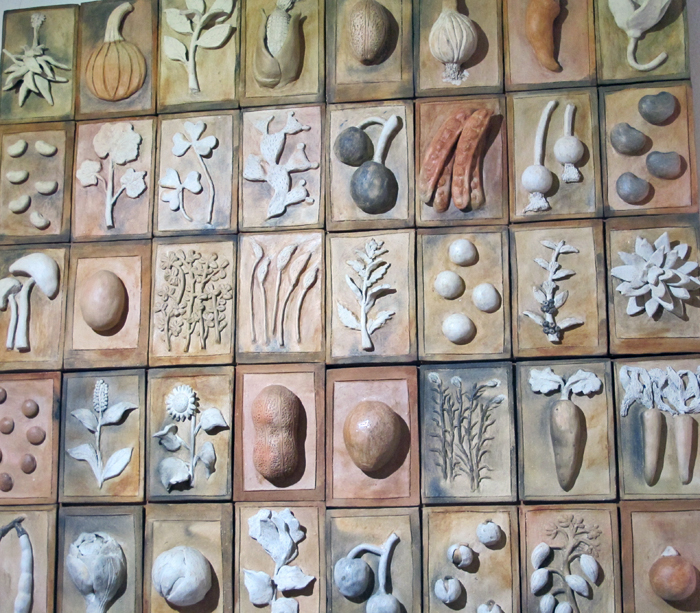
    Wall of bas relief vegetables at my friend Pilar Cabrera's Restaurante La Olla, Calle de la Reforma 402, Col. Centro.  

    Oaxaca Carne Asada Mercado 20 de noviembre 2
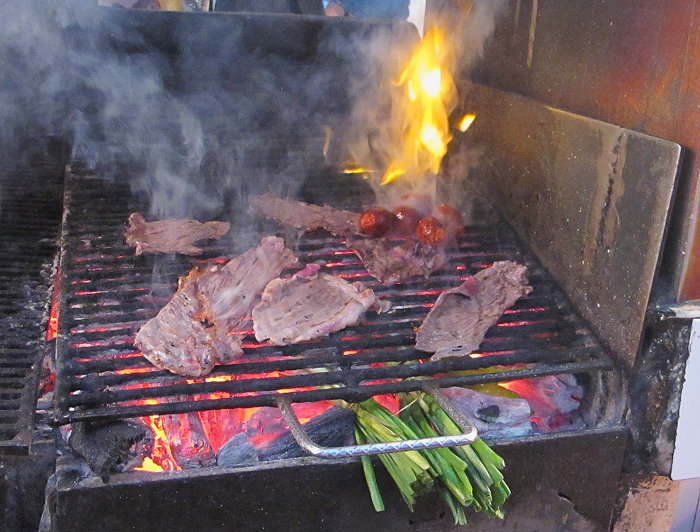
    One stand in the famous callejón (alley) of carne asada (grilled meat) at Mercado 20 de noviembre.  From the late afternoon moment that we saw this long hallway, lined as it was on both sides with carne asada stands and tables filled with ravenous carnivores, we knew this would be the spot for comida (Mexico's midday meal) the next afternoon. 

    Oaxaca Carne Asada Mercado 20 de noviembre
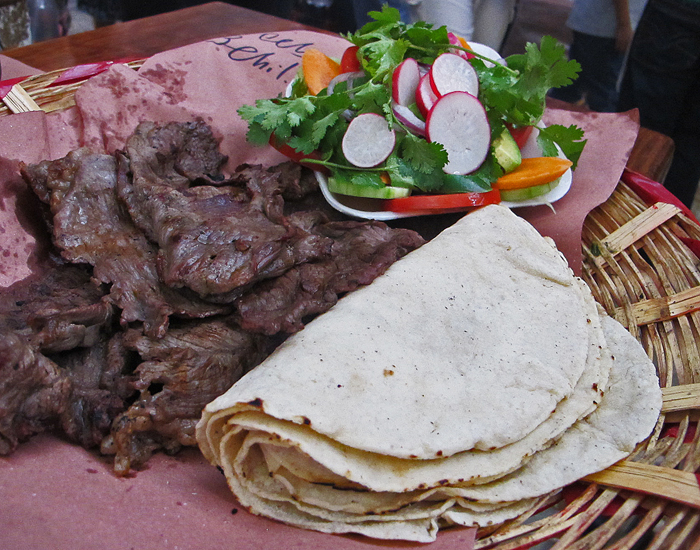
    Our basket of tender grilled beef, hot tortillas, and a spritely salad.  The side dishes we ordered–nopales, guacamole, grilled onions, the salad pictured above, and several others–disappeared just as fast as the kilo of carne asada and the pile of tortillas.  Three of us ate and drank our fill for just about $20.00 USD.

    Oaxaca La Teca Molotes de Plátano Macho
    One of my personal favorite Oaxaca restaurants is the Istmo de Tehuantepec's La Teca, owned by the marvelous Sra. Deyanira Aquino.  As part of another day's many-course main meal, friends and I shared these four molotes de plátano macho (small, sweetly ripe plantain croquettes) topped with crema de mesa (table cream) and queso fresco (fresh cheese), dividing the last one into smaller and smaller pieces so that one of us did not hog the whole thing–although each of us would have!

    Paletas en Celofán
    Paletas (in this case, lollipops) stand ready to welcome you to Oaxaca.  For me, just for today, these represent the sweetness, color, variety, and delight that Oaxaca have to offer.

    Come with me next week as we journey just outside the city of Oaxaca to make a new friend, a sister-soul of the cocina mexicana (the Mexican kitchen). I can't wait to introduce you; you'll love her just as much as I do.

    Looking for a tailored-to-your-interests specialized tour in Mexico? Click here: Tours.

  • Witness to Life: The Rebozo in Mexico :: El Rebozo en México, Testigo de la Vida

    Agustina en la Calle
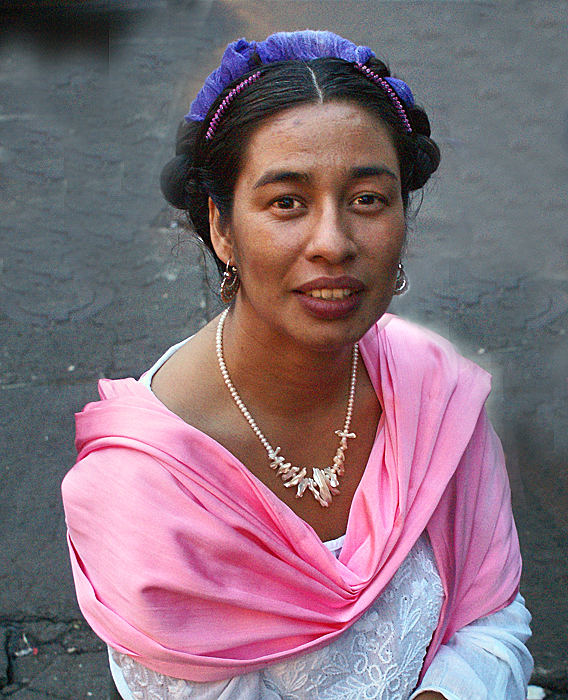
    Lovely young Agustina in her pink silk rebozo (long rectangular shawl).

    A friend recently gave me a copy of an old and anonymous Mexican poem, written in Spanish, in homage to the rebozo.  The rebozo's importance to Mexican women cannot be exaggerated: from swaddled infancy to shrouded death, a rebozo accompanies our women throughout their days.  It is at once warmth, shade, infant's cradle, cargo-bearer, fancy dress, screen for delicious flirtation, and a sanctuary from prying eyes.

    I hope you enjoy my translation.

    Rebozo con Guitarra
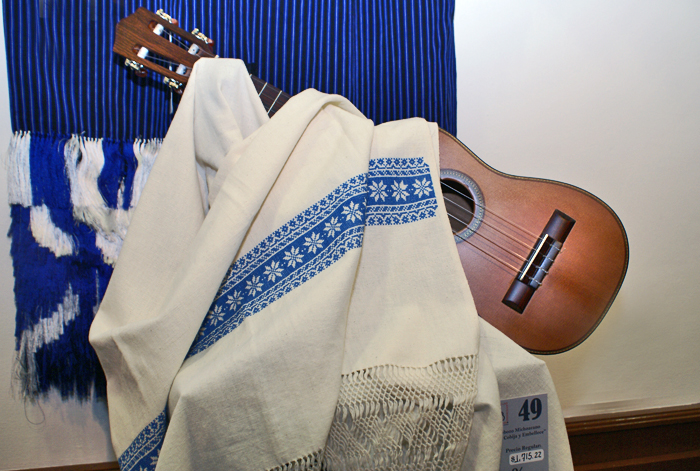
    Michoacán-made rebozos and guitar, on exhibit in Morelia.  Note the elaborate fringes on both rebozos.

    My Rebozo

    Rummaging through my closet one fine day
    I found this garment—my old rebozo!
    How long had it been resting there?
    Even I can’t say exactly.
    But seeing it brought back so many memories
    Tears clouded my eyes and fell one by one as I held
    My beloved rebozo!

    Mamá e Hija, 12 de diciembre
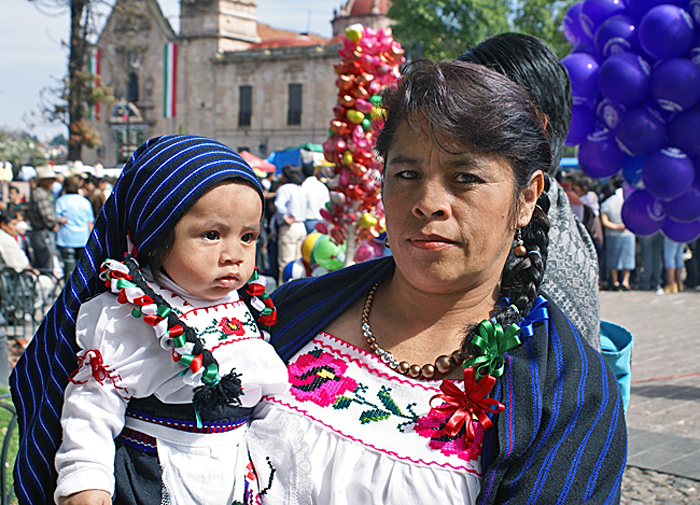
    Mother and infant daughter wear matching rebozosFiesta de Nuestra Señora de Guadalupe, Morelia, Michoacán 2010.

    What a faithful friend you have been.
    Shall we relive just an instant of that far-distant past?
    When I first showed you off, you were so beautiful, so new,
    With your lively color and flowing fringe
    Your reflection gleamed in the mirror like the morning star!

    Paracho Tejedores Aranza
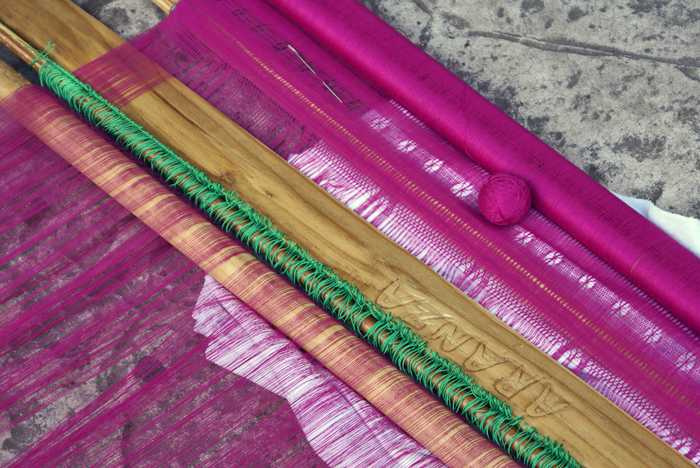
    Fine lace rebozo still on the loom, from the Reboceros de Aranza (Aranza Rebozo Weavers Cooperative).

    Come on, come on, let me fling you over my heart
    The way I did in bygone years,
    Next to this heart that disappointment has turned to ash!
    Don’t you remember that beautiful blouse I wore,
    Embroidered with poppies and carnations?
    Don’t you remember all my triumphs and successes,
    And my flounced skirt, so full of its pretty sequins, beads, and glitter?

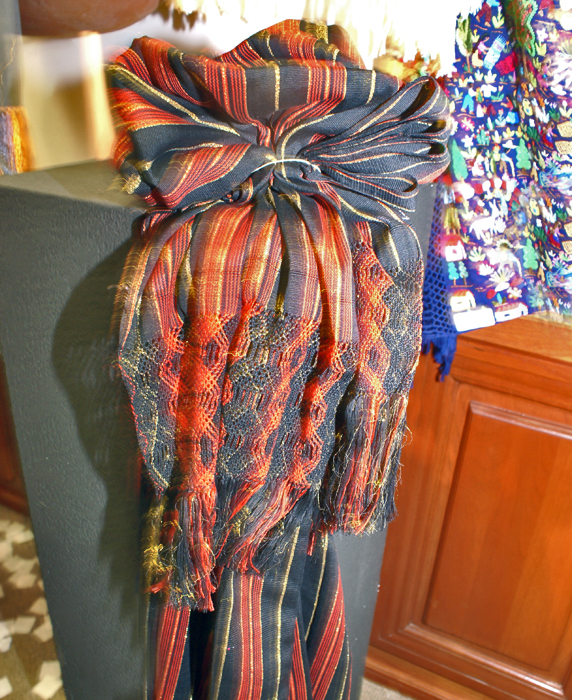
    Rebozo con Fleca Lavanda
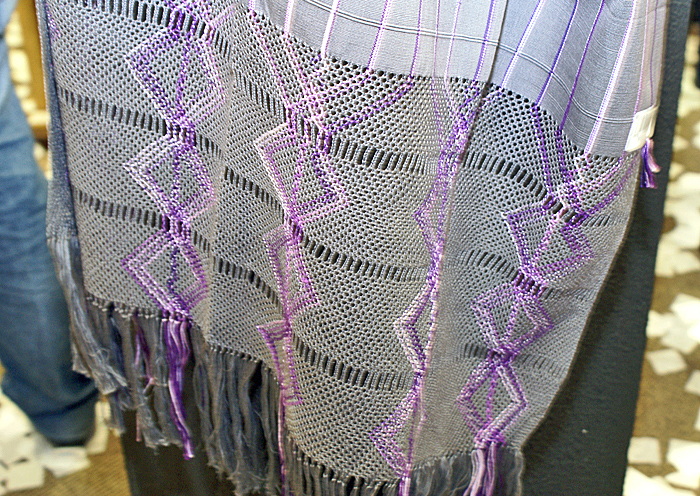
    Lavender and white rebozo with elaborate fringe.

    See, tightened to the span of my narrow waist and
    Crossed just so over my straight young back
    Showing off my fresh round breasts,
    With two vertical parallel lines.
    We stepped out to the beat of those long-ago songs,
    That dance that determined my life.
    Your fringes hung down just so!
    And the two of us formed one soul.

    Rebozo Negro y Rojo
    Finely woven black and red rebozo.

    How was it that I wanted him?  You know!
    Rebozo, you heard first how I loved him!
    Your fringes were hopeful prisoners of my teeth
    While I heard the soft slow songs of love
    Oh perverse rebozo, unfaithful friend!
    You were my confidante and my hiding place
    You pushed me, burning, into romance
    Wrapped in your fringes as if they were cherished arms.

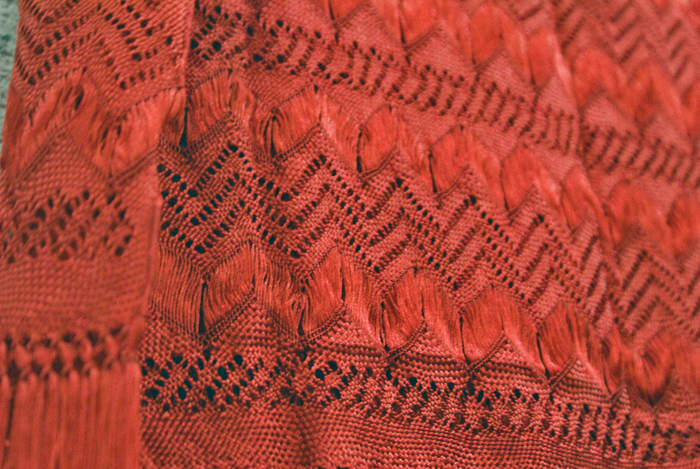
    Rebozo Rojo Rojo
    Intricately patterned deep red rebozo.

    But what’s this I see!
    An ugly hole
    That looks like a toothless mouth
    Bursting out into furious laughter.
    You laugh at my romantic memories?
    You make fun of my long gone triumphs?
    You know that the one who loved me has forgotten me
    And that my soul, just like my love, is sacked and plundered?

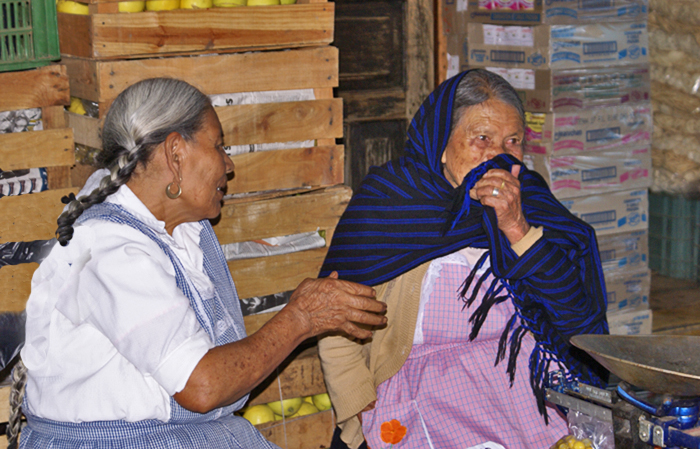
    Comadres  Patzcuaro
    Two elderly women share a secret joke in Pátzcuaro, Michoacán.

    And you—you aren’t even a shadow of what you were
    And because we don’t remember what we have been
    We are betrayed!  Old!  Faded!
    I’ll throw you in a box with other trash—
    You, who are a traitor and so worn out!
    How strange and how complicated
    Just like you, I also betrayed—sometimes–in little ways!
    Those sweet lies and silly nonsense
    That made so many of my yesterdays happy.

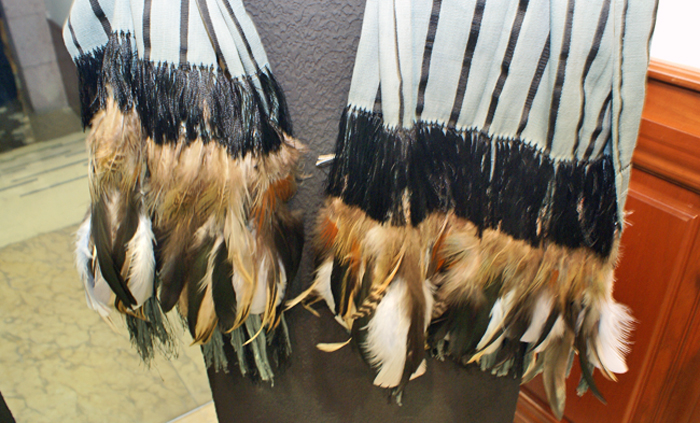
    Rebozo con Plumas
    White and black rebozo fringed with feathers.

    Laugh, rebozo!  Don’t you see that I’m laughing–not angry?
    The tears that spring from these eyes
    Are just laughter, nothing more.  I’m not crying, I’m laughing!
    But how can I be laughing, when I hate you so?
    Let your mantel cover my head
    The way it did in days long past, when I was possessed
    By a kiss so strong, so violent.

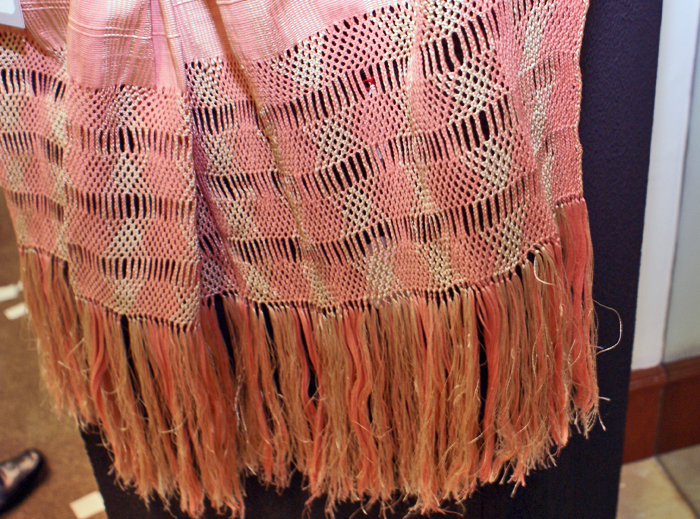
    Rebozo Oro y Salmón
    Gold and salmon rebozo de gala (fancy dress).

    No!  I will not throw you away, old rebozo!
    You have a soul like mine
    A Mexican woman's soul, wild, unmanageable
    That will not bend even when faced with death itself!
    I will fold you up and keep you in the closet
    And there, like a holy relic,
    My heart will once again put on
    Your flowing fringe.

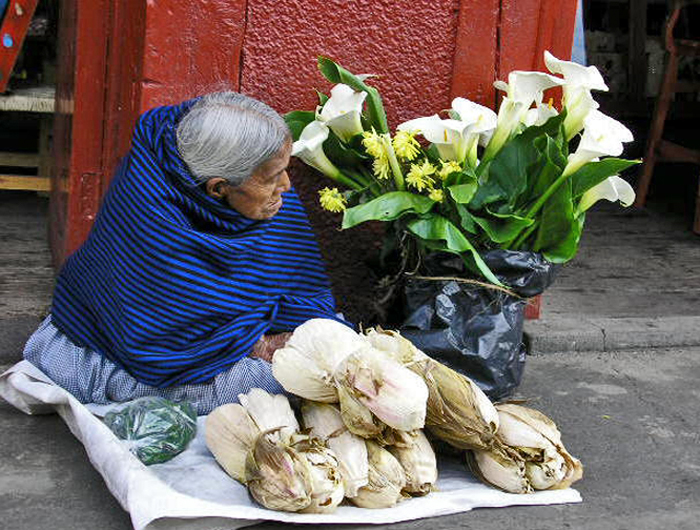
    Viejita con Flores
    Elderly flower seller, Pátzcuaro, Michoacán.

    Looking for a tailored-to-your-interests specialized tour in Mexico? Click here: Tours.
  • Comida Mexicana para La Cuaresma: Special Mexican Food for Lent

    Ash Wednesday, which marks the beginning of Lent, was March 5, 2014.  The following article has been very popular as a reference since it was first published on Mexico Cooks! in 2009.  So many people want to know what we eat in Mexico when we're not eating meat!  Enjoy…and buen provecho!

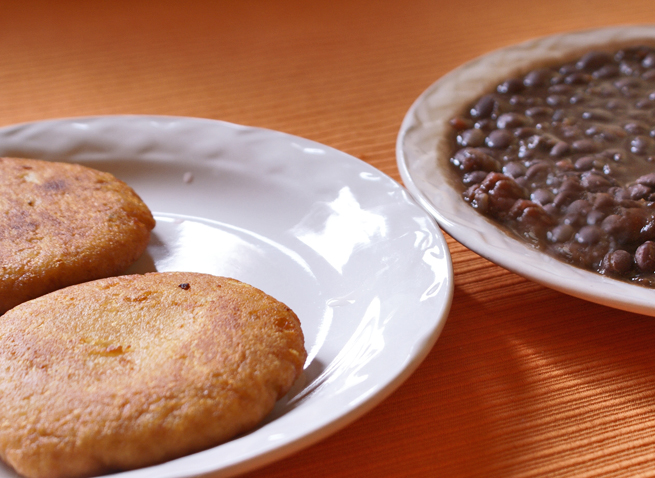
    Torta de Papa con Frijolitos Negros
    Tortitas de papa (potato croquettes, left) and frijoles negros (black beans, right) from the south of Mexico are ideal for a Lenten meal.

    Catholic Mexicans observe la Cuaresma (Lent), the 40-day (excluding Sundays) penitential season that precedes Easter, with special prayers, vigils, and with extraordinary meatless meals cooked only on Ash Wednesday and on the Fridays of Lent.  Many Mexican dishes–seafood, vegetable, and egg–are normally prepared without meat, but some other meatless dishes are particular to Lent. Known as comida cuaresmeña, many of these delicious Lenten foods are little-known outside Mexico and some other parts of Latin America.

    Many observant Catholics believe that the personal reflection and meditation demanded by Lenten practices are more fruitful if the individual refrains from heavy food indulgence and makes a promise to abstain from other common habits such as eating candy, smoking cigarettes, and drinking alcohol. 

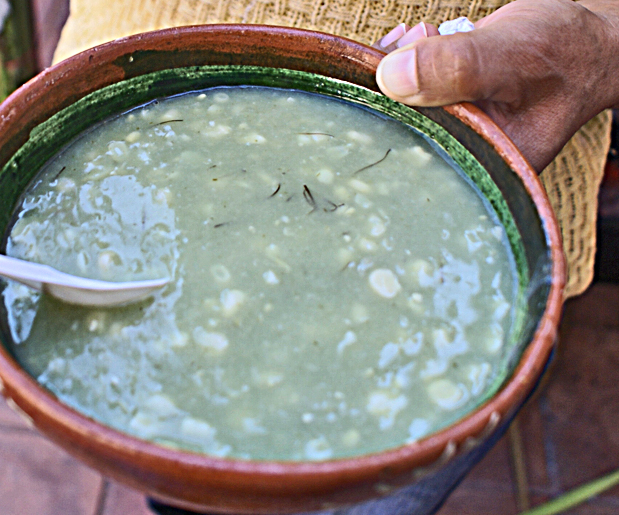
    Atole de Grano
    Atole de grano, a Michoacán specialty made of tender corn and licorice-scented anís, is a perfect cena (supper) for Lenten Fridays.

    Ash Wednesday, February 22, marked the beginning of Lent in 2012.  Shortly before, certain food specialties began to appear in local markets.Vendors are currently offering very large dried shrimp for caldos (broths) and tortitas (croquettes), perfect heads of cauliflower for tortitas de coliflor (cauliflower croquettes), seasonal romeritos, and thick, dried slices of bolillo (small loaves of white bread) for capirotada (a kind of bread pudding).

    Romeritos en Mole
    This common Lenten preparation is romeritos en moleRomeritos, an acidic green vegetable, is in season at this time of year.  Although it looks a little like rosemary, its taste is relatively sour, more like verdolagas (purslane).

    Tortas de Camarón
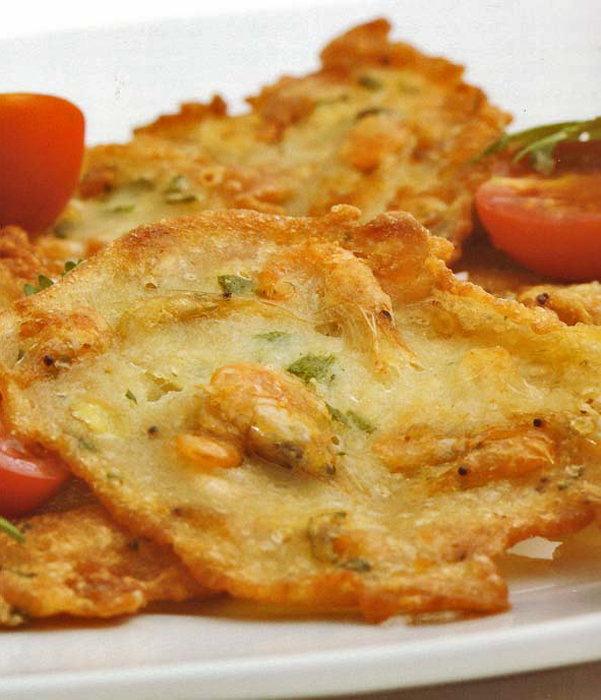
    You'll usually see tortitas de camarón (dried shrimp croquettes) paired for a Friday comida (midday meal) with romeritos en mole, although they are sometimes bathed in a caldillo de jitomate (tomato broth) and served with sliced nopalitos (cactus paddles).

    Huachinango Mercado del Mar
    During Lent, the price of fish and seafood in Mexico goes through the roof due to the huge seasonal demand for meatless meals.  These beautiful huachinango (red snapper) come from Mexico's Pacific coast.

    Tortita de Calabacita
    Tortita de calabacita (little squash fritter) from the sorely missed Restaurante Los Comensales in Morelia, Michoacán.  Mexico Cooks! featured the restaurant (the name means 'The Diners') in October 2009.  Less than a year after our interview with her, Señora Catalina Aguirre Camacho, the owner of Los Comensales since 1980, became too elderly and incapacitated to continue to operate her wonderful restaurant.  This dish is wonderful for a Lenten supper.

    Trucha Zitácuaro
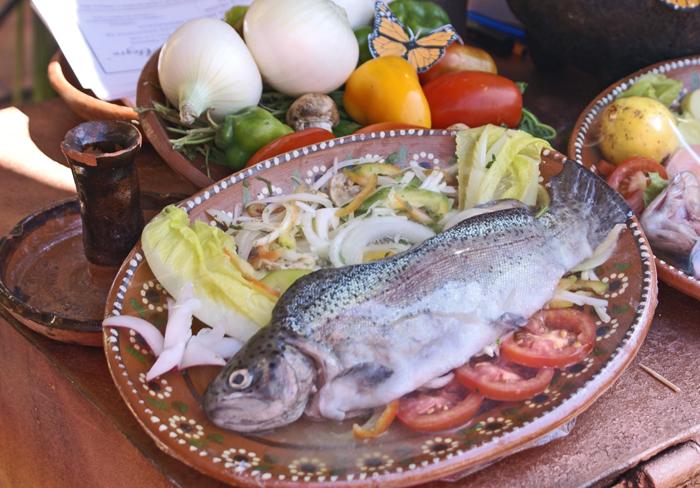
    Chef Martín Rafael Mendizabal of La Trucha Alegre in Zitacuaro, Michoacán, prepared trucha deshuesada con agridulce de guayaba (boned trout with guava sweet and sour sauce) for the V Encuentro de Cocina Tradicional de Michoacán held in Morelia in December 2008.  The dish would be ideal for an elegant Lenten dinner.

    Plato Capirotada
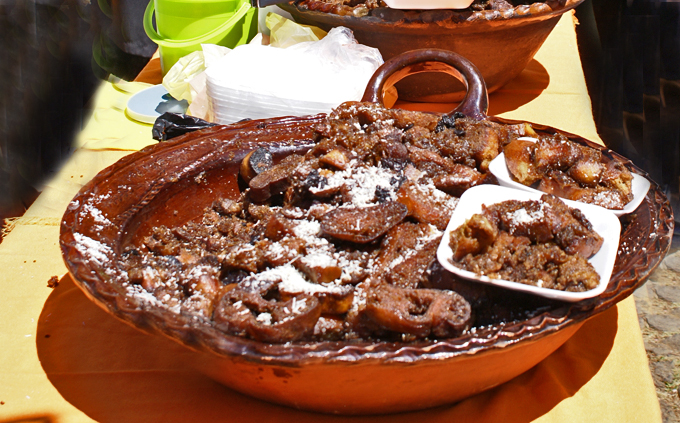
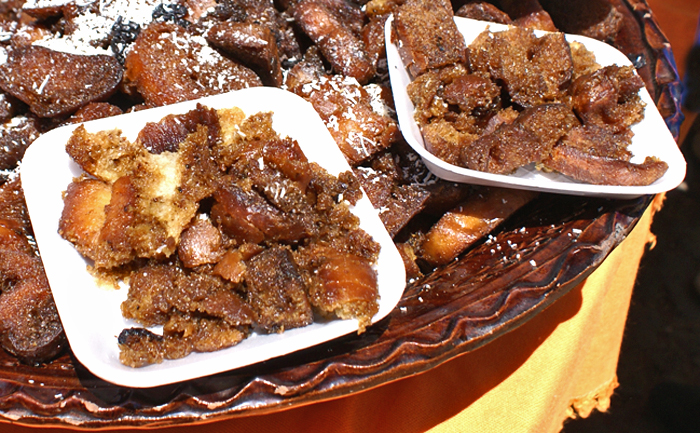
    Capirotada (Lenten bread pudding) is almost unknown outside Mexico.  Simple to prepare and absolutely delicious, it's hard to eat it sparingly if you're trying to keep a Lenten abstinence! 

    Every family makes a slightly different version of capirotada: a pinch more of this, leave out that, add such-and-such.  Mexico Cooks! prefers to leave out the apricots and add dried pineapple.  Make it once and then tweak the recipe to your preference–but please do stick with traditional ingredients.

    CAPIROTADA

    Ingredients
    *4 bollilos, in 1" slices (small loaves of dense white bread)
    5 stale tortillas
    150 grams pecans
    50 grams prunes
    100 grams raisins
    200 grams peanuts
    100 grams dried apricots
    1 large apple, peeled and sliced thin
    100 grams grated Cotija cheese
    Peel of one orange, two uses
    *3 cones piloncillo (Mexican brown sugar)
    Four 3" pieces of Mexican stick cinnamon
    2 cloves
    Butter
    Salt

    *If you don't have bolillo, substitute slices of very dense French bread.  If you don't have piloncillo, substitute 1/2 cup tightly packed brown sugar.

    A large metal or clay baking dish.

    Preparation

    Preheat the oven to 300°F.

    Toast the bread and spread with butter.  Slightly overlap the tortillas in the bottom and along the sides of the baking dish to make a base for the capirotada.  Prepare a thin syrup by boiling the piloncillo in 2 1/2 cups of water with a few shreds of cinnamon sticks, 2/3 of the orange peel, the cloves, and a pinch of salt.

    Place the layers of bread rounds in the baking dish so as to allow for their expansion as the capirotada cooks.  Lay down a layer of bread, then a layer of nuts, prunes, raisins, peanuts and apricots.  Continue until all the bread is layered with the rest.  For the final layer, sprinkle the capirotada with the grated Cotija cheese and the remaining third of the orange peel (grated).  Add the syrup, moistening all the layers  little by little.  Reserve a portion of the syrup to add to the capirotada in case it becomes dry during baking.

    Bake uncovered until the capirotada is golden brown and the syrup is absorbed.  The bread will expand as it absorbs the syrup.  Remember to add the rest of the syrup if the top of the capirotada looks dry.

    Cool the capirotada at room temperature.  Do not cover until it is cool; even then, leave the top ajar.

    Platos Servidos Capirotada
    Try very hard not to eat the entire pan of capirotada at one sitting!

    A positive thought for the remainder of Lent: give up discouragement, be an optimist.

    Looking for a tailored-to-your-interests specialized tour in Mexico? Click here: Tours. 
  • Stencil Graffiti: Art and Politics on Mexico’s Walls

    Bush Come...

    "Bush Eats Mexico's S**T".  San Cristóbal, Chiapas, 2006.  All photos by Mexico Cooks! unless otherwise noted.

    Looking around–really observing the flow of life–in Mexico, it's easy to see that the times, they are a-changing.  Whether you're watching the wall of a farmer's field or suddenly spying an all-but-hidden wall around an obscure corner in Mexico City, you become aware that art, both art-for-art's-sake and political art, is everywhere.  These days, street art is sometimes hand-painted but more often than not, it's a stencil.

    DF Trompe l'Oeil Rosetta
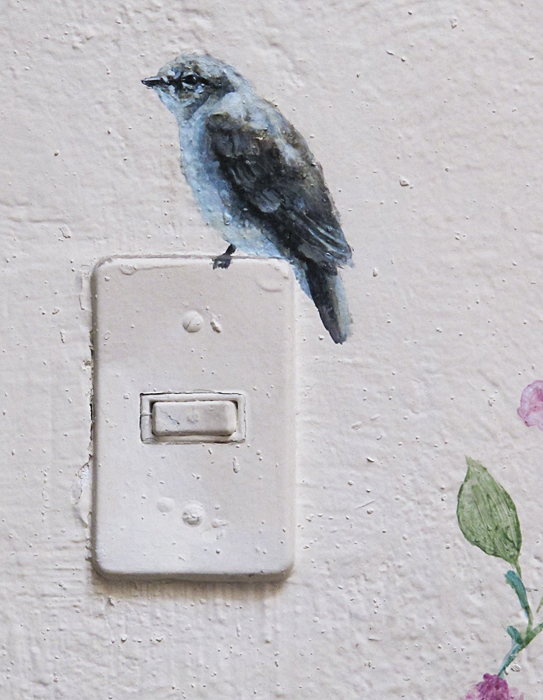
    Delicately painted by hand, this peaceful, charmingly rendered bluebird (undoubtedly the bluebird of happiness) perches quietly on a light switch at Restaurante Rosetta.  Mexico City, 2013.

    Hecho en Oaxaca
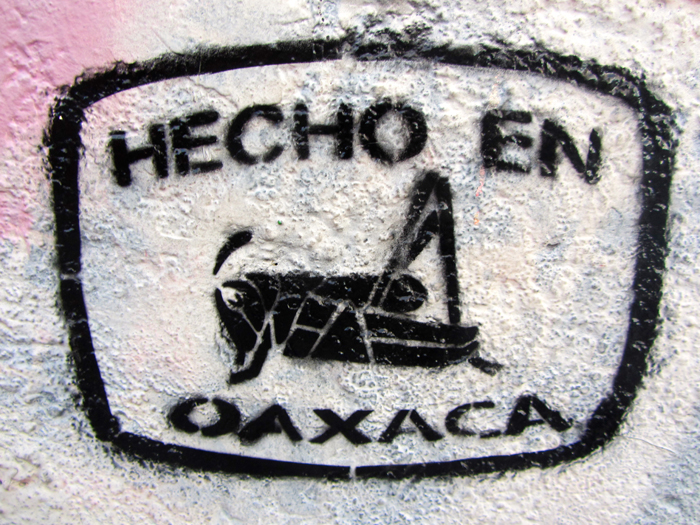
    The chapulín (grasshopper) is an icon not only of Oaxaca's gastronomy, but also of the state's cultural identity.  It's about who we are, not simply what we eat.  "Made in Oaxaca" is the slogan's translation. Oaxaca de Juárez, 2013.

    Condesa Wall Stencil Jugs
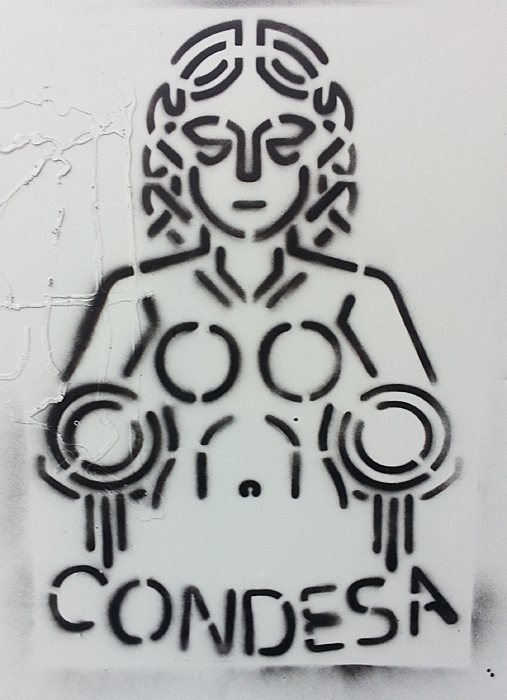
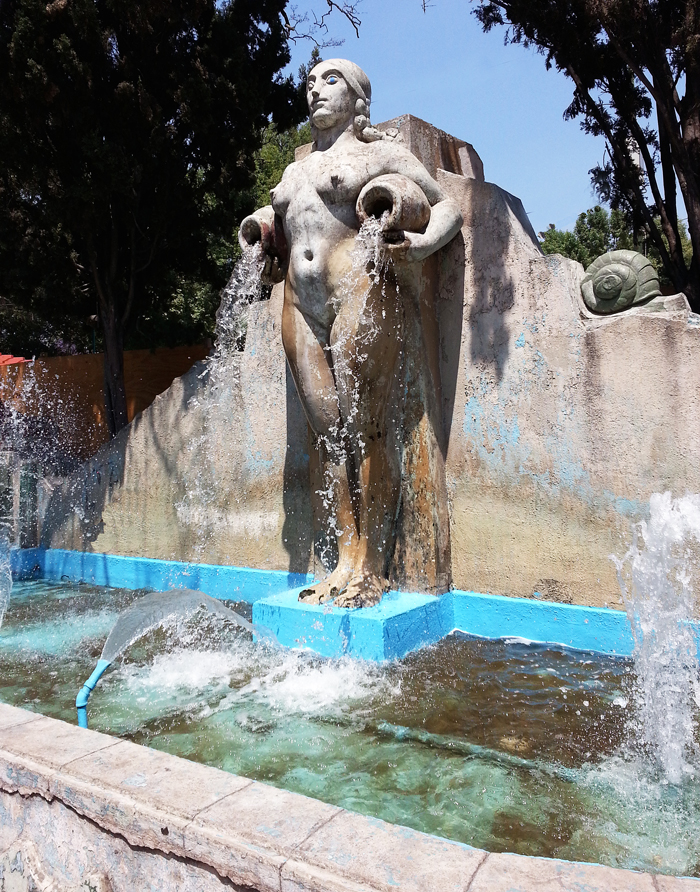
    Another icon: in this case, art imitates art.  José María Hernández Urbina's original Art Deco-era statue, Fuente de los Cántaros (Water Jars Fountain), still graces the Teatro al Aire Libre Lindbergh (Lindbergh Open Air Theatre) wall in Parque México, Colonia La Condesa. This stencilled grafito graces the same wall. Mexico City,  November, 2013.

    Jugs
    The actual fountain in Parque México.  Photo courtesy Judith McKnight.

    El Recodo Barda
    Advertising Banda El Recodo (one of Mexico's most popular), this wall and others of its genre are hand-painted calls to party hearty.  These hand-painted advertisements are ubiquitous in every Mexican state, whether in huge cities or tiny villages.  The highly skilled but minimally paid graphics artists paint these signs freehand.  Photo courtesy theatlantic.com.

    DF Grafito Calle 5 de febrero 25
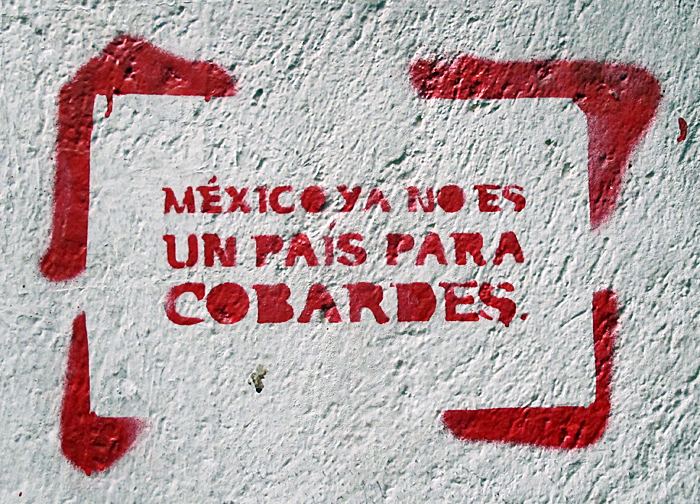
    Mexico is a country of enormous and frequently surrealistic differences.  The stereotypical meek and humble Mexican contrasts sharply with the equally stereotypical highly politicized and revolution-hungry Mexican; the polemic is often contained in the self-same individual's mind and body.  These blood-red words read, "Mexico is no longer a country for cowards."  Mexico City, April 2013.

    Barda Política
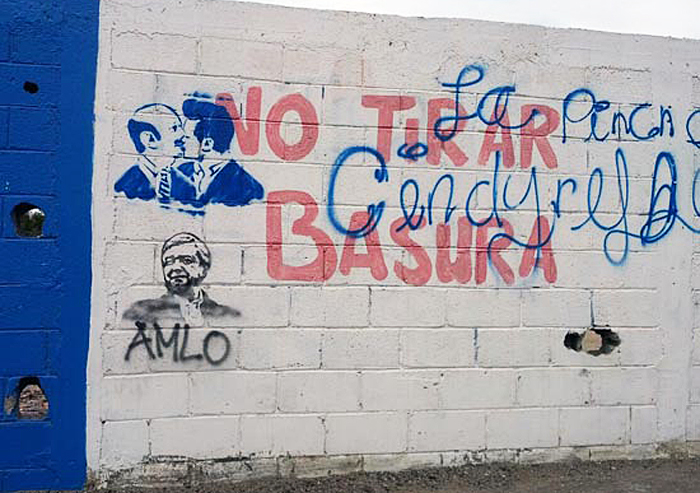
    This wall in the State of Mexico originally held a no-nonsense civic-minded slogan: No Tirar Basura (Don't Throw Your Garbage Here).  One or two waggish political commentators superimposed stencils of (top, blue) former Mexican president Carlos Salina de Gortari kissing 2012 presidential candidate Enrique Peña Nieto and (bottom, black) 2012 presidential candidate Andrés Manuel López Obrador.  No Tirar Basura, indeed. Estado de México, 2012. Photo courtesy hazmeelchinagdofavor.com.

    Portón de Cochera
    Garage door, Mexico City, March 2014.

    Oaxaca Stencil Reforma Energética

    Calls to political action are common representations in urban street art.  At the end of 2013, Mexico's federal government voted to change the Constitution to allow some privatization of Mexico's petroleum industry.  That change has been argued all along the political spectrum. Is it good for Mexico?  Is it bad for Mexico?  This stencilled poster falls into the 'bad for' column.  The bureaucratic rats have parachuted onto our oil derricks, the police show up as granaderos (shield and truncheon-bearing 'crowd control' officers), and the poster calls for revolutionary action against so-called energy reform. Oaxaca de Juárez, January 2014.

    Espirituosa
    Spirited.  Alive.  That's Mexico's graffiti, summed up in a single word on a tangerine wall.  Oaxaca de Juárez, January 2014.

    Looking for a tailored-to-your-interests specialized tour in Mexico? Click here: Tours.
  • Bazar Sábado, San Ángel, Mexico City

    Bazar Sábado 3
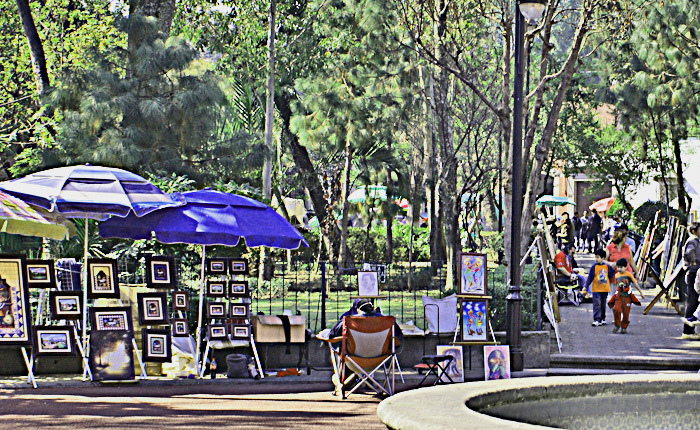
    Sun-and-shade dappled Plaza San Jacinto, Colonia San Ángel (in the southern part of Mexico City) hosts the weekly Bazar Sábado (Saturday Bazaar).

    Fonda San Angel Terraza
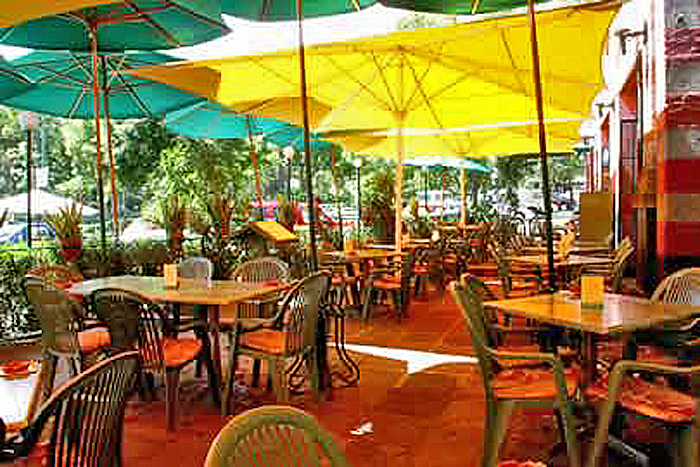
    Our favorite place for brunch at the Bazar Sábado is directly across the street from the scene in the first photo. This is the Fonda San Ángel, where the every-Saturday brunch will give you the fuel you need for shopping.  You will love it!  Photo courtesy Fonda San Ángel.

    Bazar Sábado 1
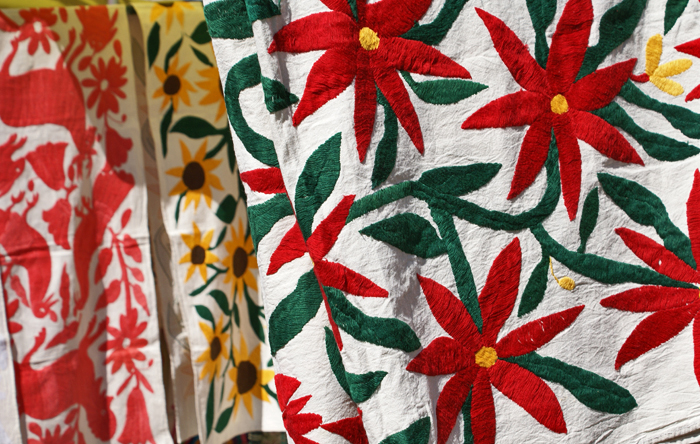
    These hand-embroidered table runners are made in the state of Guerrero.  We also saw full-size table cloths, napkins, and place mats. We bought a dozen or two fabric coasters hand-embroidered with birds, fish, and flowers.

    Bazar Sábado Napkin Rings
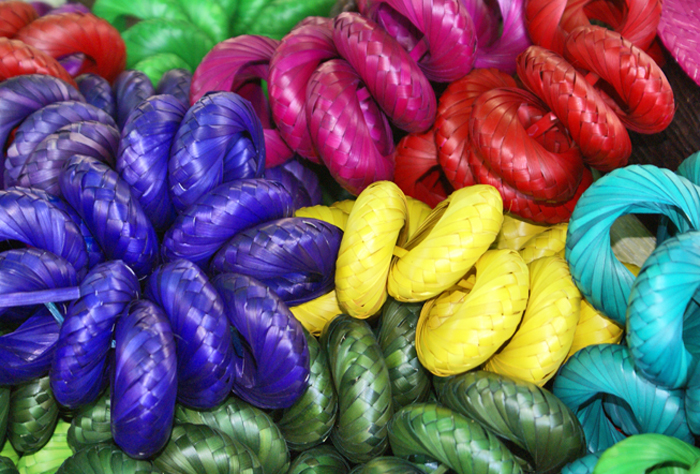
    Napkin rings to match any decorator's color combination.

    Crowds at Bazar Sábado tend to be large and shoppers are fairly aggressive.  Lots of tourists go: you'll hear Japanese, French, English, German, and a slew of other languages on the pathways of Plaza San Jacinto.  Be prepared to spend a little more money than you might in some other markets, but the atmosphere and the enormous selection of goods will give you great stories to tell back home.  Bazar Sábado is worth it!

    Bazar Sábado Cajitas
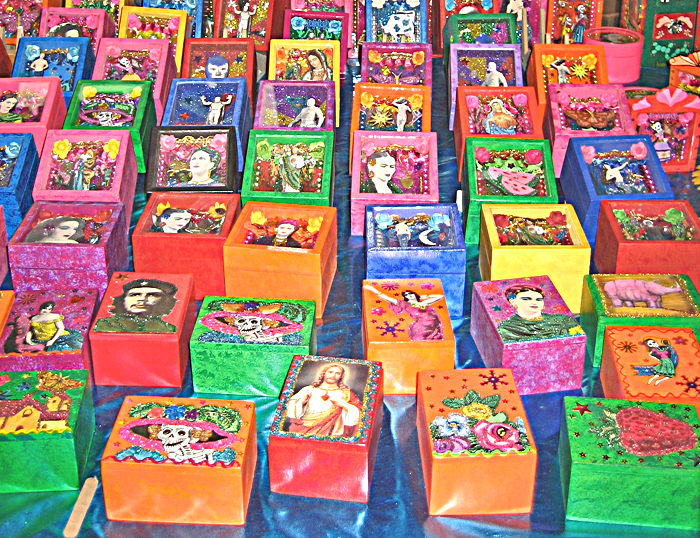
    Wooden boxes, the tops decorated with icons ranging from the sacred to the profane.  Frida Kahlo, Che Guevara, and Mexico's lucha libre (wrestling) stars are among the most popular secular images.

    Bazar Sábado Jacob's Ladders
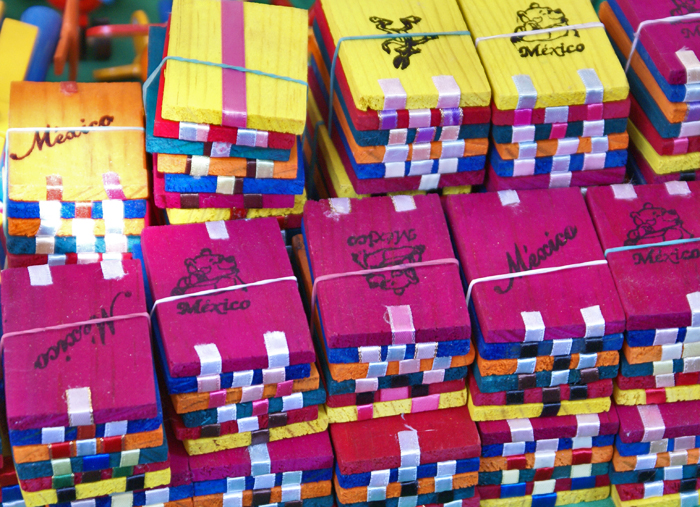
    Children's toys made of wood.  A million years ago, Mexico Cooks! knew these toys as Jacob's ladders.  Remember the sound they make?  Click, clack, click, clack, click, clack–now turn it over and start again.

    Bazar Sábado Baskets
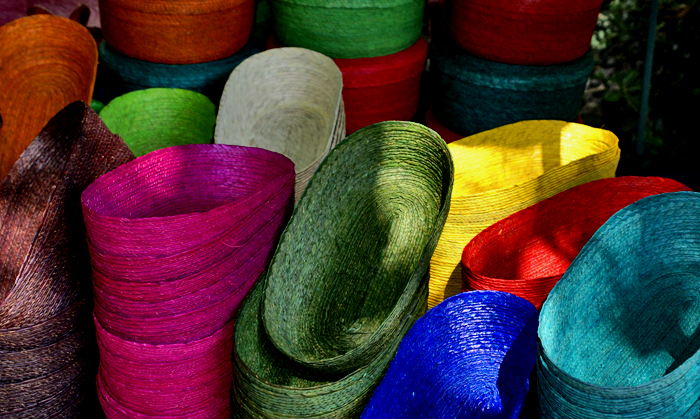
    Woven straw soft baskets to match your napkin rings.  We loved them, although ultimately we decided not to buy them.  We have a lot of baskets already.

    Bazar Sábado Olinalá Box
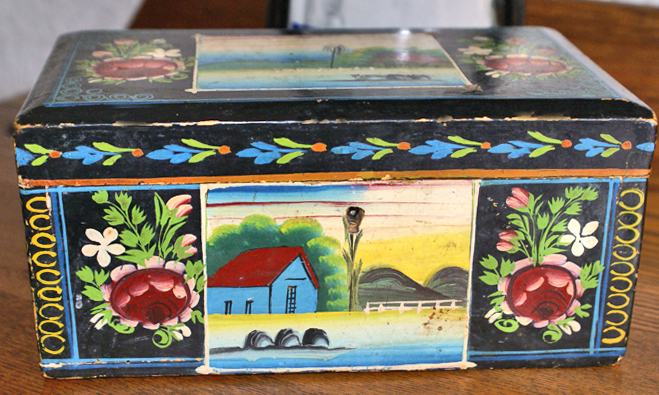
    Mexico Cooks!' antique painted box from Olinalá, Guerrero may well have been sold originally at Bazar Sábado.  Booths there still sell similar examples–new, of course.

    Bazar Sábado Títeres 
    Mira, los títeres!  He's still young enough for the excitement of these simple fantasy-animal marionettes.

    Bazar Sábado Enrique Segarra López 2
    Maestro Enrique Segarra López, one of Mexico's most famous mid-20th Century photographers, holds court on Saturdays at his booth.  It's always a joy to spend some time with him.

    Looking for a tailored-to-your-interests specialized tour in Mexico? Click here: Tours.
     

  • Fiestas Patronales (Patron Saints’ Festivals): El Señor del Rescate in Tzintzuntzan, Michoacán

    Entrada al Templo
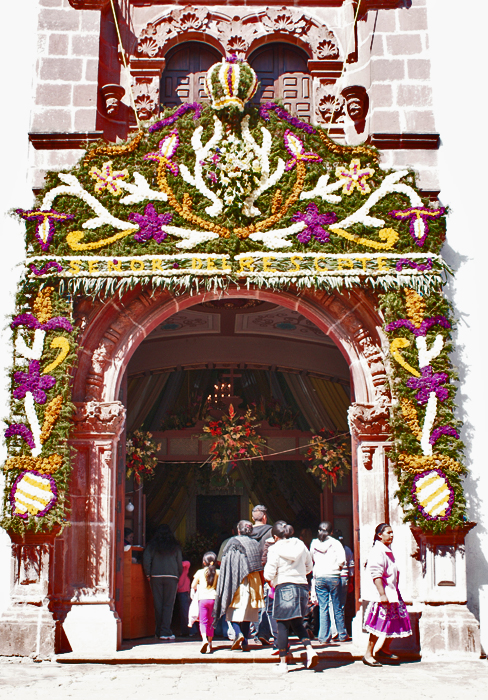
    The entrance to the Templo de San Francisco (St. Francis Church), Tzintzuntzan, Michoacán, during the February 2009 fiestas patronales (patron saint's festivities) honoring El Señor del Rescate (the Lord of Rescue). 

    The indigenous community from four regions of Michoacán (the Zona Lacustre [Lake Pátzcuaro Zone], Cañada de los 11 Pueblos [the Ravine of the Eleven Towns], Ciénega de Zacapu [marshlands of Zacapu], and the Meseta Purhépecha [Purhépecha tablelands]) arrives each year during the week prior to Ash Wednesday to give homage to their patron, El Señor del Rescate (the Lord of Rescue).  Not only do the Purhépecha gather from the four regions, people come from as far as Monterrey in Mexico's north to Oaxaca in Mexico's south.  Cars and trucks with license plates from neighboring and distant Mexican states park side by side next to vehicles from Texas, California, Minnesota, Virginia, New York, and a dozen other states north of the USA border.

    Limas Tzintzuntzan
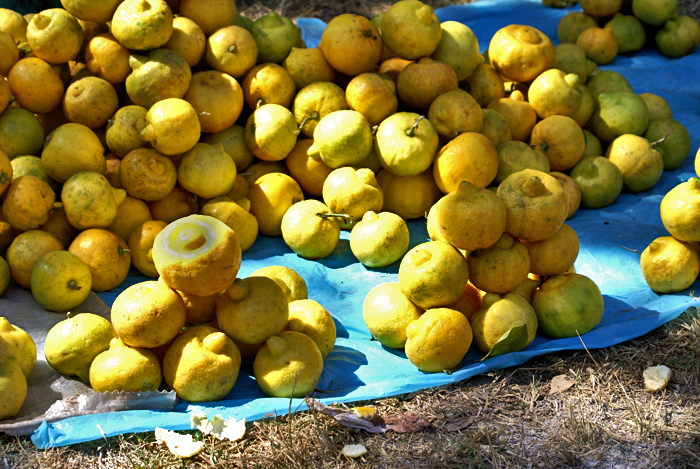
    Bishop Vasco de Quiroga and other 16th Century Spaniards are credited with introducing limas to Mexico and Michoacán.  The lima, in season at this time of the year, is used in Mexico for out-of-hand eating as well as for making agua fresca de lima (a fresh fruit drink).  Notice the round shape of this sweet, mild citrus fruit and the nipple of skin at its blossom end.  In other countries, the lima is known as the bergamot.

    Fiestas Señor del Rescate 2009
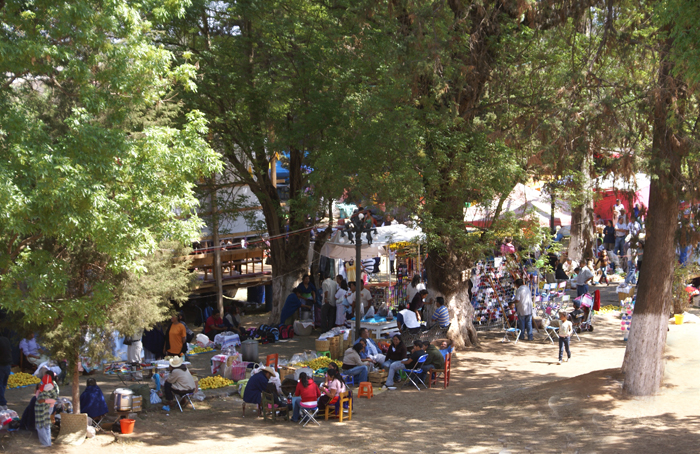
    In the Atrio de los Olivos, crowds picnic, dance, and buy or sell artesanías (arts and crafts) and regional foods in the shade of ancient olive and cypress trees.  
     
    The Atrio de los Olivos (Atrium of the Olive Trees) of Tzintzuntzan's Templo de San Francisco, ordinarily a peaceful, meditative, park-like setting, fills with the biggest home-grown excitement of the year.  Booths with traditional regional foods, particularly tamales de trigo (wheat and piloncillo [brown sugar] tamales, similar in taste and texture to bran muffins) and limas (a citrus fruit virtually unknown outside Latin America).  Sweet, not sour; round, not oval, the lima can be eaten out of hand or squeezed to prepare agua fresca de lima.

    Señor del Rescate
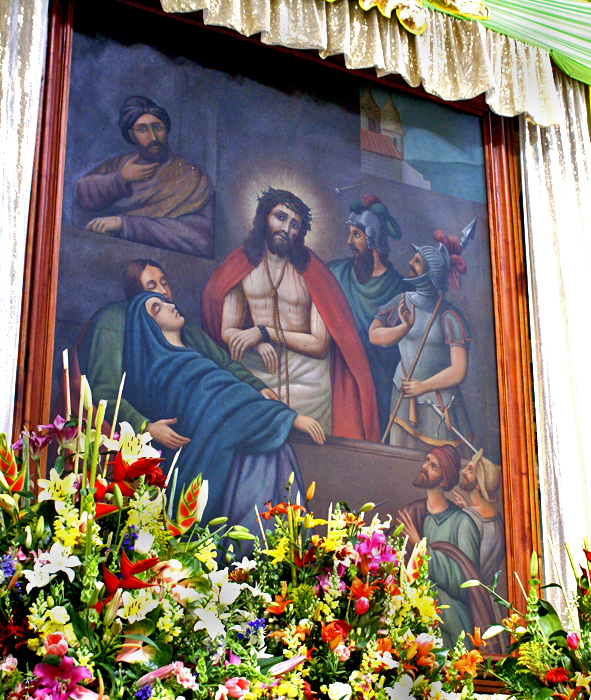
    El Señor del Rescate: Tzintzuntzan's venerated Lord of Rescue.  The original 16th Century painting burned in a church fire in 1944.  It's said that the paint colors of this painting, a copy, are taking on the deep burnished tones of the original painting.

    From the 16th to the late 19th Century, St. Francis of Assisi (the patron of the Franciscan order) was celebrated as the patron saint of Tzintzuntzan.  Late in the 1800's, the church sacristan found an old painting of Jesus hidden away in storage.  The town was under siege by a measles epidemic, and the sacristan begged permission to make a vow: if prayers to this image of Jesus put a stop to the epidemic, the sacristan himself would throw a town party, a huge party, in gratitude for the granted favor.  That party is today's Fiesta del Señor del Rescate, still going strong after more than 100 years.

    The fiesta is what's known in liturgical terms as a 'movable feast'.  It's celebrated during what is known in other towns across the world as Mardi Gras or Carnaval–the last blowout party before Ash Wednesday and the abstinence of Lent's forty days.  Here in rural Tzintzuntzan, Michoacán, El Señor del Rescate takes precedence over Carnaval.

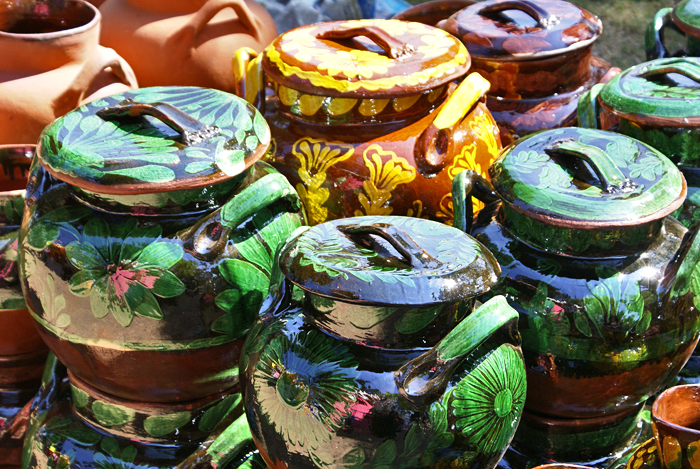
    Ollas de Barro, Tzintzuntzan
    These traditional Tzintzuntzan clay pots, for sale at the fiesta, are for cooking beans.  Look closely and you can see Mexico Cooks!' pink blouse reflected in the pots' high glaze.

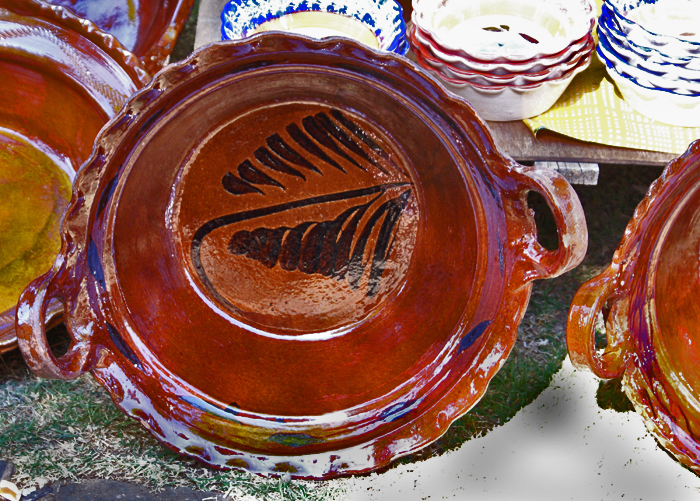
    Cazuela
    This huge, thick cazuela de barro (clay cooking vessel) measures approximately 45 centimeters (18") across the top, plus the handles.  The cazuela came home with us and is already on display in our kitchen. 

    Drummer
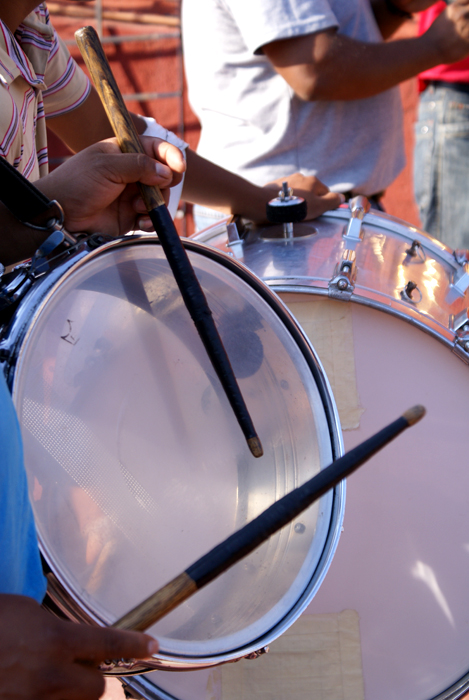
    Before we even entered the church atrium, we heard the joyous sounds of a band.  The music, from classical to the most current Mexican pop favorites, plays nearly non-stop for three days or more.  It's tempting to stop and listen before going to the church, but as we heard a woman say to her adolescent children, "Primero le echamos una visita y después venimos a escuchar la música!" ('First we pay him a visit [to El Señor del Rescate] and then we come listen to the music!') 

    All of the bands are paid by contributions from various members of community organizations, including two groups paid by the local government offices.  Traditionally, about a month before the events, the parish priest names several couples as a commission to help oversee the fiesta; these couples must have been married for 25 years before the current year's fiesta.  In addition, townspeople who live 'away'–usually in the United States–send dollars to offset the cost of other bands and general costs.

    Gorditas de Nata en el Comal
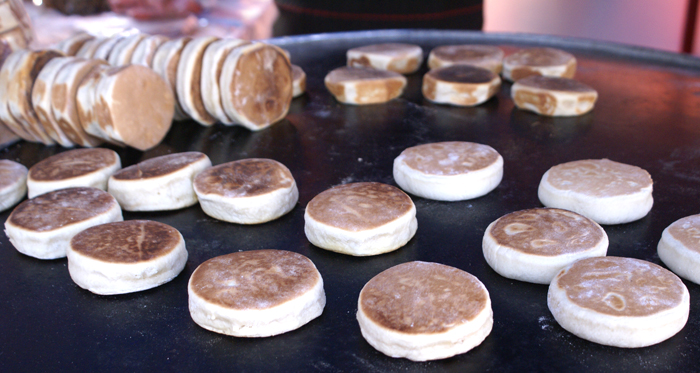
    The fragrance of gorditas de nata (cream hotcakes, about 3" in diameter) baking on a comal (griddle) is all but irresistable.  Delicious cream, sugar, and vanilla cakes, combined with the magic of a sun-dappled afternoon at a fiesta, always make Mexico Cooks! stop to get'em while they're hot.

    Little Girls
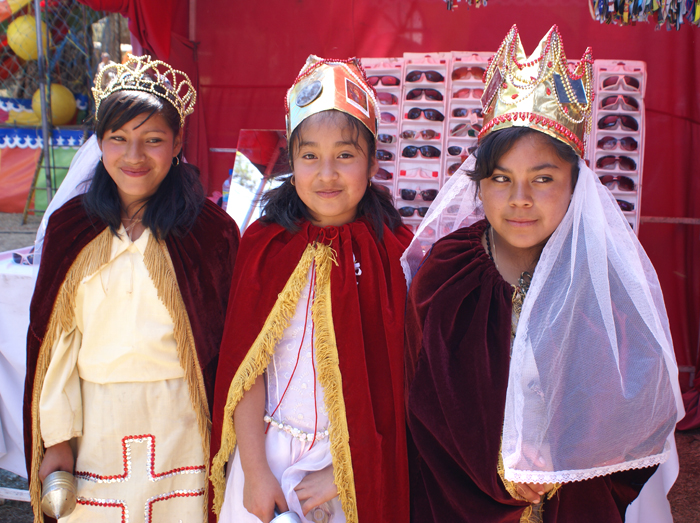
    These little girls had to be wheedled, but ultimately they let Mexico Cooks! take their picture.  They're dressed for la Danza del Señor del Rescate, which represents the fight between good and evil.  The dance features a number of characters: queens, angels, and demons.  Traditionally, girls wear beige, yellow, or white dresses, a red cape (which represents the robe Christ wears in the painting), and a crown.  The devils, of course, represent evil.  The angels represent a barrier that the devils can't pass.  During the dancing, the devils jump out at the crowds to make jokes and scare children.

    Feligreses 
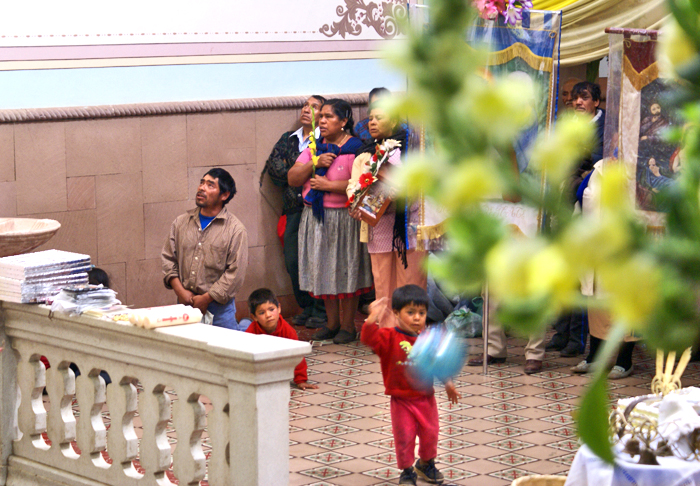
    All day, every day of the fiesta, bells ring in the church to keep evil forces away.  Hundreds of devoted pilgrims–some creeping the length of the church's center aisle on their knees–enter the Templo de San Francisco to give thanks, to ask for a personal miracle, or to be blessed by a crown placed on their heads with a prayer.  The crowns represent both the blessings of Christ who has rescued the faithful and a petition for redemption.

    We'll surely go back next year to Tinztzuntzan's Fiestas del Señor del Rescate.  Plan to join Mexico Cooks! in celebrating these enormously fun, beautiful, and ancient traditions.

    Looking for a tailored-to-your-interests specialized tour in Mexico? Click here: Tours.
  • Tamaliza (Tamales Feast) with Dear Friends on February 2: El Día de la Candelaria

    Yuri y Mundo wradio
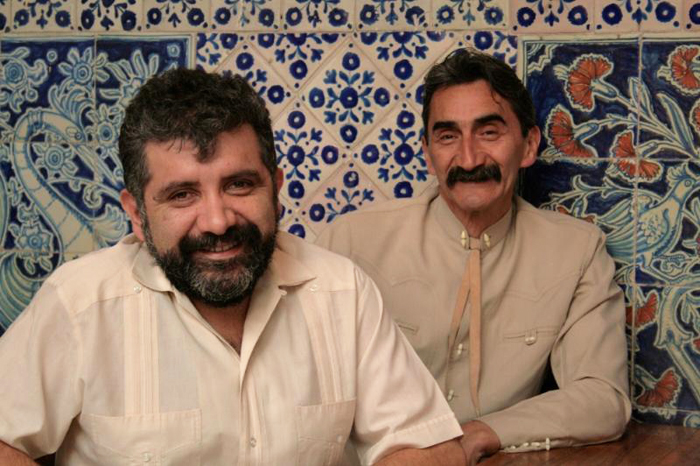
    Mexico Cooks!' dear friends Edmundo Escamilla Solís (L) and Yuri de Gortari Krauss.  Between them, Yuri and Mundo know more about Mexico's history and its cuisines than most of the rest of our friends put together.  I can't imagine that anyone would disagree. Photo courtesy wradio.com.mx. All photos by Mexico Cooks! unless otherwise noted.
    Several years ago, mutual friends introduced Mexico Cooks! to Edmundo Escamilla and Yuri de Gortari. Within minutes, we realized that we were in the presence of two of Mexico's treasures.  Far from being museum pieces or distant ruins, these men are a vibrant, living storehouse of this country's past and present.  Today, my wife and I are honored to count Mundo and Yuri among our dearest friends.  We don't see one another as often as any of us would like–they're busy, we're busy–but the moments we spend together are precious.
    Stairway, Escuela de Gastronomía
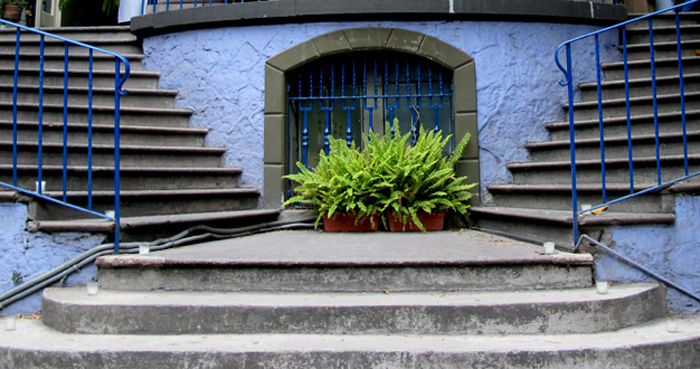
    The double stairway into the Escuela de Gastronomía Mexicana (Esgamex, School of Mexican Gastronomy), Colonia Roma, Distrito Federal. Since 1990, Yuri and Mundo have dedicated themselves to an in-depth study of Mexico's gastronomy; after running a restaurant and catering company, they founded the school in 2007.  Esgamex is unique among culinary schools in Mexico, teaching not only Mexico's regional and national cuisines, but also teaching Mexico's history, art, and culture.  Although the school offers no program leading to a culinary degree, it continues to attract students who want to learn traditional recipes from the best teaching team in the city.  

    A few weeks ago, my wife and I received an invitation from Yuri and Mundo–please come share our tamaliza (tamales party) on the night of February 2, el Día de la Candelaria (Candlemas Day).   An intimate circle of friends gathered in homage to a close friend of our hosts, who had passed away.  In her honor, we ate tamales–and more tamales–five varieties in all.

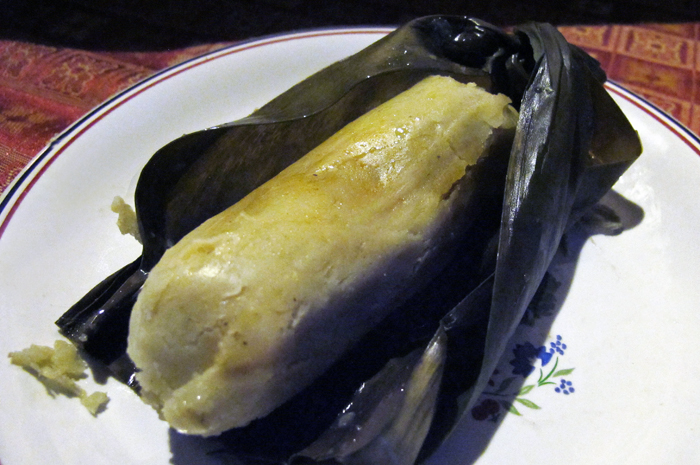
    Tamales de Cambray
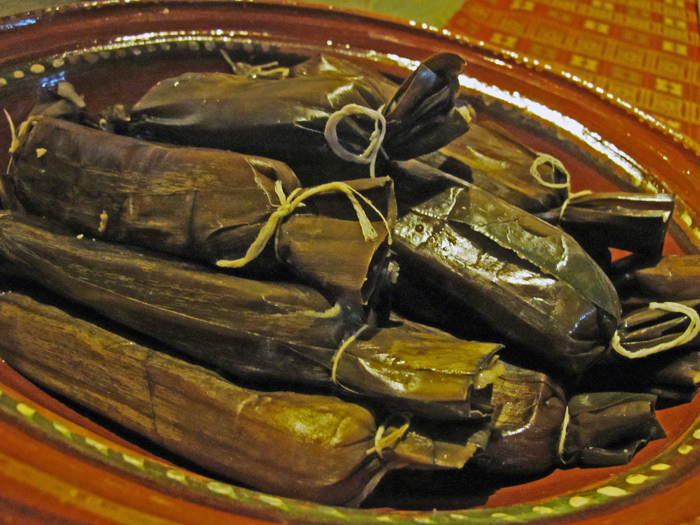
    First were tamales de cambray, from Chiapas.  These corn masa (dough) tamales, wrapped in banana leaves and steamed, were savory and delicious.

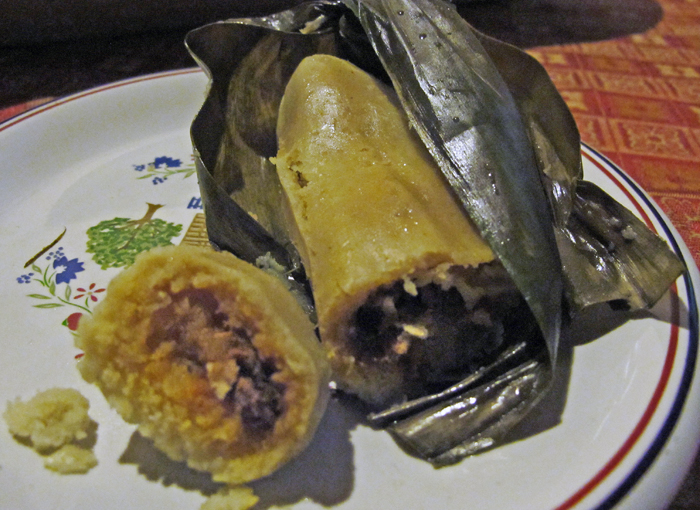
    Tamal de cambray abierto
    Tamal de cambray unwrapped.  Each tamal was small enough to leave us hungry for the ones that followed.

    Tamal de cambray dentro
    The tamal de cambray cut open to show its savory filling.

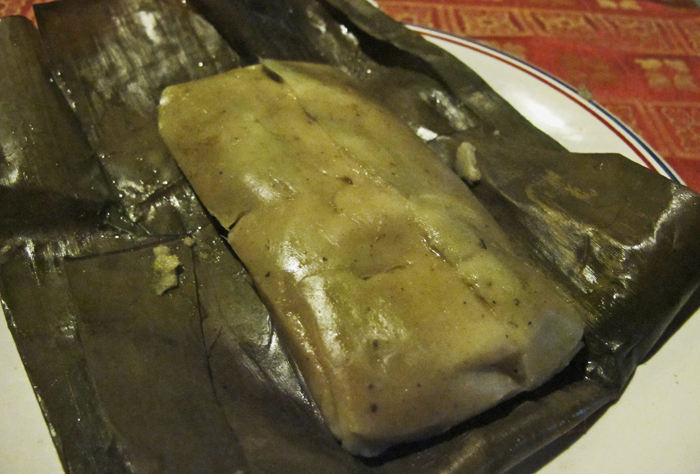
    Tamal de Cazón
    This rectangular, flat tamal de cazón is filled with flaked baby shark meat.  It's a specialty of the state of Campeche.

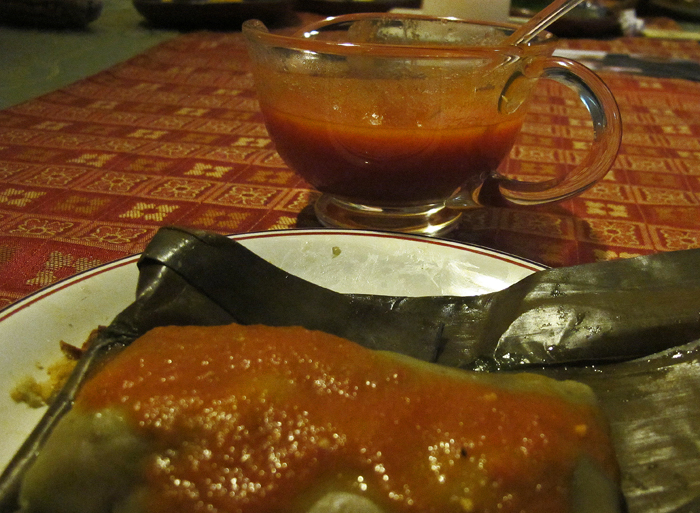
    Tamal de cazón con su salsa
    A marvelously spicy salsa made with chile habanero accompanied the tamal de cazón.

    Tamal en Hoja de Maíz
    The next three varieties of tamales looked almost identical to one another.  Each was wrapped in corn husks and steamed–but despite appearances, each was very different from the other.  The first variety was a tamal de pollo, frutas, y verduras (chicken, fruit, and vegetables) from the state of Sinaloa.  The second was our first sweet tamal of the evening.  A tamal from the state of Colima, its masa is prepared with mixed corn and rice flours as well as dried coconut.  The sweet filling is a mix of various dried and crystallized chopped fruits.

    Tamal de almendra dentro
    The last (but definitely not the least!) tamal was a tamal de almendra (almond).  The masa contains not only corn and rice flours and sugar, but also blanched, peeled, and finely ground almonds.  The almonds both sweeten and give texture to the masa.  And sweet surprise!, the tamal is filled with sweet crema pastelera (pastry cream).  If we had had one inch of space in our stomachs, we each would definitely have eaten two of these!

    [youtube=://www.youtube.com/watch?v=HonJ3sz8HOw&w=420&h=220] 
    Here's Yuri de Gortari, teaching the proper way to prepare tamales de almendra.  Even if you don't understand all of the Spanish-language instructions, you'll be fascinated by his teaching manner as well as his techniques.  And his lovely speaking voice is simply hypnotizing.

    When our group finished eating, we stayed for hours in the sobremesa–the after-dinner conversation that is frequently as delicious and nourishing as the food itself.  What better way to enjoy an evening than in the company of precious friends, sharing ideas, feelings, and loving laughter?  Next year, have a tamaliza at your home on February 2, invite your friends, and deepen your love and appreciation for one another–and of course for the marvelous cuisines of Mexico. 

    Looking for a tailored-to-your-interests specialized tour in Mexico? Click here: Tours.