Category: Mexican Tourism

  • Oaxaca Restaurant Recommendations From the Primer Encuentro de Cocineras Tradicionales! Breakfast First…

    Oaxaca Las 15 Letras Fruta 1
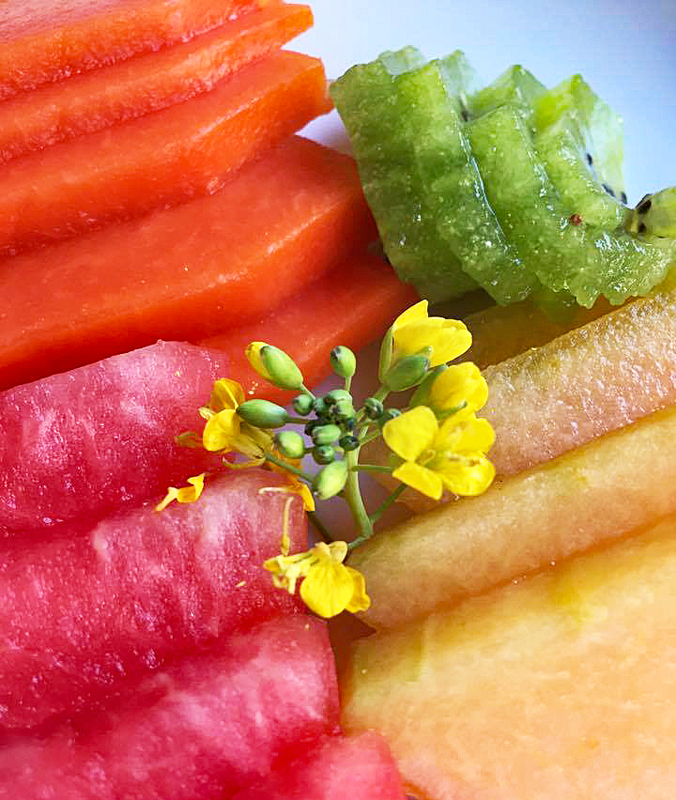
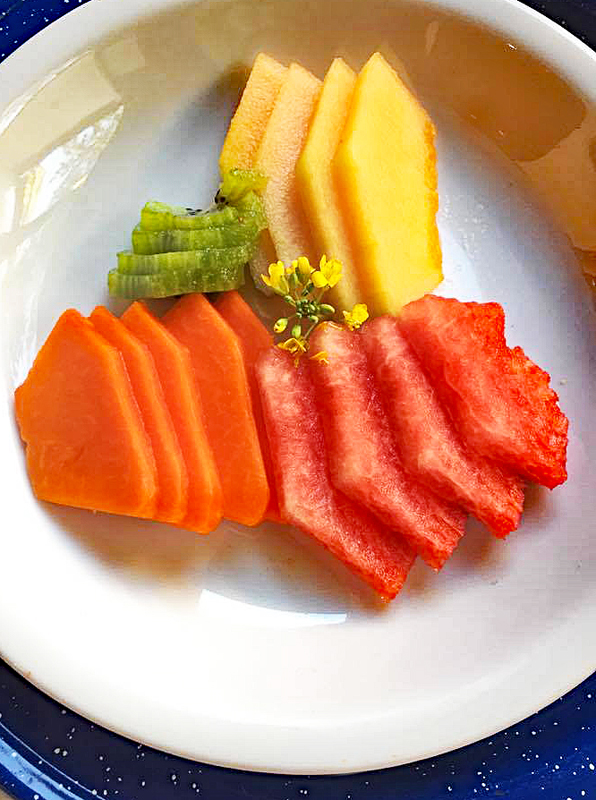
    Our first breakfast in Oaxaca at the end of April was at Restaurante Las 15 Letras (Abasolo #300, Centro Histórico, Oaxaca). We started with a seasonal fruit plate that included watermelon, papaya, kiwi, and cantaloupe.  Mexico Cooks! prefers to eat tropical fruits the typically Mexican way, with a squeeze of limón (key lime), a pinch of salt, and a sprinkle of powdered chile.  Try it that way–the sweetness of the fruit combines with the other flavors to bring a new flavor profile to your palate.

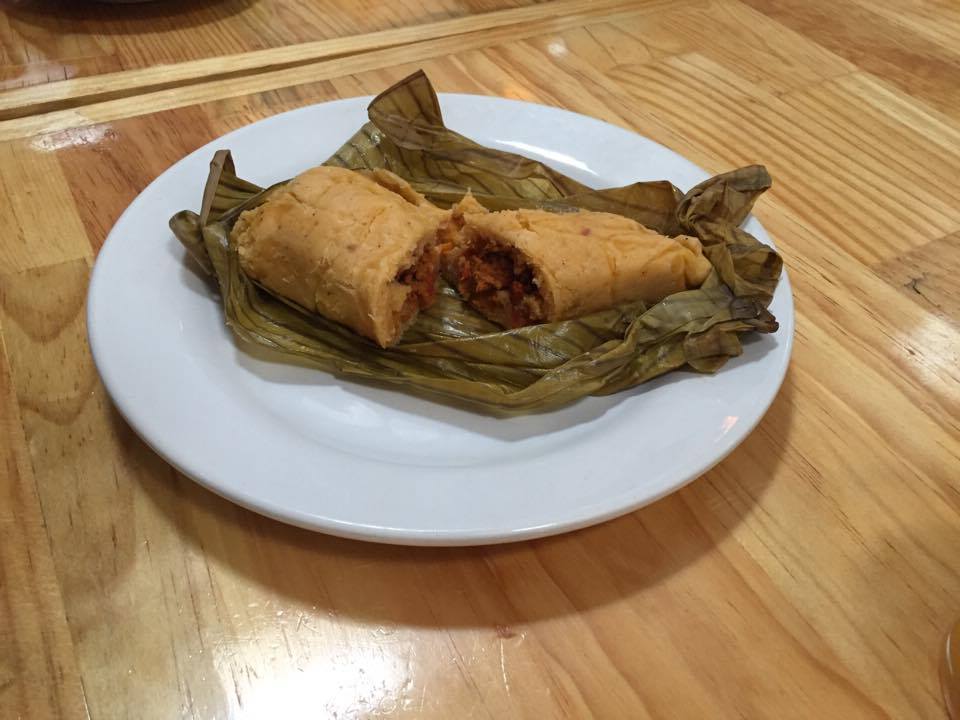
    Oaxaca Restaurantes 15 Letras Tamal
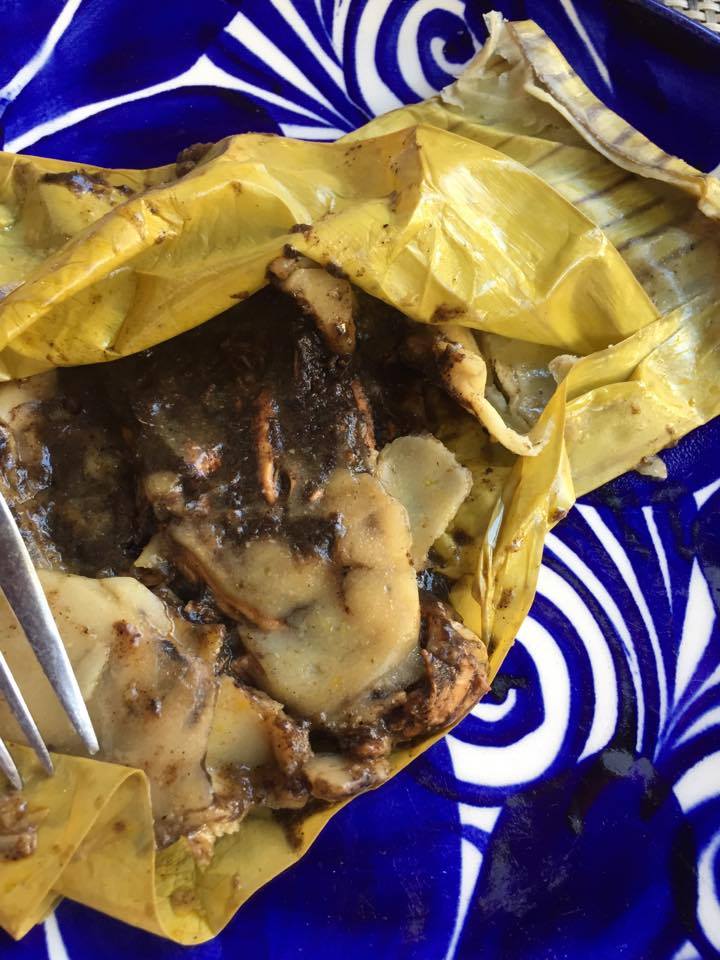
    A really marvelous tamal–as usual, wrapped in banana leaves in the Oaxacan style–followed the fruit course.

    Oaxaca Chilaquiles con Tasajo 15 Letrs
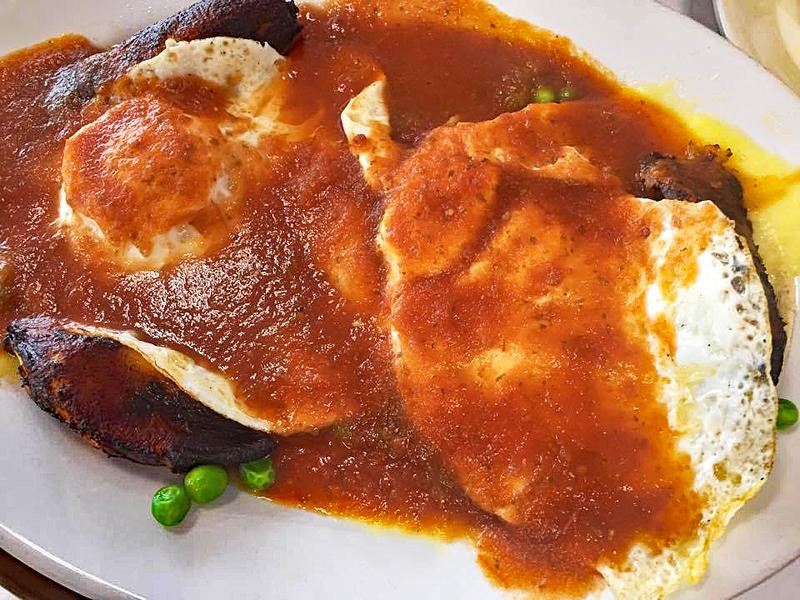
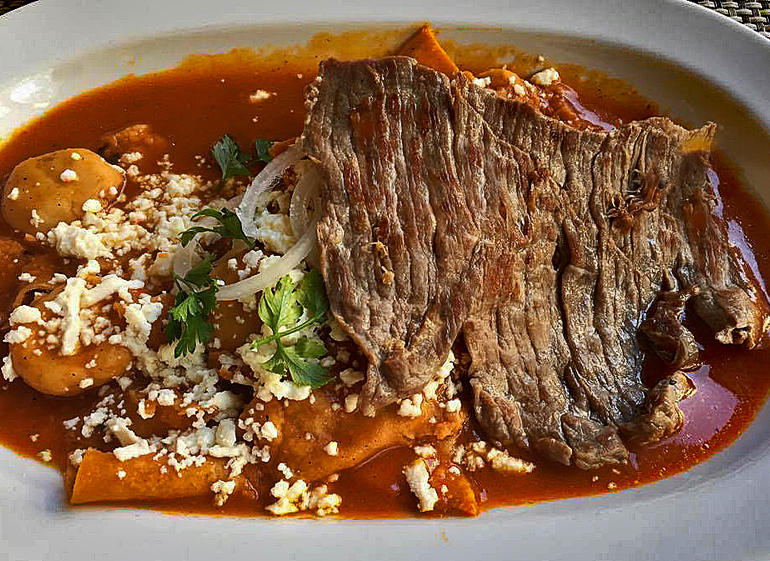
    Our main breakfast course at Las 15 Letras was chilaquiles entomatados con cecina a lightly spiced, lightly dried beef served atop a plate of totopos (tortilla chips) sautéed and then bathed in tomato sauce. Crumble white cheese on the chilaquiles and voilà–delicious.

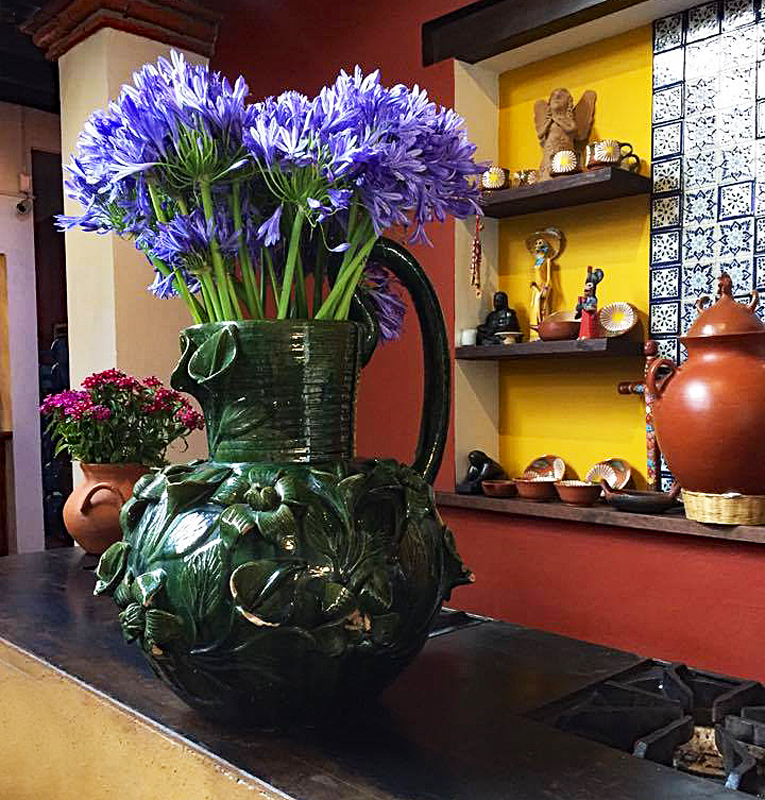
    Oaxaca Las 15 Letras Jarra Verde 1
    The restaurant is charming, decorated with Oaxacan artesanía (craft work) from all of the state's eight regions. I had eaten here several times before; the meals have always been wonderful.

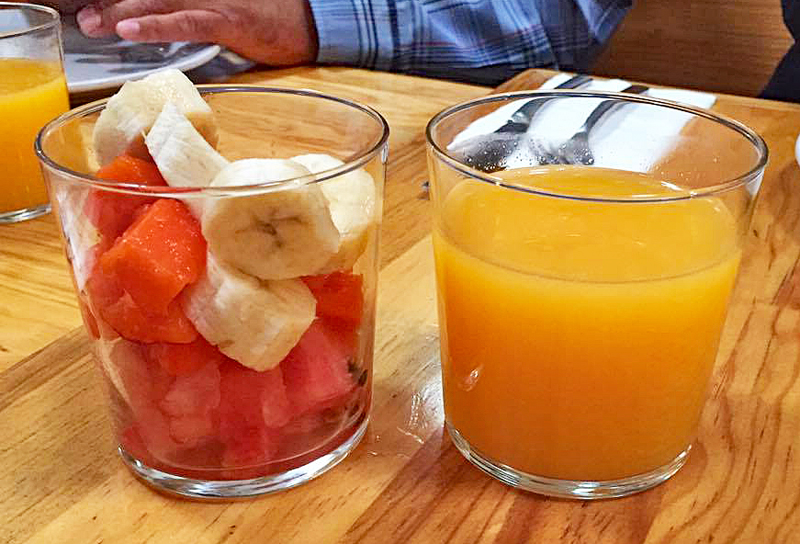
    Oaxaca Restaurantes Zandunga Fruit and Juice 1
    Breakfast on Day Two took place at Zandunga, a restaurant that I had read a good bit about but that I had never visited.  We started the meal with full servings of seasonal fruits (papaya, watermelon, and banana) and freshly squeezed orange juice. 

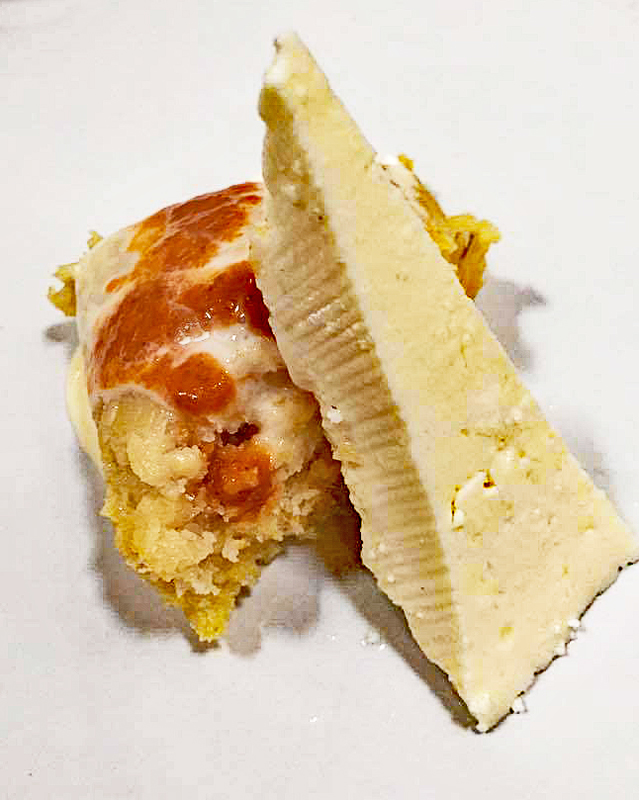
    Oaxaca Restaurantes Zandunga Tamal de Elote con Queso
    Because Aurora de Toledo, Zandunga's delightful owner, served us so very many dishes, a friend at table and I decided to share this tamal de elote. Not only did the sweet tamal come with a plate of cheese, but of course I dolloped rich crema de mesa (table cream) over it and topped that with fiery salsa de chile de árbol.  

    Oaxaca Restaurantes Zandunga Tamal de Cambray
    As you might begin to notice, there is no such thing as too many tamales.  Zandunga's tamal de cambray is filled with mildly spicy picadillo, a kind of meaty, fruity hash. My friend and I split this one, as well.  There are limits, no?  Or maybe limits don't apply in Oaxaca!

    Oaxaca Restaurantes Zandunga Mezcal
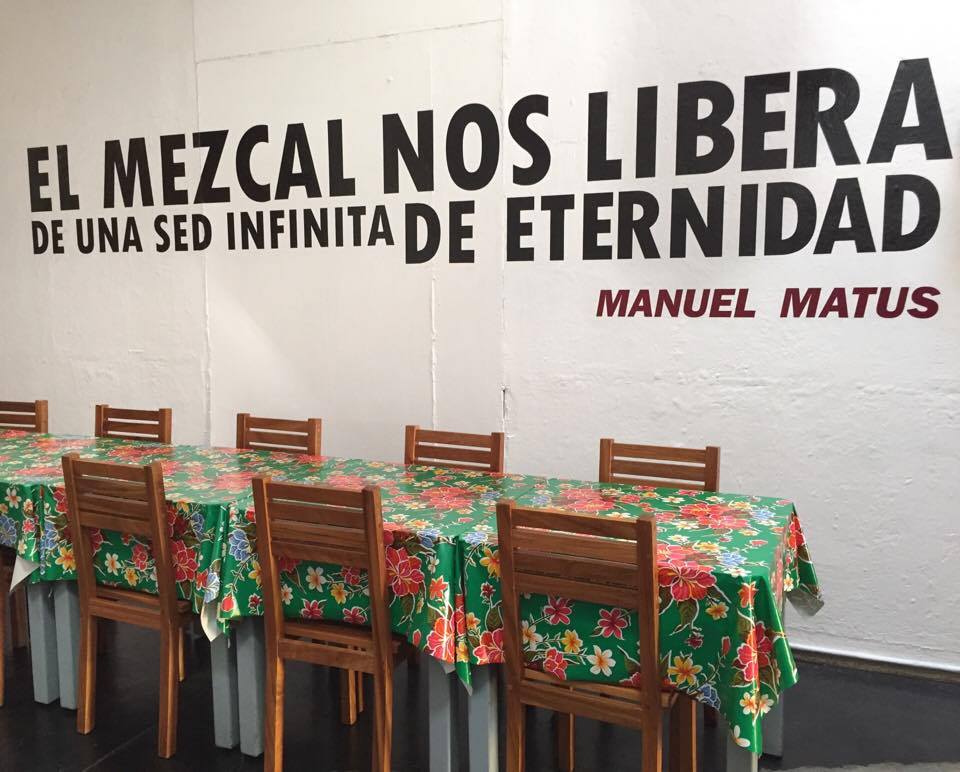
    Zandunga's design and decor, both coordinated by señora Toledo and her sons, are modern and quite comfortable, mixing many traditional elements into the room.  The restaurant combines its delicious food with a mezcal bar. Here, typical Mexican oilcloth tablecloths combine with a quote from Oaxaca's literary prize-winning author, Manuel Matus.  The translation: "Mezcal frees us from an infinite thirst for eternity."
     
    Oaxaca Restaurantes Zandunga Daniella Luis Rodri?guez
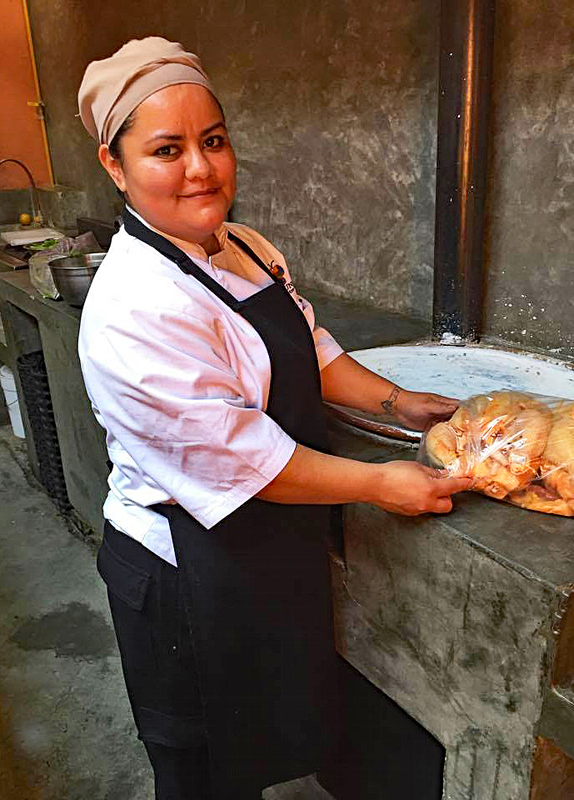
    One of our Zandunga cooks for the morning, Daniela Luis Rodríguez.  Daniela has been in the kitchen at Zandunga for a bit more than a year and loves her work.

    Oaxaca Restaurantes Zandunga Entrada 1
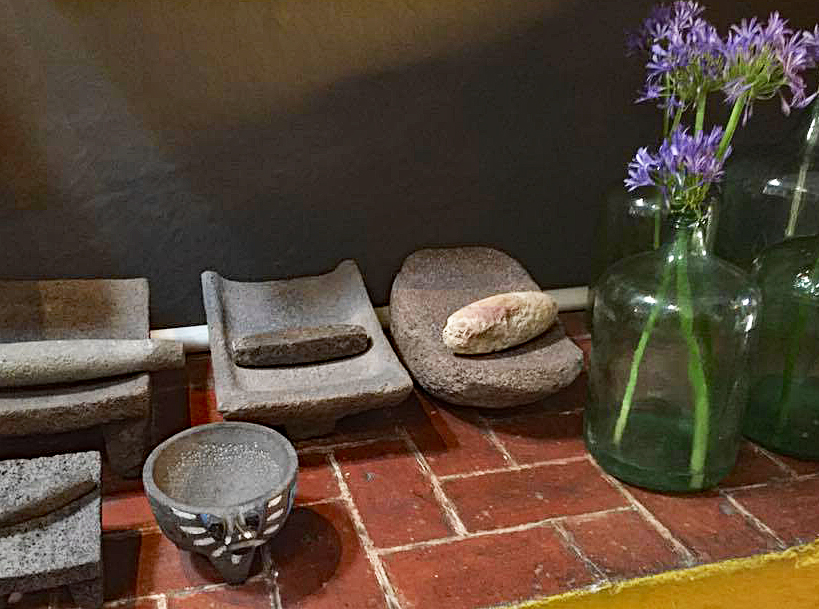
    A niche in the Zandunga entryway displays old metates with their metapiles–volcanic stone grinding stones, each with its 'rolling pin'.  The round grey item in the middle of the photograph is a molcajete, used for grinding spices, chiles, and other vegetables for sauces.

    Oaxaca Restaurantes Fonda Florecita Chocolate 1
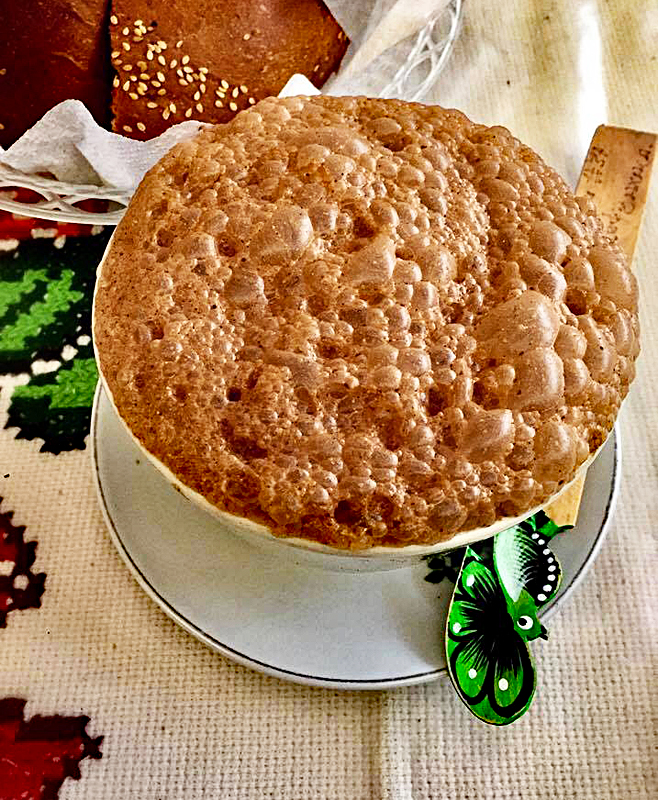
    On my last morning in Oaxaca–for this trip–breakfast was at the Mercado de la Merced's Fonda Florecita.  A fonda usually refers to a family-run eating spot, either in a market or free-standing.  I've eaten at the wonderful Fonda Florecita many times.  The first thing I order is a cup of hot chocolate, traditionally prepared with water.  

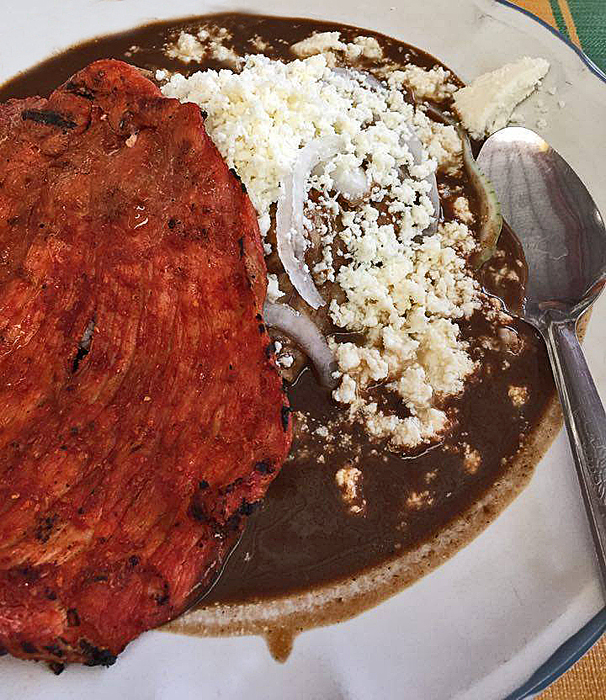
    Mercado de la Merced La Florecita Con Cecina y Enfrijoladas MC
    My breakfast: cecina enchilada (semi-dried meat soaked in spicy chile sauce and cooked) with enfrijoladas (tortillas dipped in bean sauce prepared with native avocado leaves–the avocado leaves give the beans a heavenly anise-like flavor).

    Three days, three superb Oaxaca breakfasts!  Next week, we'll take a look at our press group's comida de bienvenida (welcoming midday meal), cenas (suppers), and a snack or two.  Be sure to come back hungry.

    Looking for a tailored-to-your-interests specialized tour in Mexico? Click here: Tours.

  • OAXACA: First Grand Meeting of Oaxaca’s Traditional Cooks :: Primer Encuentro de Cocineras Tradicionales de Oaxaca

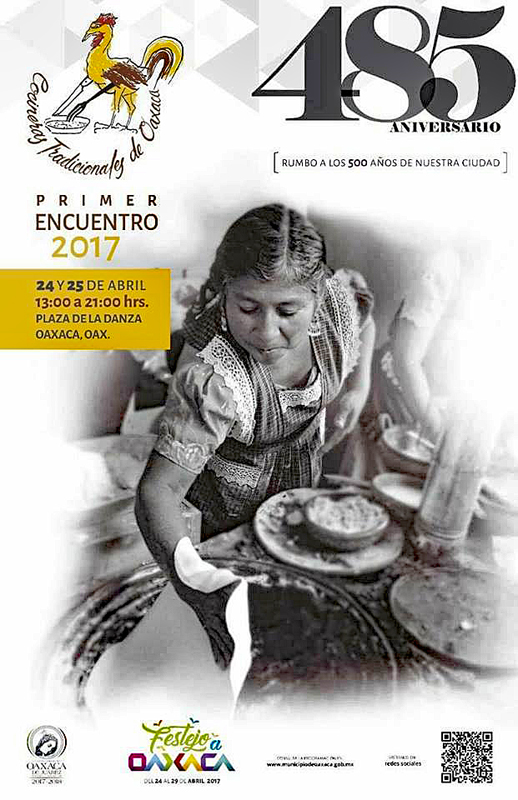
    Encuentro Oaxaca Poster 2017 1
    Oaxaca hosted its first-ever Encuentro de Cocineras Tradicionales on April 24-25, 2017.  The festivities included more than 50 traditional home cooks from Oaxaca's eight regions, plus two days of conferences and other activities.  Doña Martina Sánchez is the person shown on the poster; she's making a tlayuda, a very large, thin corn tortilla that will subsequently be topped with any number of ingredients. 

    Empanadas de don?a Martina Sa?nchez 1
    Indescribably delicious empanandas, prepared by doña Martina Sánchez at the Mexico City press conference prior to the Encuentro.

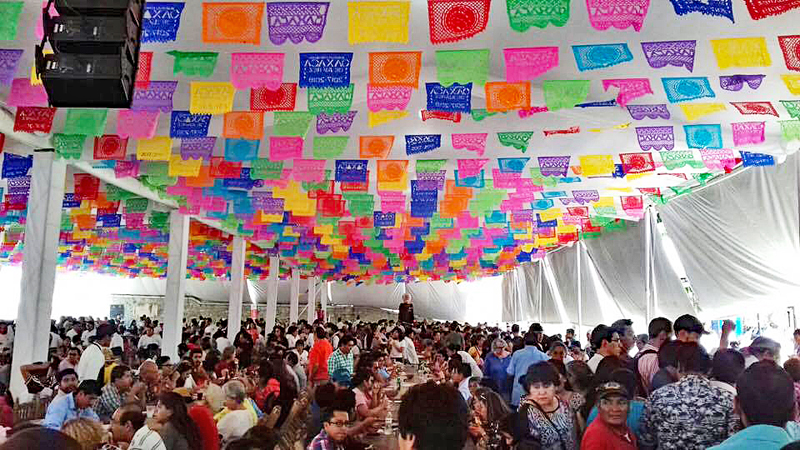
    Oaxaca Plaza de la Danza 2a Wide
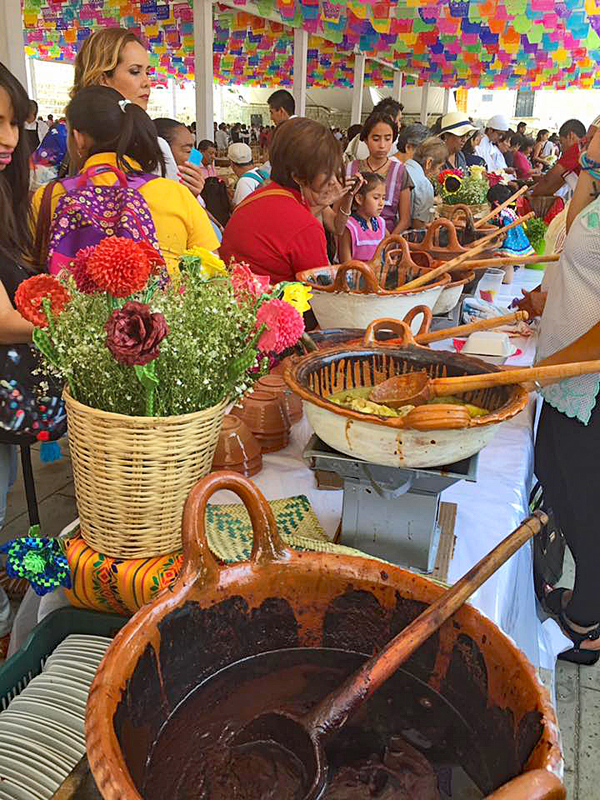
    From 1:00PM until 9:00PM, the cocineras tradicionales (traditional cooks) sold plates and platters and bowls of both well- and little-known dishes to the hordes and throngs of avid attendees.  More than 10,000 people showed up over the course of two days.  The Encuentro was a tremendous success in every respect.

    Celia Floria?n Puebla July 2016
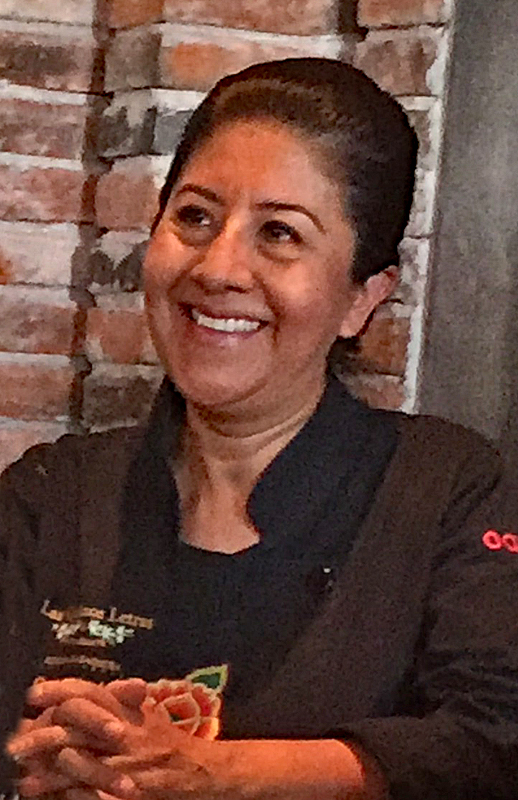
    Señora Celia Florián, traditional cook, restaurant owner (Las 15 Letras, Calle Abasolo 300, Centro Histórico, Oaxaca), and one of the principal organizers of the Primer Encuentro de Cocineras Tradicionales de Oaxaca.  My dear friend Celia is a truly great woman, in every sense of the word.

    Oaxaca thrilled Mexico Cooks! with an invitation to an April 23-26 hosted press trip to Oaxaca, for the sole purpose of eating, drinking, photographing, and writing about the first Encuentro de Cocineras Tradicionales in that city.  The event took place during the celebration of the city's 485th anniversary of founding, and what a celebration it was!  The Encuentro, primarily organized by Señora Celia Florián and hosted by Oaxaca's city government and other organizations, the event included more than 50 traditional cooks who set up their cooking fires on the Plaza de la Danza, just in front of Oaxaca's beautiful Basílica de Nuestra Señora de la Soledad.

    Oaxaca Los Rubios Daniel Cui IGER 1
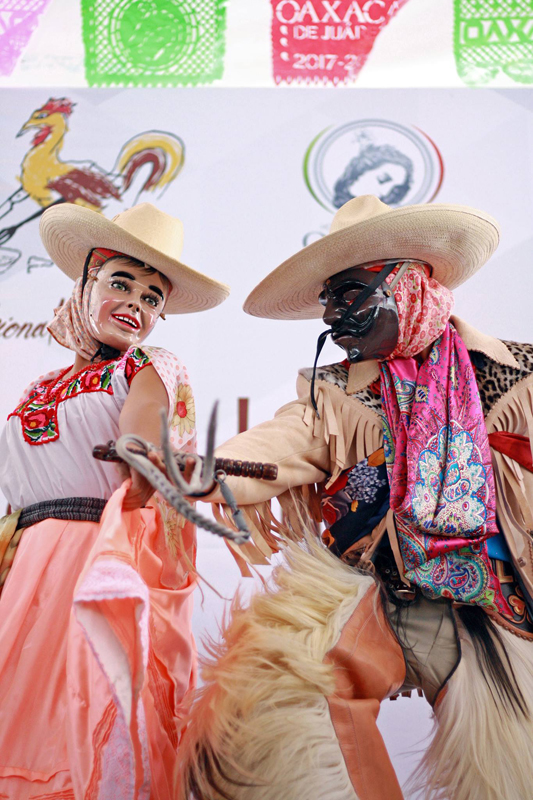
    La Danza de los Rubios of Santiago Juxtlahuaca, Oaxaca, pounded the stage with its fiercely colorful, tremendously flashy rendition of this more than 100-year-old dance to open the Encuentro.  Normally danced during Carnaval, the bailable (dance) made a wonderful festival of the Encuentro.  Photo courtesy Daniel Cui, IGERS Mexico.

    Encuentro Oaxaca Pig Roasting 1
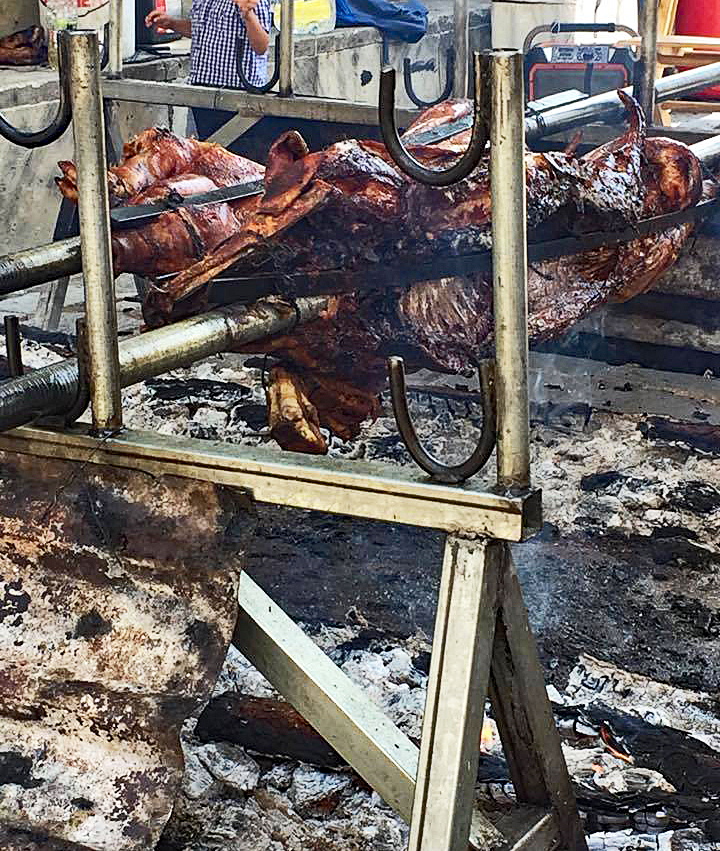
    Just one of a huge number of whole pigs, roasted over firewood at the Encuentro.  This one was almost ready to be served, together with puré de papa (mashed potato), all in the style of the Isthmus of Tehuantepec, in far-southern Oaxaca.  

    Oaxaca Istmo Carne de Cerdo con Pure? de Papa Gaby Vargas
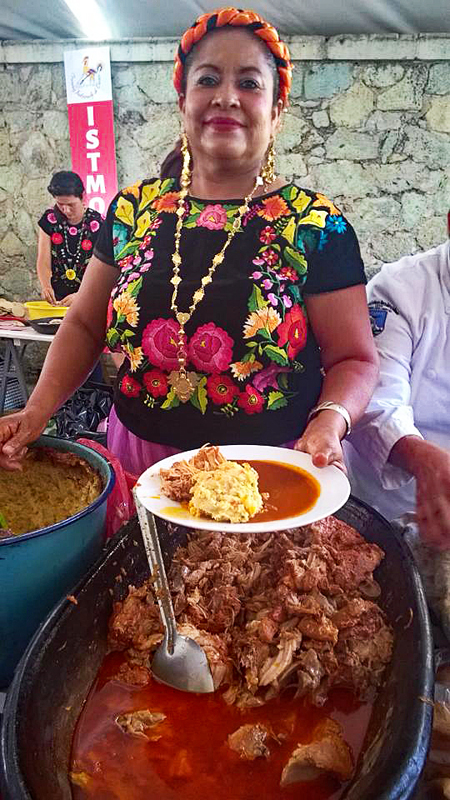
    My plate, filled with tender, juicy, wood-roasted, mouth-watering carne de cerdo (pork meat), Isthmus-style puré de papa (mashed potato), and delicious sauce. The cocinera tradicional istmeña who served the crowd wears the typical clothing of the Tehuana: a woman from the Isthmus: hand embroidered velveteen blouse coupled with a colorful skirt and typically white lacy underskirt, gold filigree jewelry, and a ribbon or flower wreath around the head.  Photo courtesy Gaby Vargas.

    Oaxaca Encuentro Mendoza Sisters
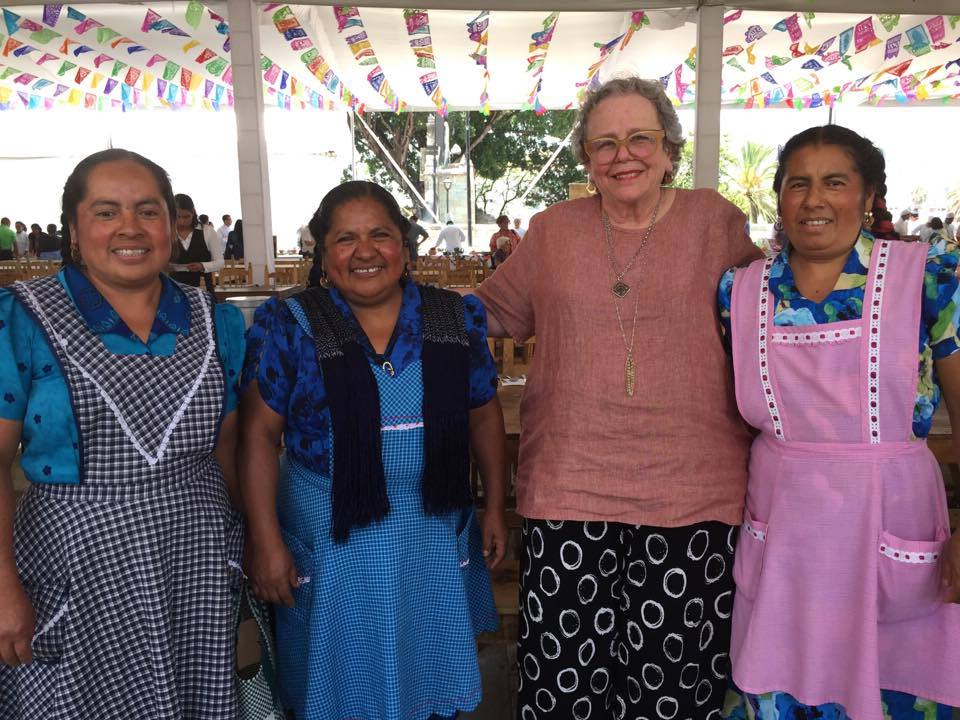
    From left to right: Rufina Mendoza Ruíz, Abigail Mendoza Ruíz, Mexico Cooks!, and Marcelina Mendoza Ruíz.  The Mendoza Ruíz sisters are arguably the best-known cocineras tradicionales in Oaxaca–and probably in all of Mexico.  Indigenous Zapotecas from Teotitlán del Valle, they operate Tlamanalli, their family restaurant.  Abigail Mendoza has literally traveled the world educating people about Mexican and Oaxacan food.  It's a privilege to be a friend of the loving Mendoza family.

    Oaxaca Tichindas en Caldo 1
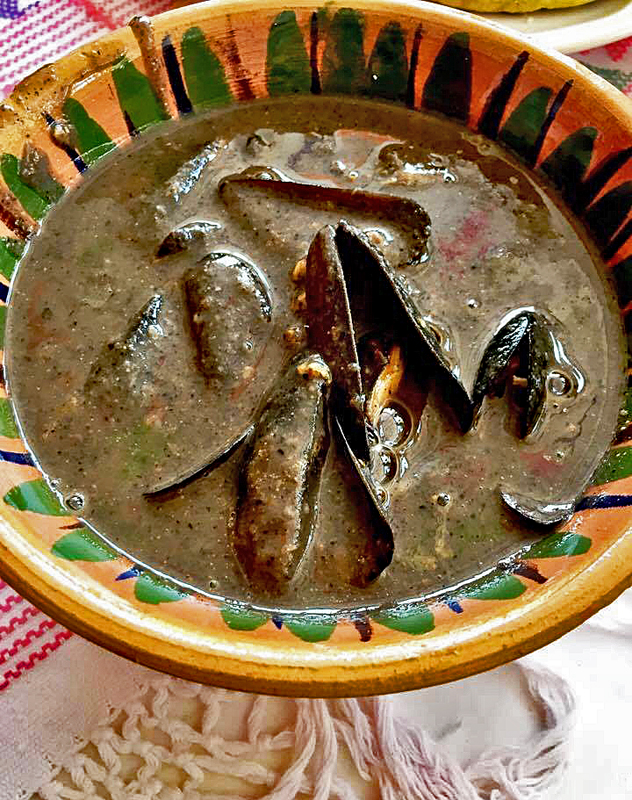
    Tichindas en caldo de frijol: sweet-water mussels hand-gathered from their muddy flats along the coast of Oaxaca and prepared in a slightly spicy, slightly savory, slightly sweet sauce of smoothly-ground beans that knocked my socks off.  The mussels themselves, shells and all, were just over an inch long. From now on, when I think para chuparse los dedos (finger-lickin' good), this will be the dish in my mind.  I ate this bowl of mussels on the last day of the Encuentro; on the first day, a friend gave me the last tiny bit of a tamal with one of these mussels, still in the shell, wrapped in rich masa (corn dough). The next day, I went looking for those tamales, but they were completely sold out.  This bowl of tichinda soup was my consolation prize, but wow, a prize indeed.

    Tehuanas Primer Encuentro Oaxaca 25 abril 2017
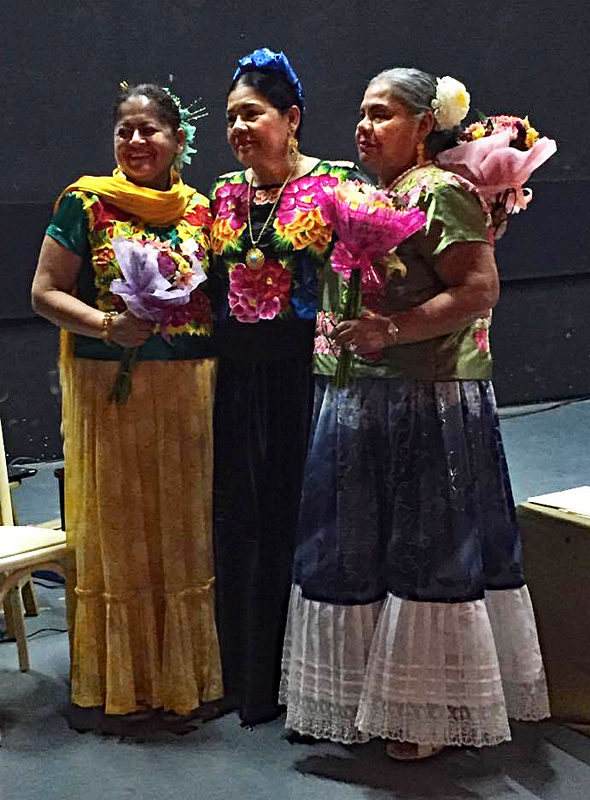
    Three members of a fascinating and tender round table conference; the one of the topics was "food memories from your childhood".  The Tehuanas (women from the Istmus of Tehuantepec) are (left to right): Aurora de Toledo, owner of Restaurante Zandunga; Deyaniro Aquino Pineda, owner of Restaurante La Teca; and Ofelia Toledo Pineda, owner of Restaurante Yu Ne Nisa.  All three restaurants are located in the city of Oaxaca.

    [youtube=https://www.youtube.com/watch?v=UgQROnZ1SY0&w=560&h=315]
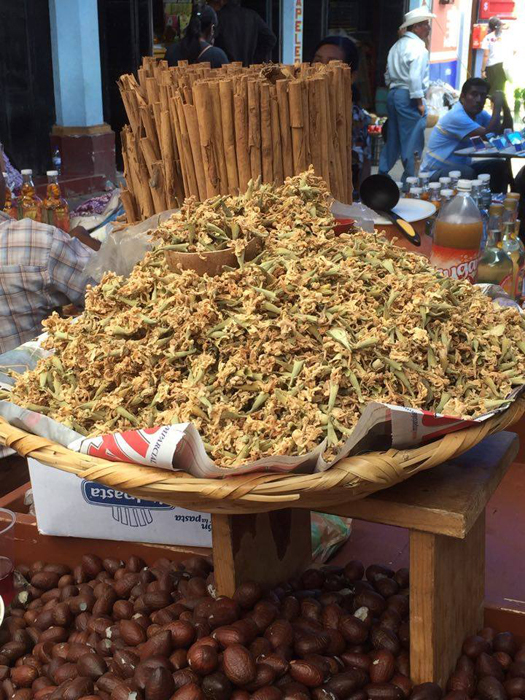
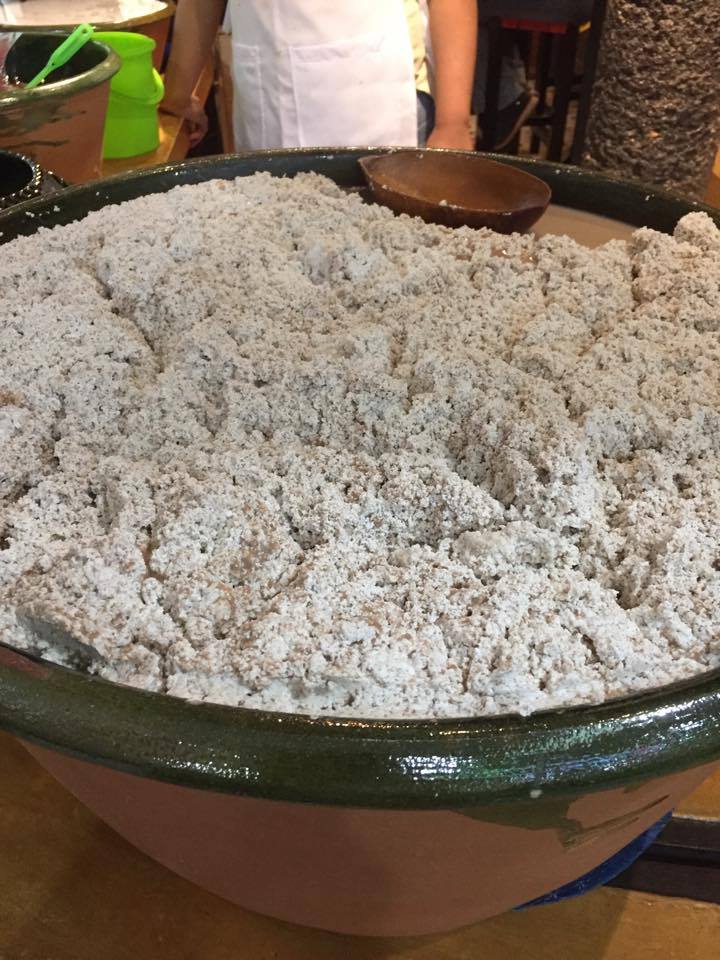
    Tejate, one of the iconic drinks of Oaxaca, is made from corn masa, Oaxacan chocolate, canela (Mexican cinnamon), the finely ground large brown seed of the mamey fruit, and flor de cacao (also known as rosita). After those ingredients are beaten by hand (see video), water and ice are added.

    Oaxaca Tlacolula Mamey Resized
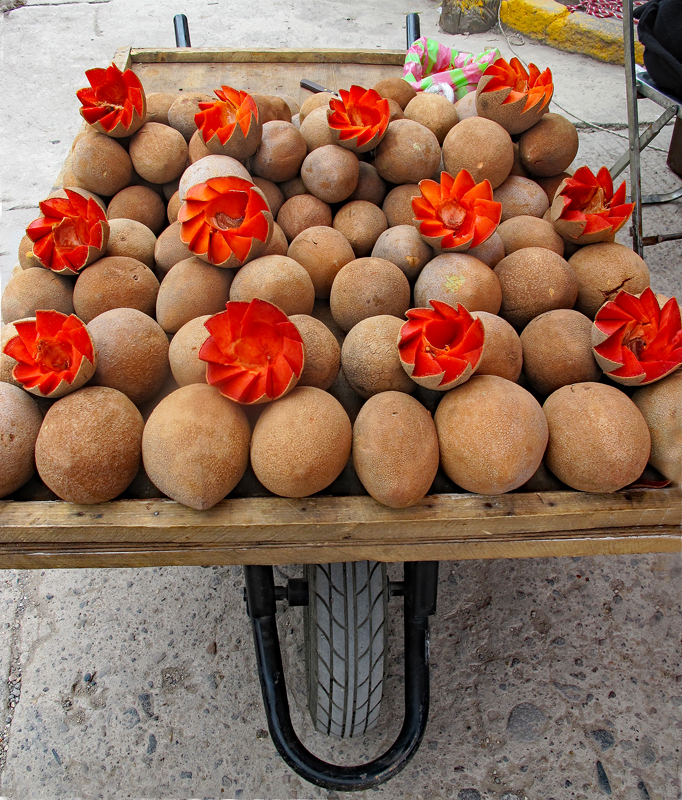
    Mamey fruit for sale at a market in Oaxaca.  The mamey tastes very much like a baked sweet potato. The cut fruits–so beautiful!–have had their seeds removed to be sold separately.

    Ocotla?n Mercado Venta de Rosita y Semilla de Mamey MC
    At the top of the photo are long sticks of Mexican cinnamon.  In the woven tray is flor de cacao, or rosita. At the bottom are the large brown mamey seeds, ready to be ground to a fine powder for tejate.

    [youtube=https://www.youtube.com/watch?v=wFg7WqFmn3U&w=560&h=315]
    In this video, the vendor has added cold water and ice to the tejate mixture–it's almost ready to serve.  You can see that the surface of the tejate is foamy and thick, while the liquid she mixes from on high is thin, as it is supposed to be.  Tejate is a delicious and extremely refreshing cold chocolate drink.  When you're in Oaxaca, be sure to try it!

    Oaxaca Mercado Benito Jua?rez Tejate
    The finished product, tejate ready to be served.  We thoroughly enjoyed a jícara of this one at Oaxaca's Mercado Benito Juárez.

    For two full days and evenings, thousands of hungry people lined up at this event for Oaxacan regional food specialties that are rarely seen outside the comunidades (small indigenous towns) where they are made.  Oaxaca residents, Mexicans from states near and far, and foreign tourists devoured anything and everything that the cocineras tradicionales prepared; everything I tasted was a thrill.  The Encuentro was enlivened by constant live music and other entertainment, the city was in full fiesta mode for its anniversary, and everyone was excited and happy to be present.  

    As soon as the dates for the Encuentro de Cocineras Tradicionales de Oaxaca 2018 are announced, I'll post the news right here.  You really, really need to book your trip as soon as possible!  The event is a do-not-miss.  In addition, I'll be offering a guided tour of the festivities!

    Encuentro Oaxaca Comensales Marichuy
    Eager comensales (diners) pass along one of three sides of the Plaza de la Danza, where the cocineras tradicionales served food.  No admission fee at the Encuentro means that one can purchase more of the very inexpensive dishes that the traditional cooks prepare and serve. Photo courtesy Marichuy Garduño.

    Oaxaca Aguas Casilda Group
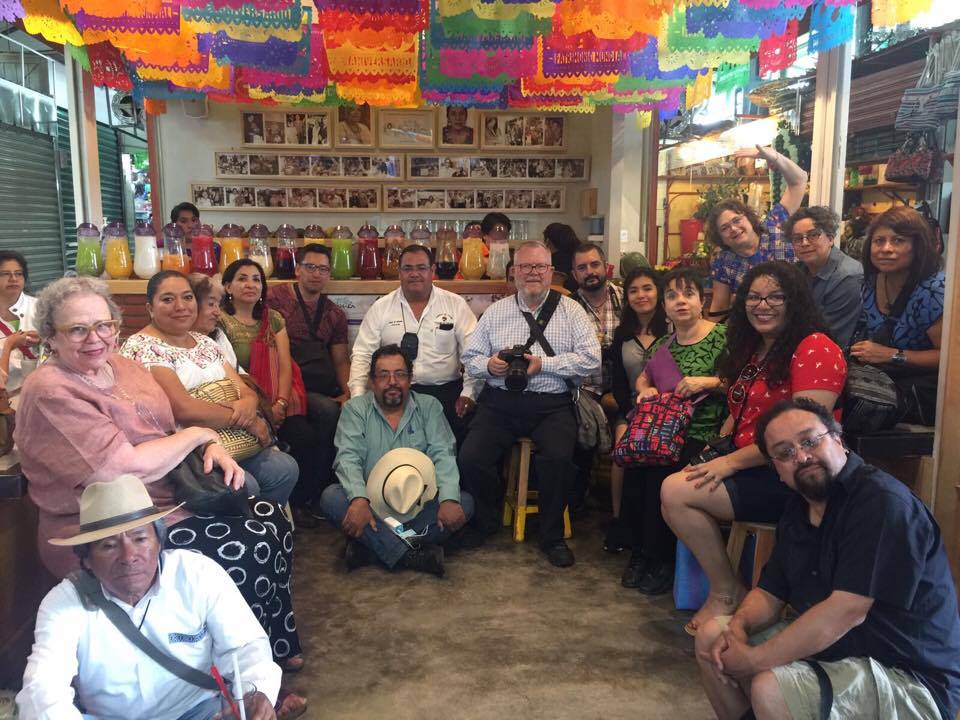
    Part of the invited Mexico City press group took a culinary tour of Oaxaca's Mercado Benito Juárez.  I'd been there many times before, and nevertheless learned a tremendous amount from our guide.  We're sitting for our portrait at Aguas Frescas Casilda, an institution in Oaxaca.

    Over the course of many years, Mexico Cooks! has been invited to countless culinary festivals in Mexico.  The Primer Encuentro de Cocineras Tradicionales de Oaxaca will always stand out in my mind as extraordinary: as the first in Oaxaca and as being entirely exemplary of Oaxaca's marvelous hospitality.  Profound thanks to Celia Florián, to the Oaxaca city government, to the Oaxaca tourism department, to CANIRAC Oaxaca (Cámara Nacional de la Industria de Restaurantes y Alimentos Condimentados–Mexico's national restaurant association), to the cocineras tradicionales, and to all who made this marvelous event possible.  Trabajar en equipo siempre es mejor (it's always better to work as a team) has never been truer.  Three cheers and huge gratitude to all.

    Next week, Mexico Cooks! will feature some of the restaurants where we were spoiled rotten by Oaxaca's CANIRAC.  The truth is, we ate more in three days than is really conscionable.  Between the traditional food at the Encuentro and our meals at Oaxaca's legendary restaurants, we all but waddled our way through the city. 

    Looking for a tailored-to-your-interests specialized tour in Mexico? Click here: Tours.

  • La Nueva Viga, Mexico City :: Second Largest Fish Market in the World

    Mother at Work
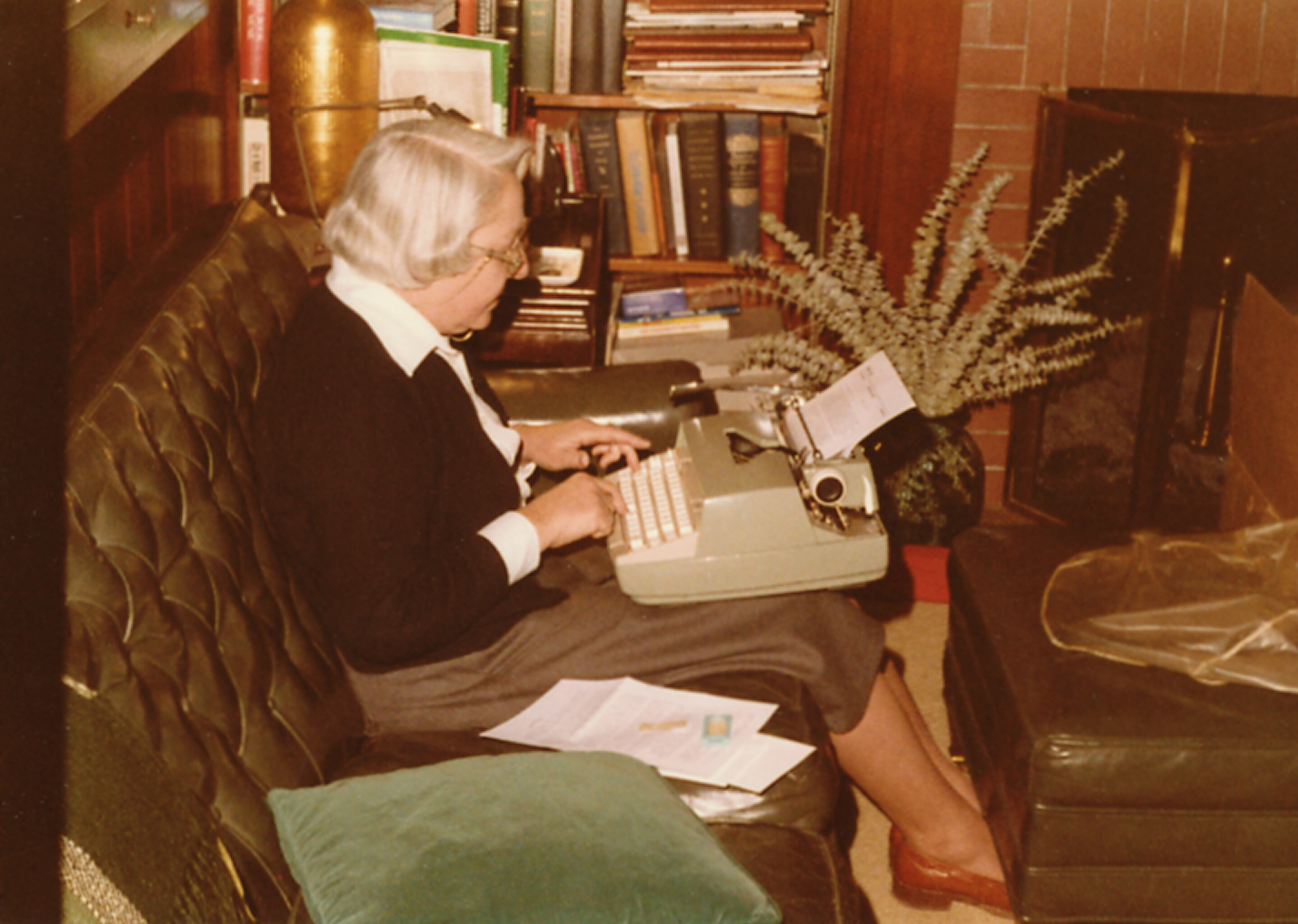
    Mexico Cooks!' mother, circa 1980.  She tried her best to give me good advice, but I was often loathe to listen.

    1969 March on Washington 1
    In November 1969, she suggested that the March on Washington, against the war in Vietnam, might be overcrowded.  I went anyway, and it was packed–but the experience was entirely worth being smooshed like a sardine in a can. 

    Times Square NYE 2012 1a
    Over the course of several years, she warned me about wanting to do battle with the New Year's Eve crowds in New York City's Times Square. Although the idea of squeezing in still piques my interest, I haven't been there yet.

    Viga Genti?o 1a
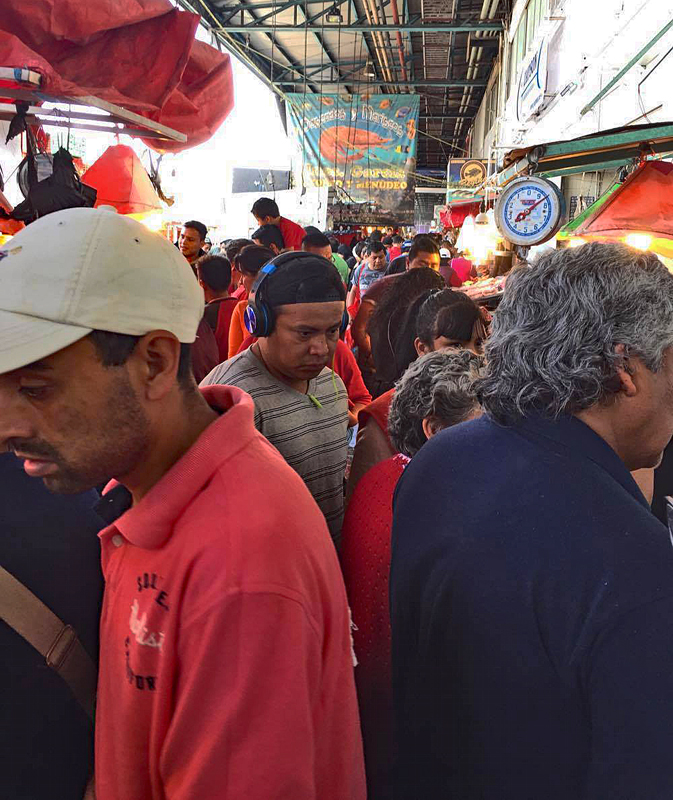
    My mother didn't know about Mexico City's wholesale fish market, La Nueva Viga, but had she known, she would have insisted that Viernes Santo (Good Friday) was not the day to go. This photo, taken on Good Friday 2017, barely does justice to the incredibly jammed aisles at La Nueva Viga, Latin America's largest fish market and the second largest fish market in the world.  Only the Tsukiji fish market in Tokyo, Japan, surpasses the volume of fish and seafood sold annually at La Nueva Viga.  The Tsukiji market averages 660,000 tons of fish and seafood in yearly sales; La Nueva Viga racks up around 550,000 tons. I think 549,000 tons must sell just on Good Friday, the last day of abstinence from meat during Lent. 

    Entrada La Nueva Viga 1
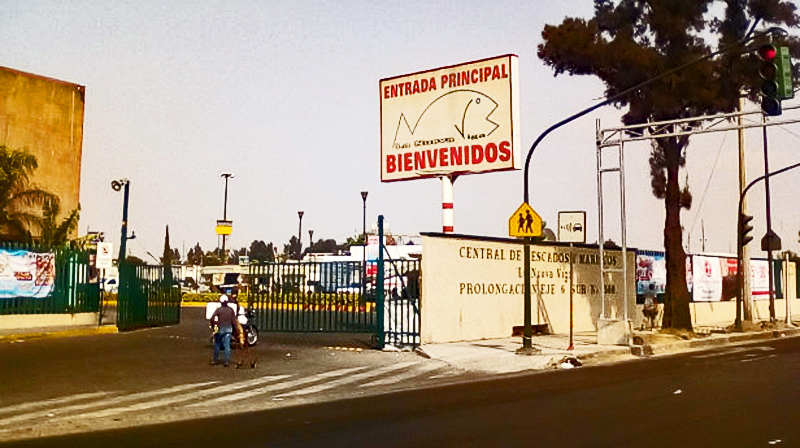
    The main entrance at La Nueva Viga is on Prolongación Eje 6 Sur, Colonia San José Aculco, Iztapalapa. The facility extends over nearly 23 acres (9.2 hectares), with 202 wholesale warehouses, 55 retail warehouses and 165 sellers in total.  On any given ordinary day, the market receives between 20,000 to 25,000 customers, mostly restaurant owners in Mexico City and the areas immediately around it.  On Good Friday, the clientele is mainly retail: home cooks looking for bargain fish and seafood for the Friday before Easter.  Both fish and good prices abound and it seems like half the city is there to buy–what a challenge!

    On Good Friday 2017, friends Rondi Frankel, Magdalena Mosig, and I made the trek to La Viga.  Rondi drove and Magdalena acted as our guide; she at one time owned a restaurant and always bought fish and seafood at the market.  It was a great treat–not to mention an enormous help!–to have her show us the ropes.  From my street, south of Mexico City's Centro Histórico, the trip to La Viga took about 45 minutes. Because it was Good Friday, there was no traffic at all until we were close to the market–and then–yikes!  Bumper to bumper, several lanes of near-parking lot, hundreds of street vendors of everything from cold bottled water to kites, partial sleeves (wrist to above the elbow) to wear while driving so your arm doesn't get sunburned, thin, crisp, sweet fried morelianas (a kind of cookie), chewing gum, single cigarettes, bags of ready-to-eat mango with chile, limón, and salt, soft drinks, straw hats–anything at all that a person might want.  

    The massive parking lots for La Viga were completely filled, so we drove a couple of blocks past the fish market and found a private lot. Once we were finally at the market, we sloshed through salty puddles, thousands of fish scales flying through the air, and the clang of huge knives hitting long fish-cleaning tables. Then up a few stairs and we were smack in the middle of the jostling, shoving crowds, pushing between rows of vendor stalls. 

    Viga Camaro?n con Mano 1
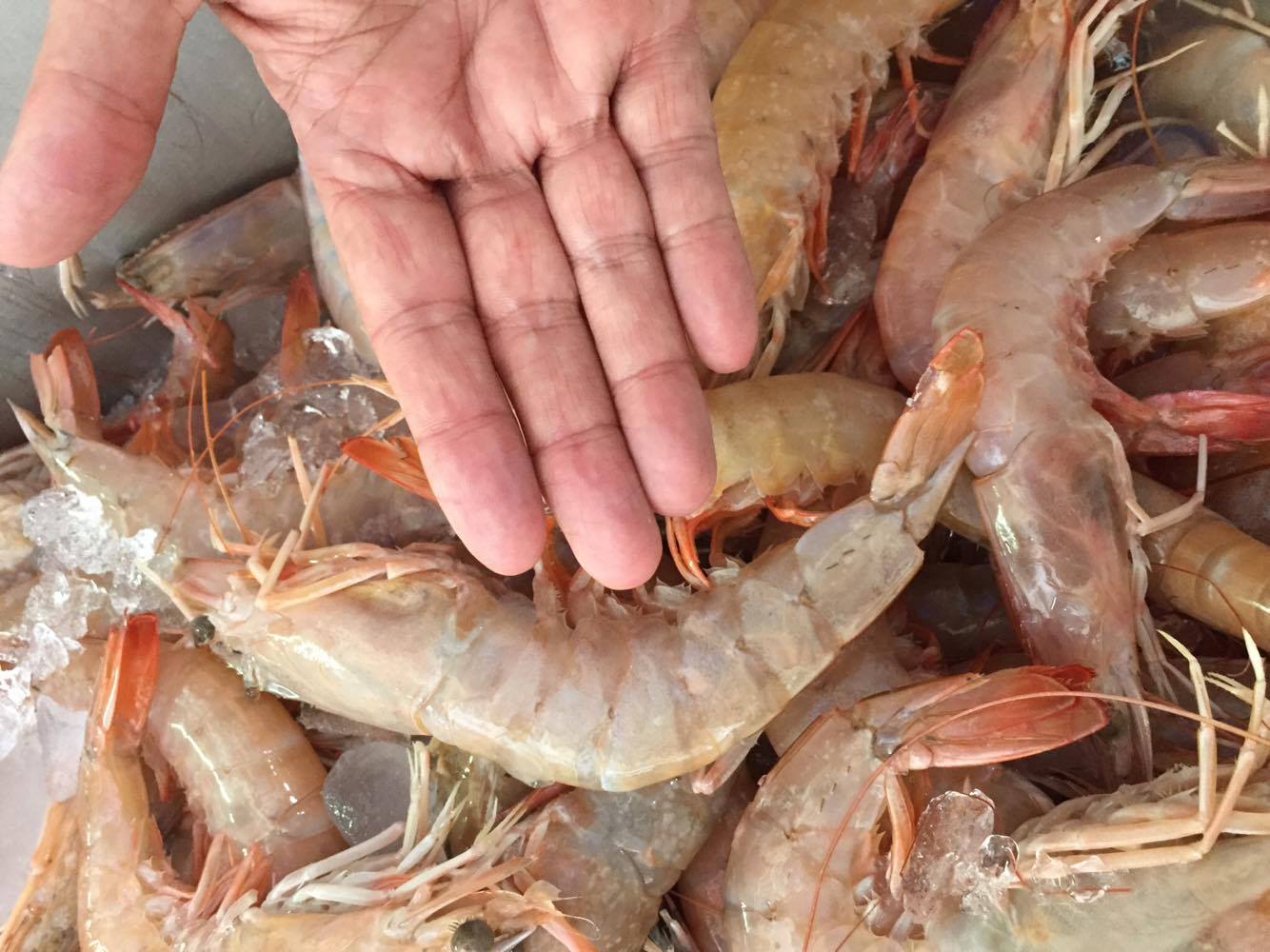
    Extra-jumbo shrimp!  That's Rondi's normal-size adult hand, for comparison.  Each shrimp measured approximately 8" long with the head on. The price?  $280 pesos (approximately $15 USD) per kilo–or $8.00 USD per pound.  If I had to guess, I'd say these huge shrimp are about 5 or 6 to the pound.

    Viga Huachinango Whole 1
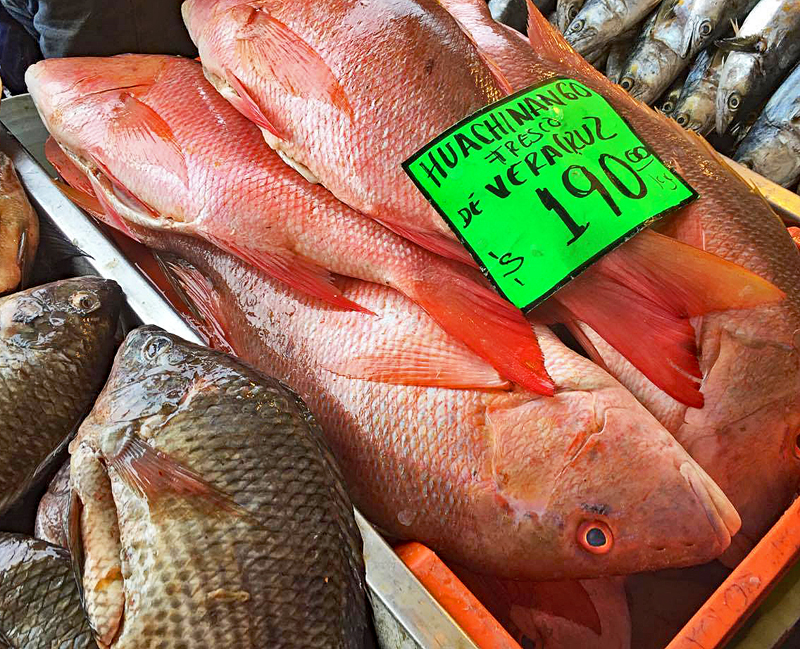
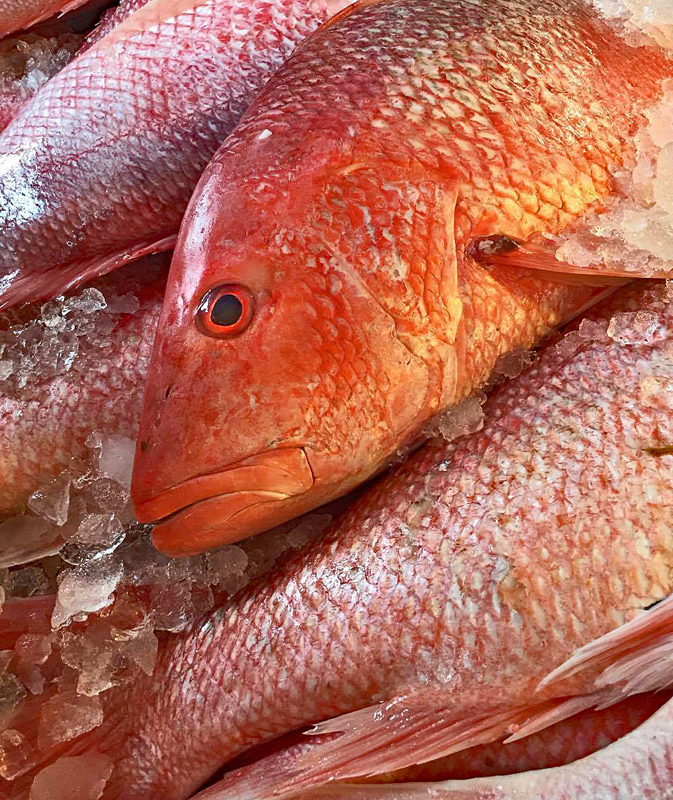
    Beautiful, fresh, and enormous huachinango (red snapper) were everywhere.  These measured about two feet long–great big ones!–and looked fresh as the morning. According to the sign, they were caught in the waters off the state of Veracruz, on the southeastern Gulf coast of Mexico. The darker fish to the left are mojarra (sea bream), delicious but very bony.

    Viga Mojarra Gills 1a
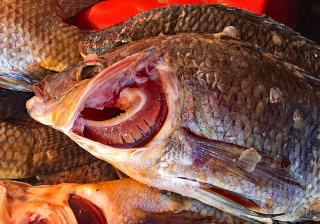
    Another vendor displayed his mojarra with the gill flap raised.  It's easy to see by the condition of the gill that the fish is wonderfully fresh. This is exactly how a gill
     should look when you're buying: firm and pink.

    Viga Huachinango Ojo 1a
    Many vendors had huachinango for sale; these were offered at a booth farther down the aisle from the first photo of huachinango.  You can tell by the condition of the eye that this lovely fish was freshly caught.  The eye is shiny, not sunken into the head, and full of light.  My only hesitation in buying a fish was the length of time that I would be carrying it around in a bag prior to getting it home and into the refrigerator: too long in the very warm Mexico City springtime weather.

    Viga Almeja Varias 3
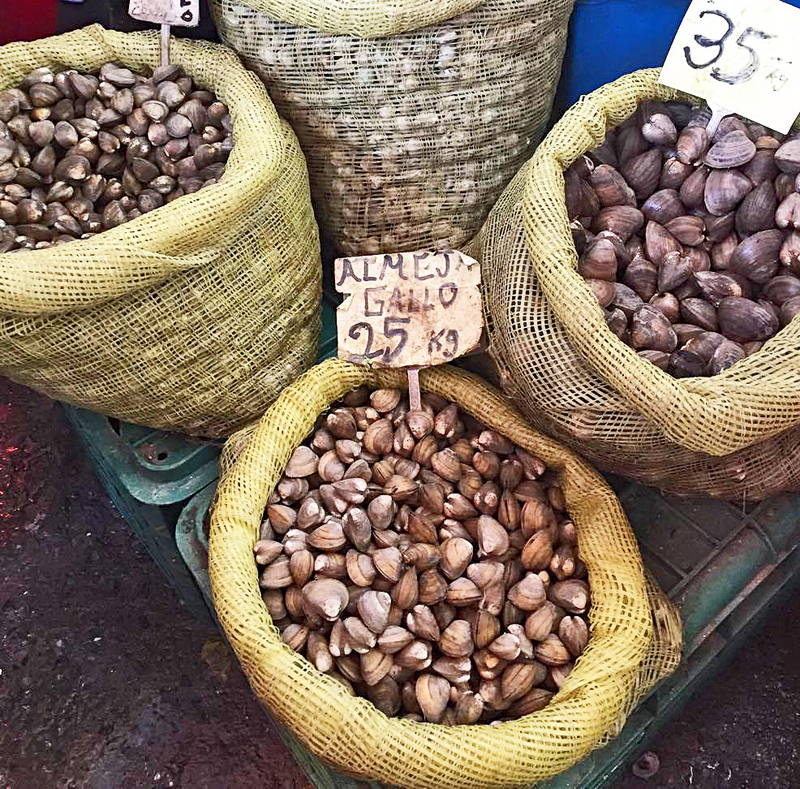
    The smallest of these almeja gallo (rooster clams, at the rear) carried a sign reading, "For soup".  Their price was $20 pesos (about $1.40 USD) per kilo.  As the sizes increased, the prices increased.  The most expensive were the ones on the right, at 35 pesos the kilo.

    Jaiba Tied Up 1
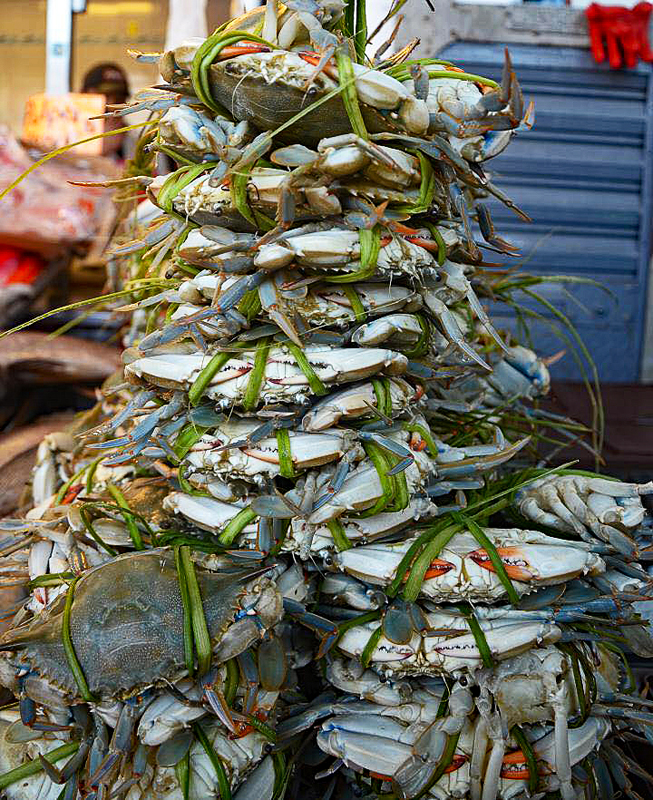
    Look at this incredible tower of live blue crabs, tied up with reeds!  Mexico Cooks! has always seen blue crabs in retail markets, always quite moribund, so it was wonderful to discover that they actually arrive at La Viga still living.

    [youtube=https://www.youtube.com/watch?v=j-bSv1XADag&w=420&h=315]
    Proof positive!  Watch these babies wiggle!  The first thing that crossed my mind to prepare was a big platter of Chinese blue crabs in black bean sauce.

    Viga Monton de Pulpo 1a
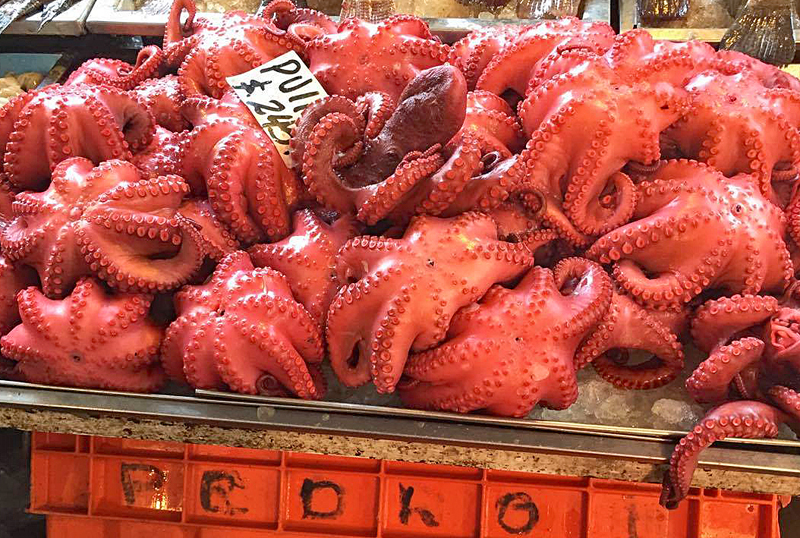
    Fresh red octopus, piled high.  $245 pesos the kilo.

    Viga Mackerel 1
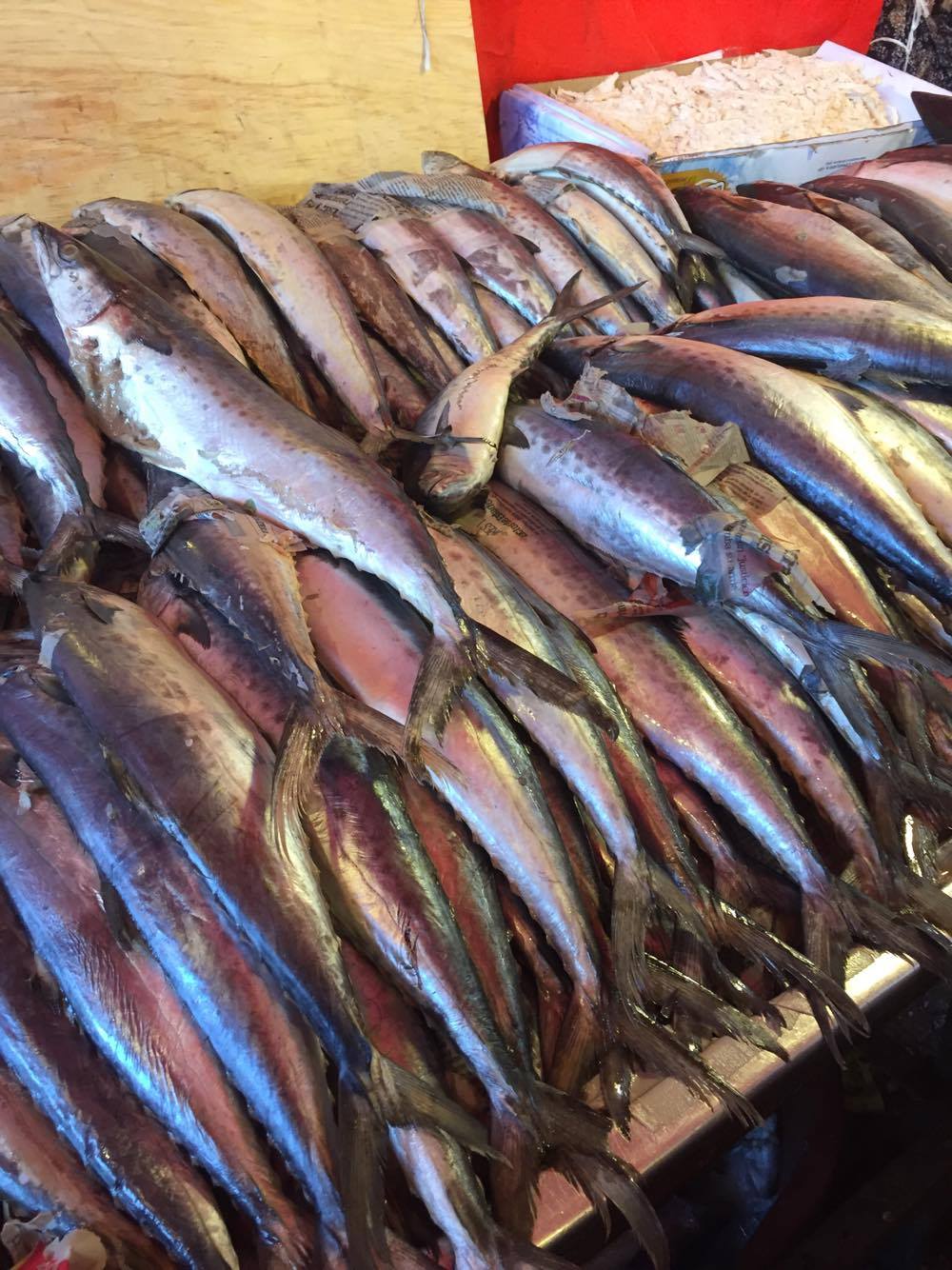
    Spanish mackerel.

    Viga Langostina 1a
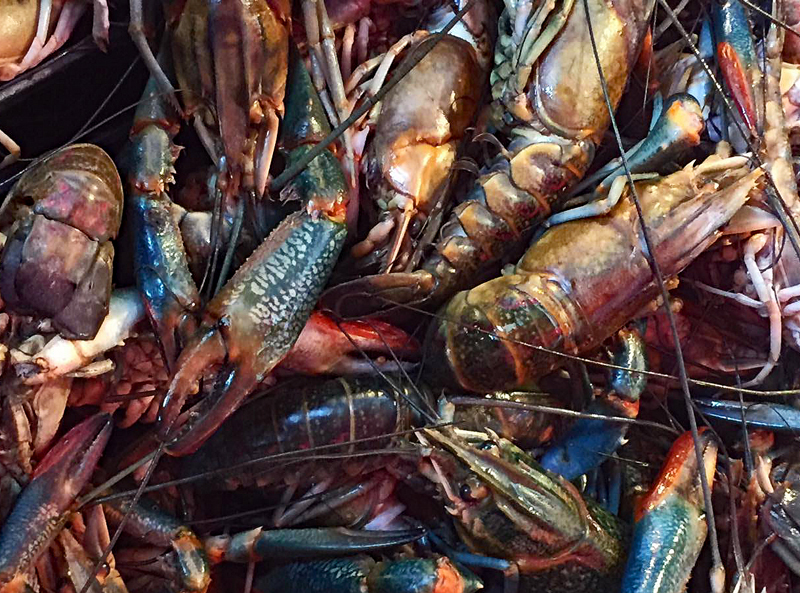
    These are langostinos–where you live, they may be known as crayfish (although they are a completely different species). 

    Viga Ostiones Costal 1a
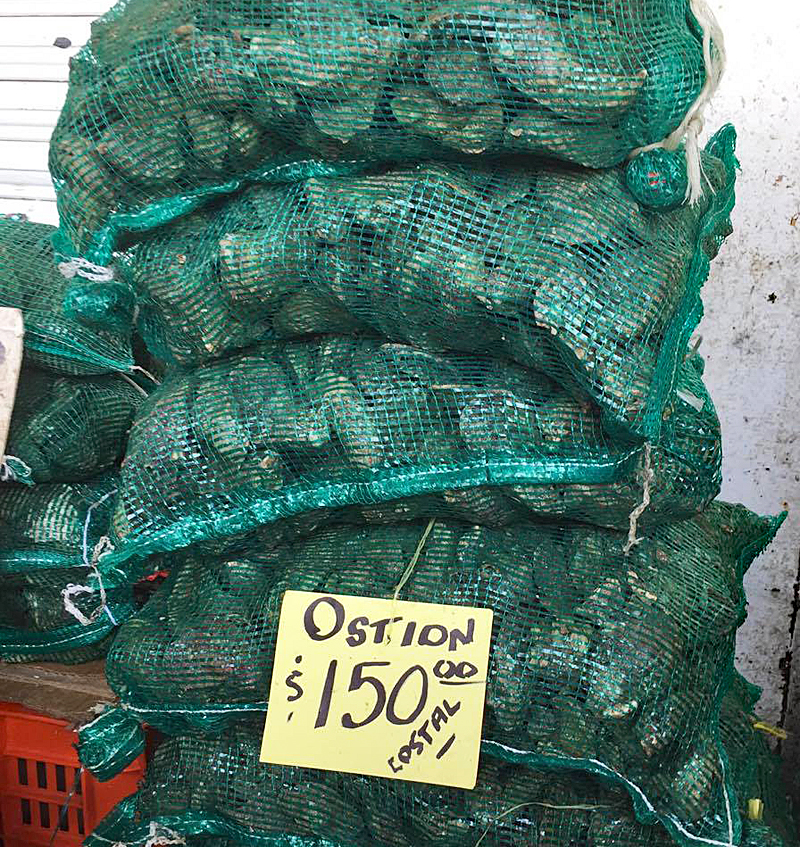
    Oysters: piled-up huge costales (in this case, open-weave polypropylene sacks) of oysters.  Oysters are sold by the costal, or shucked in their liquid in plastic bags as long as your arm, and also in smaller containers for home consumption.  Some oysters come from the southeastern Mexican states of Tabasco and Campeche; others come from the Pacific Coast states of Baja California and Sinaloa.  Mexico is the fourth-largest producer of oysters in Latin America.  These particular oysters were for sale at $150 pesos the sack.  "Isn't that about $8.00 USD?" Why yes, it is.

    Viga Ostiones a Comer 1a
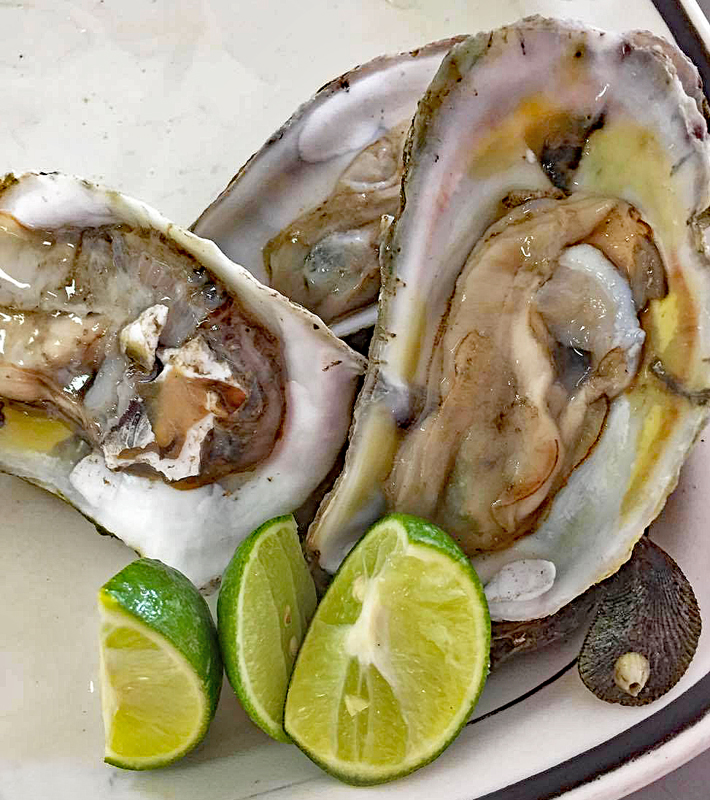
    Oysters, ready to eat.  Served with fresh Mexican-grown limones (Key limes), a dozen cost 100 pesos at this sit-down restaurant in La Viga.

    Viga Salsitas 1
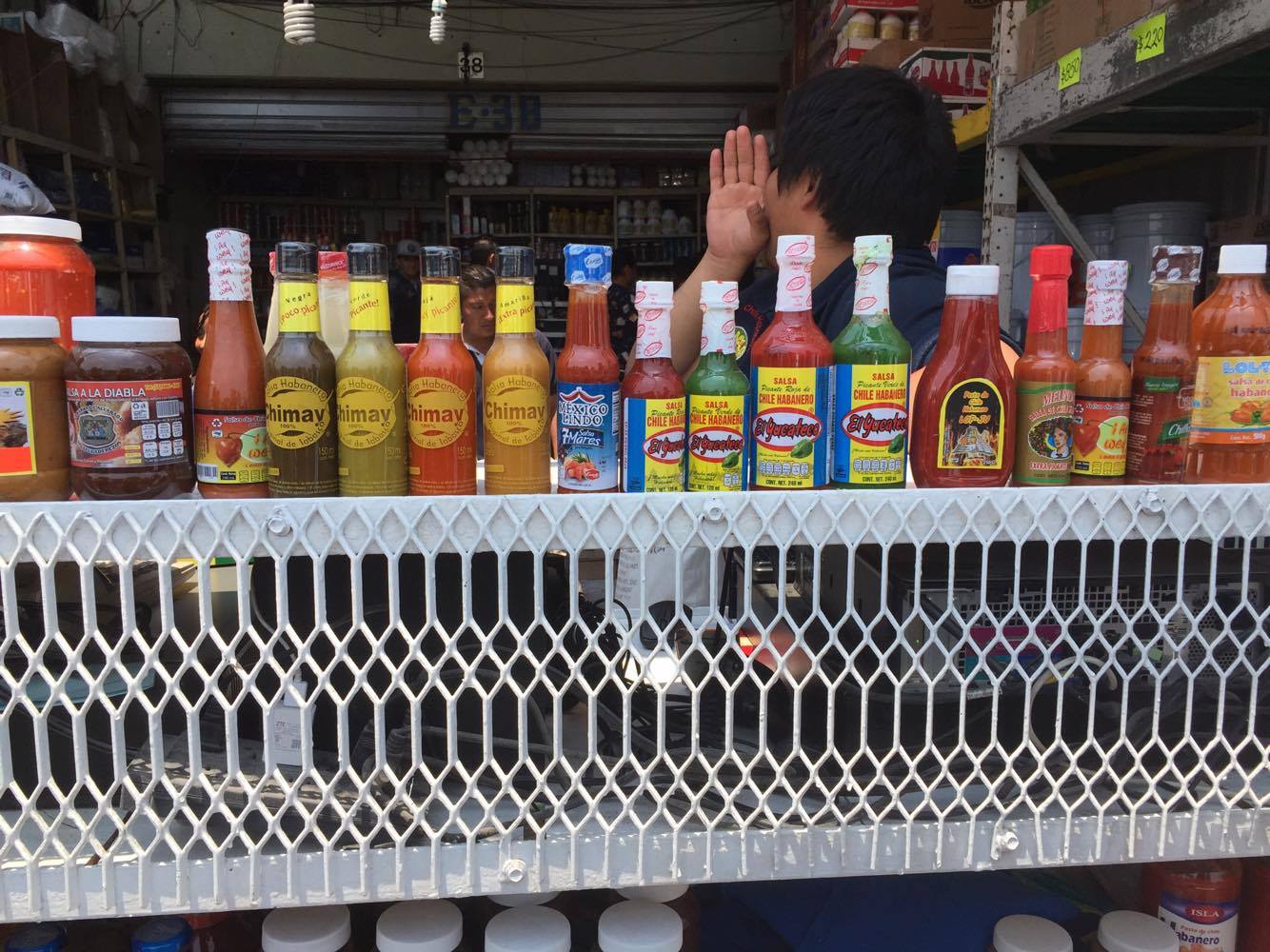
    What would Mexican seafood be without a bottled table salsa to season it–along with limón and maybe a wee pinch of salt?  What we see here is a small selection of the hundreds of salsas from which to choose.  

    Salsa Bruja Casera
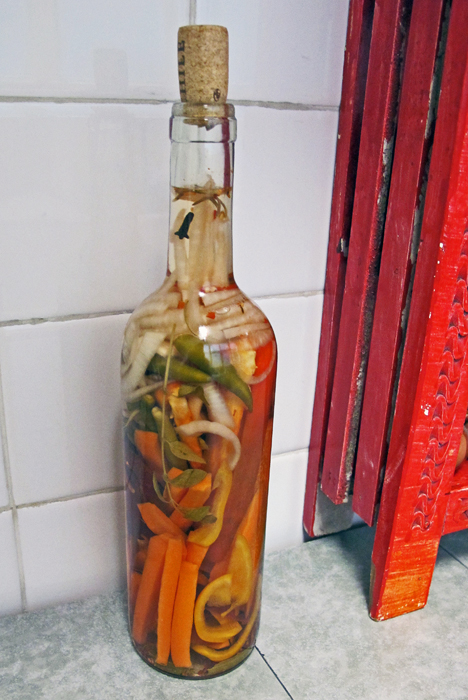
    And truly, it wouldn't be right to serve seafood without a splash of home-made salsa bruja: witches' sauce!  I keep mine on my counter and top it off with more vinegar as needed.  The salsa is a mixture of vinegar with onion, garlic, carrot strips, bay leaf, rosemary, chile (I use serrano), oregano, a couple of cloves, salt, and pepper. Stuff all the vegetables and herbs into an empty wine bottle, fill with vinegar, cork, and allow to sit for several days.  Voilà, salsa bruja!

    The next time I go to La Nueva Viga, I will abide by what my mother surely would have advised: go on a day when half of Mexico City isn't there!  You come, too–we'll have a marvelous time!

    Looking for a tailored-to-your-interests specialized tour in Mexico? Click here: Tours.

  • At Home and Away in the Kitchen and on the Street: Mexico Cooks!

    Women's March Jan 21 2017 CDMX
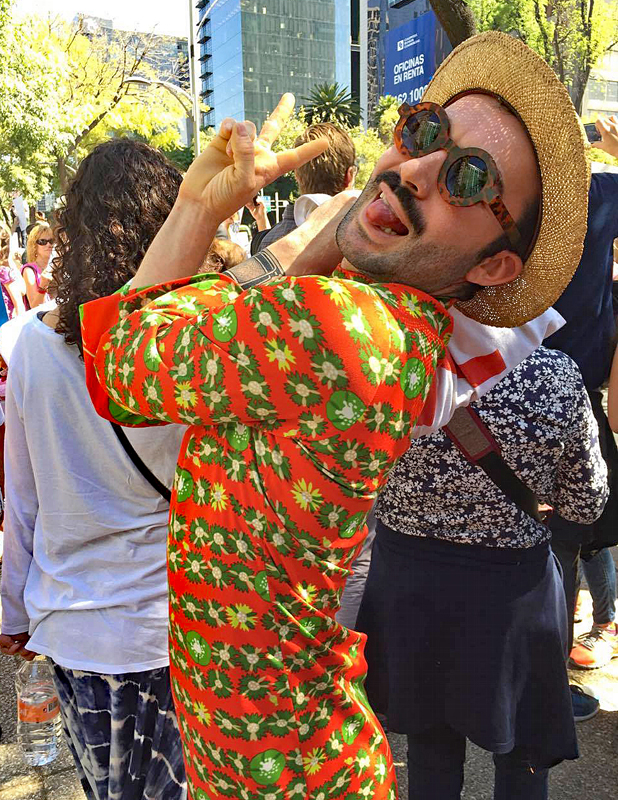
    Like many of you, we started our year with the Women's March–in our case, at the United States Embassy in Mexico City.  This delightful young man exemplified everyone's spirit of joy at spending an afternoon in solidarity with so many marchers from so many countries: Mexicans, US citizens, Canadians, Europeans from several nations, Asians, and more, all eagerly participated.  

    Ensenada Paci?fico 1
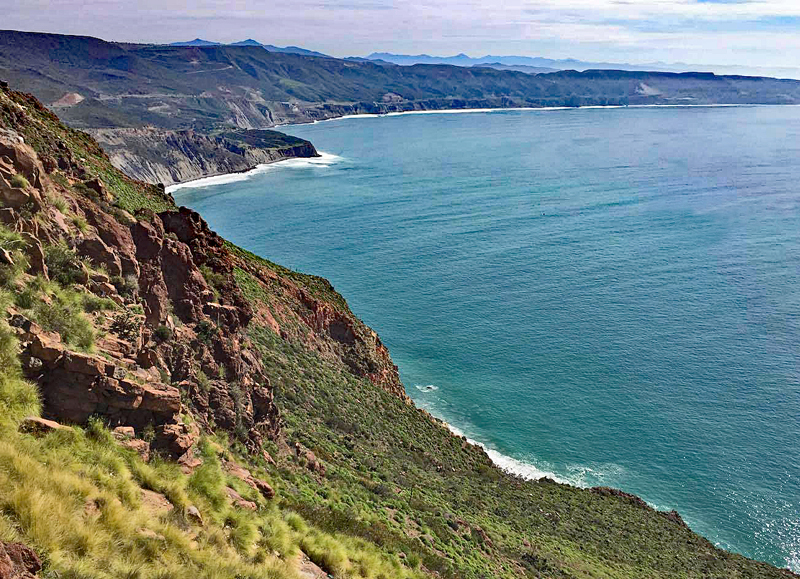
    At the beginning of February, the Pacific Coast lured me away from home.  Twenty years had passed since I had been to Baja California's wine country in the Valle de Guadalupe.  Just the scenery was worth the trip–but oh!, the vineyards and the food were so exciting.  My mind keeps drifting back there; I should have returned so much sooner.

    Tijuana Fito Taco de Tripas 1
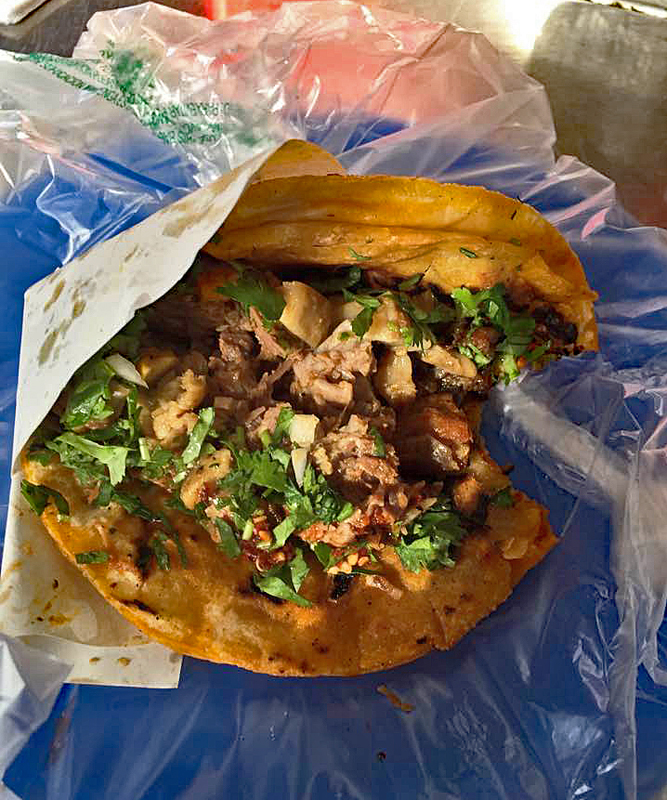
    Yes, it's a taco–but what a taco!  Have you ever tasted something that almost made your knees buckle, it was so delicious?  That's this taco: shreds of birria de res (long-stewed beef) topped with tender, fried tripitas (beef intestines), all tucked into a folded, chile-drenched and toasted two-tortilla package and topped with cilantro and minced onions. Add either salsa roja (red) or salsa verde (green) and get ready for an OMG moment.  You can get these at Tacos Fitos, at one side of Mercado Hidalgo, Tijuana.  A big shout-out to Fernando Gaxiola of Baja Wine + Food for everything you did!

    Ensalada de Aspa?ragos Traslomita 1
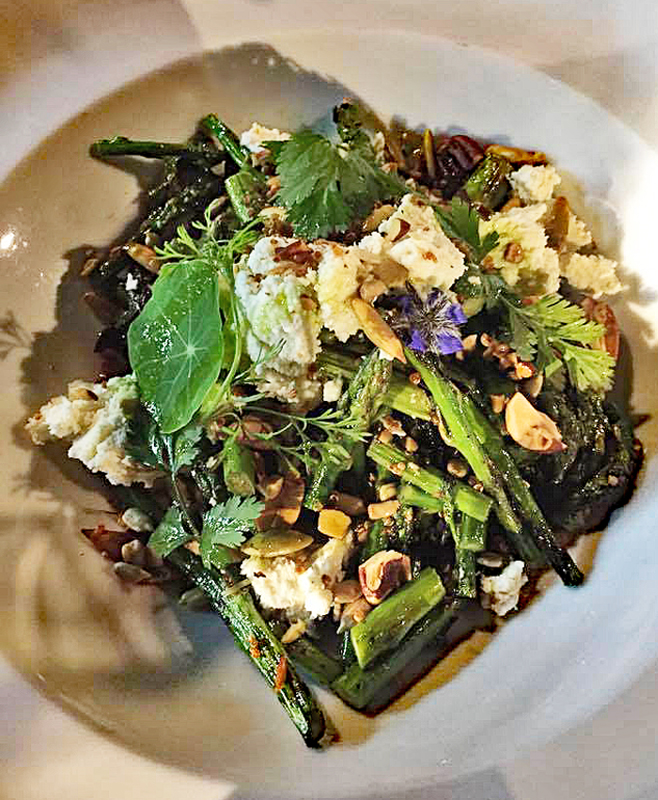
    To finish our two-day February tour in Valle de Guadalupe, we ate our farewell dinner at the impeccable TrasLomita Comedor Campestre. The beautiful setting outdoors under the trees, the wonderful owners and staff, and the really marvelous meal made our evening perfect. Above, a salad of grilled asparagus, seasonal greens, a variety of seeds, and ricotta cheese–all dressed with epazote oil.  Two of us split the salad, but either of us could have eaten the whole thing!

    Traslomita Arroz con Leche FG 1
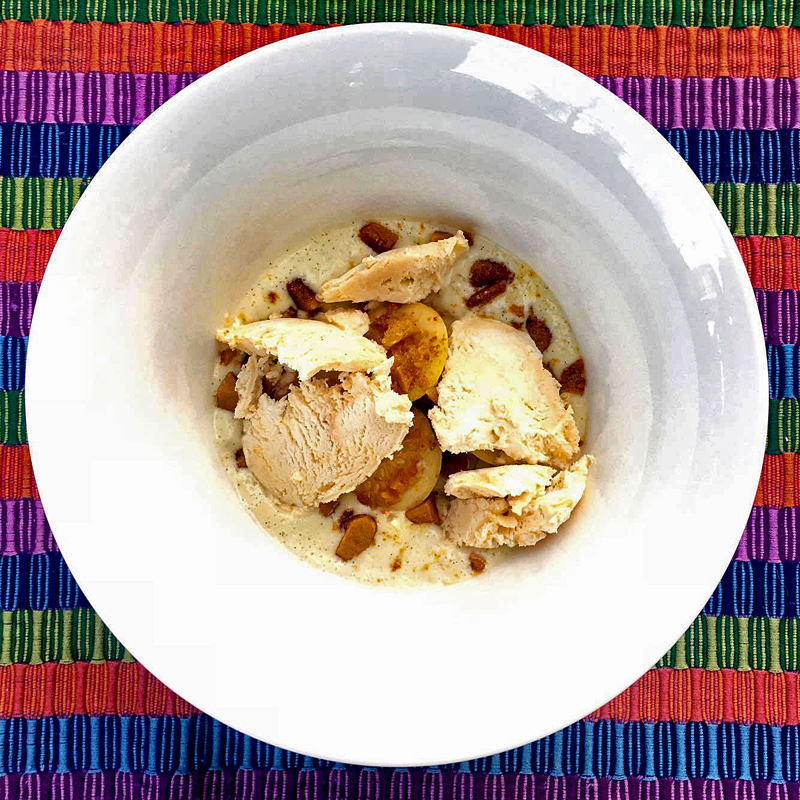
    One of the several desserts on the menu when Mexico Cooks! was at TrasLomita: arroz con leche (Mexican rice pudding) with tweaks by Sheyla Alvarado, the incredibly talented young chef.  The base is traditional arroz con leche, which is served with conserve of fresh guavas, honey, nuts, and house-made ice cream.  Photo courtesy Fernando Gaxiola of Baja Wine + Food.
     
    Nicolas Fabia?n Mazorcas 1a
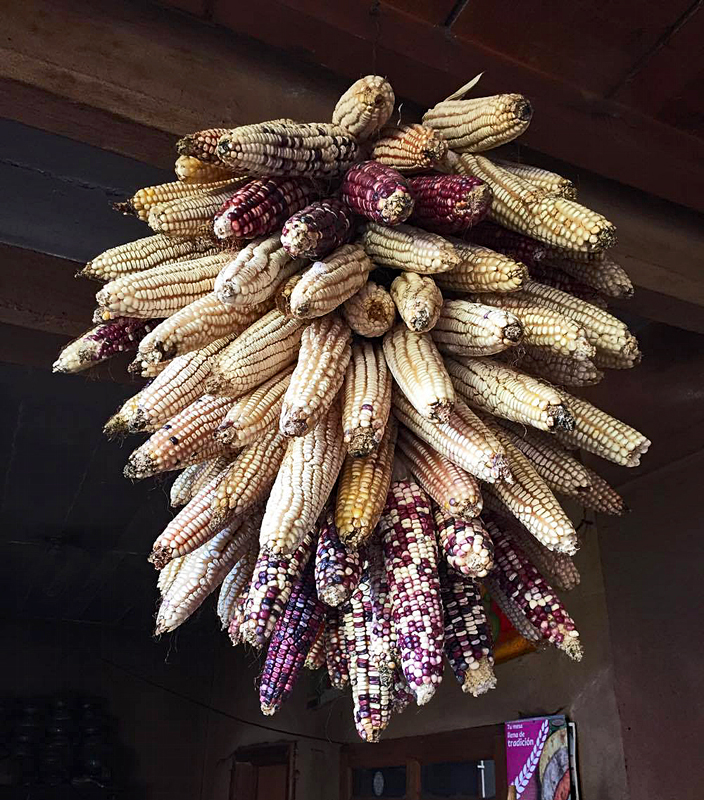
    In late February, Mexico Cooks! took a tour group to Morelia and neighboring towns in Michoacán.  One of our stops was in Santa Fe de la Laguna, at the taller (workshop) of grand master potter Nicolás Fabián Fermín and his wife, María del Rosario Lucas, a potter in her own right and one of Michoacán's well-known cocineras tradicionales (traditional home cooks).  This large bunch of mazorcas (ears of native corns) was drying, hanging from the ceiling beams.

    Croissants Origo Morelia marzo 2017 1
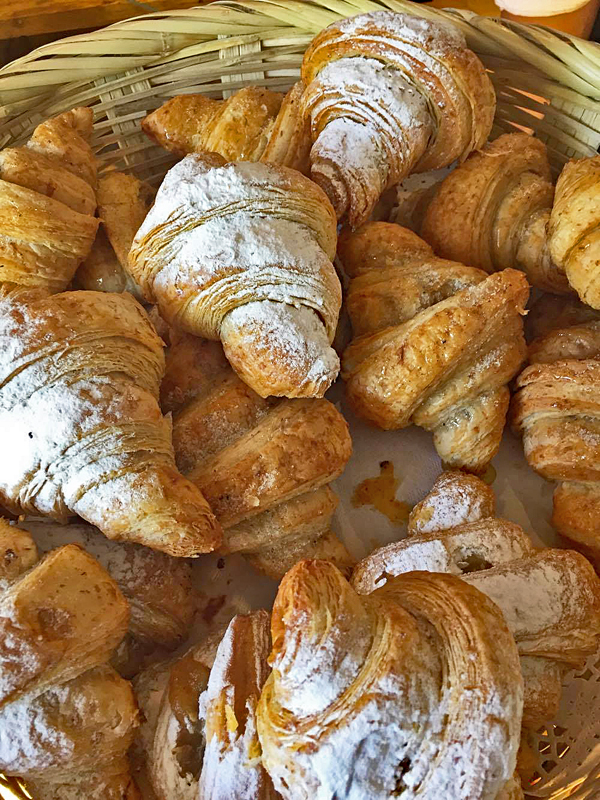
    In Morelia for several days after the tour, Mexico Cooks! took an old friend to Origo, Panadería de Origen (Bakery of Origin), at Boulevard García de León 936.  This delightful new bakery is owned by Pietro Lembo Islas and his wife, Marie Lembo. The Lembos's idea is to work to take food back to its simpler, local origins, in addition to hiring and training local people to work in the restaurant and bakery.  When I was there in early March, Pietro told me that they currently employed 30 people from Morelia. 

    Origo Flour Mill 1
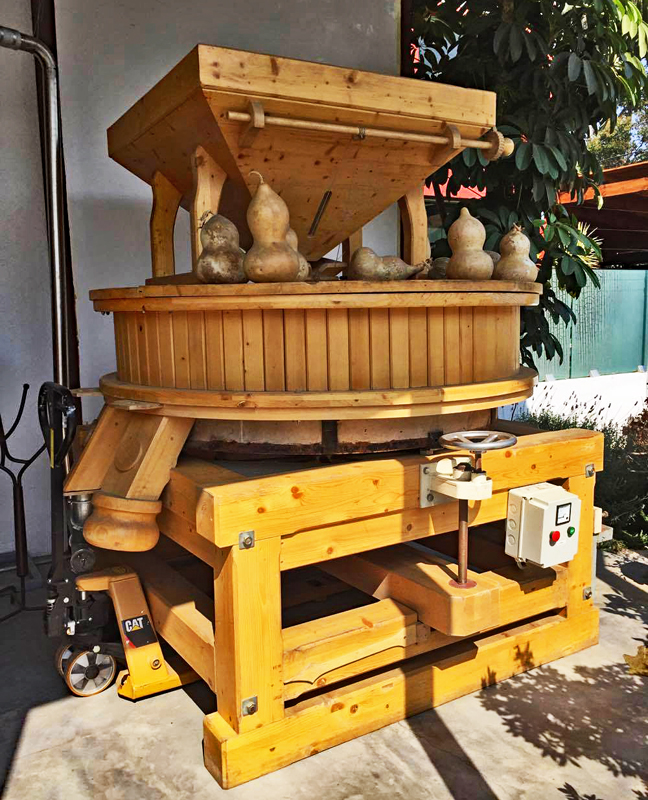
    Panadería Origo's beautiful flour mill, where they grind flour for bread and pastries.  Pietro Lembo demonstrated the mill and the various processes that achieve the texture needed for baking the delicious products that come from Origo's ovens.

    Albo?ndigas Caseras Febrero 2017 1
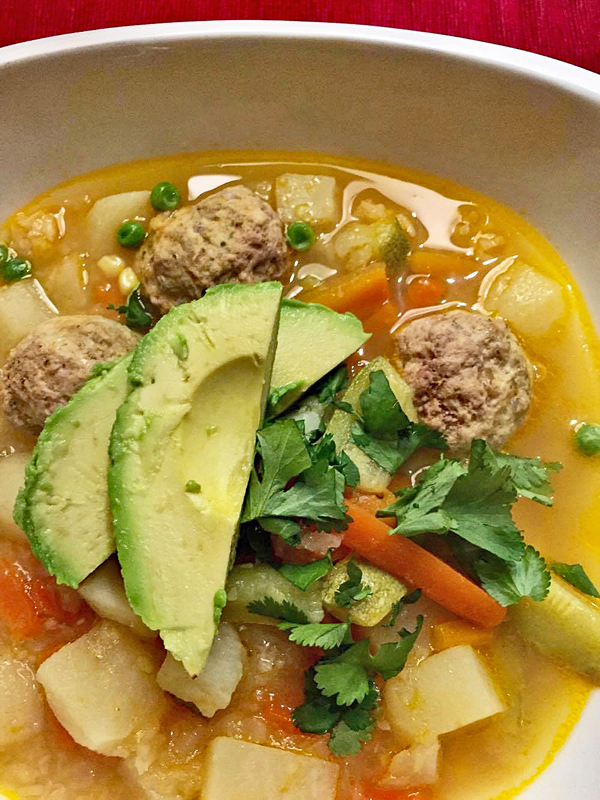
    Delicious (if I do say so myself) and simple home-made albóndigas (meat balls) in caldo (broth).  If you want to make these traditional Mexican meatballs in your own kitchen, the recipe is in the link.

    Primavera CDMX 1
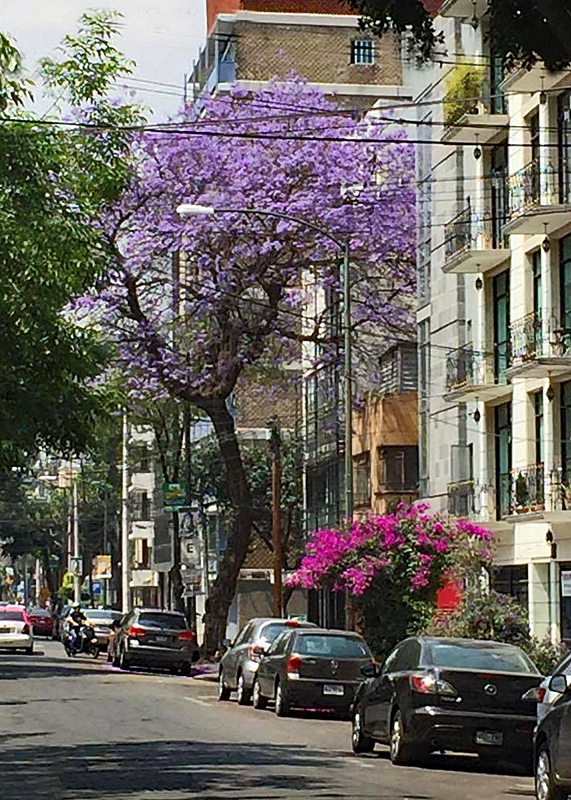
    Mexico City springtime color!  The purple is jacaranda, the deep fuchsia is bougainvillea.  Late March, April, and May are the hottest months in central Mexico; temperatures can be has high as 90º Fahrenheit during the afternoons.  Even though the temperature is very warm at midday, morning, evening, and nighttime are cool (in the low 50s)–and the humidity is extremely low.  By mid-to-late May, the rainy season starts and the weather cools off even during the afternoons.  It rarely if ever rains for more than an hour or so on any day!

    Pinta La Revolucio?n Still Life Diego Rivera 1a
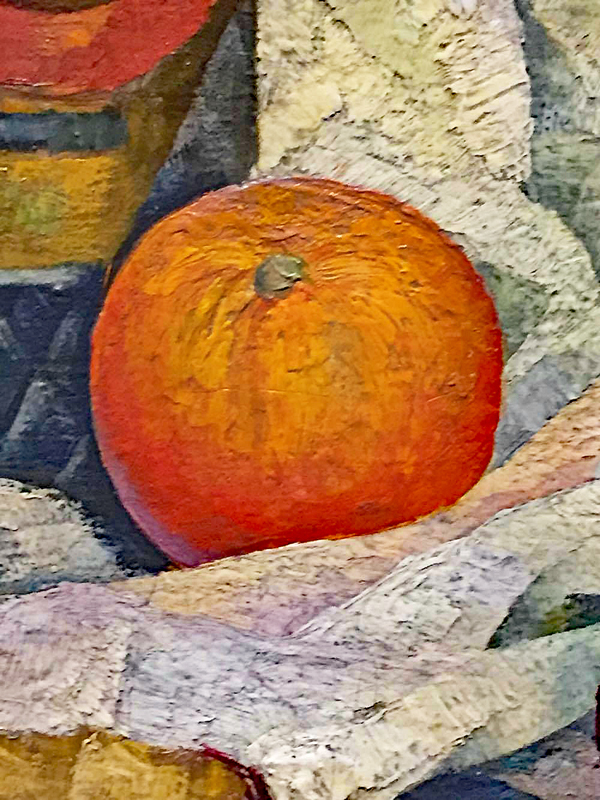
    In early April, a visiting friend was eager to see the exhibition "Pinta la Revolución" (Paint the Revolution) at Mexico City's Palacio de Bellas Artes (Fine Arts Palace). The exhibition, which will be on display until May 7, 2017, includes paintings, sculptures, and photographs dating from the early 1900s to about the 1950s; the works come from museums both inside and outside Mexico as well as from private collections. Artists range from Diego Rivera, Frida Kahlo, and other top Mexican painters to Tina Modotti and Paul Strand, foreigner photographers who were profoundly affected by their lives in Mexico. The photo above is a detail of a Diego Rivera painting called Naturaleza Muerta con Botella de Anís (Still Life with a Bottle of Anise Liqueur), painted in 1918.

    Detra?s de la Catedral CDMX marzo 2017 1
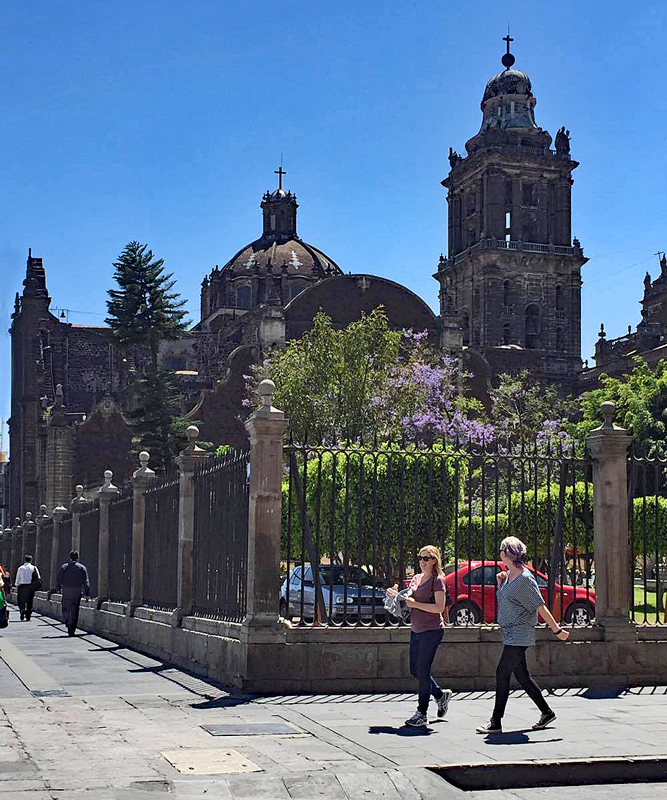
    Our glorious springtime blue sky.  You're looking at the back of the late 16th century Metropolitan Cathedral, in the heart of Mexico City's Centro Histórico (historic center).

    Keith Dannemiller Angel 1
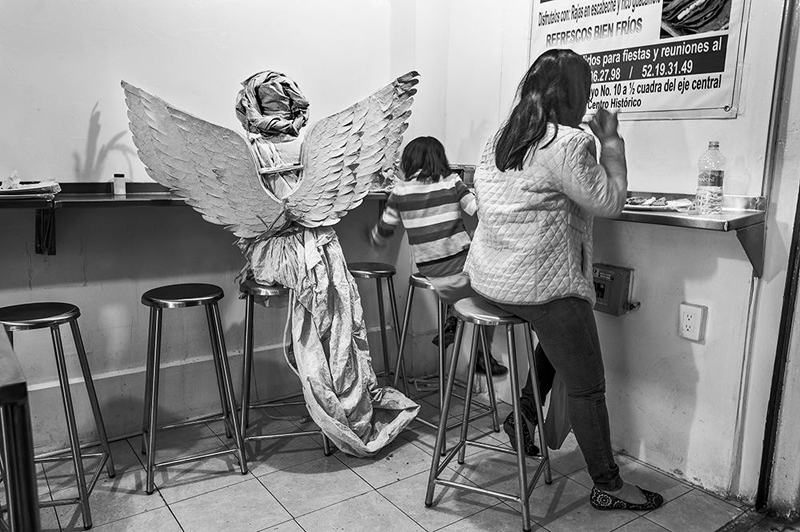
    My out-of-town friend and I also went to see Callegrafía, a photography exhibit at the Museo del Archivo de la Fotografía (Photography Files Archive Museum) at Calle República de Guatemala 34, just opposite the entrance to the Templo Mayor.  The photographer, Keith Dannemiller, photographs almost exclusively in black and white; his specialty is Mexico City's downtown street scene and his gift for seeing what most of us miss is uncanny.  Above, a Mexico City diner.  Even angels need sustenance.  The exhibit will close in mid-June; here's a preview: Callegrafía.

    Tlayuda PdeH marzo 2017 1a
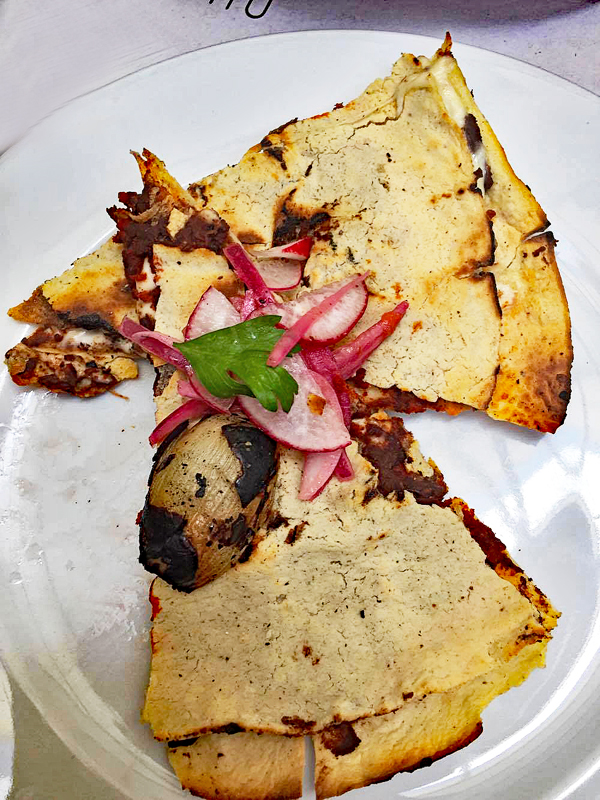
    Tlayuda (a Oaxaca-style thin, crisp corn tortilla, folded over asiento (a smear of lard), refried black beans, chorizo, and cheese.  April 2017, at Restaurante Pasillo de Humo, Av. Nuevo León 107 (upstairs).  The restaurant is far and away the best Oaxacan food in Mexico City.

    Pehua Marzo 2017 1
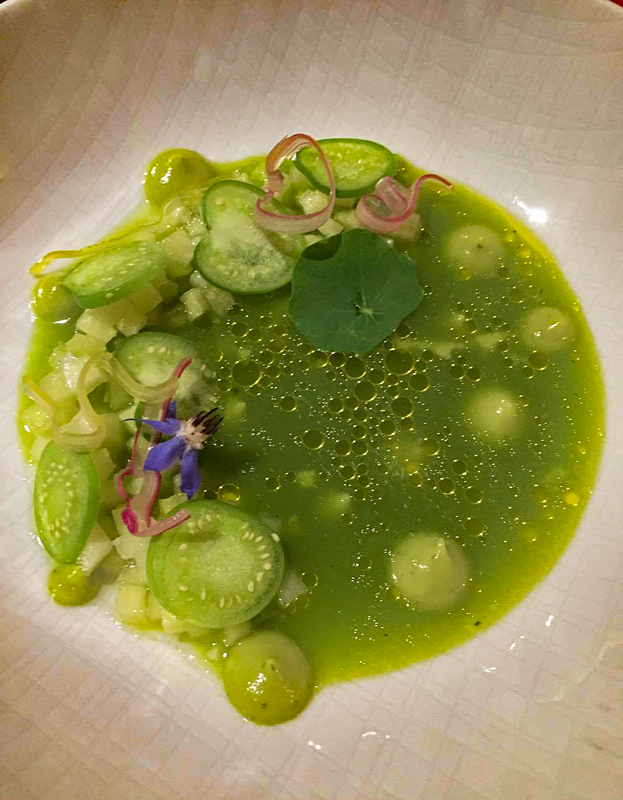
    On the spring menu at Restaurante Pehua (the name means 'beginnings' in Náhuatl), an appetizer called 'Monocromatismo' (monochromatic). The dish is composed of finely minced green chayote and green apple, a light agua (in this case, a cool broth) of tomatillos, and swiss chard. Neither my supper comp
    anion nor I wanted a full meal; this and another shared dish or two were just right for us. Monocromatismo was both stimulating and refreshing, truly delicious.  Chef and co-owner Lezli Ramos Fabiel, formerly of Restaurante Quintonil, surely has a winner on her hands at Pehua.

    Looking for a tailored-to-your-interests specialized tour in Mexico? Click here: Tours.

  • Good Friday Procession of Silence, Morelia :: Viernes Santo Procesión del Silencio, Morelia, Michoacán

    Dolores 1
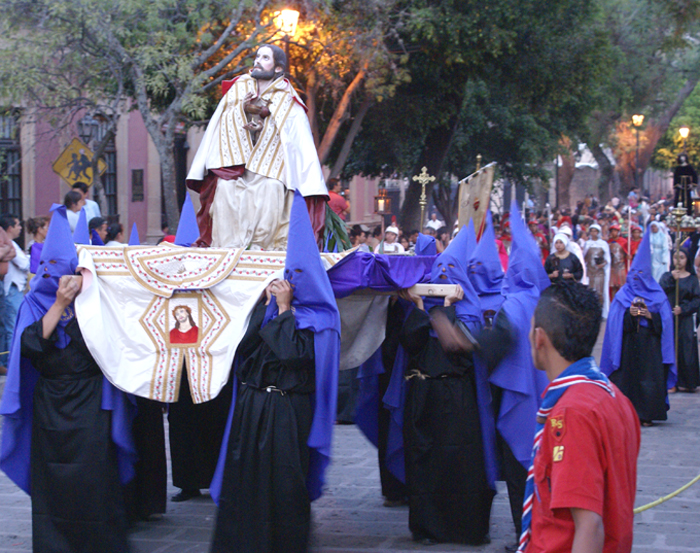
    Nuestra Señora de Dolores (Our Lady of Sorrows) leads the procession.  Hooded members of various Catholic cofradías (confraternities, or religious organizations founded in Europe) carry life-size statues on their wooden platforms approximately three kilometers through Morelia's Centro Histórico.

    Nuestra Señora de los Dolores
    Nuestra Señora de Dolores (detail).

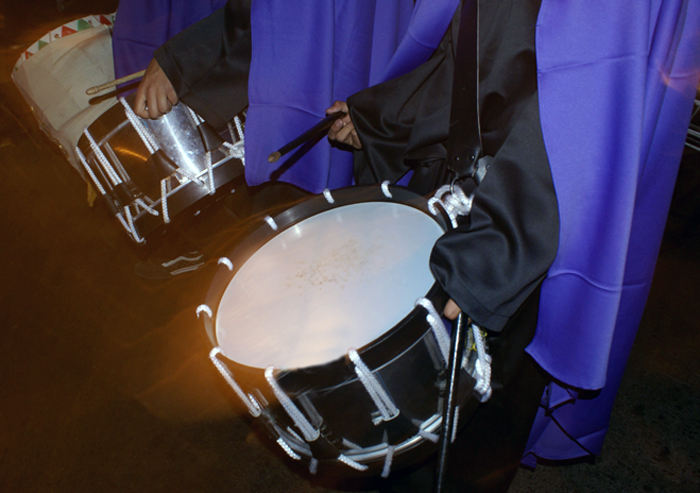
    Procesión Tambores
    Drummers marked the beat of Morelia's penitential Procesión del Silencio, Good Friday's silent procession commemorating both the crucifixion of Christ and his Mother's grief.  Only the drumbeat breaks the silence along the route.

    Rezando en la
Huerta
    Jesus during la Oración en el Huerto (praying in the Garden of Gethsemane), just prior to his arrest on Holy Thursday night.  Boy Scouts (the young man in red at the right of the photo) hold the protective rope all along the route of the procession.

    Procesión Cofradía de Blanco
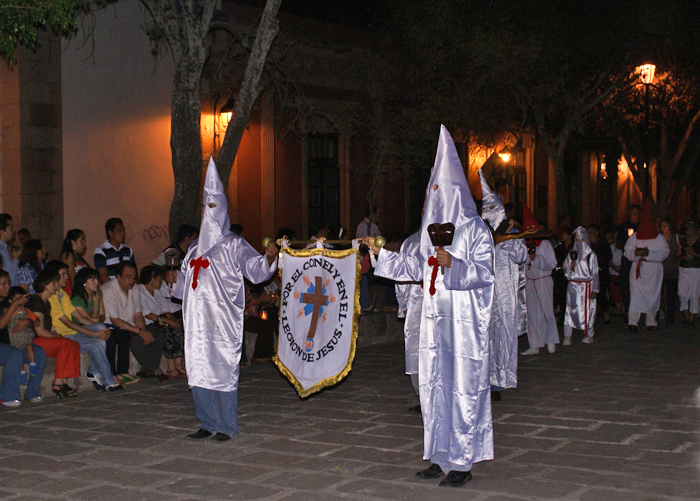
    Hundreds of cofradía members marched in the still of this Good Friday night.  Foreigners, particularly those from the United States, are often shocked by the hoods, which to them are cultural reminders of the Ku Klux Klan.  In Mexico, there is no association between the two.  The procession is penitential and the hoods are a guarantee of anonymity and humility for the cofradía members.  They believe that humility and works of charity are best practiced anonymously.

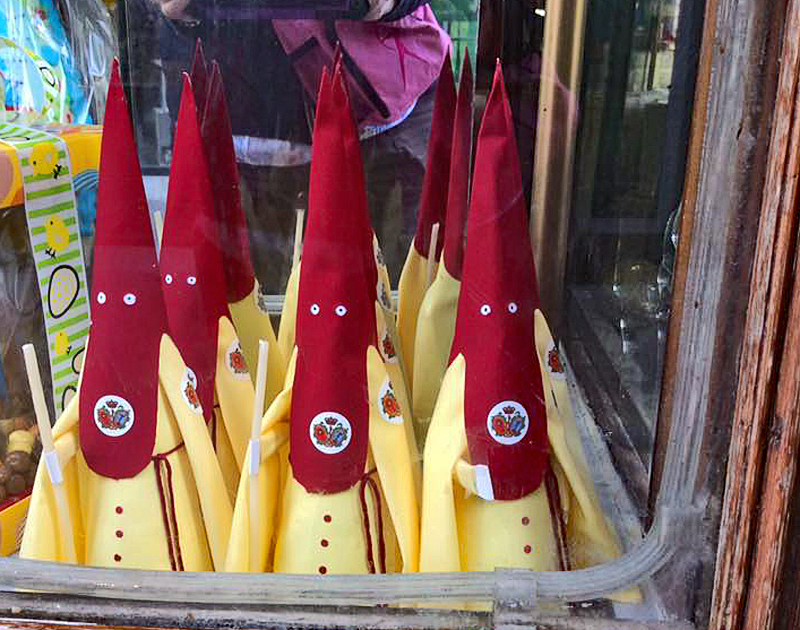
    Jane Bachner King White Chocolate Nazarenos Seville 
    Semana Santa (Holy Week) cofradías originated in 9th century Europe as pious organizations and arrived in Mexico with the earliest Spanish settlers. The figures in the 2017 photo above are from Seville, Spain, and are made of white chocolate.  Photo courtesy Jane Bachner King.

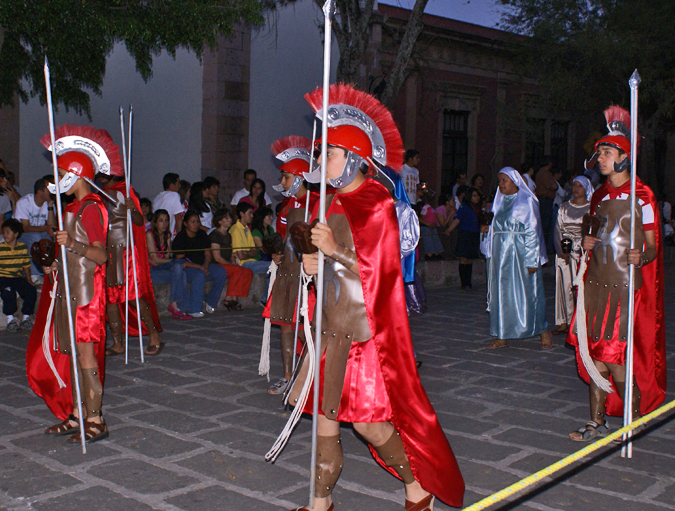
    Soldados Romanos
    Roman soldiers.

    Procesión Veladora 1
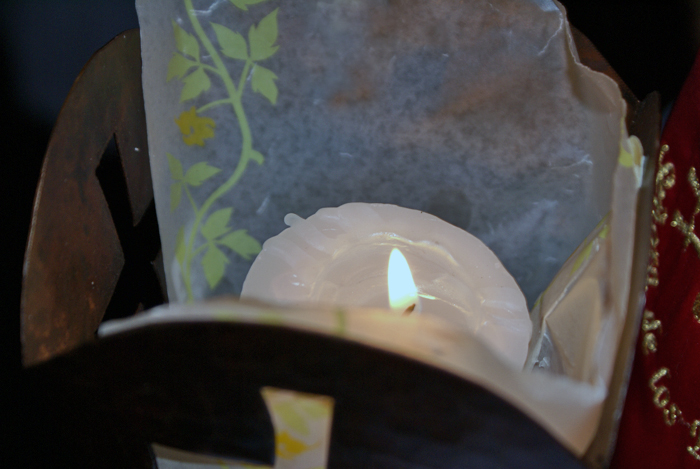
    The majority of Morelia's Procesión del Silencio takes place after dark, by candlelight.  

    Legion de Jesús
    The Legion of Christ carry their banner and their lamps.  The Procesión del Silencio lasts about five hours.  During that time, all of Morelia's Centro Histórico is closed to vehicular traffic.

    La Cruz a Cuestas
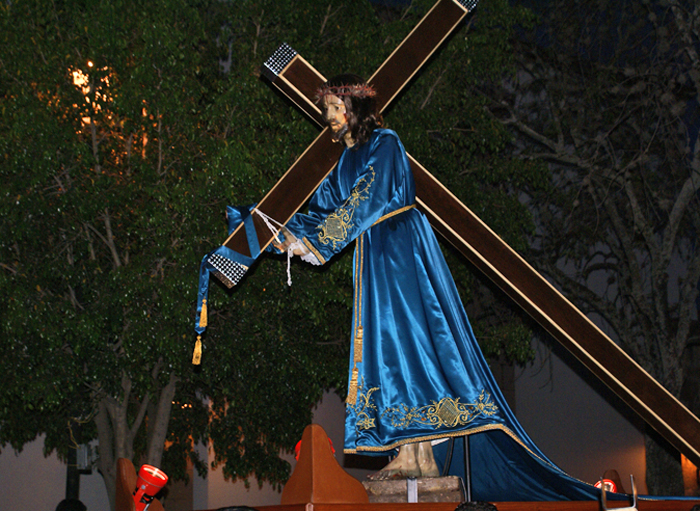
    Jesus carries the cross a cuestas (on his back) to Calvary.  More than 50,000 spectators stand along the entire route of Morelia's Procesión del Silencio.

    Procesión Veladora 3
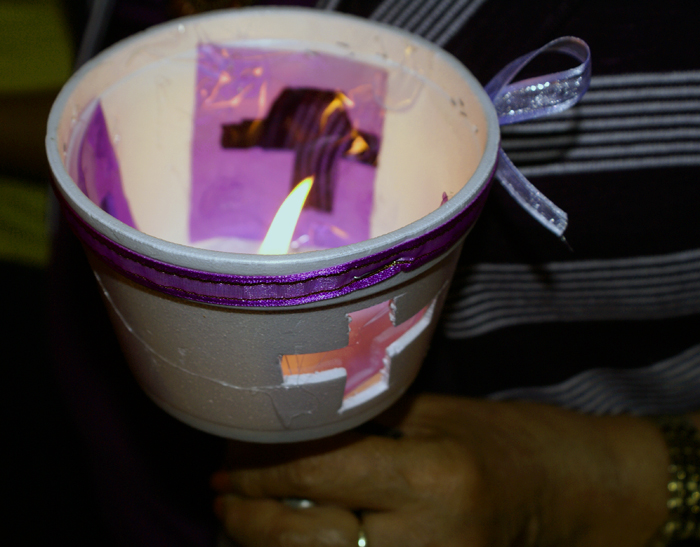
    Candle holders are made of many materials, from crystal to styrofoam to metal.

    Cargando la Cruz 2
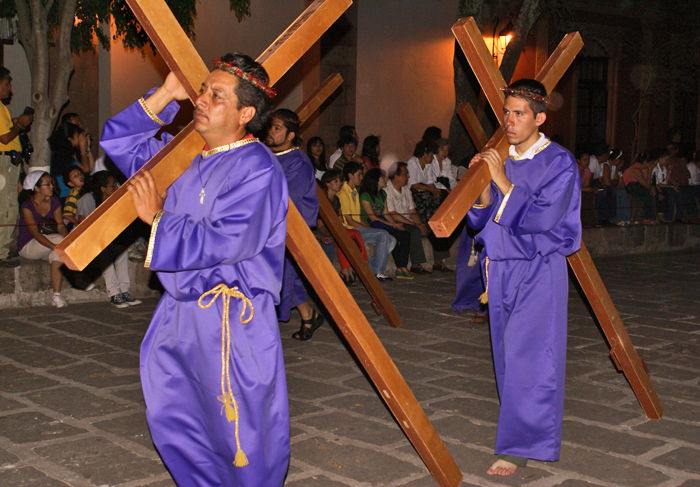
    Penitents from one of Morelia's confraternities carry their crosses the length of the procession.  Many march barefoot through the city streets.  The procession celebrated its thirty-seventh anniversary this year.

    Procesión Cristo Negro en la Cruz
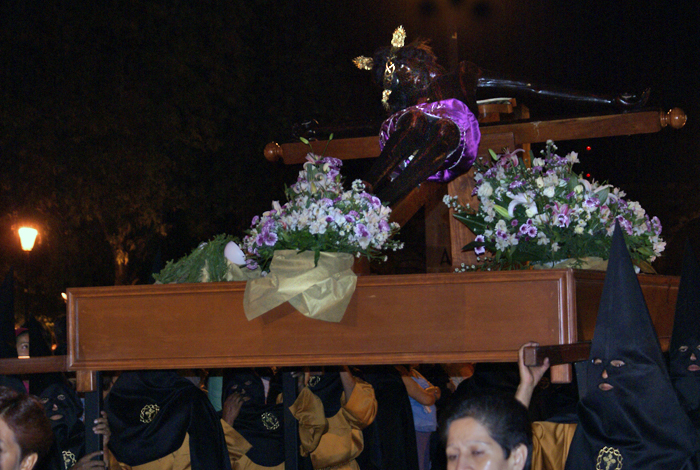
    Robed and hooded members of another Catholic confraternity carry this image of the Cristo del Entierro (Christ of the Burial), nailed to the cross prior to his elevation.  Hoods cover the faces of those who march as a sign of penitence.

    Antorchas
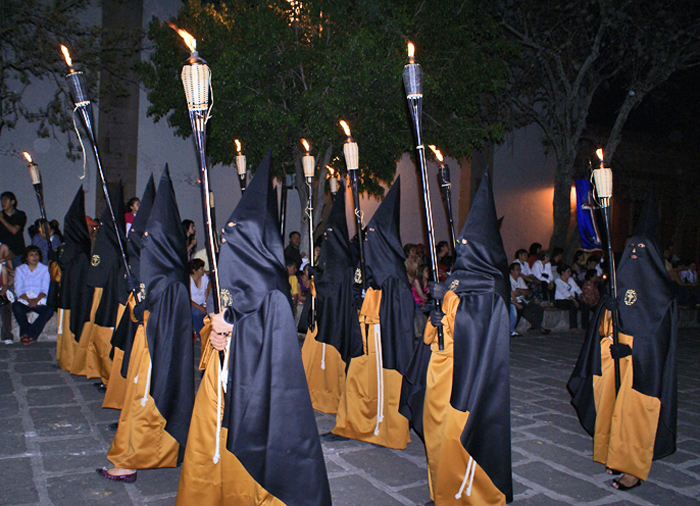
    Clothed in gold and black, these marching penitents carry huge metal torches.

    Cristo Muerto
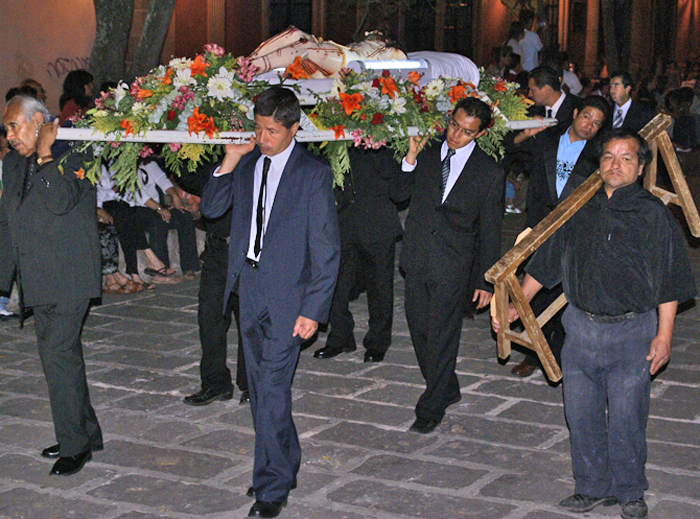
    Six men of all ages carry Cristo Muerto (the dead Christ), while six others follow as relief when the burden of the image, the platform, the lights, and the flowers becomes too heavy.  The man at the far right of the photo carries one of two saw horses used to support the platform during occasional pauses in the procession.

    Nuestra Señora de
Soledad
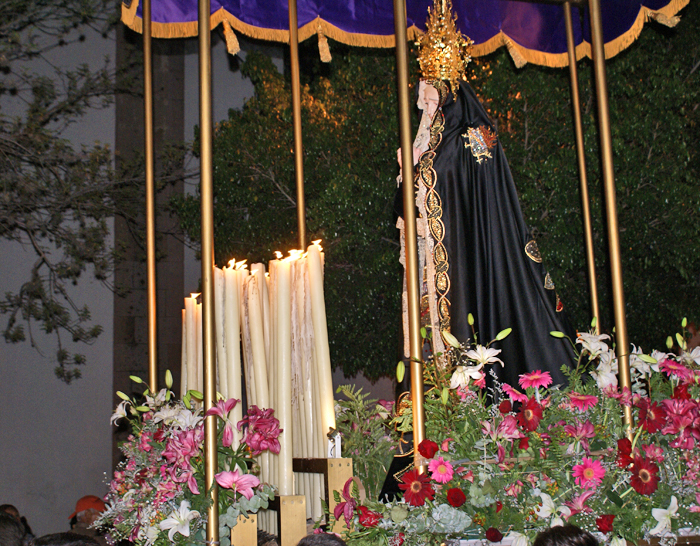
    At the end of the Procesión del Silencio, la Virgen de la Soledad (Our Lady of Solitude) follows the body of her crucified Son.  The platform bearing her image holds burning candles, a purple and gold velvet canopy, and banks of fresh flowers.

    Looking for a tailored-to-your-interests specialized tour in Mexico? Click here: Tours.

  • De Vaga en Veracruz, Tierra Jarocha :: Vacation Wanderings in Veracruz, Part V

    Hotel Taji?n 1
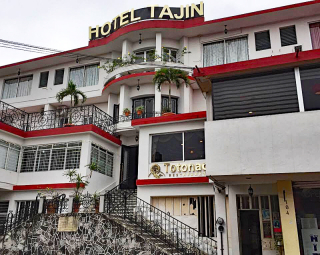
    The truly wonderful Hotel Tajín.  Our reservation was for one night, but the town of Papantla and the hotel were so delightful that we stretched it out to three nights!  We enjoyed huge quiet junior suites, comfortable beds, great showers, excellent above-the-call-of-duty service, and prices lower than we'd thought possible.  A big plus: Hotel Tajín is just a block from Papantla's main square and only a few steps farther from its two markets.  If you need a place to stay in Papantla, don't hesitate to book here.  All photos copyright Mexico Cooks! unless otherwise noted.

    We're untiring food snoops, always seeking out any option for any kind of new taste, modern or millennial.  In most regions of Mexico, traditional cooking is a great opening for getting acquainted with ancient cultures, ancient customs, and ancient rituals.  Veracruz–especially the Papantla area and its surroundings–is one of those very special parts of the country, where ancient cuisine continues to be the heart and soul of the region. 

    Zacahuil Mercado Hidalgo 1
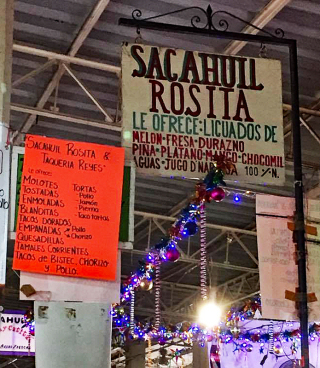
    Inveterate investigators of food in general, we were on a hopeful hunt for traditional and regional Totonaco food. The tamales pintos that we tasted with the cocineras de humo near El Tajín had served only to whet our appetites for more of these Veracruz specialties.  When we awakened after a restful night's sleep in our quiet hotel, our first stop would be Mercado Hidalgo, just a couple of blocks from Hotel Tajín.  We were jonesing for a breakfast of zacahuil, another kind of Veracruz tamal.  Many of the food booths at the Mercado Hidalgo specialize in regional zacahuil. We found a table at Sacahuil Rosita, on the upstairs level of the market.
     
    Veracruz Papantla Zacahuil
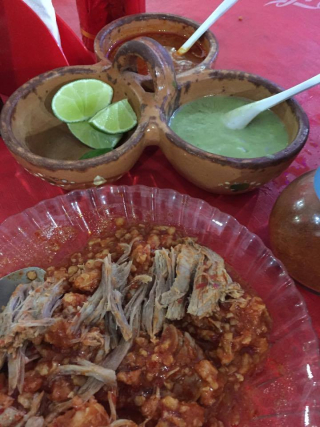
    This zacahuil totonaco is prepared with masa martejada (dough made of coarsely broken corn), chile guajillo (a mild-flavored red chile), other mild spices, and pork meat. Cooked in a pot rather than wrapped in corn husks or banana leaves and fire-baked, it's ladled out into your bowl and served with a choice of salsas.  We were glad to have tried the zacahuil, but we weren't thrilled with its somewhat mushy texture or its bland flavors.  We hoped for better food luck later in the day.

    Papantla don Rosendo 1
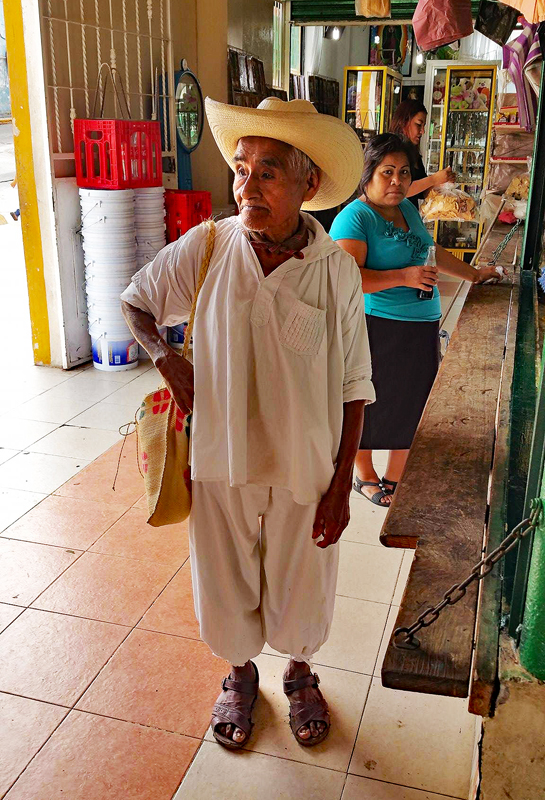
    Meet don Rosendo, dressed in the traje típico totonaco (typical Totonaco men's clothing).  He was quite pleased to be asked for his photo. Courtesy Pamela Gordon.

    While we were out and about talking to vanilla producers, the name of one remarkable Papantla restaurant kept popping up in conversation: Restaurante Nakú Papanteco, offering traditional Papantla and Totonaco dishes.  Lucky us: when we got back to the hotel, it was time for cena (supper), we were hungry, and a taxi stand was just outside our door.  TAXI!

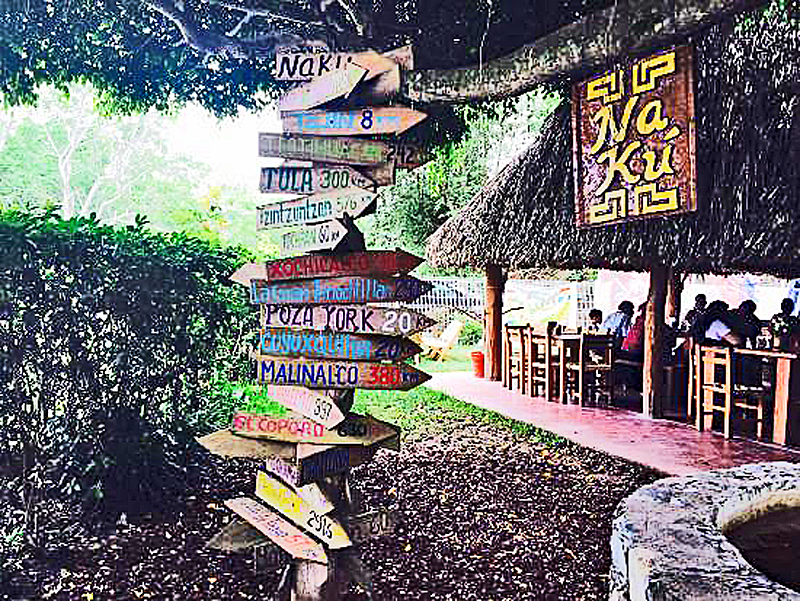
    Naku? Palapa Papantla 1
    Restaurante Nakú Papanteco, built under a palapa, welcomed us warmly, brought us the menu and something to drink, and we settled in to our task: to order food that would wow us with its traditional sabores totonacos (Totonaco flavors).

    Naku? Cena Caldo Better 1
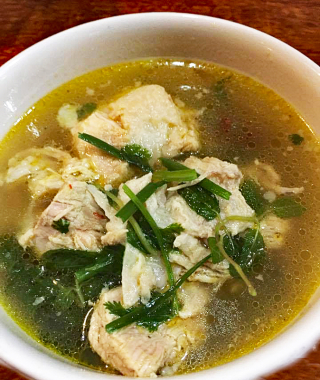
    The Takxwayajun (caldo de pollo estilo totonaco con chile de mole, yerbabuena y cebollina) [traditional Totonaco chicken soup with chile de mole, mint, and chives], was hot and cozy on a cool December evening. The traditional Totonaco herbs, chile, and tender chicken combined for deep satisfaction.

    Naku? Cena Tripas copy
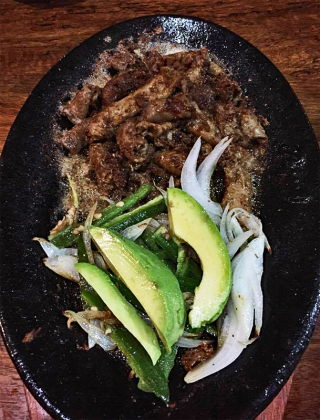
    An appetizer plate: the tabla de tripas de leche en chile seco.  Tripas de leche are the milk glands in a cow's udder, as opposed to tripas, which are intestines. Menudo, which many people know as tripe, is the different linings of any of a bovine's four stomachs. 

    Naku? Cena Pollo con Vainilla 1
    We were so interested in trying this chicken, bathed in very subtly-flavored vanilla sauce.  Last week, Mexico Cooks! explained the profound link between Papantla and vanilla, but the flavor is infrequently used in savory dishes.

    Who are the Totonaco?  The indigenous community known as Tutunacú (in the Totonaco language, it means three hearts) dates from approximately 300 to 1200 CE (Common Era).  By the time the Spanish arrived on the shores of what is now Veracruz, the Mexica (known much l
    ater as the Azteca) had conquered and overtaken the region encompassing El Tajín, Papantla, and Cempoala.  The Spanish completed the takeover; diseases formerly unknown to the indigenous people decimated their population.

    Varinia and Lorenzo Naku?
    Varinia Juárez and Lorenzo Collado, the delightful and highly committed owners of Nakú, who so generously shared their time, food, friendship, and some Totonaco history.  Photo courtesy Restaurante Nakú.

    "In the Totonaco culture, we love and profoundly respect nature, Mother Earth, and the four elements that govern the universe and the consequences of our lives.  To live without these considerations is to live without a reason for being.  There is no moment in the Totonaco life in which we don't consider this world view; nearly every action carries a ritual with it.  Illnesses arise and are healed considering the wind, fire, water, and earth.  In the fields, sowing follows the state of the moon and all farming cycles.  In building, we ask the god of the forest for permission to cut down trees, and at the same time we beg forgiveness from Mother Earth for damaging her. With regard to food, women are offered up to the gods, so that in their homes, no one goes hungry.

    "Nakú Restaurante Papanteco was born from a vision of rescuing, preserving, and promoting the Totonaco culture by means of its gastronomy, offering traditional Papanteco and Totonaco recipes, serving farm products endemic to the region and prepared by indigenous hands. The concept is enhanced by buying and selling artisan handwork and other works of art guaranteed to be made by Totonaco hands.  Nakú is redolent of firewood, vanilla, history, ancestral culture–but above all, Nakú is filled with the fragrance of love.  We love what we do, because our food brings together all of this yearning to be with family, to remember those long moments marked by the hand mill, the comal (clay griddle) the metate (rectangular 3-legged grinding stone), and in this environment, the grandmother, the daughters, and the granddaughters are the leading characters.  Today, the fragrance of firewood at Nakú evokes in us the uses and customs of a people that, day by day, are being lost."

    Naku? Pepitas a Tostar 1
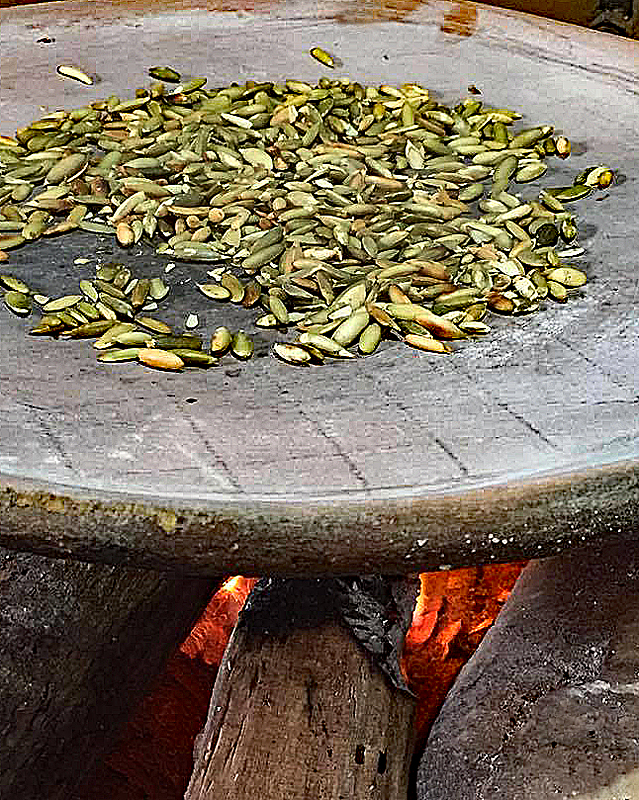
    Squash seeds toasting over a wood fire, on a clay comal (griddle).

    Naku? Moliendo Pepitas 1
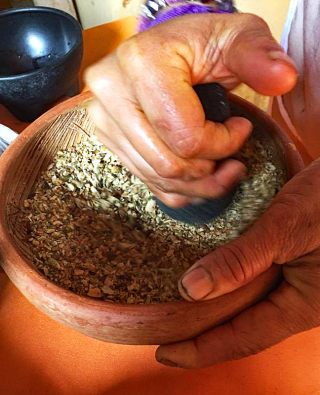
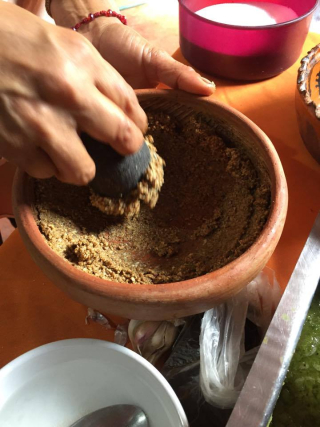
    Mayora Celsa Santes Cimbrón, grinding pepitas (toasted squash seeds) using a molcajete and mano.  A mayora, always an extremely knowledgeable and skilled woman, is the head of a kitchen.

    Naku? Masa de Pepitas
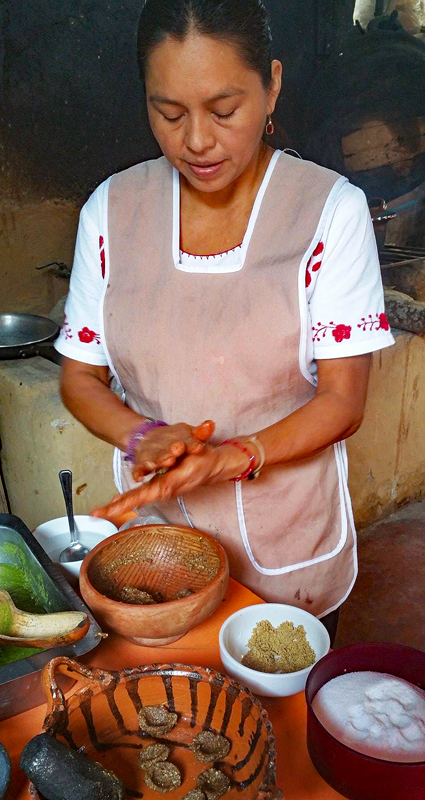
    Mayora Celsa continued to grind the pepitas until they released enough of their oils to gather into a dough; she then formed them into little orejas (ear-shaped dumplings) that she served for breakfast in a regional vegetable soup, the morning after we'd had cena at Nakú.

    Naku? Mayora Celsa 1
    Mayora Celsa, forming the orejas.  You can see the first few in the bowl at the bottom of the photo.  Photo courtesy Pamela Gordon.

    Naku? Desayuno Untadas Mejor 1
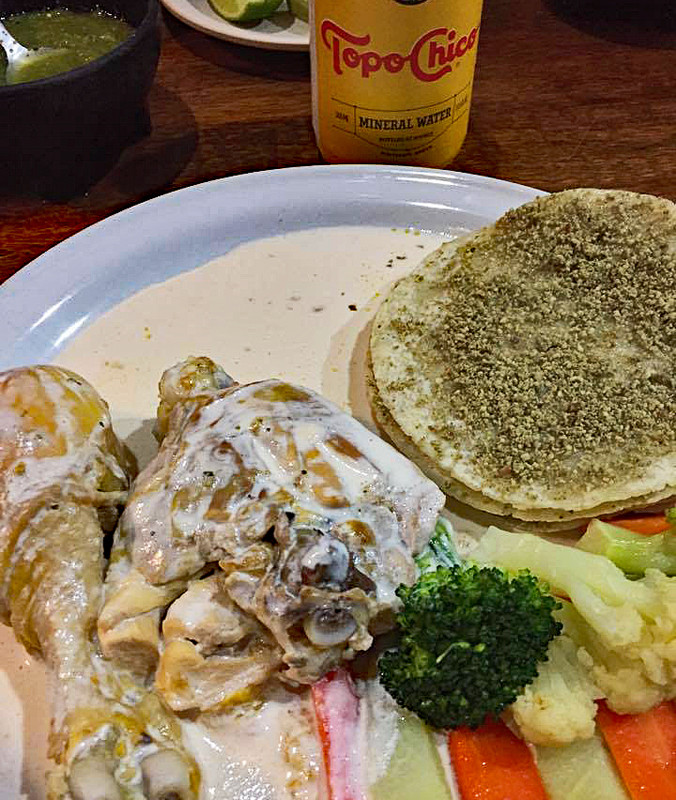
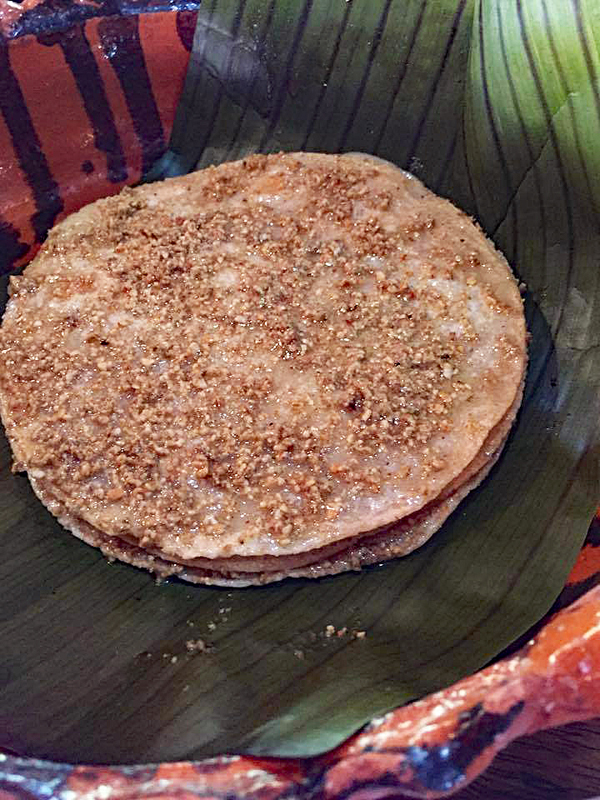
    Totonaco tortillas untadas con pipián.  Freshly made tortillas, spread with freshly rendered pork lard and sprinkled with toasted, molcajete-ground squash seeds.  I wish you have an opportunity to taste these–a simple, elegant and completely heavenly thing, the stuff of dreams.

    Naku? Desayuno Hongos Silvestres 1
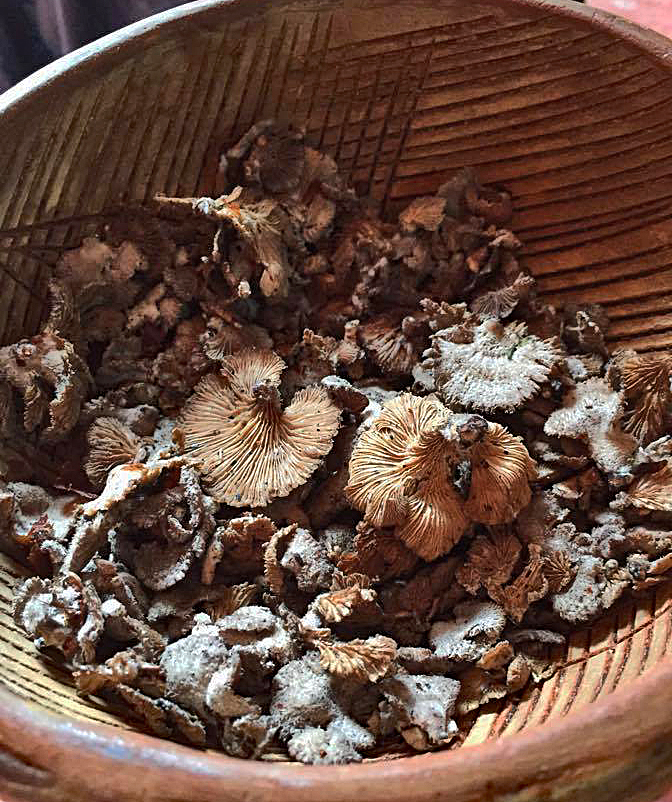
    Freshly harvested hongos de chaca (local wild mushrooms); mayora Celsa prepared them in empanadas for our breakfast.

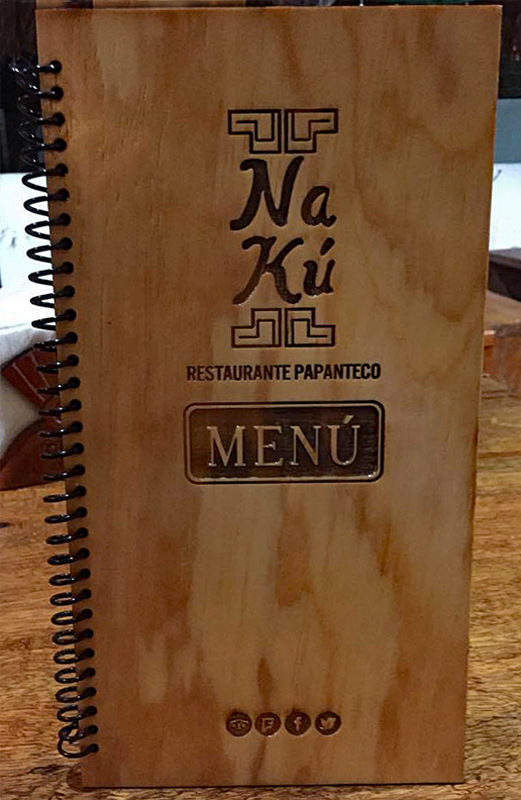
    Naku? Portada Menu? 1
    Nakú Restaurante Papanteco opened on February 14, 2013.  If you are ever in Papantla, don't miss it.  If you're even near Pap
    antla, take the time, make a detour, eat the marvelous food on its menu.  Tell them Mexico Cooks! sent you.  On second thought, take me with you.

    Looking for a tailored-to-your-interests specialized tour in Mexico? Click here to see new information: Tours

  • De Vaga en Veracruz, Tierra Jarocha :: Vacation Wanderings in Veracruz, Part IV

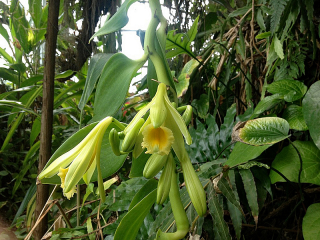
    Vanilla-orchid-flowers
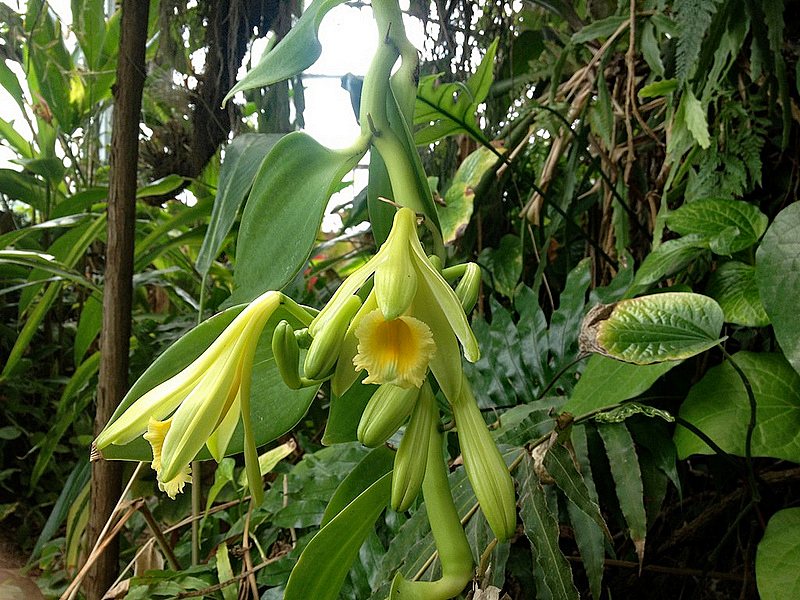
    Did you know that vanilla–that leathery, wrinkled, don't-know-what-to-do-with-it, dark-brown bean in the back of your pantry, that bottle of extract in your cupboard, the ice cream that drips from your cone–is the pod of an orchid that originally grew only in Mexico?  Since long prior to Spain's arrival in what we know today as Mexico, Vanilla planifolia (flat-leafed vanilla) grew in the cool forests of the low easternmost mountains near the Gulf of Mexico–specifically, in and around Papantla, Veracruz. Today, the area produces about 80% of the vanilla grown in Mexico.  The orchids were not in bloom while we were there; hence this photo, courtesy Wikipedia.com.
    Veracruz Gaya Entrada
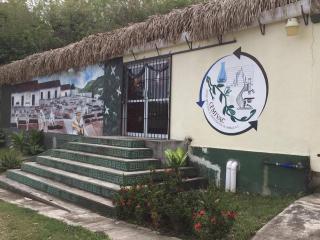
    In our search for Veracruz vanilla, we stopped here: Vainilla Gaya, one of the original Italian vanilla growers in Mexico.  I had made an appointment for a tour, but we arrived late after erroneously going to another of Gaya's locations.  Nevertheless, we were well-attended and able to see–albeit quickly–the areas of 'beneficio' (betterment), where green vanilla pods, newly harvested from vines in commercial production rooms, are cured and fermented both in ovens and in the open air.
    Veracruz Gaya Beneficio 1
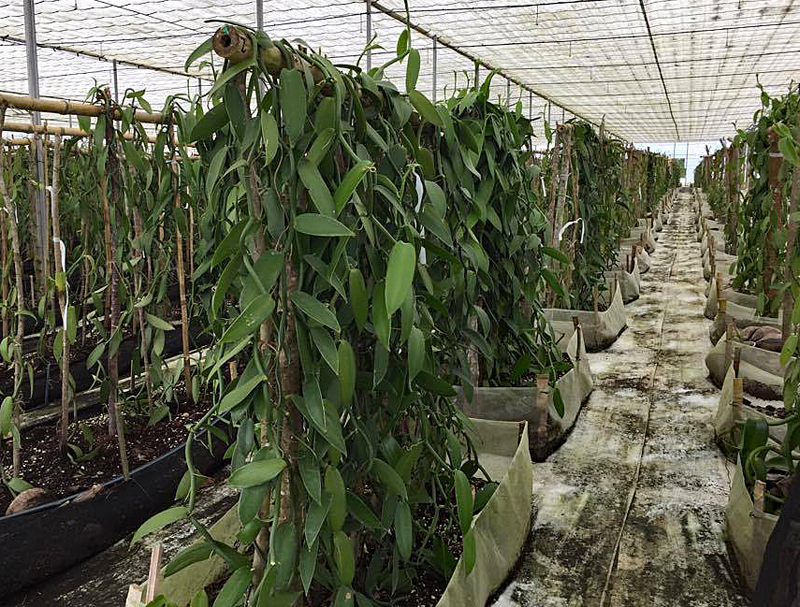
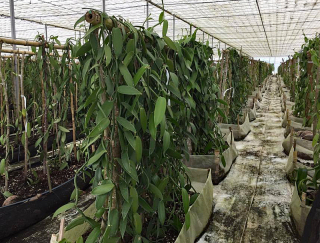
    One of the growing rooms at Vainilla Gaya.  Vanilla is a vine that requires the support of jungle trees, of individual limbs, or, in this case, of metal and bamboo supports.  Click on any photo to enlarge it.  
    Veracruz Gaya Beneficio 4
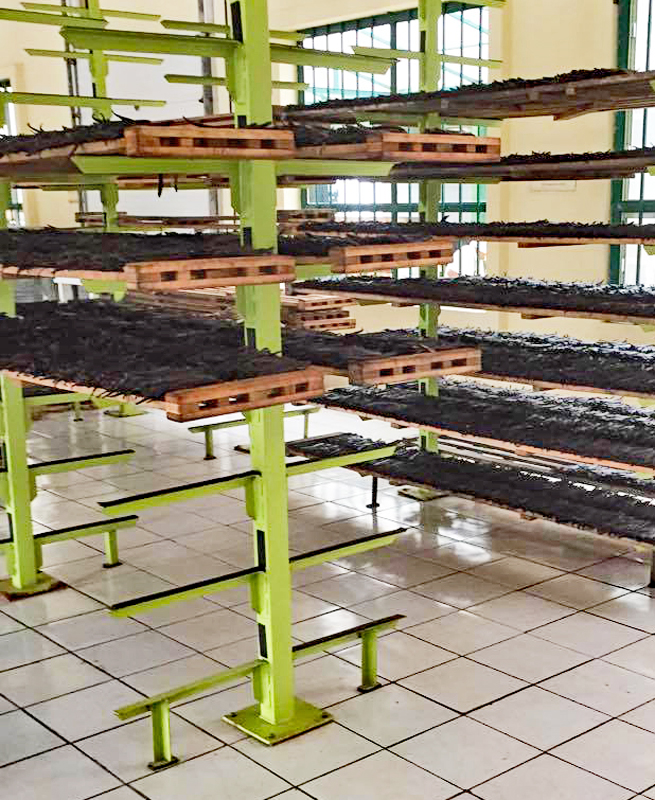
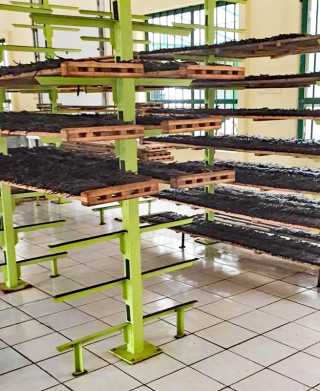
    Trays of vanilla pods curing at Gaya.  Of the three vanilla businesses that we visited, Gaya appears to be the most like a modern laboratory. If you're looking for jungle-grown vanilla, it's not at Gaya.  

    You might well ask, "How did vanilla get its name?" It was originally called xánat, by the Totonacos; the name in Náhuatl is tlilxóchitl.  The Spanish name is vainilla, the diminutive of vaina, a pod.  So vainilla–vanilla, in English–is a little pod.  Even though most of us call it a vanilla bean, it is in no way related to phaseolus vulgaris, the common bean–pinto, black, navy, kidney, or any other you can think of, none of them and none of their relatives are related to vanilla.  If you're asking for a vanilla bean in Spanish, the commonly used phrase is "ejote de vainilla".
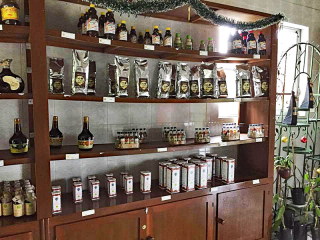
    Veracruz Gaya Tienda 1
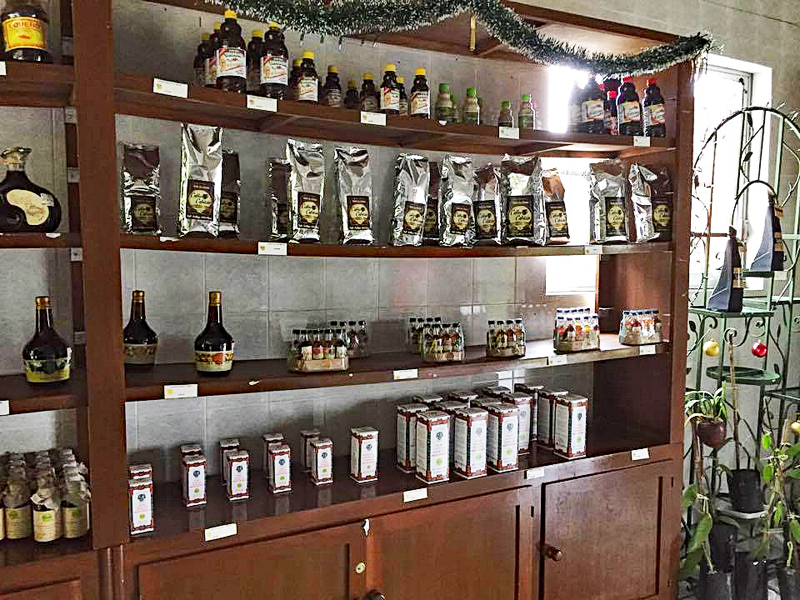
    The store at Gaya.  The company produces and sells the pods, natural vanilla extract, vanilla saborizante (flavoring), vanilla powder, sugar flavored with vanilla, coffee flavored with vanilla, vanilla liqueur, and some other products.  We bought a few pods and some vanilla extract.

    Our tour guide at Gaya gave us a good deal of information about what the vanilla vine requires to prosper, flower, and produce pods.  Among the various details were:

    –a warm, humid, tropical climate with temperatures ranging from 71 - 90 degrees Fahrenheit.
    –more than 80% humidity.
    –annual rainfall of 48 to 118 inches.
    –location at zero to 600 meters above sea level.
    –light at 80%.
    –well-drained soil with pH between 6 and 7.
    –plenty of organic material as its main nutrients.

    March, April, and May are the time when new vanilla plants are cut and planted from older vines.  From planting to first flowering, vanilla normally requires three years of growth.  From pollination to harvest, each pod requires nine months to the day.  
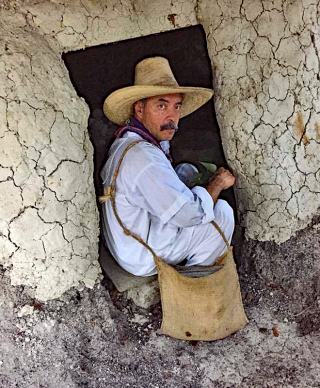
    Jose? Luis Entrada Temazcal 3
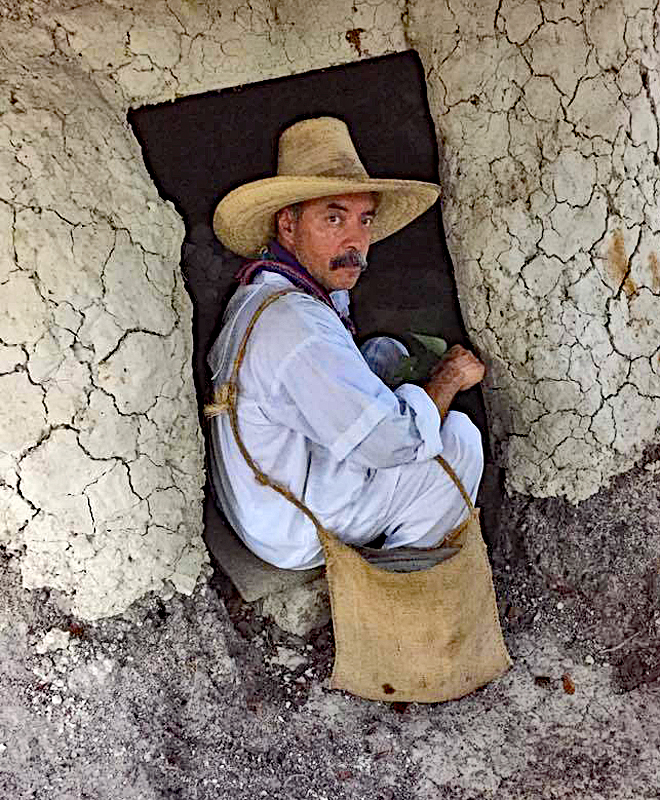
    After visiting the installations at Gaya, we moved on to meet José Luis Hernández Decuir, of Eco-Park Xanath near Papantla.  Sr. Hernández is a learned and really fascinating tour guide in all aspects of the traditional cultivation of vanilla.  In the photo, he's sitting in the doorway to the temazcal (ancestral and spiritual sweat lodge) on his property.    

    One of the most interesting facts about vanilla is its pollination.  The early Spanish were fascinated with the plant, its flowers and pods, and its flavor.  Of course they wanted to cultivate vanilla in Europe; Hernán Cortés introduced the plants there in the 1520s.  The orchid plants grew and flowered, but produced no vanilla pods.  
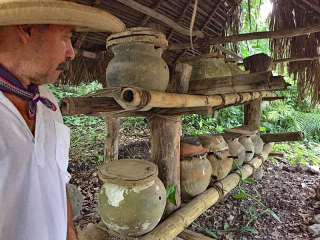
    Jose? Luis Melipona Hives 1
    Sr. Hernández explains pollination of the vanilla orchid by the melipona bee.  The clay pots in the photo are two tiers of bee hives balanced on bamboo shelves; the dark round spot on the top and bottom hives closest to Sr. Hernández are the tiny entryways to the hives.
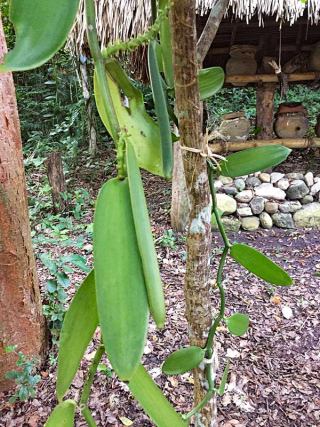
    Jose? Luis Vainilla Up Close 2
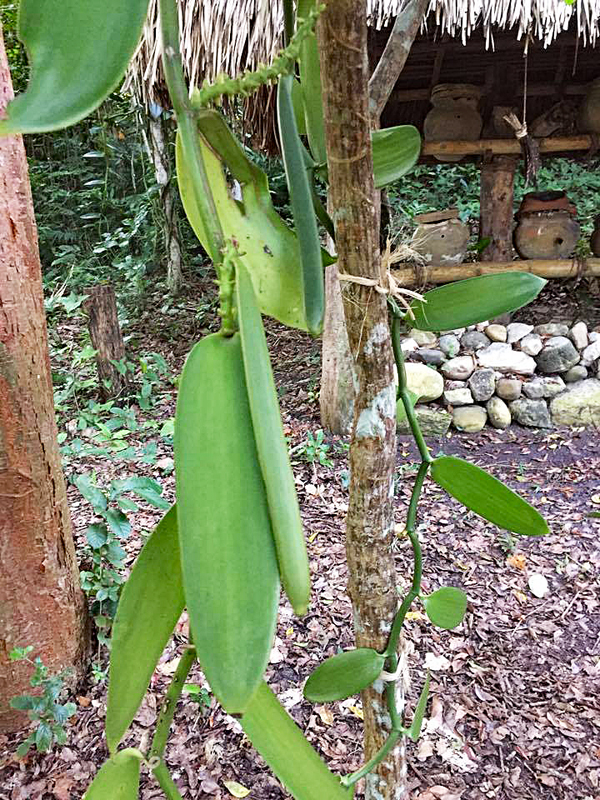
    Vanilla vines grow naturally in the jungles of Veracruz. Here, you can see two vanilla pods among the larger flat leaves of a tree-supported vine.

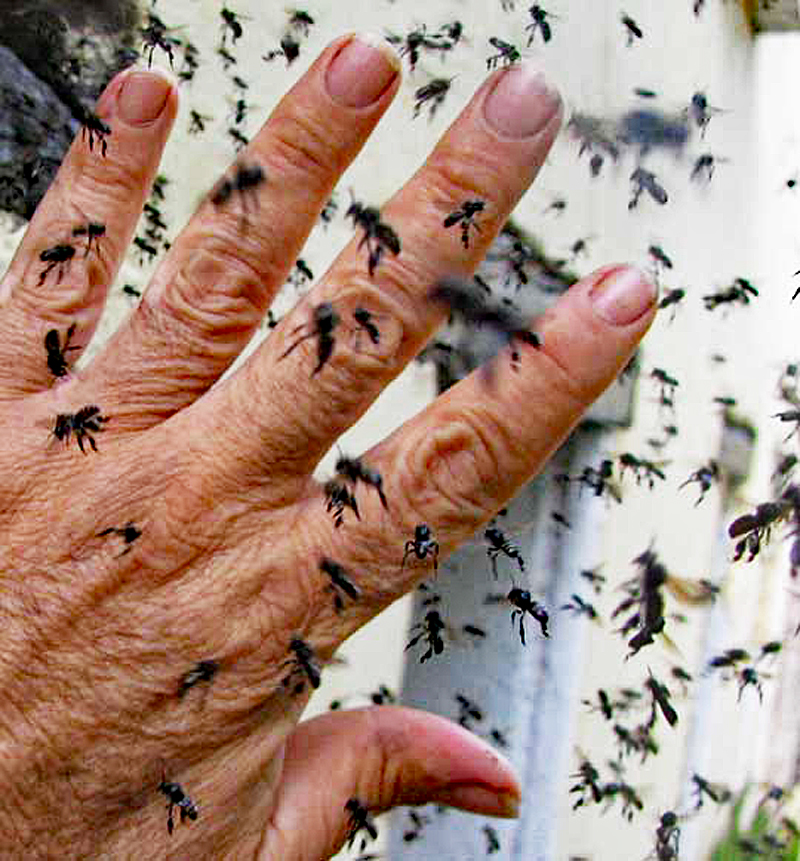
    The Spaniards and other Europeans didn't know that in New Spain, the flower had a symbiotic relationship with the tiny, native melipona (stingless) bee.  Only that bee is small enough to creep into the tiny hermaphroditic sex organs of the vanilla orchid and carry the pollen from the male to the female part of the flower; the melipona bee did not exist in Europe, although growers made efforts to import it.  Outside Mexico, for three centuries no one could pollinate the orchid blooms and vanilla pods grew only in their country of origin.

    Vainilla Melipona Bees 1
    The melipona stingless bee is tiny, measuring between approximately .07" and .5" in length.  Photo courtesy Backyardnature.net.

    In 1841, a simple and efficient artificial hand-pollination method was developed on Réunion Island in the French Indian Ocean, by a 13-year-old slave named Edmond Albius.  His method is still used today. Using a beveled sliver of bamboo, an agricultural worker lifts the membrane separating the anther and the stigma inside the orchid flower; then, using his thumb, he transfers the pollen from the anther to the stigma. The flower will then produce a fruit. The vanilla flower lasts about one day, sometimes less, so growers have to inspect their plantations every day for open flowers, an extremely labor-intensive task.  Today, vanilla is almost entirely pollinated by hand, still using this nearly 200-year-old method.
    Consejo Presidente don Crispi?n Pe?rez Garci?a
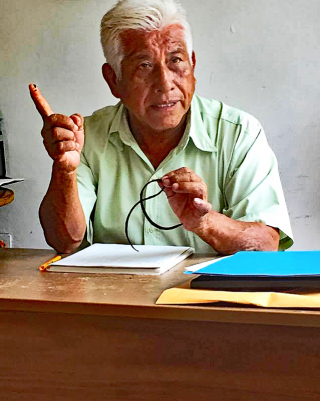
    Our last specifically vanilla-related stop in Papantla was at the offices of the Consejo Estatal de Productores de Vainilla Veracruzana (the Veracruz State Council of Vanilla Producers), where Council President don Crispín Pérez García toured us through the state vanilla cooperative.  Above, don Crispín talks with us about some of vanilla's characteristics.  The various people who educated us about many of the historic data about vanilla agreed on those points, but on other points there was tremendous disagreement.  Legend and myth mixed with statistics and theories to the point that it was difficult to sort out truth from fiction.  Everyone agreed, though, that vanilla is a marvelous pod with many, many uses. Don Crispín answered one of my questions by saying, "Ay señora, la vainilla es…pues, es…supernatural!" ("Vanilla is…is…supernatural!")

    Consejo Outside Vanilla Pods 3
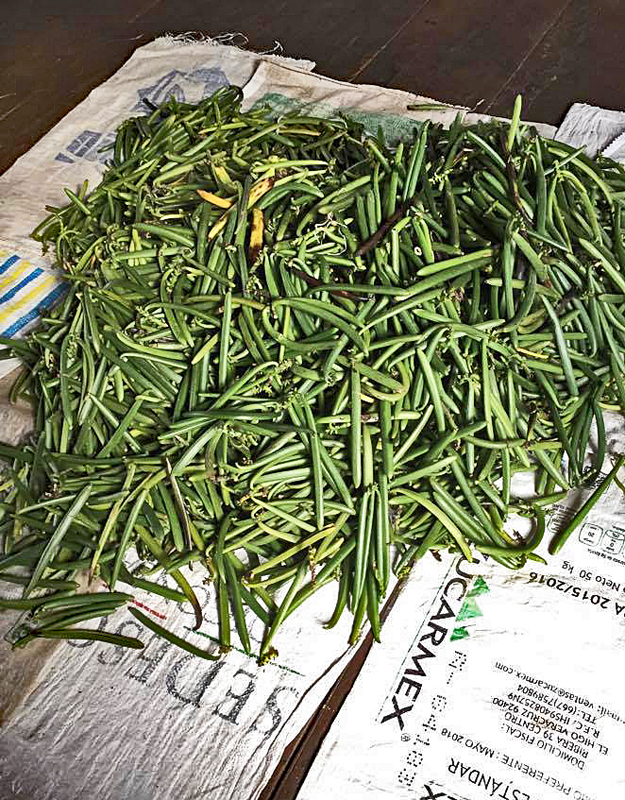
    Every year, more than 1,500 Veracruz vanilla producers from the municipalities of Misantla, San Rafael, Tecolutla, Gutiérrez Zamora, Coatzintla, Coyutla, Zozocolco de Hidalgo, Tihuatlan and Papantla bring 450 to 500 tons (that's between 90,000 and 100,000 pounds per year) of freshly harvested, green vanilla pods to the Council offices to be cured by traditional heat and sun methods. All of the vanilla that will be produced each year in Veracruz is sold prior to its harvest, as buyers are willing to pay almost any price to ensure that they get what they need.  Don Crispín told us, "Now that we have the Denominación de Origen (similar to the Appellation d'Origine, the certification granted to certain French geographical indications for wines, cheeses, butters, and other agricultural products), it's very easy for us to export vanilla.  Mexican vanilla is the best, and not just because I say so.  Those who buy from us say that it is, and with the price we sell it for, no one is complaining." In years gone by, green vanilla sold for between 30 and 40 pesos the kilo (2.2 pounds).  The wholesale price for 2017 started at 200 pesos per kilo and is currently at 350 pesos per kilo.
    Veracruz Consejo Window PG 1
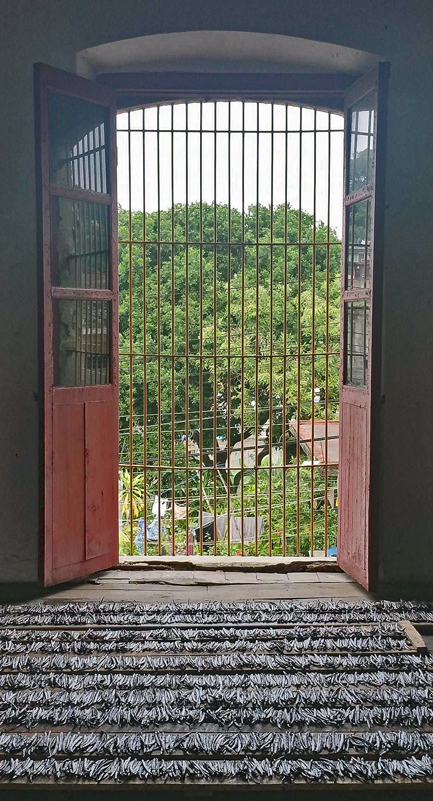
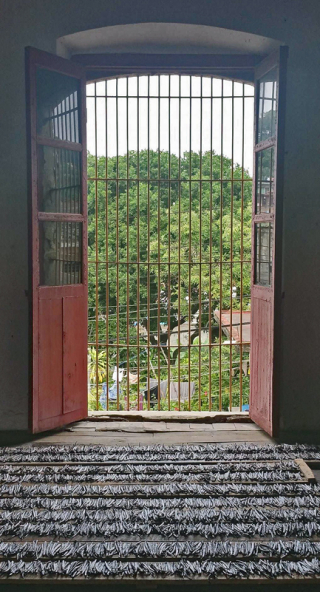
    Vanilla curing in the light and air of the afternoon. Consejo Estatal de Productores de Vainilla, Papantla, Veracruz.  Photo courtesy Pamela Gordon.
    Consejo Vanilla Pods Millions 1
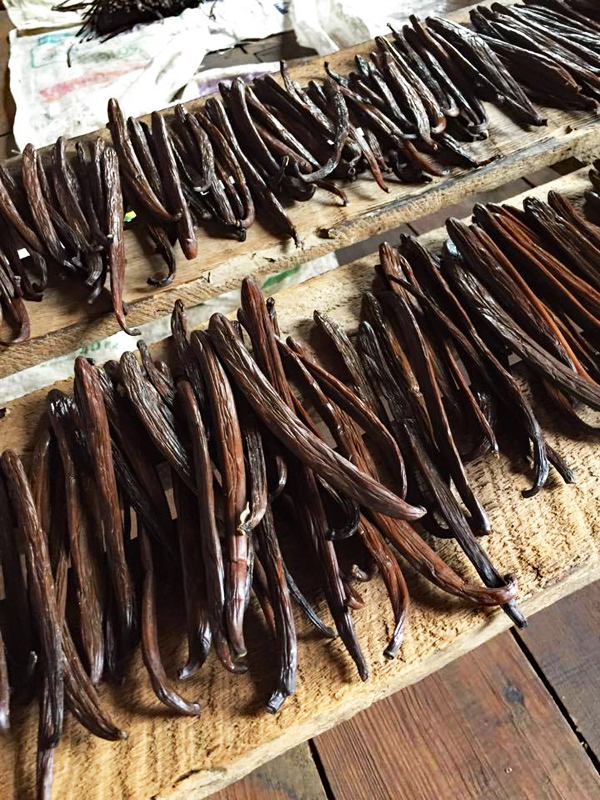
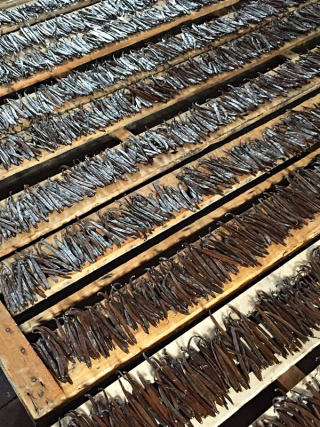
    Another tiny section of the many, many racks of curing vanilla at the Vanilla Council offices.  Vanilla isn't dried; it's cured until it is fragrant and leathery.  If you find some pods to buy, make certain that they aren't brittle. They should be quite flexible.  Don Crispín told us that a ready-for-use vanilla pod can be used over and over again; he suggested using a whole pod to stir our morning coffee–and then he said, "Wipe it off and put it away to use again.  It won't go bad and it will last a long time." He also mentioned putting a vanilla pod into a canister of sugar; left in the sugar for just a short time, the vanilla will flavor the entire contents of the canister–and again, it's reusable.
    Consejo Vanilla Curing Close-Up 1
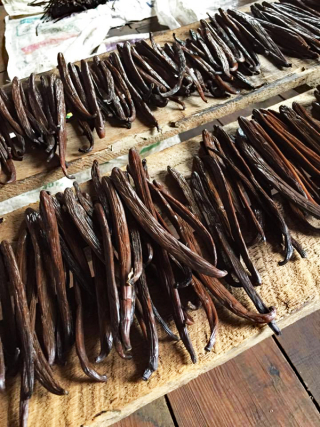
    A close-up of some of the vanilla pods at the Council offices.  These are nearly finished with the curing process.  You can see that the pods are shiny and wrinkled, exactly the state you want for your own home use.   Click on any photo for a larger view.

    Next week, we'll do what we've been wanting to do for the last month of articles: EAT!  Come with Mexico Cooks! to try traditional, regional Totonaco dishes.  We had our socks knocked off, and so will you.

    Looking for a tailored-to-your-interests specialized tour in Mexico? Click here to see new information: Tours
  • De Vaga en Veracruz, Tierra Jarocha :: Vacation Wanderings in Veracruz, Part III

    Veracruz Papantla Tacos en Camino 1
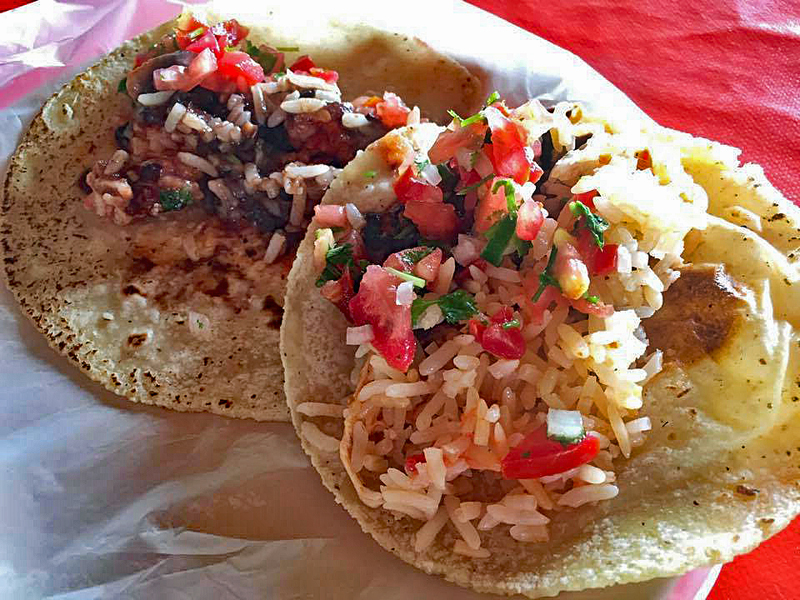
    On the way from coastal Casitas to Papantla–a drive of about an hour–you know we got hungry!  And what better to have for brunch than roadside tacos, Veracruz style: on the left is milanesa de pollo (lightly breaded and sliced chicken breast with rice, black beans, and salsa) and on the right, pollo deshebrado (boned, simmered, and shredded chicken) with the same condiments.  The tacos were truly wonderful, we were delighted with our we-got-lucky-with-roadside-tacos de guisado, home-style tacos filled with stew-y deliciousness.

    Veracruz Papantla Taji?n 2
    The pyramid El Tajín was our very first stop in Papantla, Veracruz.  We went straight to the pyramid site, even before checking into our hotel!  El Tajín is not just one pyramid; the archeological site is an entire city. The name, in the Totonaco indigenous language, is believed to mean "place where temples join and smoke is constant", the latter due, to the long ago burning of copal incense in the temples.  The photo shows the pirámide de los nichos (Pyramid of the Niches). The name of the pyramid refers to the 365 "windows" placed on all sides of the structure; because the number corresponds to the number of days in a year, this pyramid has received tremendous attention from those who study the calendars and the cosmic vision of the ancient Totonaco inhabitants who, sometime between 1700 and 800 years ago, built this city.

    Veracruz Papantla Taji?n Voladores 2
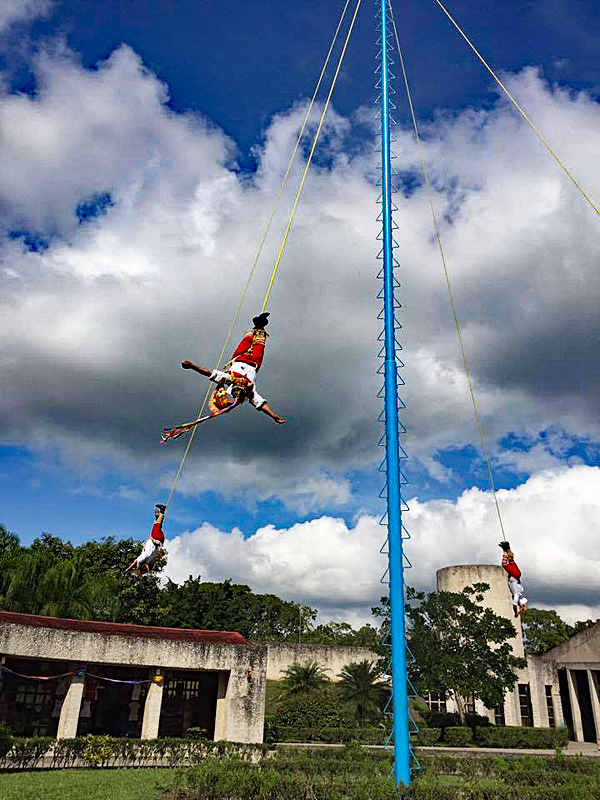
    Los Voladores de Papantla (The Papantla Flyers) practice this impressive spiritual ritual on the El Tajín grounds. We made a point to arrive in time for their daily exhibition; the rite had its 450-year-old origins as a form of prayer for rain after a severe drought which left the Totonaco people without food.  The Totonacos believe that these prayers to the rain gods brought life-saving rains back to the region. The prayer ceremony initially began with the cutting of a tree tall and straight enough for the flyers; today, the flyers climb the 30 meter high metal pole that you see in the photograph above.  Five men participate in this prayer; one remains on a platform at the top of the pole to play ritual music meant to mimic birdsong; the other four launch themselves from the platform to fly upside down to the ground.  There is ceremony and prayer form in every part of the rite.  The pole is the connection point between earth, the underworld, and the sky; the flyers represent the four cardinal points and the four elements (earth, air, water, and fire); each rope is wrapped 13 times around its flyer, and the flyers circle the pole 52 times, representing the length in weeks of the Mesoamerican great year.  All photos and videos copyright Mexico Cooks! unless otherwise noted.

    [youtube=https://www.youtube.com/watch?v=ZpX9H1fYB0E&w=560&h=315]
    Los Voladores de Papantla in motion–with the musician playing his drum and flute on the platform!  Together, the five flyers form a living, moving pyramid.  Video copyright Mexico Cooks!.

    [youtube=https://www.youtube.com/watch?v=WOqRSc9gIuY&w=560&h=315]
    In the Totonac region, the flyers are required to know and speak Totonaco.  Most boys and young men learn the rituals and the dances from their fathers and grandfathers. Mastering the ceremonies can take as long as 10 to 12 years and the flyers and dancers usually commit themselves for life. In this video, a boy no more than three years old carefully followed the steps and gestures of the dancers on the platform.  I asked; the boy is the son of one of the dancers, learning from his father and the rest of the group.  Video copyright Mexico Cooks!.

    Martha Soledad Go?mez Atzin 2
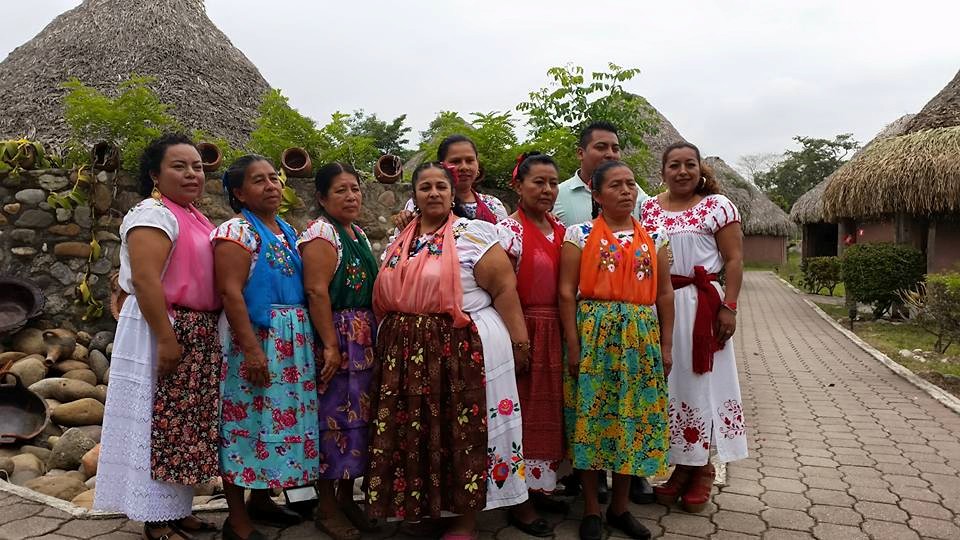
    When we finished at El Tajín, we paid a visit to the well-known Totonaca cocinera tradicional (traditional cook) Martha Soledad Gómez Atzin at her cocina de humo (traditional kitchen where cooking is done over firewood), close to the pyramid site.  Her group, Las Mujeres de Humo, continues to give demonstrations and classes in Totonaco regional cooking.

    Martha Atzin y las Mujeres de Humo
    The group of women (Las Mujeres de Humo) who work with Martha Gómez Atzin to preserve and protect the Totonaca kitchen.  

    Beginning in 2000, the cocina de humo has formed a part of the international festival Cumbre Tajín, which promotes music, art, and traditional cuisine in northern Veracruz.  The Cumbre (summit) was founded under the impetus of the then-governor of Veracruz.  The realization of the event met with strong opposition from INAH (National Institute of Anthropology and History), from the custodians of the archeological site, from students at ENAH (the National School of Anthropology and History), and from the central organization of people and farm workers, all of whom believed that the festival was an illegal commercialization of archeological heritage.  Differences exist between those who believe that the festival is an exploitation rather than a preservation of tradition and who say that the festival itself damages the archeological site and the promoters, as opposed to those who applaud the festival as a tourist attraction and money-making proposition. The festival, despite its controversial nature, has persevered.

    In 2001, Parque Takilhsukut, a theme park approximately one kilometer outside El Tajín archeological site, opened in answer to opposition to the Cumbre.  Most Cumbre events were moved to that park; only a nightly sound and light show continues at the pyramid site.  Although the government intended the theme park to be a center of indigenous life and tradition, the only activity the day we were there was at the cocina de humo. Sra. Atzin and her group of cocineras tradicionales were cooking comida (the main meal of the day in Mexico) for themselves, but no group of students or guests was in the kitchen.  Sra. Atzin talked extensively to me about the Veracruz government's failure to continue funding and support for their efforts.  Until fairly recently, the cocina de humo offered many buzzing classes to school children and older people alike, including transportation from their towns to the theme park.  Today, the bankrupt Veracruz government has no funds to offer. 

    Papantla Martha Pintitos in the Pot
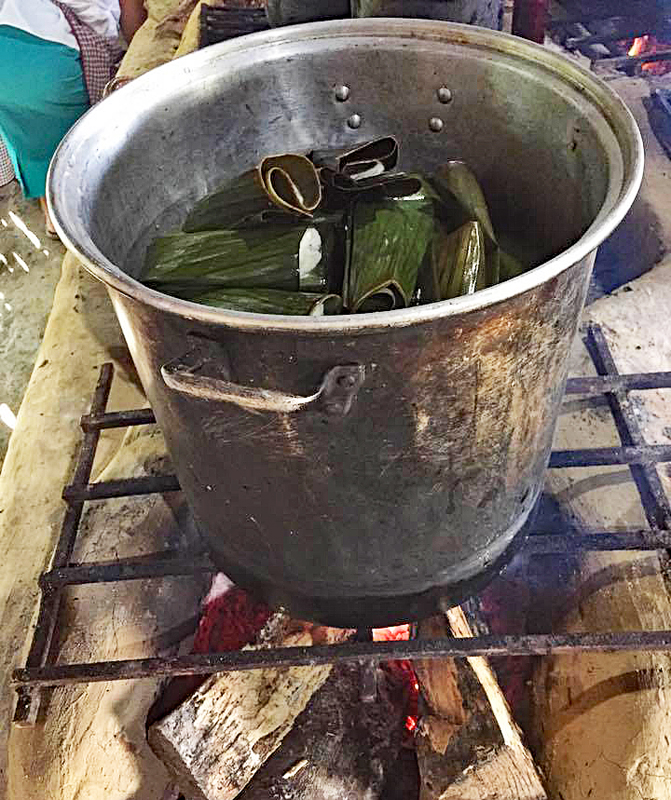
    In the pot are tamales pintos, a Totonaco specialty that wraps a mixture of fresh, light masa (corn dough) with newly harvested, tender black and white beans known as pintos ('painted') in hoja de plátano (banana leaves).  Las mujeres de humo treated us to the first two delicious pintos to come out of the pot.

    Martha Cocina de Humo 3
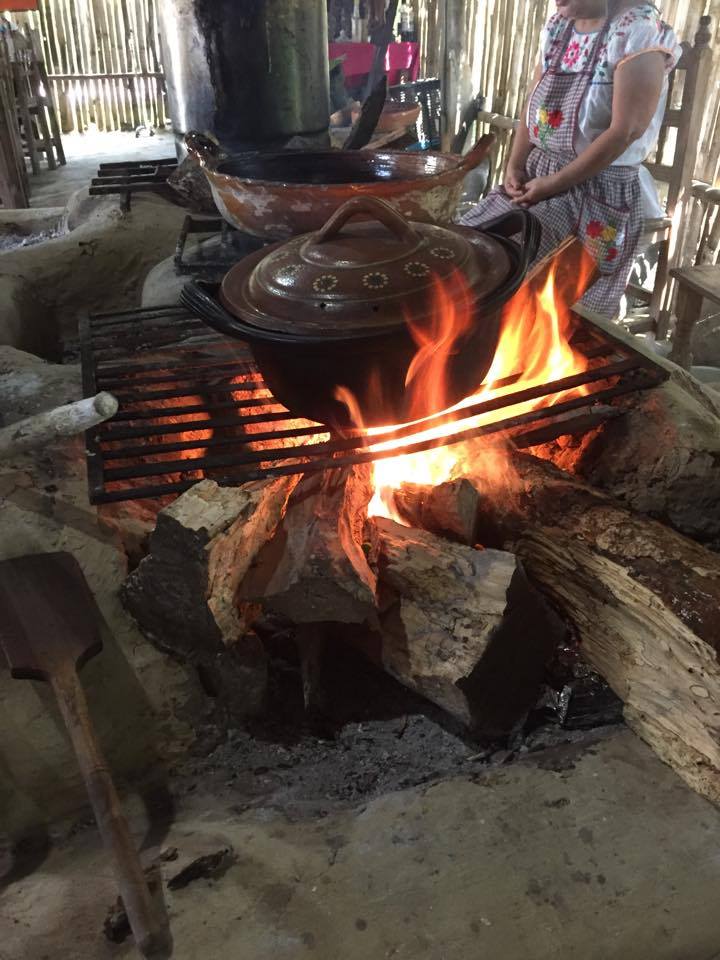
    Preparing the rest of the midday meal.  

    Next week, come with Mexico Cooks! on the last leg of this journey in Veracruz: vanilla production in Papantla! We learned more about the origin, harvest, and importance of vanilla than we thought possible, and so will you.  Plus, we ate regional Totonaca food that we're still dreaming about, and prolonged our trip till we really couldn't stay longer.  Such fun!

    Looking for a tailored-to-your-interests specialized tour in Mexico? Click here to see new information: Tours
  • De Vaga en Veracruz, Tierra Jarocha :: Vacation Wanderings in Veracruz, Part II

    La Jicarita Hotels.com
    After leaving Puerto de Veracruz, our next stop was the town of Coatepec, high in the coffee-producing mountains of central Veracruz state. We stayed just outside the town, at Eco-Hotel La Jicarita (hee-cah-REE-tah).  The property at La Jicarita is beautiful, planted with native trees and flowers (and shade-grown coffee).  You'll find hiking paths, a swimming pool, and delicious Veracruz breakfasts (not included in the room cost).  Although the rooms and bathrooms are fairly primitive, the beds are quite comfortable.  The rooms are inexpensive and the management works hard to please guests.  The photo, courtesy Hotels.com, is the outside of the room where I actually stayed.

    Coatepec is just about equidistant between Xalapa (the Veracruz state capital) and Xico (a charming provincial town known for its mole), and was an ideal place to stay in order to visit all three towns.  

    Xalapa Meso?n de los Alfe?rez
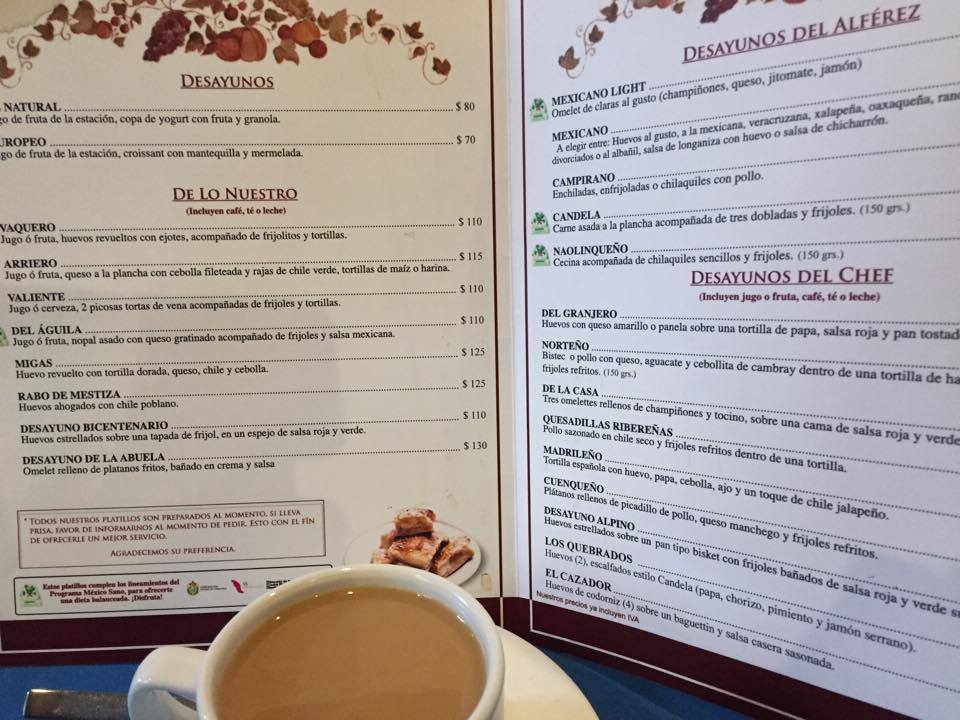
    Before the trip, several friends who are from the Xalapa area recommended with great enthusiasm the breakfasts at the Hotel Mesón de Alférez, in Xalapa.  The restaurant is charming and service was attentive, but what we ate left something to be desired.  There was nothing exactly wrong with it, but we had hoped, given the high recommendations, that the food would be more regional and of higher quality.

    Cabeza Olmeca 3 dic 2016 2
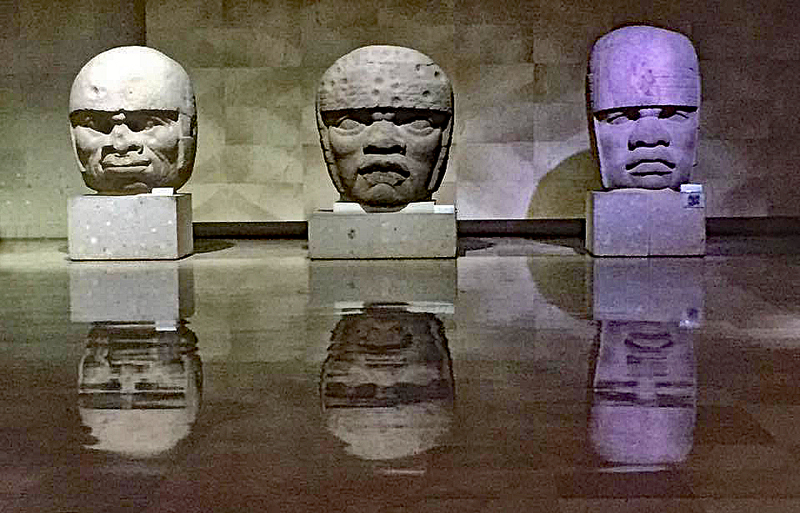
    After we finished breakfast in Xalapa, we went to the Xalapa Museo de Antropología primarily to see the display of colossal Olmec heads. The heads, carved of basalt and estimated to date between 1400 and 900 B.C.E.,  range in height from just under five feet to just over eleven feet and weigh between six and fifty tons apiece.  Seventeen–or possibly 18–heads are known to exist.  The color variation in the photo is due to the lighting of the displays.

    Olmec_Heartland_Overview_4.svg copy
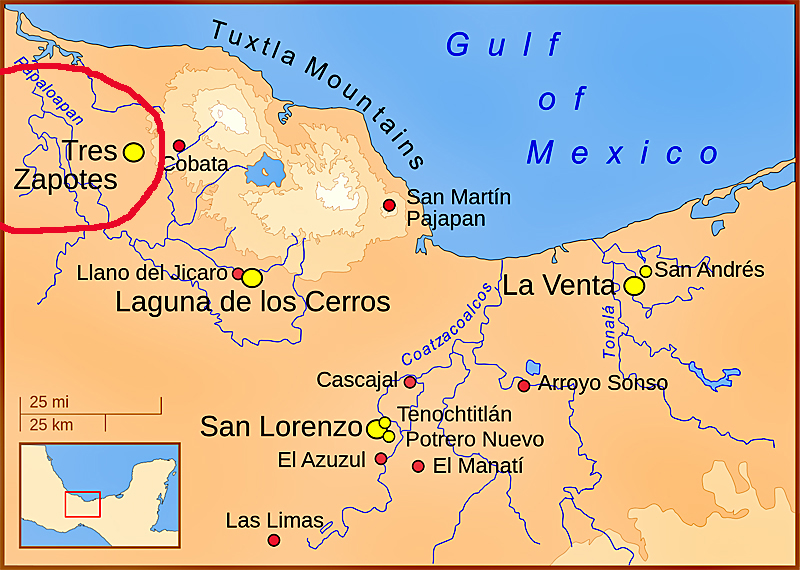
    The original Olmec head comes from Tres Zapotes, Veracruz, a town near the Papaloapan River (upper left in the map).  The area in the map is the original Olmec territory.  According to archeological notes seen in the Xalapa museum, the American archeologist M. W. Stirling and his team found the head face up at the bottom of a canyon in 1938.  Some scholars dispute this version of the find, and some say that a Mexican traveler accidentally discovered the first known Olmec head in 1861, but that the find was kept secret until the mid-1940s.     

    Cabeza Olmeca 1 Dic 2016 2
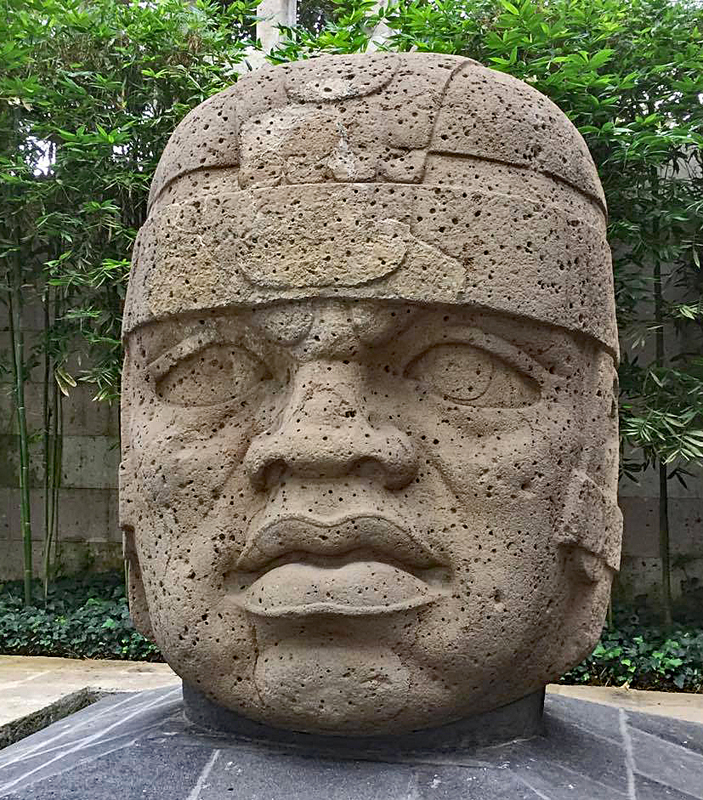
    Each of the heads is a portrait of a distinctly different Olmec man; each wears a helmet.  Theories about who these men were (warriors, rulers, ballplayers–one now-debunked theorist even believed that they might be Africans) have never been proven.  The Olmecs brought the basalt used to sculpt the heads as many as 150 kilometers to the site where carving took place, dragging the raw stone with ropes and rudimentary wheels.

    Olmec Head Excavation
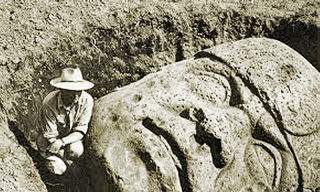
    Excavation of a  monumental Olmec head.  The photo appears to be original, but the website where Mexico Cooks! found it is full of astonishing and probably inaccurate and misleading information.  Read at your own risk.  Photo courtesy MessagetoEagle.com.  

    Writing the basic description of the Olmec heads is merely reporting data.  The personal impact of standing in front of these giants is extraordinarily moving and difficult to put into words.  Once we were on the street, we saw that the faces carved in stone and many present-day faces of the area men and women are the same as these colossals: strong, individual personalities in ancient stone and in modern-day flesh and bone.  
       
    El Resobado Exterior 12-17
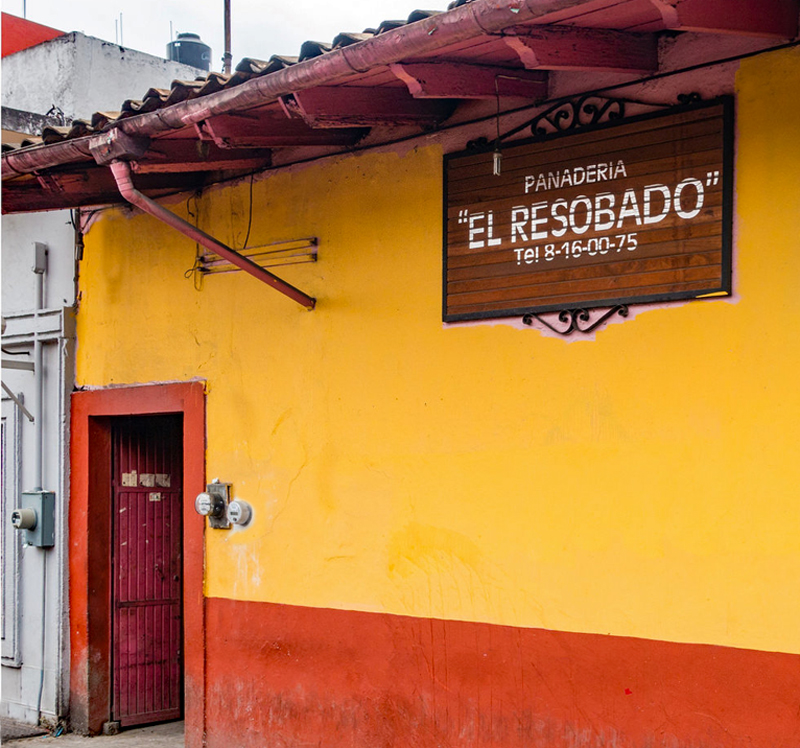
    While in Coatepec, we had the great pleasure of a visit to Panadería El Resobado, one of the few remaining commercial bakeries in Mexico using wood-fired ovens. The bakery opened for business more than a century ago; its ovens have not been allowed to cool in more than 25 years.   

    Coatepec Panaderi?a Resobada
    We were completely entranced with El Resobado. The bakery is faithful to its traditions: to make delicious bread with the flour, sugar, and yeast, the basic ingredients. People say that the best breads at El Resobado are the conchas (shells)–and that if you should be stricken with hunger in the middle of the night, don't worry: the bakery is open 24 hours a day!  
    Coatepec Panaderi?a Resobada 4
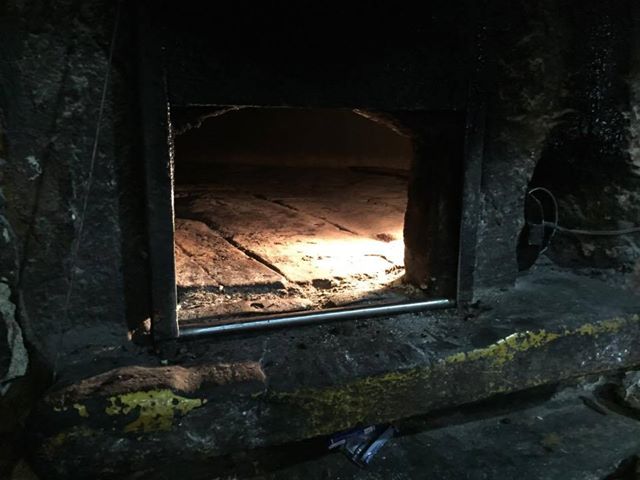
    One of the several ovens at El Resobado, ready for baking the next load of bread.  To judge the oven temperature, the skilled bakers stick their hands and forearms in–the bakers' experience is so great that they don't need oven thermometers.
    Coatepec Panaderi?a Resobada 3
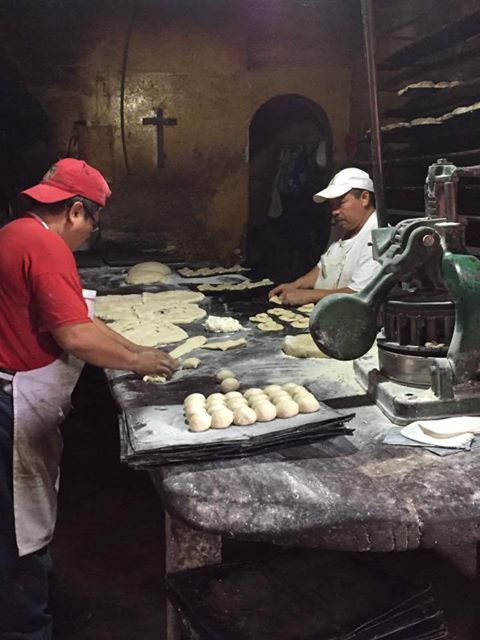
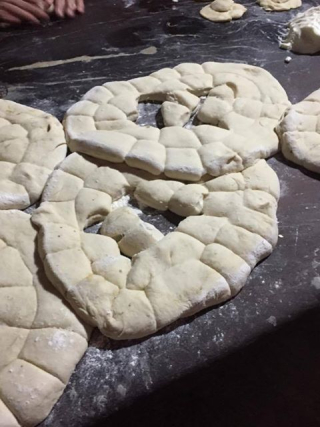
    Bread dough, kneaded, shaped, cut, and ready to be separated for baking.

    Coatepec Panaderi?a Resobada 6
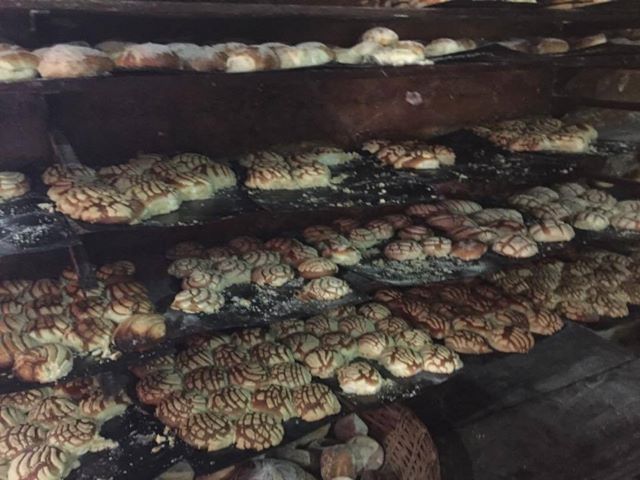
    Shelves at El Resobado, loaded with hot, fresh-from-the-oven conchas.  We bought a huge bag of many kinds of bread; we were struck by the unusual smokiness of what we tried.  

    Baker Kitties Ladder Pamela 2
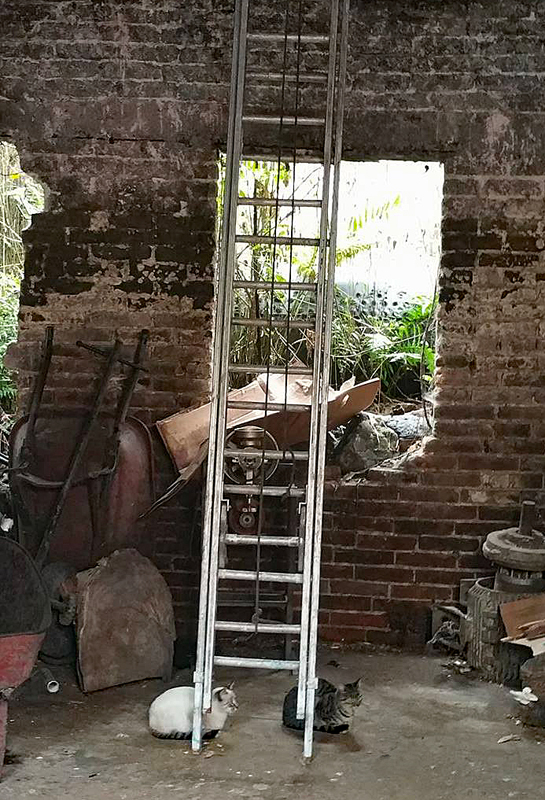
    Some of the many cats that live at El Rebosado.  We were a group of crazy cat ladies and truly appreciated their gentle feline presence.  The bakery is a mouse-free zone! Photo courtesy Pamela Gordon.

    Museo El Cafetal
    Also in Coatepec, we visited Museo El Cafetal to see the process of growing, harvesting, roasting, and grinding Veracruz's high altitude, shade-grown coffee.  Museum admission charge is 40 pesos and worth every centavo. Photo courtesy Museo El Cafetal. 

    Veracruz El Grande Coffee Museum 2
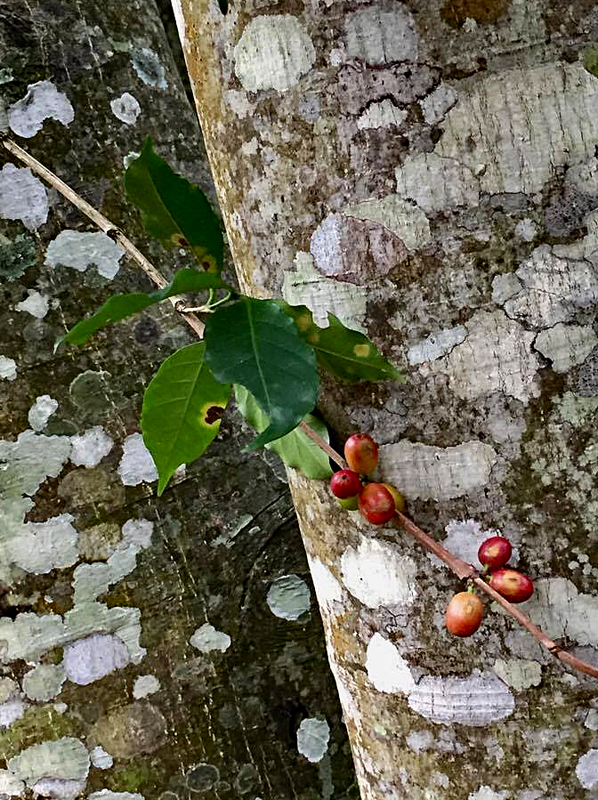
    Coffee beans against a tree trunk at the Museo El Cafetal. Photo by Mexico Cooks!.

    Coatepec Museo de Orquidea
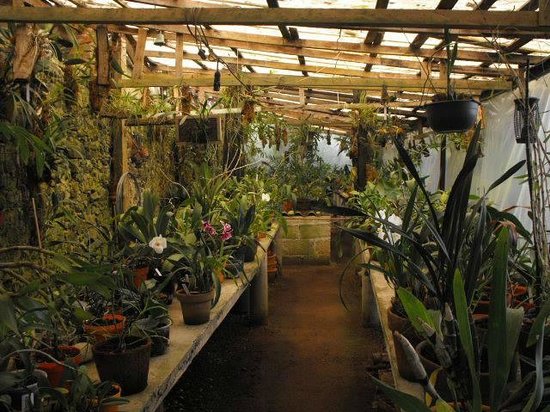
    Coatepec also boasts an orchid museum–a private collection in a private home.  This photo shows less than a quarter of the collection.  

    After two nights in Coatepec, we moved on to Casitas, on the Gulf of Mexico.  We'd had some drizzle in Coatepec, but we arrived in Casitas to discover that the coast had suffered a tremendous storm the night before.  Although we'd been looking forward to sunshine, the beach, and the humid heat that Veracruz is famous for, instead we had grey skies, churned-up Gulf water, and weather unsuitable for swimming.  

    We settled for driving to nearby San Rafael, which has the reputation of being a French-influenced town due to French settlement there in the 1840s.  We asked every adult on the streets about how to find a hint of Frenchness, but nobody knew.    

    Carniceri?a San Rafael 2
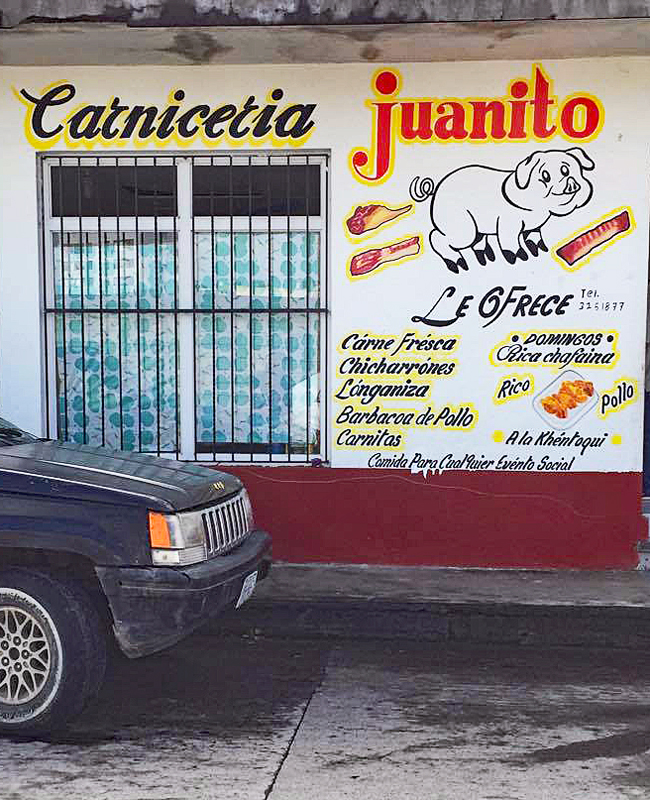
    Here's what we did find: a carnicería (butcher shop) with a really wonderful sign.  Click on the photo to enlarge it for a better view; the sign painter had a field day with accents!  Two charming young women behind the butcher counter let us taste their version of carnitas.  Verdict: not bad for Veracruz, but definitely not carnitas from the state of Michoacán, where carnitas originated.

    Next week, come with Mexico Cooks! to Papantla, Veracruz, where we investigated regional food and vanilla.  We'd planned to stay one night and ended by staying three!  We had a marvelous time and truly wanted to stay even longer.

    Looking for a tailored-to-your-interests specialized tour in Mexico? Click here to see new information: Tour

  • De Vaga en Veracruz, Tierra Jarocha :: Vacation Wanderings in Veracruz, Part I

    Veracruz Faro en la Puerta 2
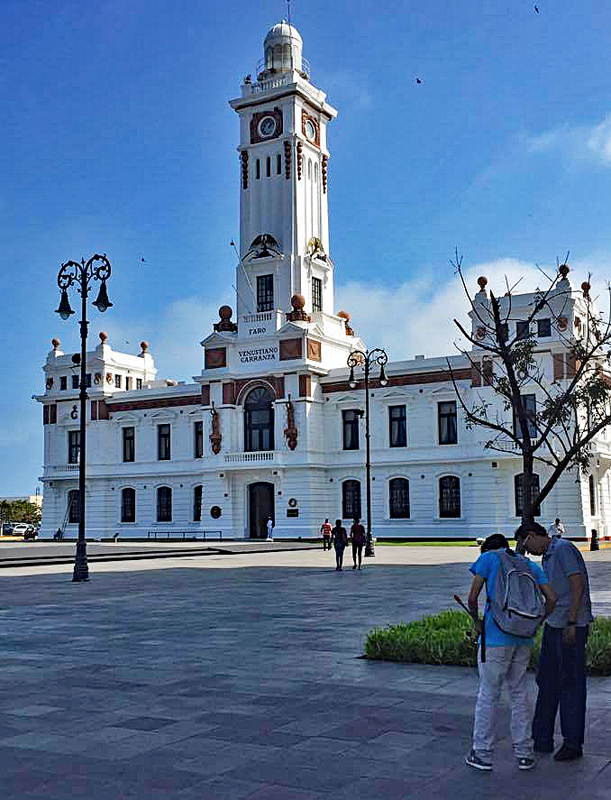
    On the malecón (pier) in the port of Veracruz.  Mexican president Venustiano Carranza used this lighthouse building, built at the turn of the 20th century, as the Palacio Nacional (federal government offices) from 1914 to 1915. During that short period, the city of Veracruz was the nation's capital. Today, the Faro Venustiano Carranza (lighthouse of Venustiano Carranza) serves as part of Mexico's naval headquarters. All photos by Mexico Cooks! unless otherwise noted.

    Port Veracruz
    Directly across the street from the lovely old building in the photo above, the hyper-modern port of Veracruz receives and sends enormous quantities of goods to and from everywhere in the world.

    Vacation!  And not just vacation, but vacation in Veracruz, one of Mexico's most beautiful states–I was so excited at the prospect of re-visiting the Puerto de Veracruz (port city), where I had not been since about 1994.  Two friends and I carefully chose two weeks for travel that would not be too hot, not be too humid: the temperatures along the Veracruz coast can range as high as more than 100ºF, with humidity equally high. Even during the second and third weeks of December, the high temperatures were in the mid-80s and the humidity was in that same range or higher.  Did we get used to it?  Not so much, but we definitely enjoyed a most fascinating trip together.  From the Puerto to the mountain towns of Xalapa, Coatepec, and Xico, and from the Córdoba flanks of the Pico de Orizaba (Mexico's highest mountain, an inactive volcano) to Papantla, the land of vanilla's origin, we traveled and learned.  And ate. And ate some more. Come along!

    Veracruz La Parroquia Sign 2
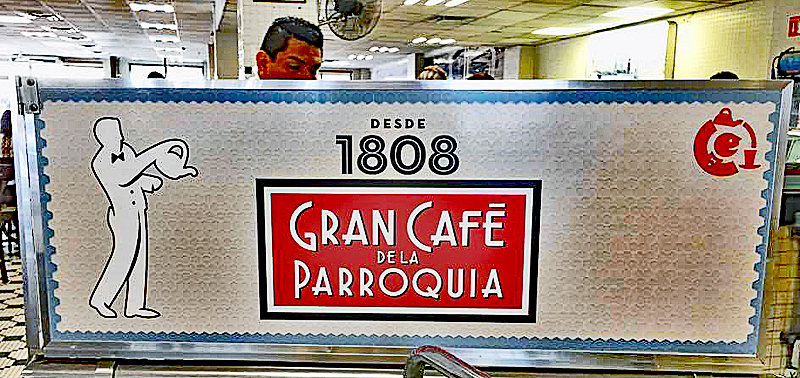
    One of our group seriously craved and insisted on breakfast at La Parroquia.  In researching the trip, I'd read that this old-time restaurant was muy de caída (had gone a long way down hill), but oh my goodness, our first breakfast in Veracruz was fantastic.

    Veracruz La Parroquia Lechero 2
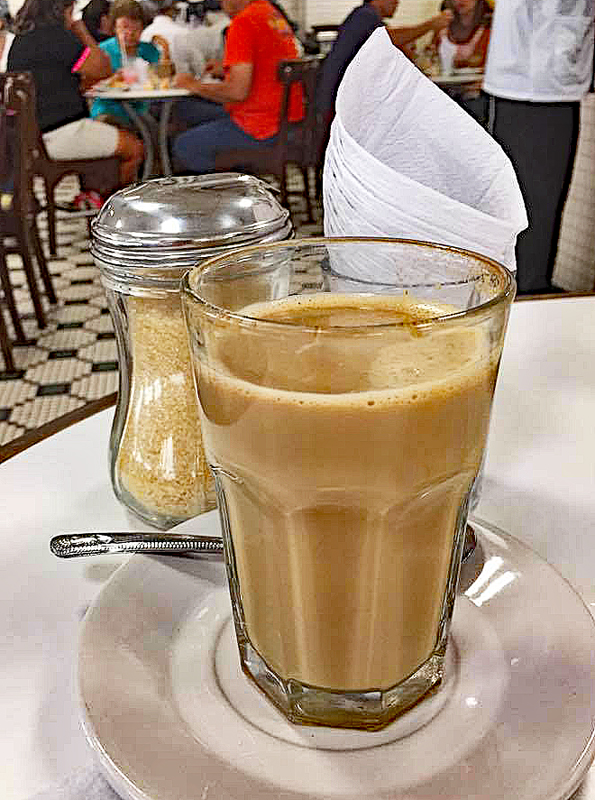
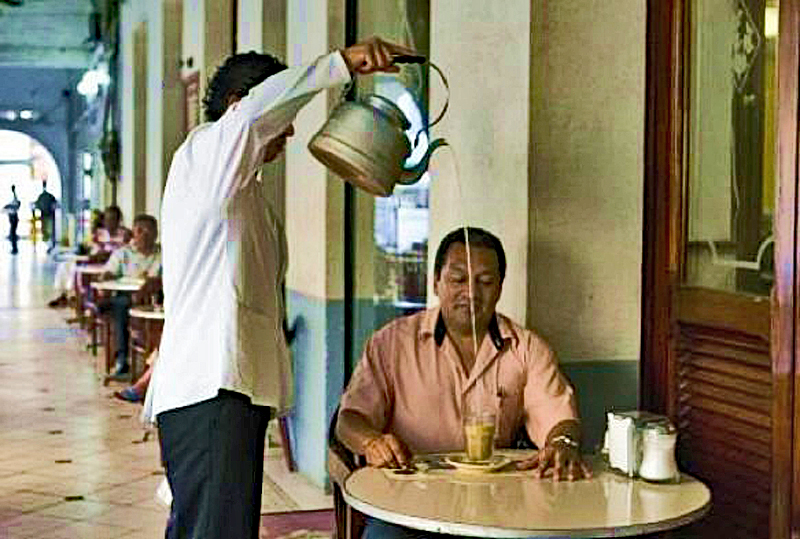
    La Parroquia is most noted for its ritual lechero–freshly brewed Veracruz-grown coffee, poured from on high to the level you prefer in your glass, the glass then filled (again, from on high) with steaming hot milk.  This first morning, the coffee wowed all three of us.

    Veracruz-cafe-la-parroquia
    Hot milk from the heights!  Photo courtesy Mexico Destinos.

    Veracruz La Parroquia Comensales
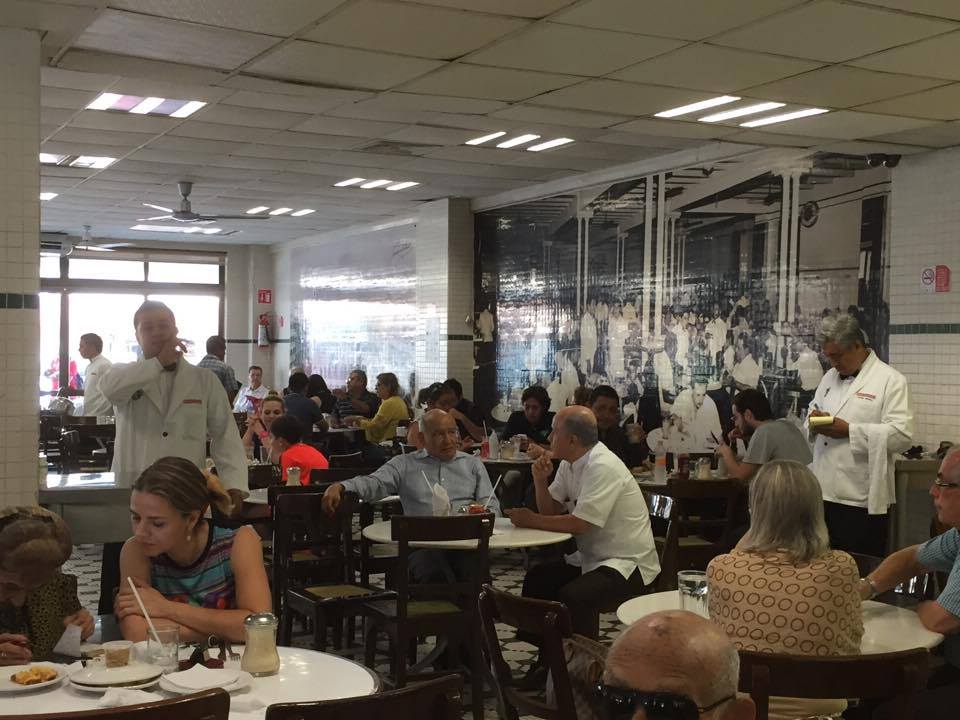
    The place was jam-packed for breakfast; there was no sign of a down-hill slide in quality or quantity the late-morning we were at La Parroquia.  Best of all, our server, don Galindo, was a real treasure-trove of knowledge about the area.  He directed us to–well, we'll go there next week on Mexico Cooks!.

    Veracruz La Parroquia Tortilla Especial 2
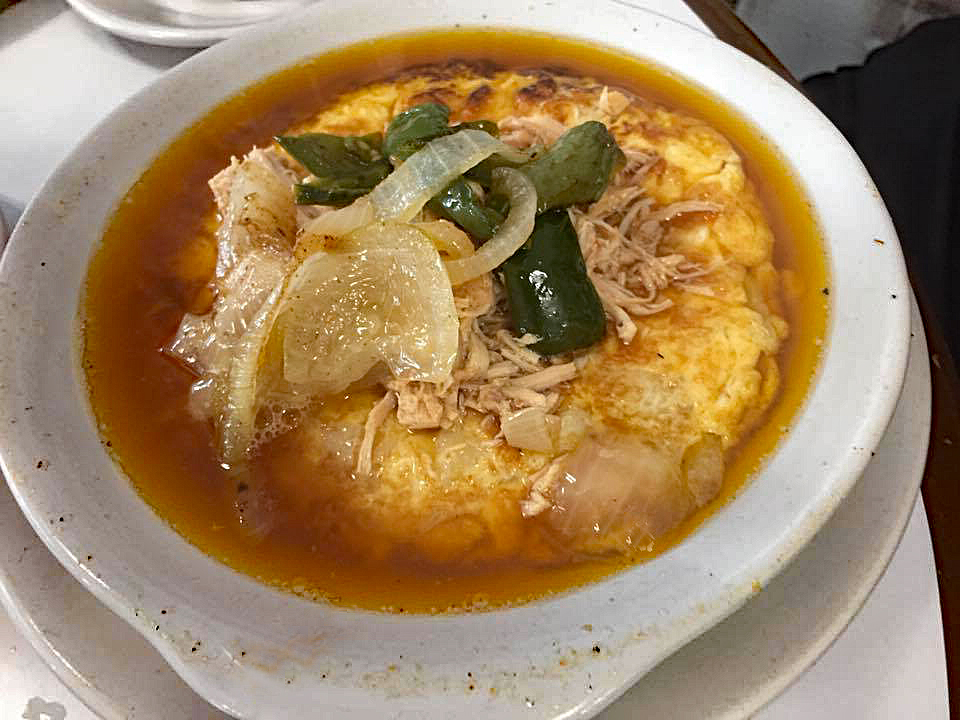
    Among many other regional specialties on the breakfast menu, the house special tortilla parroquia intrigued us. It's a tortilla española (Spanish-style omelet with egg and potato), cooked and then submerged in rich turkey broth. It's topped with shredded turkey, grilled onion, and chile serrano toreado (lightly fried in oil until the skin blisters and the chile is soft).  Doesn't it sound odd?  We were entranced by the flavor combination!  Just writing about it makes me want another one right now!  
    Veracruz Gorda Negra La Parroquia
    Gorda negra with cheese, from La Parroquia.

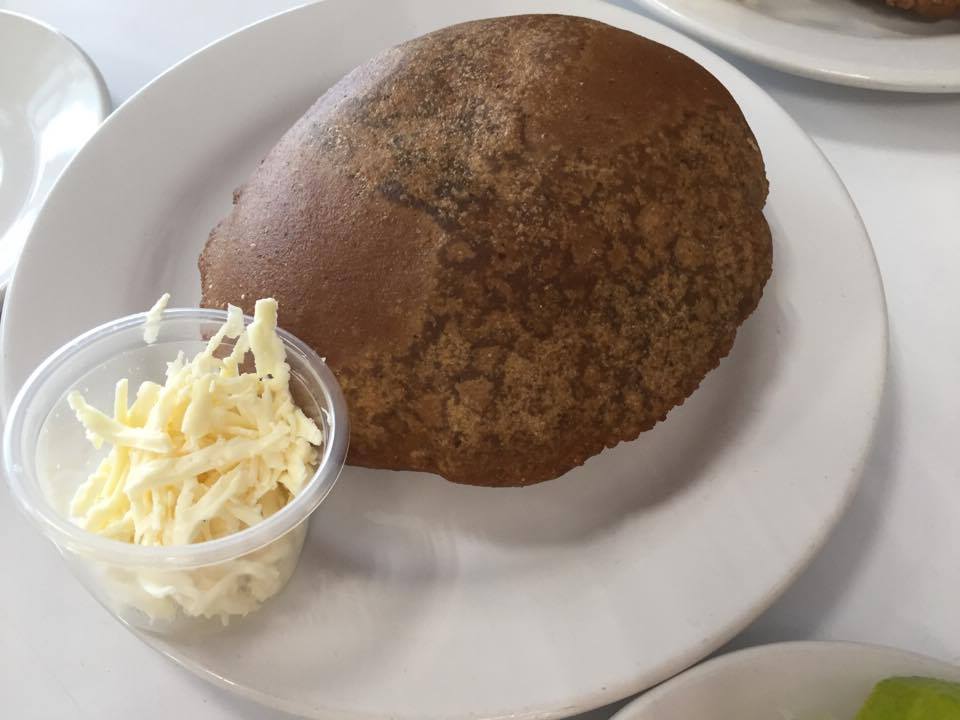
    We also requested other Parroquia specialties: gordas negras (corn tortilla dough combined with finely ground cooked black beans), patted out or pressed to form tortillas a bit thicker than usual.  These are then fried in oil until they inflate and are served with salsa and cheese or cream. We also ordered gordas dulces (corn dough mixed with a little flour, a pinch of baking soda, and quite a bit of brown sugar), patted out and fried the same as the gordas negras, and served with thick grated mild white cheese and salsa.  We also asked for what turned out to be a perfect plate of huevos motuleños, specialty of the Yucatán peninsula.  We relished everything, shared among us, along with freshly squeezed super-sweet orange juice (the state of Veracruz produces nearly 40% of the oranges grown in Mexico) plus a second glass of lechero filled us to the brim.

    Veracruz Zo?calo Danzo?n 2
    That night, we enjoyed watching danzón in the Puerto de Veracruz zócalo.  The group of both dancers and spectators was small but happy. Danzón is the official dance of Cuba and also very, very popular in Mexico.  

    [youtube=https://www.youtube.com/watch?v=OyfVkRTSsZw&w=560&h=315]
    Just to show you the dance form, here's a danzón video from Guadalajara, where one can danzón (or take inexpensive danzón classes) every Sunday evening in the plaza just in front of the Templo Expiatorio, at the corner of Calle López Cotilla and Av. Enrique Díaz de León.  

    Mandinga Alvarado Puente 2
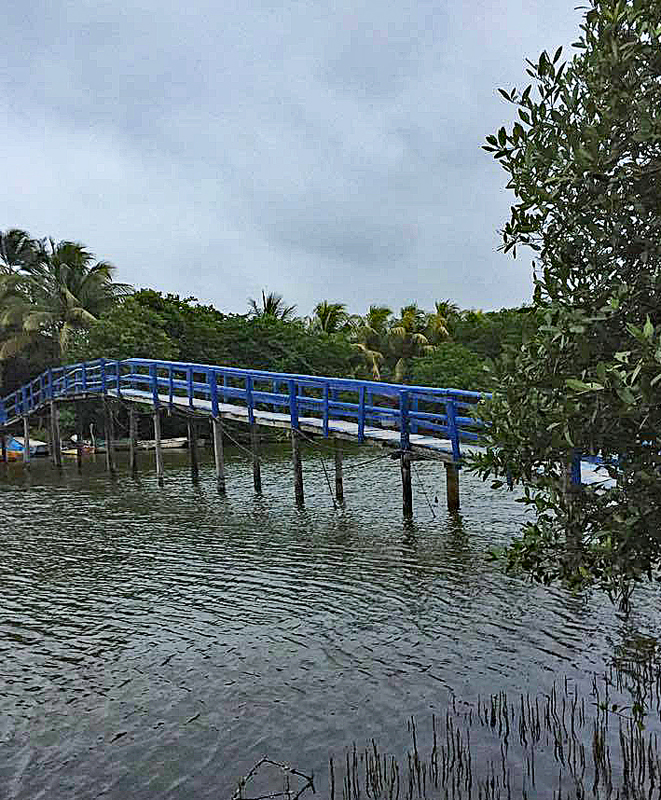
    In our meanderings close to the port city, we happened upon an island restaurant in tiny Mandinga-Alvarado. "Happened upon" is, of course, a euphemism for "asked everybody in the general area where to find it".  Once we found the town of Mandinga, population approximately 1500, we stopped at the town taxi stand and asked a cabbie for directions to the restaurant, Isla Paraíso.  He had no idea! Another fellow approached the car and said he'd guide us; he went running down the street ahead of our car and led us right to this bridge.  We walked across into a world apart: Isla Paraíso opened nearly 40 years ago and is still going strong.  

    Mandinga Crassostrea virginica
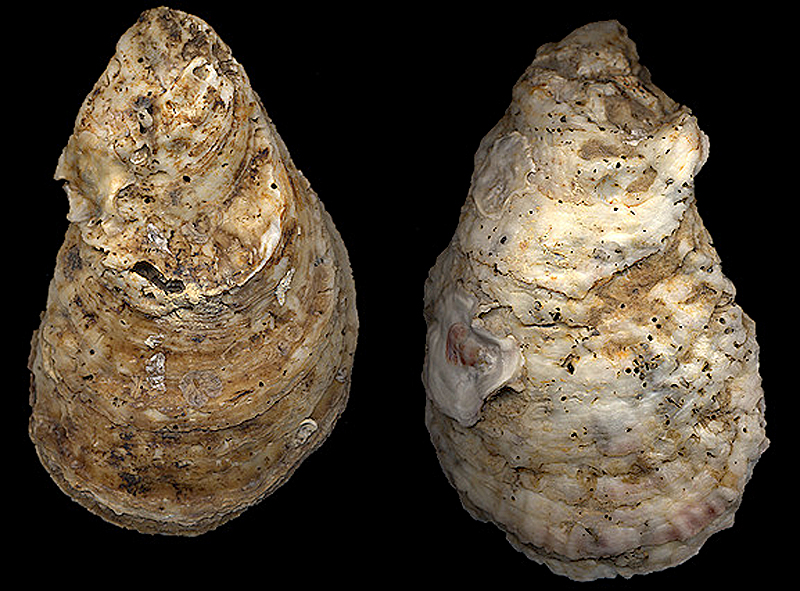
    Mandinga is famous world-wide for its oysters.  The oyster (Crassostrea virginica) is harvested throughout the entire Eastern coast of North America, from the Gulf of St. Lawrence in Canada to the Gulf of Mexico, including huge daily harvests from the Mandinga lagoon.  Of course we had to eat a plateful.

    Mandinga Alvarado Ostiones 2
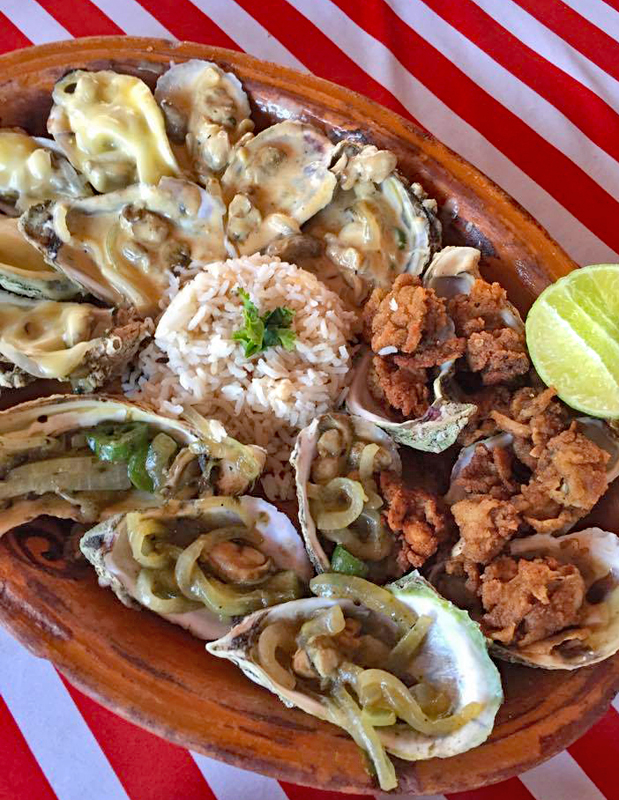
    The specialty of the house at Restaurante Isla Paraíso, oysters cooked in various ways and, in this case, served as an appetizer.

    Mandinga Alvarado Patsy
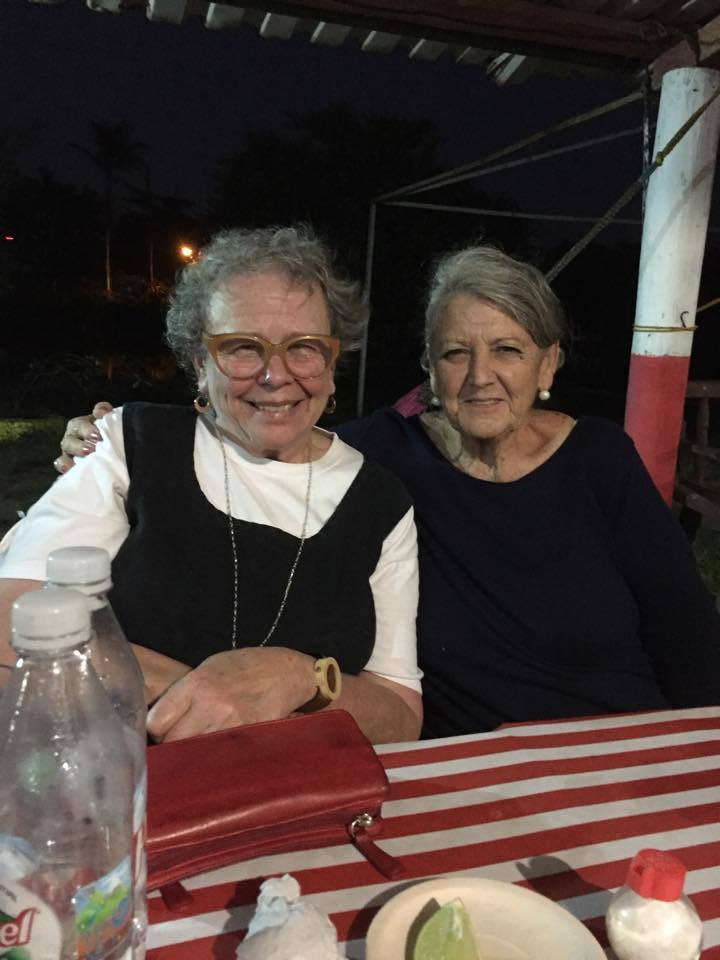
    The restaurant owner, Patricia Waters Mújica, is British. Her Mexican husband, who passed away just a few years ago, met her in England and moved her and their family to Puebla, then to Australia, then to the Puerto de Veracruz–and ultimately to Mandinga, after many fascinating life adventures.  They opened the restaurant, and Patsy has lived in tiny Mandinga all that time, raising their two daughters and running the restaurant. It was a delight to spend the afternoon and evening hearing her story.  

    Veracruz La Parroquia Motulen?os 2
    Our last morning in the Puerto de Veracruz, we once again had breakfast at La Parroquia.  This time, the restaurant unfortunately lived up to its current way-down-hill reputation.  Almost everything we ordered, including this repeat plate of huevos motuleños, was far, far below the quality of what we ate the first morning.  Even the coffee was disappointing. We shared the opinion that had this been our initial breakfast, we wouldn't have returned.  

    Next week, come back for much more de vaca y de vaga (vacation and wandering around) in central Veracruz.

    Looking for a tailored-to-your-interests specialized tour in Mexico? Click here to see new information: Tours