Category: Mexican Tourism

  • Restaurante El Bajío and Its Founder, Carmen Titita Ramírez Degollado

    Titita Carta El Bajío
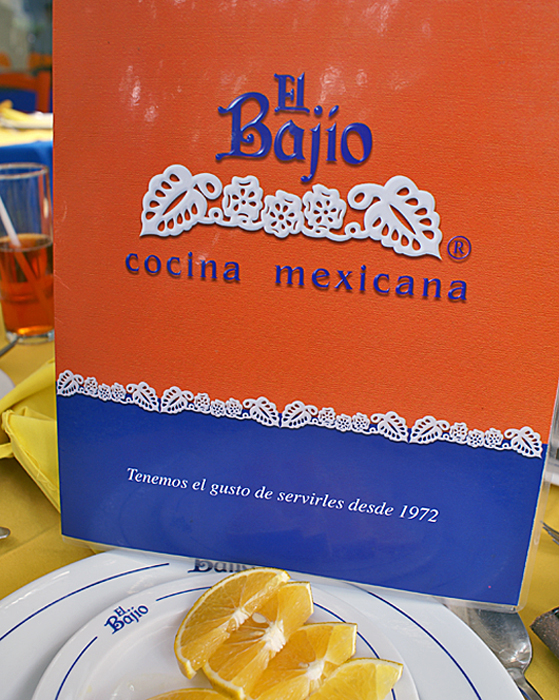
    Founded in 1972 by Raúl Ramírez Degollado y Alfonso Hurtado Morellón, the highly successful restaurant has now expanded to sixteen locations in various parts of Mexico City.  The original site is still thriving in Delegación Azcapotzalco, in the northern part of the city.
    Titita Folclórico
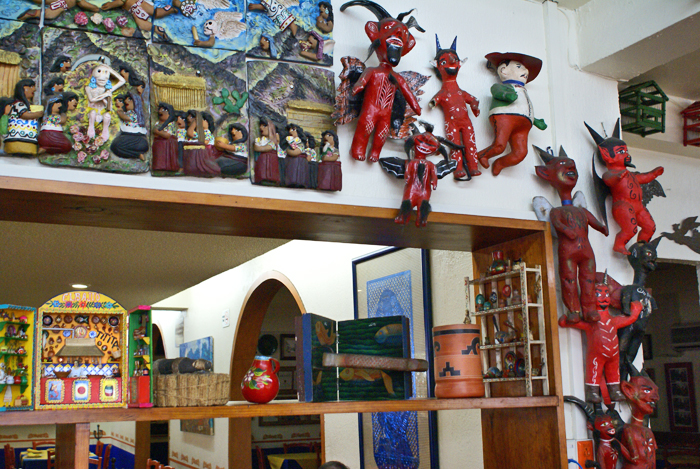
    El Bajío's original restaurant is puro folclore (completely traditional and colorful) in its decor as well as in its extraordinarily delicious food.  The cardboard Judas (devil figures) hanging on the wall are typically burned on Holy Saturday night, but these have survived to keep an eye on you as you dine.

    At an event at the UNAM Jardín Botánico (Botanical Garden at Mexico's national university),  Mexico Cooks! renewed acquaintance with the deservedly celebrated Carmen Titita Ramírez Degollado, founder (with her husband) and owner of Mexico City's Restaurantes El Bajío. Titita, as she is known to family, friends, and faithful customers, graciously invited us to come for comida at whichever of the eight El Bajío restaurants we preferred, and we chose the founding site, in the far northern part of Mexico City called Azcapotzalco.   We particularly wanted to see the birthplace of the legendary restaurant.

    Twenty-nine years ago, when Titita was left a widow with five children, she took over running the restaurant. Over the course of the years, it has become a temple dedicated to the preservation of Mexican recipes, particularly those from her Veracruz homeland.  Her cooking skills, like those of all the best Mexican restaurant owners, were honed in her home kitchen, watching and learning from her mother and other female relatives and her childhood nanas (nannies).  "Mexican food is not about fusion with other cooking styles.  Mix Mexican food with Japanese, or Italian, and what do you get?  Confusion!  Traditional Mexican food is like traditional French or Italian cuisine: recipes and techniques are time-honored formulas carried intact into today's kitchens.  My restaurant cooks might use a blender instead of a molcajete (volcanic stone grinding mortar) to save time in the commercial kitchen, but the end result–the food on your plate–is the same as it was decades ago."
    Titita con Canastas
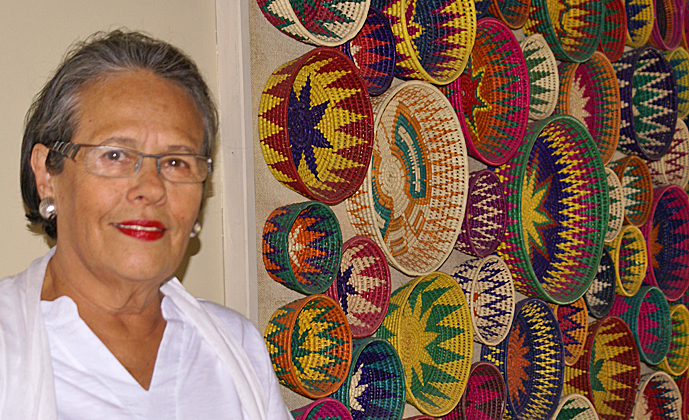
    Titita Ramírez, standing next to the gorgeous wall of baskets that decorates the Colonia Polanco branch of El Bajío.  After our several-hour multi-course meal at the original location, Titita took us to Polanco to see that site.  "Yes, we'd love to go with you today–but," we begged her, "please, please, don't feed us anything else!"

    Because we were Titita's guests, we barely looked at the El Bajío menu.  Titita, a supremely generous hostess, graciously ordered a lengthy tasting menu for us, a selection of some of her clients' favorite items.  The full menu is available at the restaurant's website.
    Titita Antojitos de Banqueta
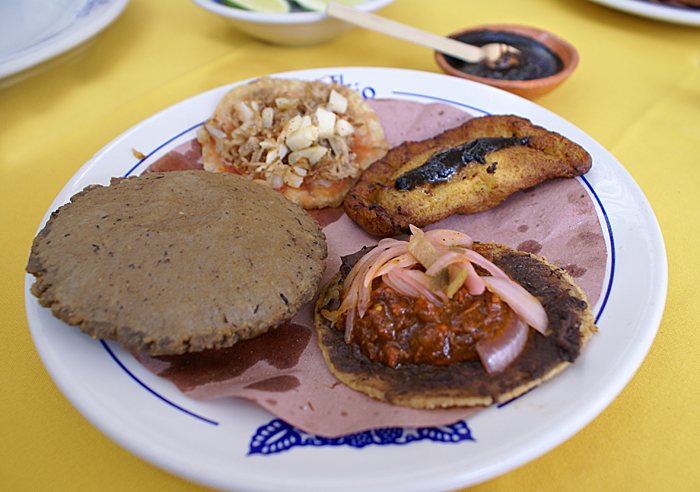
    The first course brought to the table was a selection of several antojitos de banqueta (little sidewalk whims), so called because these treats are normally eaten while you're standing at a street stand.  Clockwise from nine o'clock on the plate, we ate a gordita de frijol inflada (puffed-up thick tortilla, the masa mixed with black beans, served with that tiny dish of smoky salsa de chipotle meco), a garnacha Orizabeña (a small tortilla topped with Orizaba-style shredded beef, diced potato, and, in this case, red salsa), an empanada de plátano macho (the masa (dough) of the empanada is made of sweet, ripe plantain which is then filled with black beans and fried), and a panucho yucateco (a small tortilla covered with Yucatecan-style black beans, cochinita pibil, onion and chile habanero).
    Titita Cebiche de Cazón
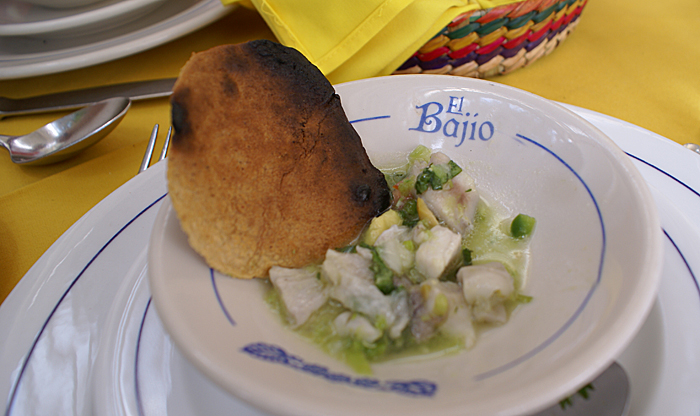
    Next, each of us tried a tasting-menu size portion of ceviche verde de cazón (green ceviche made of dogfish, a kind of shark, marinated in citrus and chile). 
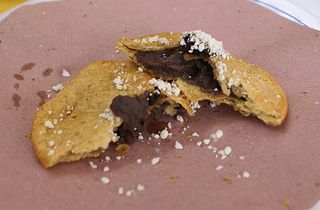
    Titita Empanada de Frijol con Hoja de Aguacate
    One tiny round empanada rellena con frijoles negros (a round empanada filled with black beans), dusted with Cotija cheese.  The beans were  delicious with the subtle anise flavor of the dried leaves of aguacate criollo–Mexico's native avocados.
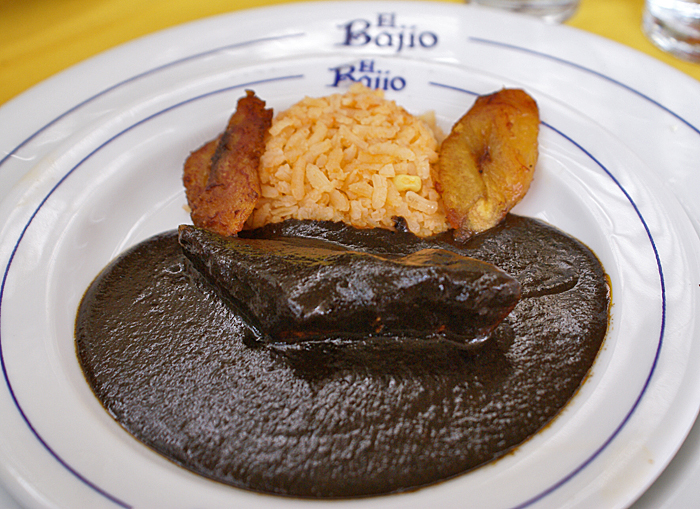
    Titita Arroz con Mole
    Arroz con mole de Xico (Mexican red rice with Xico-style mole), accompanied by a tiny serving of chicken breast and slices of plátanos machos fritos (fried ripe plantains). Xico, a lovely pueblo in Veracruz, is justifiably famous for its mole.
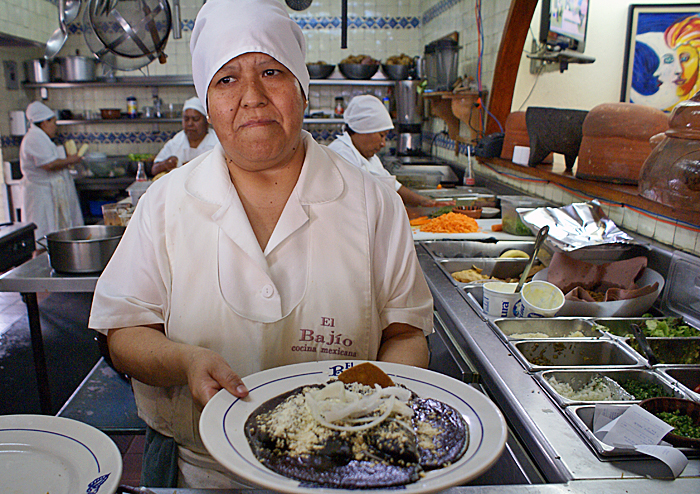
    Titita Doña Sandra Olvera
    Mayora Sandra Olvera is in charge of making El Bajío's mole; she's holding a standard-size plate, ready to be served to a restaurant client. A mayora is the woman head of a restaurant kitchen.  Mayora Sandra has been in the kitchen at El Bajío for its entire 45 year history.  For more than 30 years, Mexico Cooks! has eaten mole everywhere in Mexico and this extraordinary mole de Xico ranks among the best I've tried.
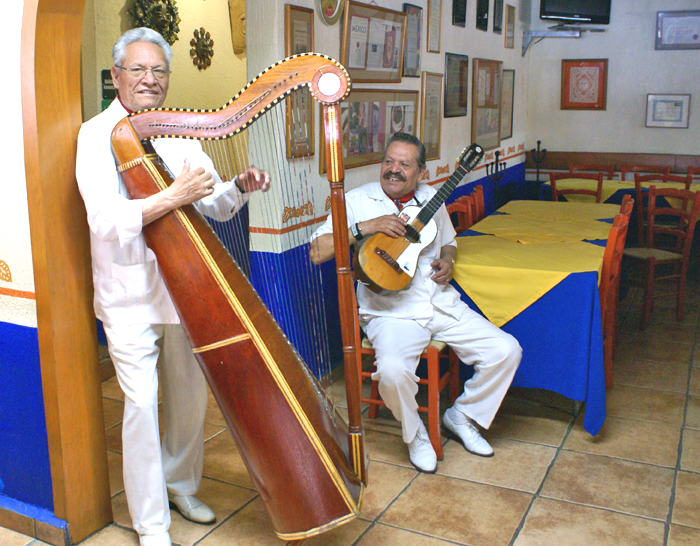
    Titita Músicos
    Two of the members of Los Tuxpeños, a group specializing in traditional music from Veracruz.  They are often at El Bajío to enliven the diners' comida (main midafternoon meal of the day).

    A short breather in between courses: I confess that I was ready to be disillusioned by El Bajío.  Whether cracking open a much-ballyhooed best-selling book, planning to see an Oscar-winning movie, or tucking into a legendary restaurant's meal for the first time, I am often guilty of having the preconceived notion that, "It couldn't possibly be as good as the hype."  Let me tell you that El Bajío is at least as good as its publicity.  The atmosphere is lovely, the food is world class, and the service is excellent. 
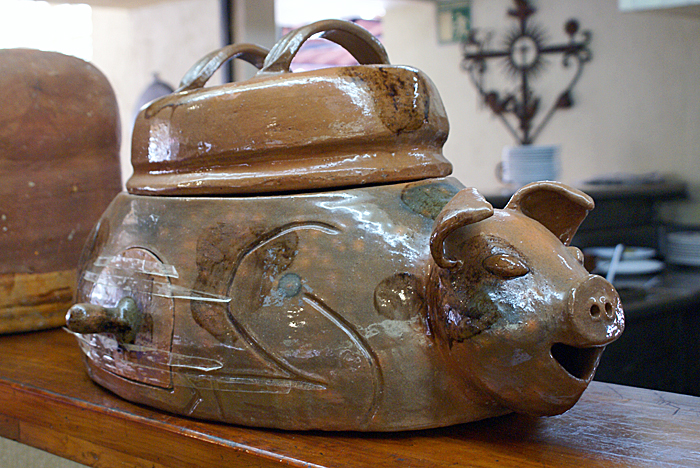
    Titita Cazuela de Puerco
    Titita told me that this little clay pig–although it's not so little, measuring more nearly a meter from snout to tail–hails from Toluca and is used to steam-heat tamales.  The door in the side, once used for carbón (Mexico's charcoal), is now used for an alcohol burner.

    Titita and her restaurants have participated in world-wide events and have won every prize conceivable.  All of her achievements (including the following) are legendary:

    • 1998 "The Amercian Academy of Hospitality Services" Five Star Diamond Award.
    • Participated for 10 years in the culinary events of Festival Anual del Centro Histórico de la Ciudad de México.
    • Consultant for various restaurants in the United States and Europe.
    • Active member of the Asociación Mexicana de Restaurantes (AMR).
    • Member of the International Association of Professional Chefs (I.A.C.P.) of the USA.
    • For three years, demonstrated Mexican cuisine at the Culinary Institute of America in Napa Valley, California.
    • Represented Mexico in the USA-based television commercials for the campaign "Got Milk" in Los Angeles, California.
    • Won recognition as "La Llave Empresarial 2006" granted by  AMAIT y ABASTUR in México.
    • Nominated by the New York Times as one of the two great matriarchs of Mexican cooking.
    • Won the 2008 and 2009 restaurant business merit prize.

    Titita assured me that the menu, the quality, and the prices are the same at all sixteen El Bajío locations, regardless of neighborhood and regardless of clientele. 
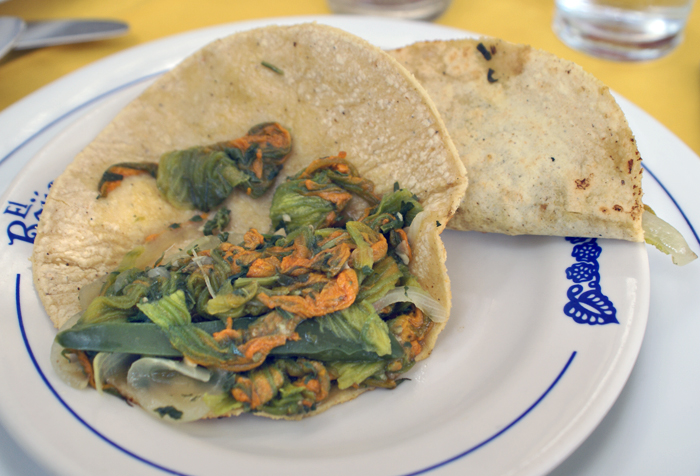
    Titita Tacos de Flor de Calabaza
    Quesadillas de flor de calabaza
    (quesadillas made with squash flowers, epazote, onion, garlic, and chile jalapeño).  The deep, rich, complicated flavor of these quesadillas was pure Mexico.

    Somehow we dived into two of the courses much too fast and the food escaped the Mexico Cooks! camera.  One was a taco of delicious carnitas estilo Tacámbaro (Tacámbaro-style pork) that gave us a taste of our beloved Michoacán.  The other a tasting plate of pescado a la veracruzana (Veracruz-style fish, with tomatoes, onions, and olives), brought us back to Titita's birthplace on Mexico's east coast.
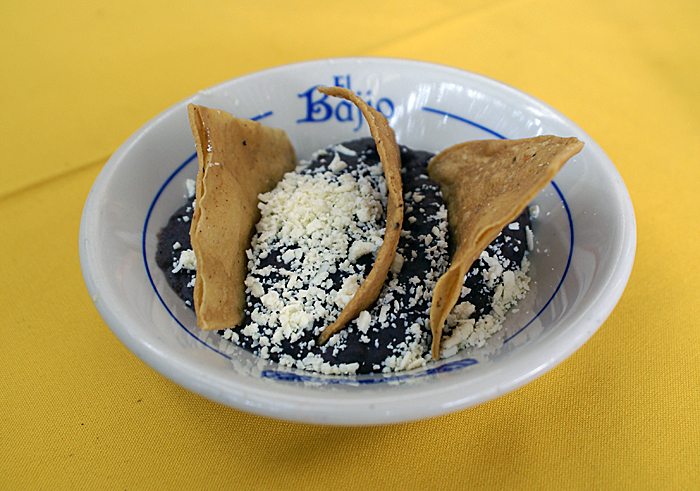
    Titita Frijolitos
    The last touch to a typical meal from the east coast of Mexico: a small dish of frijoles negros refritos (refried black beans), to eat with totopos (tortilla chips) or to roll into a small taco.  One of these is plenty as the final toquecito salado (little salty touch) to a meal such as ours.
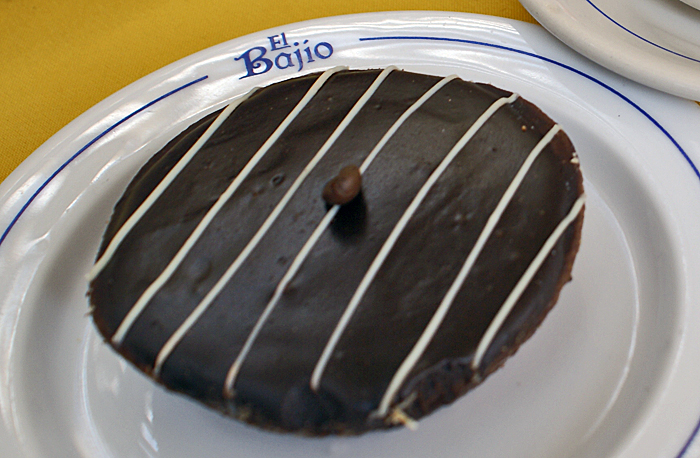
    Titita Tartita de chocolate
    And then there was dessert.  We shared two: first, an individual-size dark chocolate tart filled with cajeta (otherwise known as dulce de leche) and topped with a coffee bean, created by María Teresa Ramírez Degollado (Titita's daughter), her partner Joan Bagur Bagur and their staff at Artesanos del Dulce.
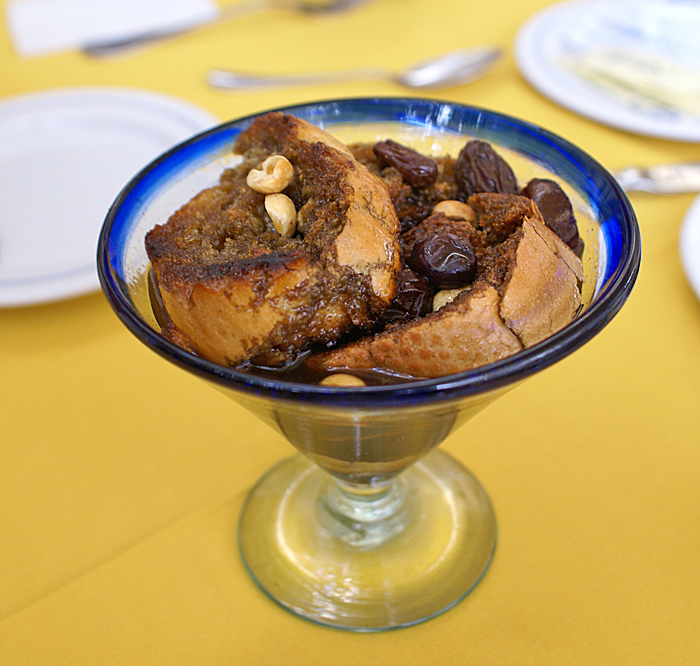
    Titita Capirotada
    Next, the hands-down best capirotada I have ever eaten.  If you've been around Mexico Cooks! for long, you know that I am a huge fan of this typically Lenten dessert–but wow, this one is stupendous for any time of year.

    Titita also gave Mexico Cooks! a copy of her beautiful cookbook, Alquimias y Atmósferas del Sabor: Alta Gastronomía de doña Carmen Titita (Alchemy and Atmospheres of Flavor: Haute Cuisine of doña Carmen Titita), with superb photo illustrations by internationally known photographer Ignacio Urquiza.  First published by Editorial Tiempo Imaginario, México in 2001, the book won the Gourmand World Cookbook Award in 2002.  The book's second edition was published in 2009.  

    Alquimias y Atmósferas del Sabor is as exquisite in its presentation as in its recipes, several of which are offered on the menu at all of the El Bajío restaurants.  Try Titita's recipe for empanadas de plátano macho; it's very simple and will make your household and your guests sigh with delight.  Here is Mexico Cooks!' translation of Titita's recipe.  Serve these empanadas with any Mexican main dish you choose and freshly prepared rice; they are marvelous with a rich mole served with chicken or pork.

    +———-+———-+———-+———-+———-+———-+

    Empanadas de Plátano Macho Rellenas con Frijoles Refritos
    Plantain Dough Empanadas filled with Refried Beans

    Ingredients
    3 very ripe platános machos (plantains), skins on
    Salt to taste
    1 quart water
    Enough vegetable oil to fry the empanadas, with a little extra to coat your hands while shaping them

    Refried black beans

    Special utensil
    Tortilla press or rolling pin

    The plantains are ready to use when their yellow skins have turned almost entirely black and are showing a bit of white mold–just when you might think it is time to pitch them in the trash, it's time to make empanadas.

    The day before you want to serve the empanadas, cook the plantains, peels still on, in the quart of boiling water.  Allow them to cool overnight. 

    The next day, peel the plantains and discard the peels.  Mash the plantains to make a smooth paste that you will use as the empanada dough.  Rub vegetable oil all over your hands and make 12 little balls of the plantain dough. 

    To flatten the dough, put each ball between two sheets of plastic (a cut-open freezer bag would work very well) and flatten into circles with either a rolling pin or the tortilla press.

    In the middle of each plantain dough circle, put a tablespoonful of refried black beans.  Fold each empanada in half, completely covering the beans with the plantain dough.  Firmly press the edges together so that the beans cannot escape while the empanadas are cooking.

    Heat the oil almost to the smoking point and fry the empanadas until they are a beautiful deep golden color.  Drain on absorbent paper. 

    Arrange on a small platter, garnish with a flower or two, and serve.

    Makes 12 empanadas as a side dish.

    You will love these empanadas and your family will beg for them.

    +———-+———-+———-+———-+———-+———-+

    Click for the El Bajío location nearest you in Mexico City: Sucursales

    When you go, please tell Titita that Cristina at Mexico Cooks! sent you, and give her a hug from me.

    Originally published in 2011, this article about the delights of Restaurante El Bajío and its founder, Carmen Titita Ramírez Degollado, bears repeating. Mexico Cooks! is on the road at the moment but will be back soon.

    Looking for a tailored-to-your-interests specialized tour in Mexico? Click here: Tours.  
  • Comida Is Served! Mexico Cooks! Dines Out and Dines At Home

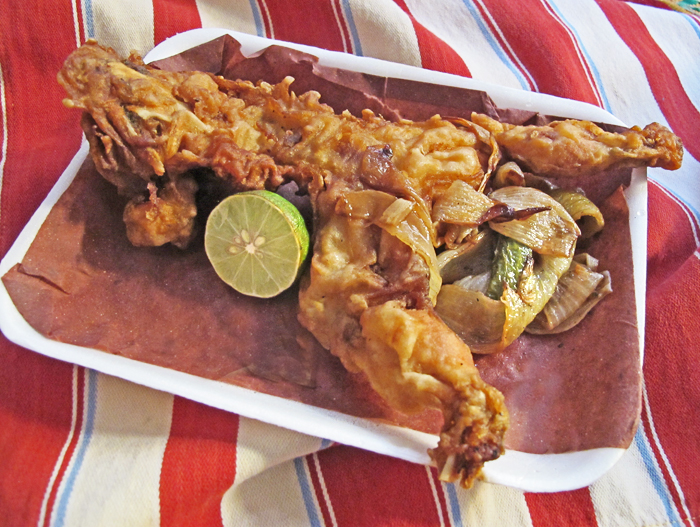
    Morelia Deep-Fried Whole Frog
    A whole frog, battered, deep fried and served with chiles toreados (chile serrano, rolled in oil and grilled or sautéed until soft), cebolla blanca (white onion, in this case caramelized), and limón to squeeze all over it. Whole deep fried frogs are a specialty of Queréndaro, Michoacán.  It's quite a graphic presentation, but you only eat the legs–unless you care to nibble on other parts.

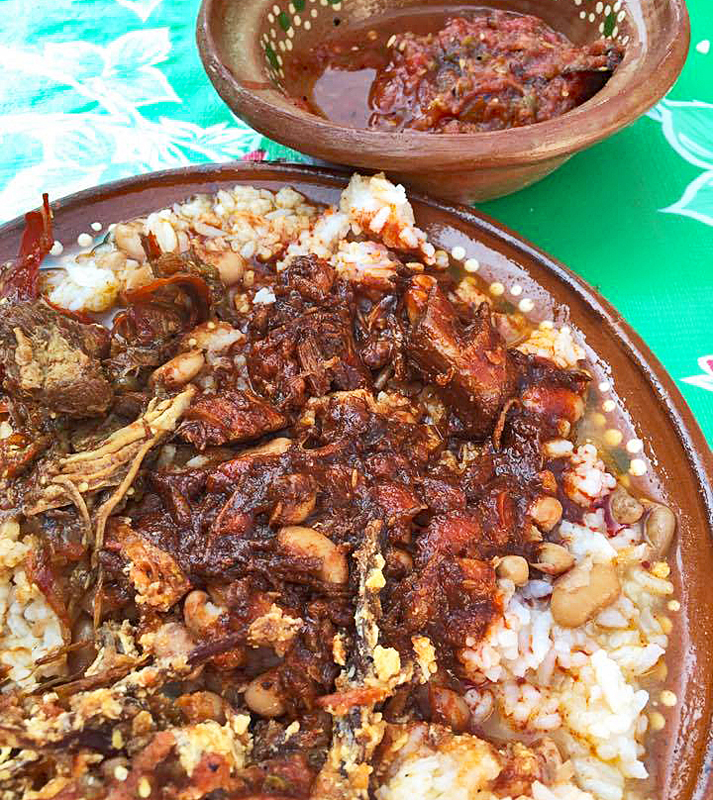
    Aporreadillo Vicky june 2017 1
    Truly wonderful aporreadillo from Apatzingán, Michoacán's Tierra Caliente (hot lowlands), as prepared by doña Victoria González at La Tradición, the family restaurant in Pátzcuaro, Michoacán.  Aporreadillo is a preparation of dried beef, cooked in highly spiced tomato-y broth with scrambled egg.  In this case, doña Vicky prepared a plate of aporreadillo for me with a base of morisqueta (steamed white rice) and frijoles de la olla (freshly cooked whole beans and their liquor).  The small dish in the background is a bowl of doña Vicky's delicious salsa, made in a molcajete (volcanic stone mortar).  Just looking at the picture makes my mouth water!

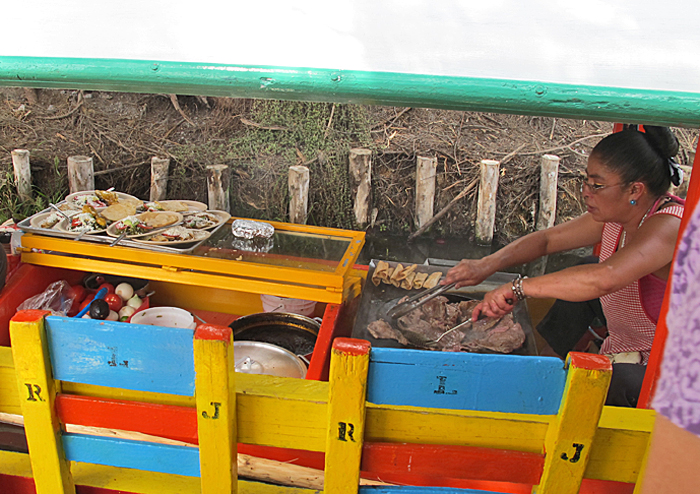
    DF Xochimilco Trajinera Cocinando 2
    A Sunday afternoon on the trajineras (boats) in Xochimilco requires a refueling stop at a 'restaurant' trajinera.  These boats with small kitchens pull up along side the trajinera that you're riding in to offer whatever's cooking.  In this case, our midday meal was juicy carne asada (grilled meat) and quesadillas cooked to order, guacamole and tortilla chips, rice, beans, and hot-off-the griddle tortillas.  Delicious!

    Pan de Romero Rosetta
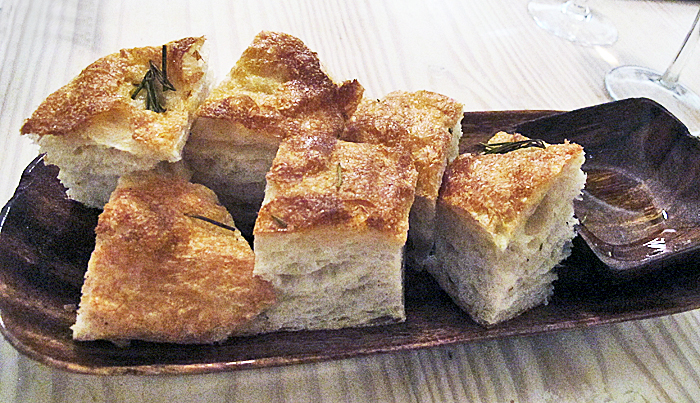
    Here's pan de romero (rosemary bread) from Rosetta, chef Elena Reygadas' lovely and well-respected Italian restaurant at Calle Colima 166, Col. Roma Sur, Mexico City.  This bread is so delicious that sometimes I wish I could go to Rosetta and just order bread and olive oil!

    Italian Sausage and Peppers Sandwich 2
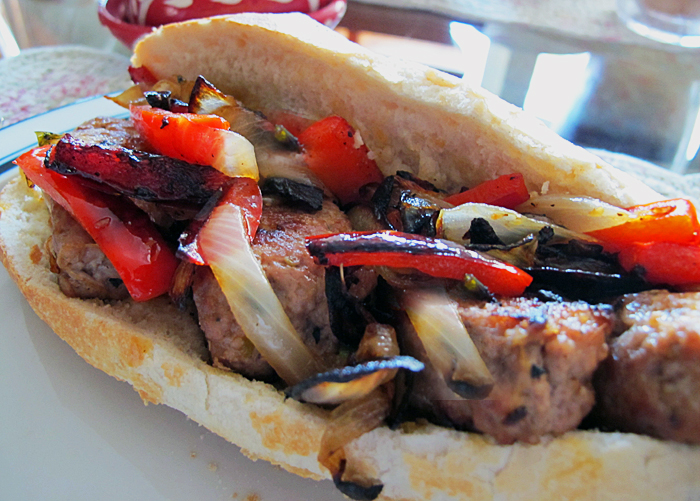
    Home cooking: Mexico Cooks! prepared the hot, fennel-y Italian sausage and then created sausage, peppers, and onion sandwiches for a recent meal at home. 

    Eggplant Parmagiana Out of the Oven
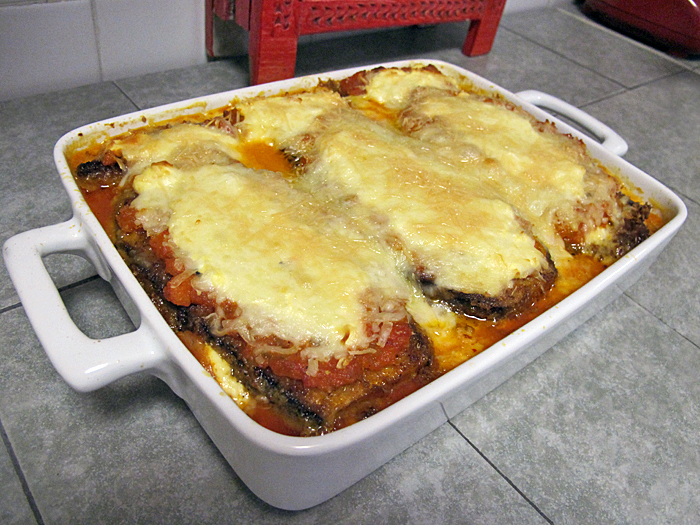
    Another home-cooked meal: eggplant parmagiana.  An Italian-American friend in New Jersey keeps me inspired to try his recipes.  They're almost inevitably delicious.

    Crema de Flor de Calabaza Azul Histo?rico 1 Marzo 2016
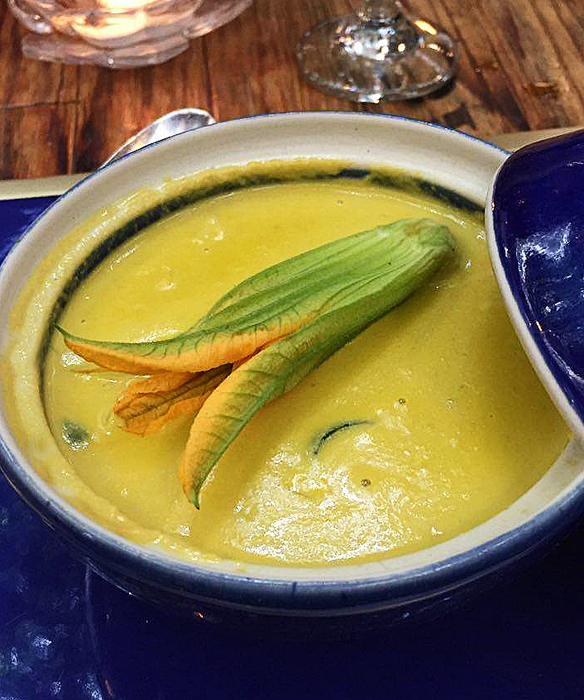
    Once every couple of months, Azul/Condesa or Azul/Histórico call out to us.  It's difficult for me to resist the wonderful crema de flor de calabaza–squash flower soup, each bowl made with 18 squash blossoms plus strips of chile poblano, kernels of tender elotes (early corn), and tiny cubes of queso fresco (fresh white cheese).

    Albo?ndigas Caseras Febrero 2017 1
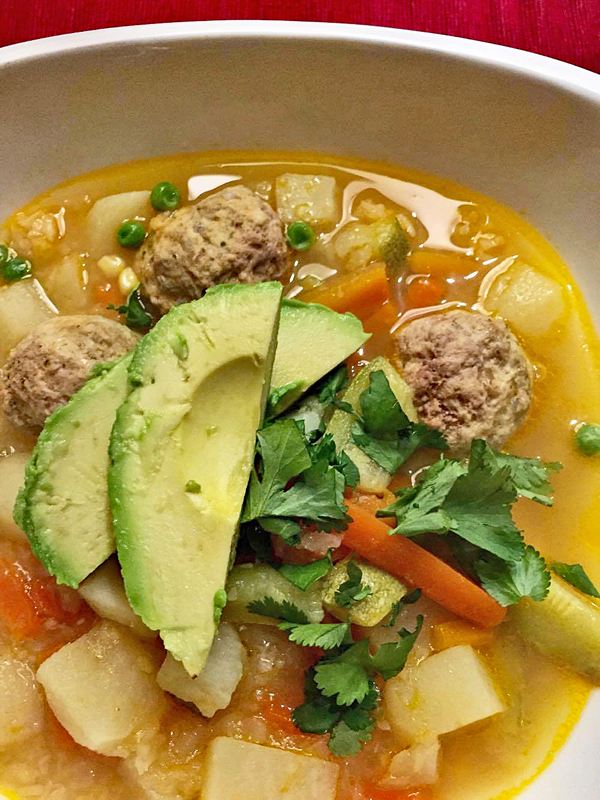
    Home-made sopa de albóndigas (Mexican meatball soup). I prepared this in February 2017 for dear friends in San Diego, California.

    Kalisa's for Dinner Claudia's Steak Feb 2017 1
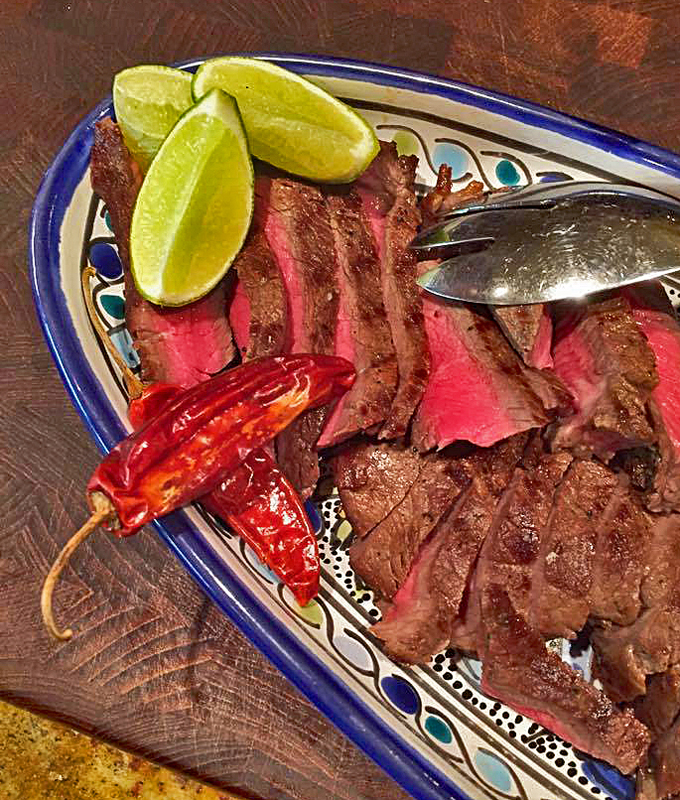
    Perfectly grilled steak, prepared in February by chef Claudia Sandoval, for an amazing meal at the San Diego home of friend Kalisa Wells.  It was an honor and a pleasure to share dinner with chef Claudia, who is the 2016 winner of MasterChef/Gordon Ramsey.  Kalisa is always the hostess with the mostess, and the evening was made complete by friends Holli and Jim DeLauro.  

    Morelia Buñuelos
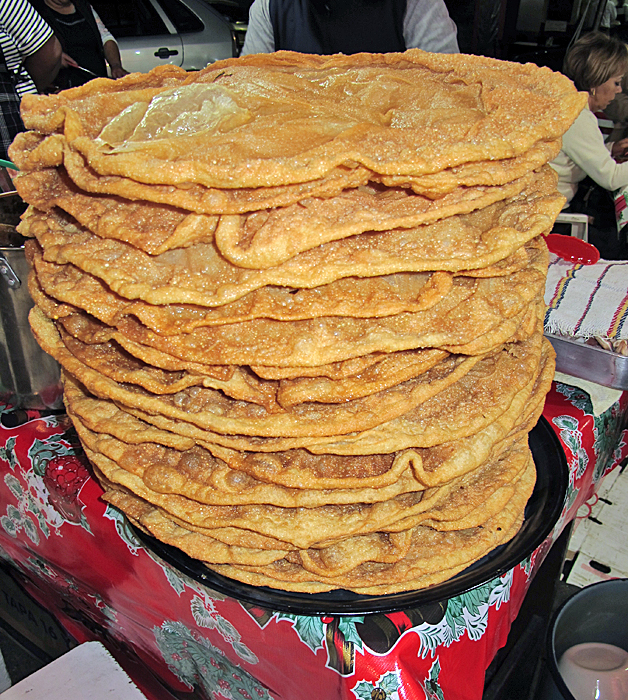
    To end on a sweet note: these buñuelos–foot-in-diameter deep-fried flour pastry, finished with a dash of granulated sugar and cinnamon, broken onto a plate or into a bowl and bathed with syrup made of piloncillo (Mexican raw brown sugar)–were on the menu at a fonda  (small family food booth or restaurant) the last time I was in Morelia, Michoacán.  Could you resist?  I couldn't.

    Looking for a tailored-to-your-interests specialized tour in Mexico? Click here: Tours.
  • Super Pollo don Emilio, Pátzcuaro, Michoacán: Enchiladas Placeras, A Banquet on the Street


    Patzcuaro Ex-Convento
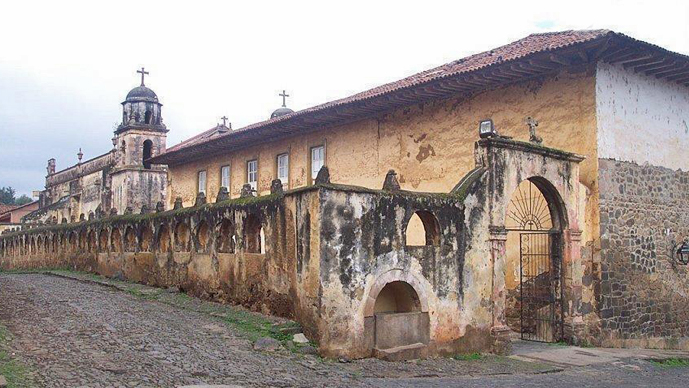
    Over the course of more than 30 years, Mexico Cooks! has visited Pátzcuaro, Michoacán, one of the most beautiful small colonial cities of Mexico, more times than we can count.  Every visit is memorable for 16th and 17th Century architecture, fantastic decorative arts, and food.  Food!  The regional Michoacán kitchen is incomparably rich and delicious, and Pátzcuaro's local specialties are truly magnificent.

    Enchiladas Placeras 1
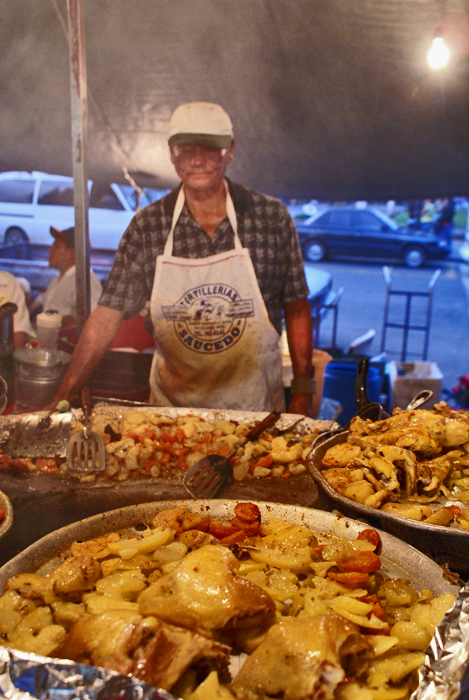
    Súper Pollo Emilio has been famous for enchiladas placeras for more than 40 years: plaza-style enchiladas, the only item on the menu.  The cooks prepare approximately 400 orders of these incredible enchiladas every night.  Don Emilio himself (the word don is an honorific title of respect and admiration) himself is supervising meal preparation at the giant brazier.

    Enchiladas Placeras 2
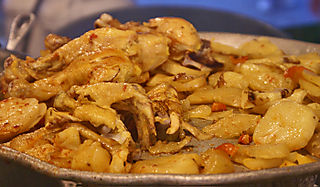
    Great quantities of enormous pechugas (chicken breast halves, each large enough to satisfy two people) and piernas (leg/thigh quarters) are simmered early in the day until they're perfectly done, still juicy and tender.  A bit later, preparation continues with vats of tender potatoes and fresh carrots.

    Enchiladas Placeras Sauce
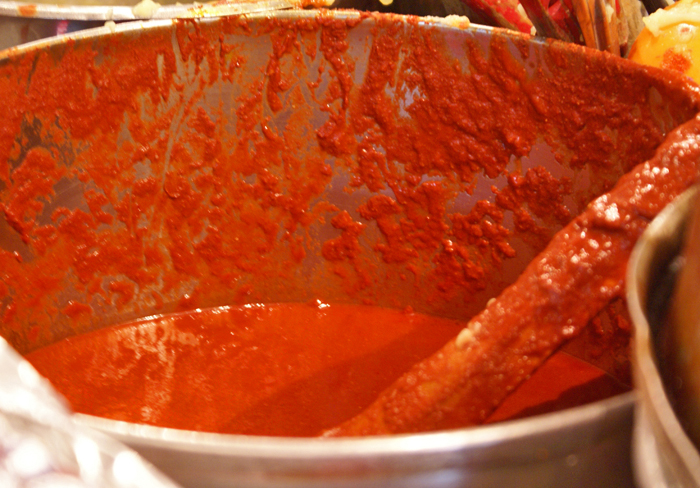
    The cook fans four tortillas at a time between his fingers and dips them into this enormous pot of house-made salsa para enchiladas (enchilada sauce).  The recipe?  Mexico Cooks! has wheedled and whined, but Súper Pollo Emilio won't give it up.

    Enchiladas Placeras Frying
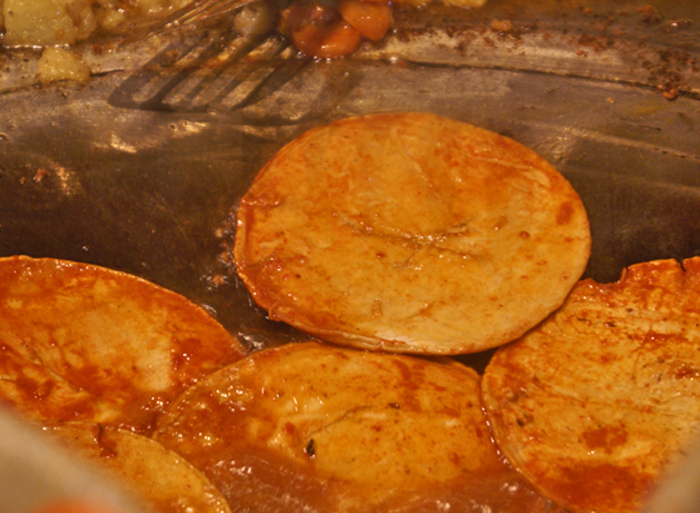
    The cook spreads the salsa-doused tortillas evenly into the sizzling grease in the industrial-strength comal (griddle), flipping them rapidly from one side to the other.  The tortillas need to be cooked till they are hot and soft, but not crisp.

    Enchiladas Placeras Papas
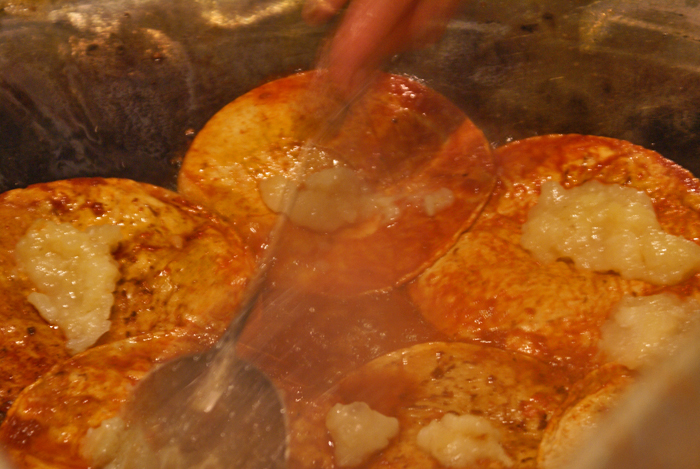
    He gives each tortilla a dollop of freshly mashed potato.  The tortillas are then folded in half: voilà, enchiladas ready for your platter.  Each order contains eight of these enchiladas as well as–well, we'll see in a minute.

    Enchiladas Placeras Serenata
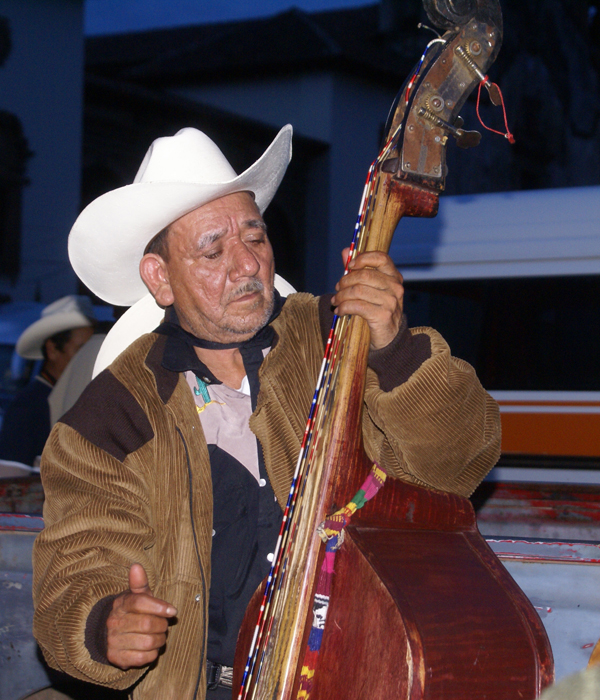
    While you wait for your supper, you'll most likely be treated, as we were, to a serenata (serenade) sung by strolling local musicians.  We were quite taken with the multi-colored strings of this big bass fiddle.  If you enjoy the music, be sure to give a small tip to the group.

    Pa?tzcuaro Enchiladas Placeras June 2017 1
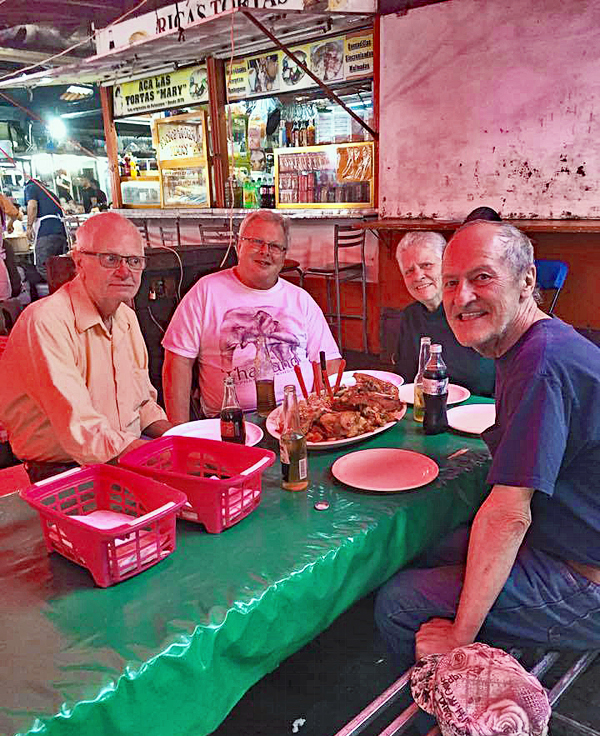
    At don Emilio's with friends  (clockwise from left) Bob, Tim, Diane, and John.  The platter of enchiladas and chicken on the table is the large size!  We couldn't begin to eat it all, but we gave it our best shot.  

    Enchiladas Placeras Antes
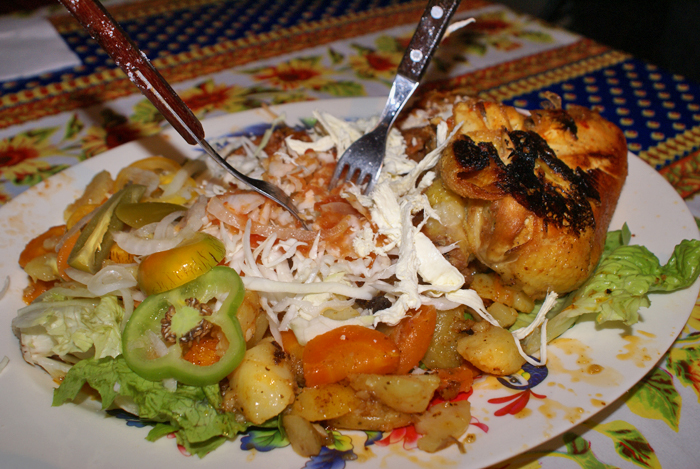
    Our order.  The platter, which looks fairly small in the photo, measures approximately 16 inches from side to side.  The two forks are ordinary-size table forks.  Each platter contains:

    • eight potato-filled enchiladas
    • freshly sautéed potatoes and carrots, enough for two or more people
    • the amount and kind of chicken you prefer–we normally order a breast portion, which was more than enough for the two of us
    • a sprinkle of thinly sliced onion
    • large shreds of queso Oaxaca (Oaxaca cheese)
    • shredded fresh cabbage
    • crumbled queso fresco (fresh farmer-style cheese)
    • fresh salsa roja (spicy red sauce, different from the sauce on the enchiladas)
    • a base of fresh lettuce
    • chile perón en escabeche (local pickled yellow chile: HOT), as much as you want

    Mexico Cooks! has never seen one person finish an entire platter of enchiladas placeras as prepared by Súper Pollo Emilio.  We were hard pressed to do it, but in the interest of pure research we managed to eat most of this order.  We accompanied the order with a glass of agua fresca de jamaica and a bottle of LIFT, an apple soda.  If you'd like a beer or two with your meal, one of the waiters will go get it for you from another stand.

    Súper Pollo Emilio is a night operation; the stand sets up at around 7:00PM every evening except Tuesdays, just around dusk on Pátzcuaro's Plaza Gertrudis Bocanegra (the plaza chica).  It's the booth closest to the portal (covered walkway) on the market side of the square.  The booth is open till the food runs out.

    Enchiladas Placeras Buñuelos
    If you're still hungry after your platter of enchiladas is gone, there are buñuelos for dessert.  A buñuelo is a huge flour pastry similar to a flour tortilla; it's fried until crisp. You can order a buñuelo broken and softened in a bowl of syrup or still-crispy and dusted with sugar.

    Enchiladas Placeras Paola y Jesus
    Our waiter Jesús and his sweet daughter Paola, who was helping take soft drink orders.  Jesús has been a fixture at Súper Pollo Emilio since long before his daughter was born.  

    When you're visiting Pátzcuaro, don't miss the enchiladas placeras at Súper Pollo Emilio.  If nothing else about this marvelous city brings you back again and again, you'll be pulled in by these addictive enchiladas, eaten on a chilly night under the stars, just by the market-side portales.

    In early June I took a client to tour Pátzcuaro.  When we arrived at Súper Pollo Emilio in the evening, don Emilio's son rushed out to greet me with a huge hug. "Señora, bienvenida y qué gusto verla de nuevo.  Te comparto la triste noticia de que mi papá falleció hace ocho días." (Welcome, it's good to see you again.  I have sad news: my father passed away a week ago.") We both dissolved into tears for a few moments, thinking about the rich memories that don Emilio gave us all.  Súper Pollo Emilio will continue into the next generation, of course; don Emilio's son is at the helm. I dedicate this article to don Emilio's memory.  If you're in Pátzcuaro, don't miss eating these fantastic enchiladas. 

    Looking for a tailored-to-your-interests specialized tour in Mexico? Click here: Tours.
     

  • What’s in Season in July at Mexico City’s Markets?

    Mercado de Sonora Calabaza
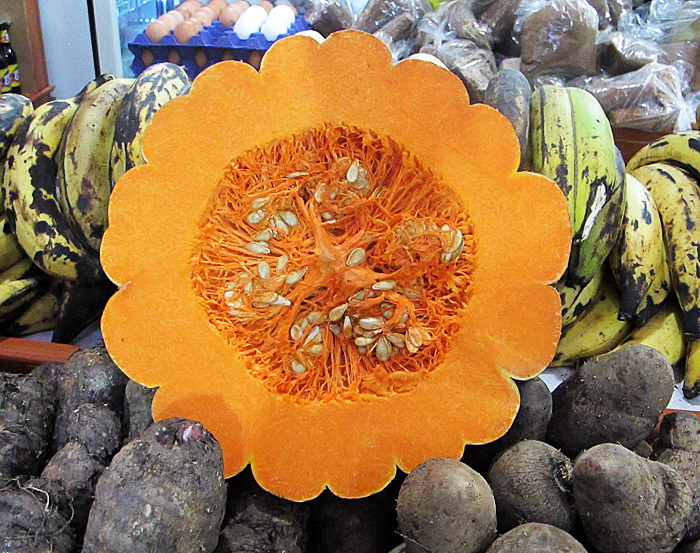
    At the Mercado de Sonora, this gigantic freshly cut squash looks more like a huge flower. The squash, an extremely hard-shelled variety known as calabaza de Castilla (Castilian squash), was approximately two feet in diameter! Behind it are plátanos machos (plaintains). The squash, carefully cut in half to show its beautiful flesh and seeds, is resting on taro root rhizomes.

    Those of you who live somewhere outside Mexico and are enjoying seasonal fresh fruits and vegetables right now might be surprised to learn that even in Mexico, where the growing season can be year-round, there are times when it's the season for (insert name of item here) and we all rush to buy what's new in our markets. Whether Mexico Cooks! shops at a tianguis (street market), at an enclosed municipal market, or at a modern supermarket, seasonal fruits and vegetables are must-haves–otherwise, they won't be back in the markets till next year.

    Mercado de Jamaica Nopales
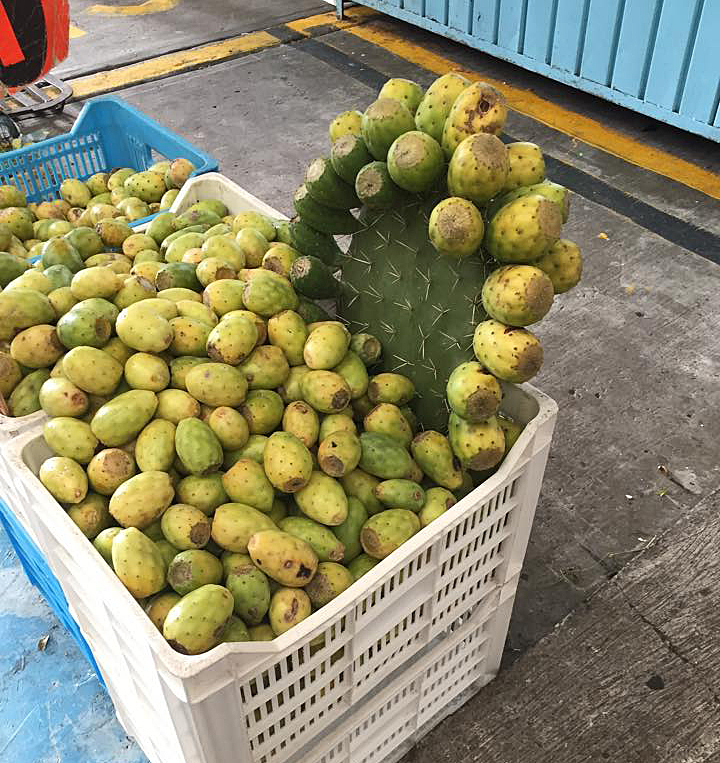
    The most recent seasonal fruit for summer 2017 is the tuna (prickly pear cactus fruit).  Available by the ton from late June until sometime in September, the tuna is considered to be Mexico's national fruit.  It even appears on Mexican flag!  You can see how it grows: that's a nopal cactus paddle, with tunas growing around the outside edge. More are piled up in the boxes. The spiny, thick green peel encloses a marvelous fruit.  

    Mercado de Jamaica Tuna Pelada
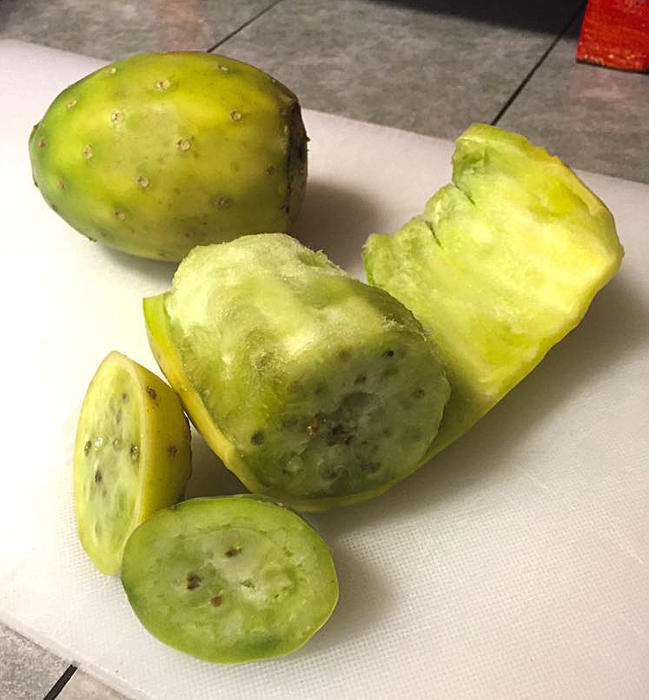
    Here's a tuna that I just peeled.  Peel-and-eat, seeds and all.  Cut the ends from the tuna, make a lengthwise slit down one side of the skin, and with your fingers, simply pull the skin away from the flesh.  Chilled, the sweet, crisp tuna flesh is as refreshing as watermelon–and similarly textured.

    Hongos Silvestres Morilla Mercado Jamaica
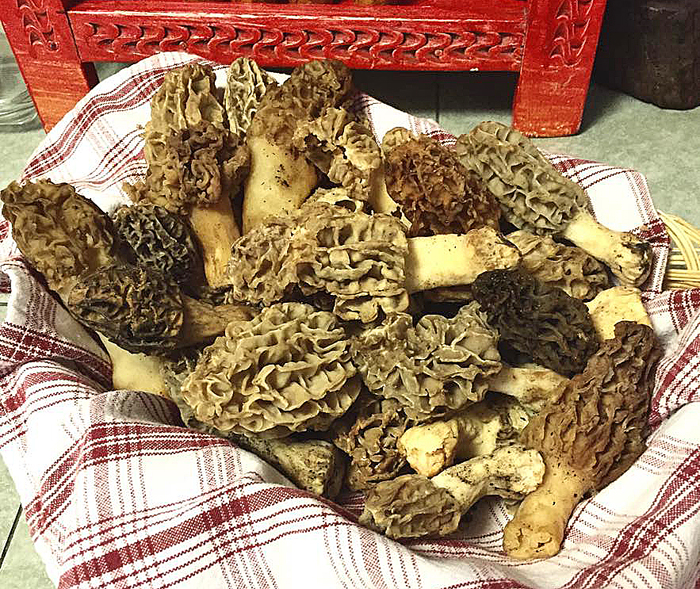
    Can you even believe it?  The cool, refreshing rainy season in central Mexico means wild mushrooms!  The season is just beginning.  I bought these glorious fresh morels at a municipal market where I often take touring foodies. Women from small towns in mountainous areas around Mexico City forage for these and other mushrooms (chanterelles and lobster mushrooms, anyone?) and sell them at local markets.  These morels were so inexpensive that I bought a kilo (2.2 pounds) and gave half to my neighbor.

    Hongos Silvestres Mercado Santo Nin?o Morelia
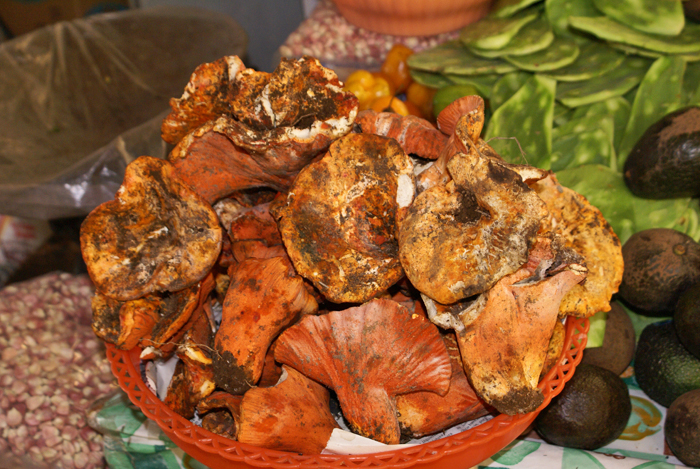
    What you may know as lobster mushrooms (Hypomyces lactifluorum) are called trompa de puerco (pig snout) here in central Mexico. Contrary to its mushroom name, this is actually a fungus that attacks a kind of wild white mushroom, deforming it into the delicacy you see in the picture. These do sometimes appear at farmers' markets in the USA, but prepare to pay through the snout for them: upwards of $30.00USD per pound.  Here, they're a tenth that price.

    Flor de Calabaza Mercado Paracho  Michoaca?n
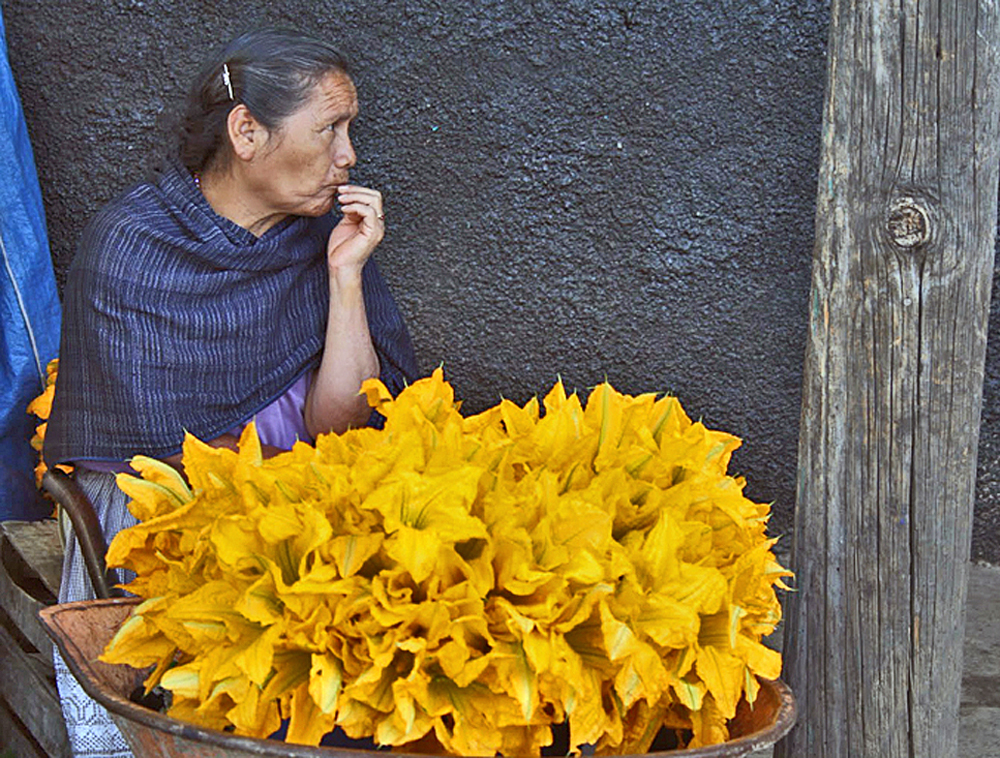
    These enormous just-cut flores de calabaza (squash blossoms) appear in Mexico's markets as the plants are setting their fruit.  The Purépecha indigenous woman in the photo has brought her flowers to sell on the street in Paracho, Michoacán.  Tidbit of information: only the male blossoms are cut; the female flowers, notable by the spherical beginning of a squash at the base of each flower, are left on the vine to bear fruit.

    DF Mangos Parai?so Mercado Coyoaca?n
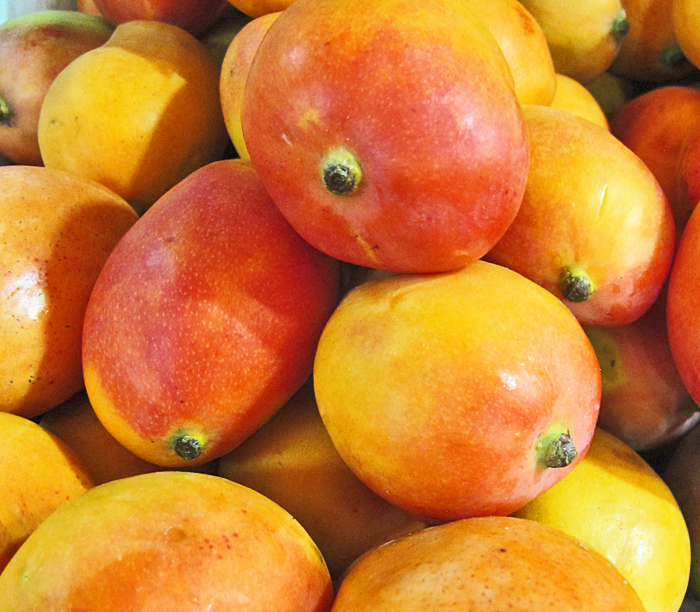
    Mangos!  It's still mango season in Mexico, and the varieties are many.  These are Paraíso: about five inches long and plump as can be, the flesh is tender, sweet, and incredibly popular as a snack.  Mangos are the most cultivated fruit in the world!

    Mango Flowers  Pa?tzcuaro Feb 2011
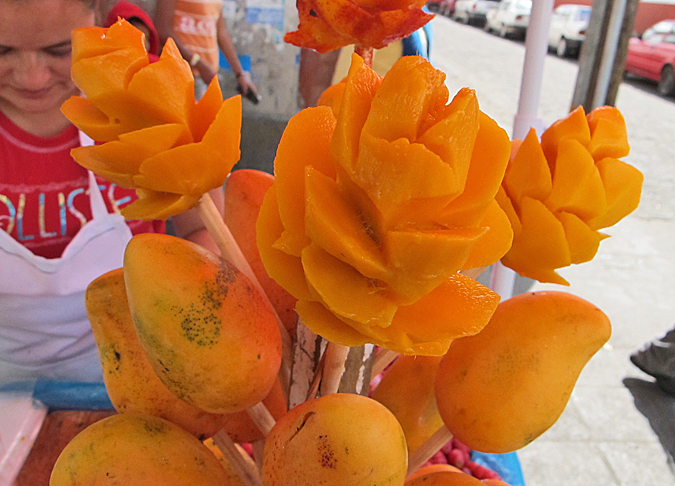
    Here's a ready-to-eat mango-on-a-stick, offered by a street vendor in Pátzcuaro, Michoacán.  Spritzed with a little jugo de limón (juice of the Key lime), sprinkled with a big pinch of salt, and dusted with crushed, dried, red chile–absolutely marvelous.  People in Mexico look forward all year long to the several months of mango season!

    Papaya
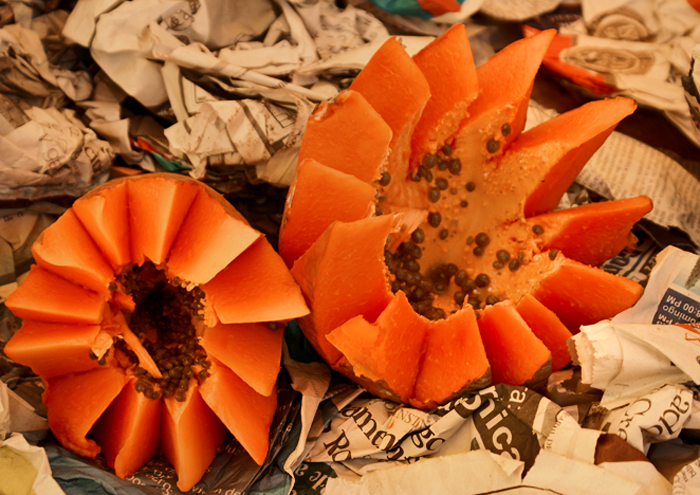
    July is also papaya season.  This variety, the usual one that we see in Mexico, is the Carica papaya–otherwise known as the Maradol.  Ranging in size from about eight inches long to a jumbo-size foot and a half, the Maradol papaya has very thin orange skin, meaty, deep orange flesh and usually a zillion firm black seeds, each smaller than a pea.  Eat this fruit any time: diced for breakfast, in a smoothie, or accompany your comida (main meal at midday) with a refreshing agua fresca de papaya–a papaya fruit water.

    Limo?n Criollo
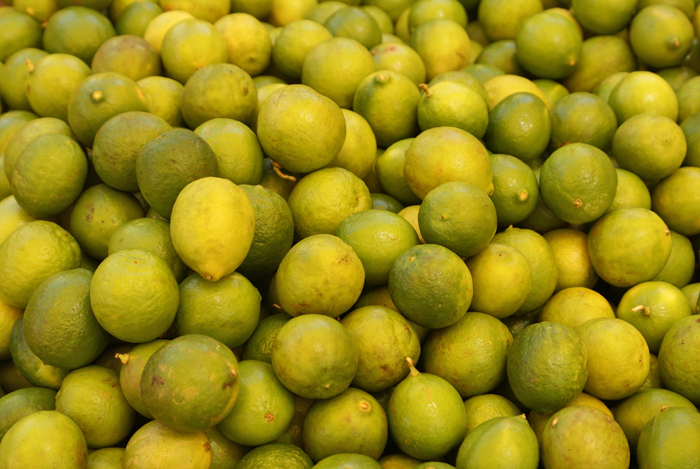
    Limón criollo: Mexico's small spherical 'native' limones are known in the United States as Key limes.  These limones aren't really native to Mexico; they originated in Asia and were brought here by the Spanish nearly 500 years ago. Available all year and used ubiquitously for everything from squeezing onto fresh fruit to squeezing into your bowl of caldo de pollo (chicken soup) to spritzing onto your hands for slicking down unruly hair, these green to greenish-yellow limones are available all year long.  July is their peak season, though.  Their flavor is completely different from either the lime OR the lemon; oddly enough, neither Persian limes (the large oval green ones) nor Eureka lemons (the large oval yellow ones) are grown for the fresh fruit market in Mexico.

    Sandi?a
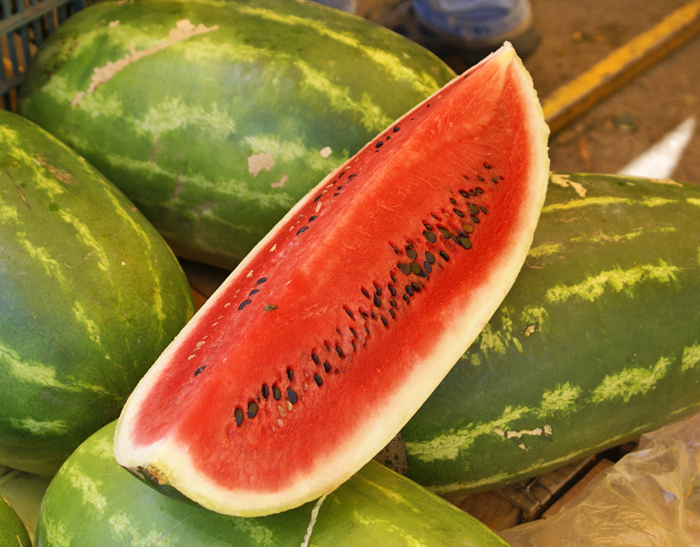
    Last, the sandía (watermelon).  Available all over Mexico and in season right this minute, the sweetness of the fruit is as refreshing as a cool shower.  Native to somewhere in Africa–there's lots of controversy about where–and over 5000 years old, Mexico's watermelon is grown primarily in this country's western and eastern coastal states.

    Paracho Fruta con Avejas
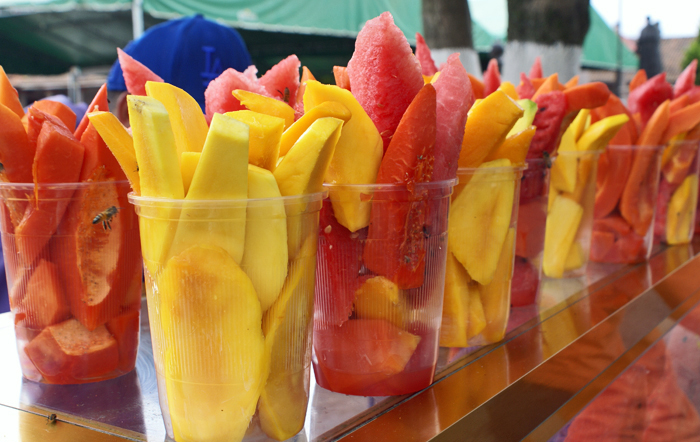
    Fresh mango, papaya, and watermelon, ready to be seasoned just the way you like them.

    Here in Mexico, many tropical fruits are eaten sprinkled with salt, crushed, dried red chile pepper, and a squirt or two of limón.  If you've never tried it this way, you'll be surprised at how this multi-level flavor combination changes a standard sweet fruit experience to a rush of OH MY GOODNESS! in your mouth.  Many years ago, when my elderly mother visited me in Mexico, I presented her with an already-seasoned breakfast plate of fresh ripe-picked pineapple from Veracruz, ripe-picked strawberries from Michoacán, ripe-picked papaya from Chiapas, and field-ripened cantaloupe from Mexico's west coast.  Always an adventurous eater, she gobbled it right down and sighed in contentment.  She said, "Cristina, I've never really understood tropical fruit before.  It needs all those seasonings to make it just perfect."  My mother was right.

    Looking for a tailored-to-your-interests specialized tour in Mexico? Click here: Tours.
  • Rosalba Morales Bartolo :: Cocinera Tradicional (Traditional Cook) and Proud Daughter of San Jerónimo Purenchécuaro, Michoacán

    Rosalba Moreles
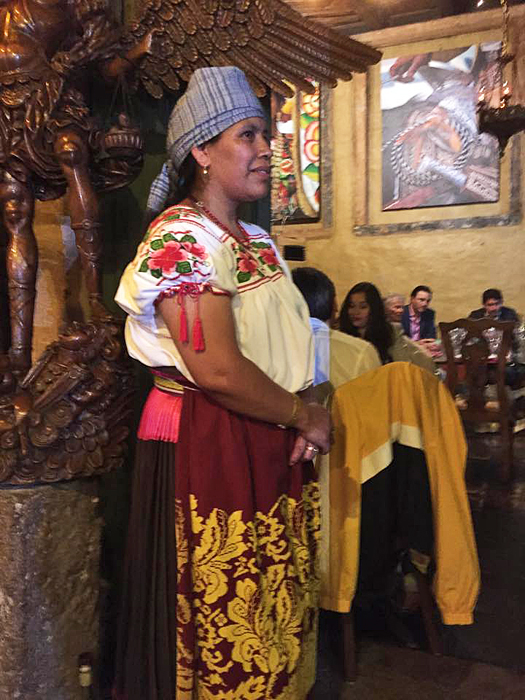
    Rosalba Morales Bartolo, born and raised in San Jerónimo Purenchécuaro, Michoacán, grew up cooking alongside her mother in their indigenous Purépecha kitchen. Purépecha women are well known for their regional cuisine and extraordinary cooking abilities. Rosalba, who learned recipes and techniques beginning in her early childhood, has become one of the most exemplary cooks living in Mexico. In the photo, Rosalba oversees a restaurant dining room during a 2015 homage dinner she prepared for Diana Kennedy and many attendees.  All photos copyright Mexico Cooks! unless otherwise noted.

    Mirador San Jero?nimo Purenche?cuaro 1
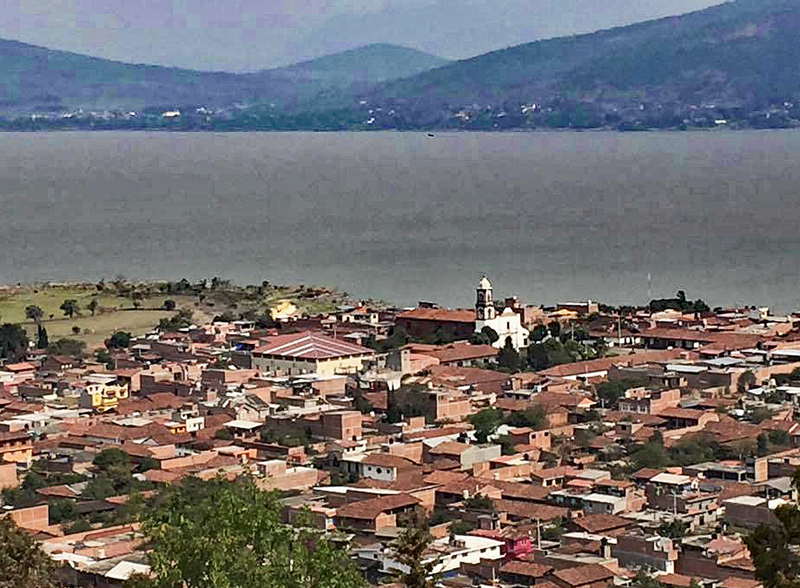
    San Jerónimo Purenchécuaro–Purenchécuaro translates to 'place of visitors'–nestles at the shore of the Lago de Pátzcuaro, in central Michoacán.  Eighty per cent of the town's approximately 2,000 inhabitants are indigenous Purépecha and a large number continue to speak their native language and teach it to their children.  The town continues its millennia-old social customs, some of which are incorporated now into Roman Catholic religious practices.  Mexico Cooks! took the photo from a scenic overlook in San Jerónimo; you can see the town, including the parish church tower, one tiny portion of Lake Pátzcuaro, and the tiers of Michoacán's mountains stretching out beyond the other shore. 

    Lake Pa?tzcuaro Old Postcard Fishing
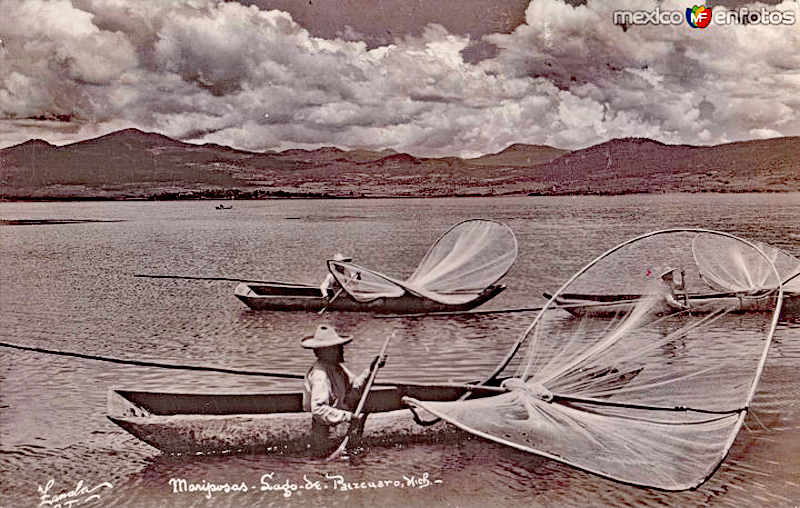
    Lake Pátzcuaro fishermen, in an old postcard.  Today, the butterfly nets typical of the lake region have been largely replaced by other styles of hand-woven nets. Fishing continues to generate income as well as family sustenance for the towns around and close to the lake. Photo courtesy Mexico en Fotos.

    Charales Cleaned 1
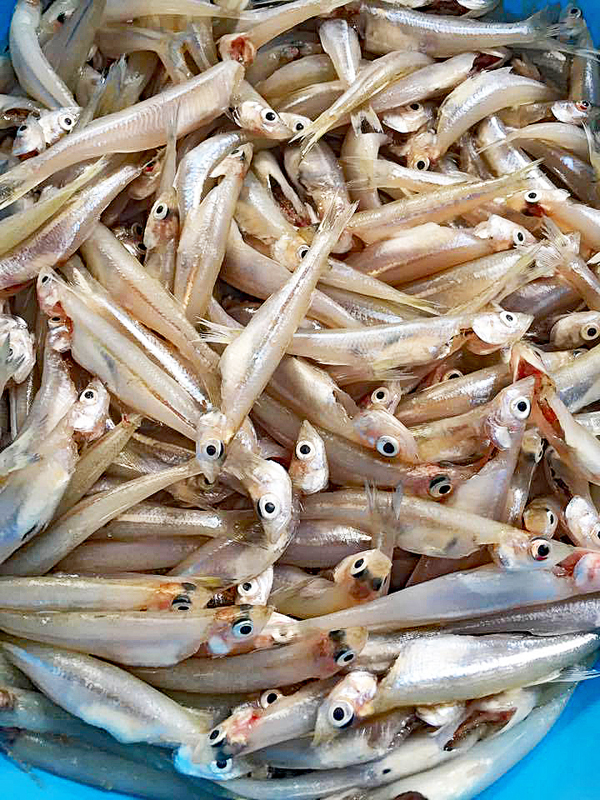
    Charales, freshly caught and cleaned.  Rosalba's father was a fisherman, working on Lake Pátzcuaro.  From him, she learned how to fish with a net. She learned how to prepare tiny charales (genus Chirostoma) her grandmother's old-fashioned way.  Once the fish are caught, she scales them (yes, these tiny fish, one by one), then eviscerates and washes them.  The heads are typically left on the charales.  Next, Rosalba spreads them out in the sun to dry on petates (mats made of palm fronds).  Once the fish are dried, she uses them for a variety of different dishes: fried for a filling in tacos or gorditas, simmered in a richly flavored broth, crushed into a salsa, or cooked in a guisado (a type of main dish that can also be used as a taco filling).

    Petate on Bicycle
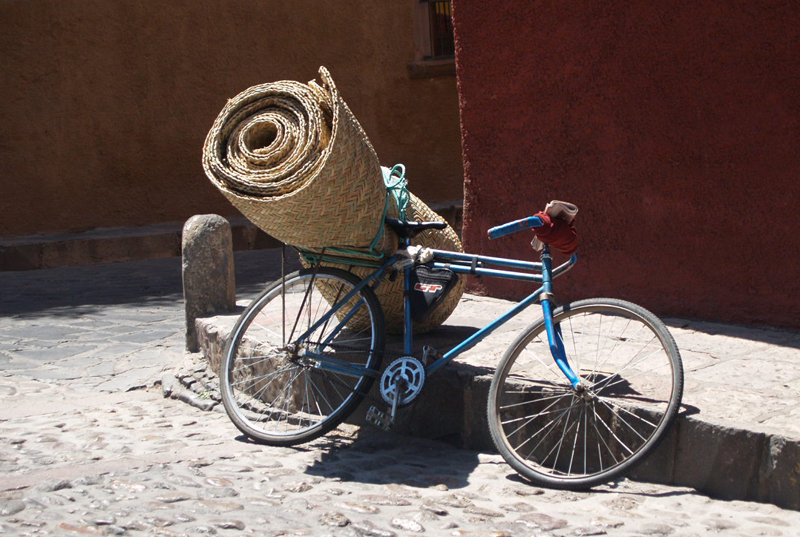
    Petate (mats made of palm fronds), rolled up to be transported on a bicycle.  The petate, of pre-Hispanic origin, has multiple uses, including use as bedding, as a drying floor, and as a shroud. Image courtesy Pinterest.

    Rosalba con los charales 2-2016
    At home in her kitchen, Rosalba shows off a plateful of her famous charales.  Restaurants and individuals in cities and towns all over Mexico order kilos of charales to be shipped to them.  I confess that I always thought I hated them: strongly fishy, thickly breaded, greasy, and often overly picante (spicy), charales were for years last on my list of things I wanted to eat.  One day a few years ago, Rosalba stood in front of me with a lightly fried, delicately golden brown charal held out between her fingers.  "You haven't tried mine, Cristina," she insisted. There was no way to say no. What a surprise, it was delicious!  Now I crave them–but only Rosalba's.

    Rosalba con Len?a 1
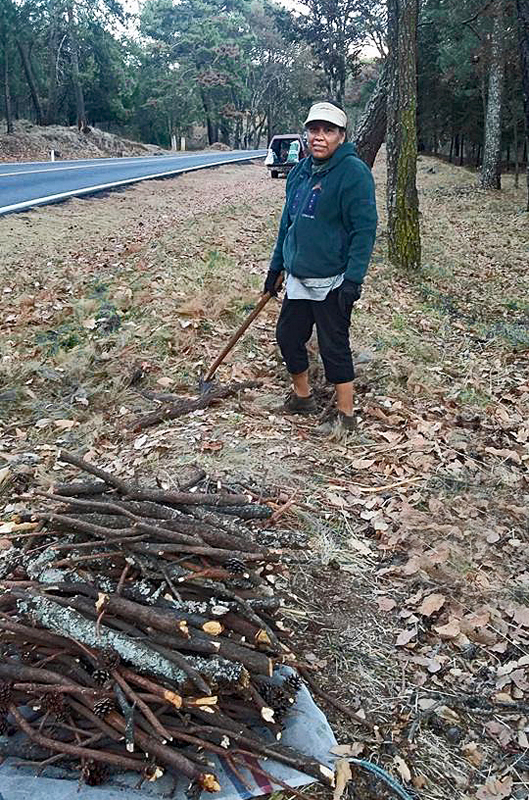
    Your family's food preparation probably begins with a trip to a well-stocked supermarket.  Once your ingredients are at home, you simply turn on a modern stove, either electric or gas. Rosalba's food preparation begins with a trip into the woods near her home, where she gathers branches to be used as fuel in her wood stove.  In addition, she grows much of her food in h
    er large back garden: she tends and harvests tomatoes, chiles, squash, cilantro, and various fruits, among other delicious items that end up on her table.

    [youtube=https://www.youtube.com/watch?v=Tf9gUGDLBSI&w=350&h=200]
    Recently, Rosalba has been featured on several Mexican television programs, including this one called "Cocineros Mexicanos" (Mexican Cooks). Take a few minutes to watch how she cleans the charales, prepares a simple soup and salsa, and delights Nico (the program's host) with her simplicity, directness, honesty, and skill as a cocinera.

    Rosy's route to her present renown hasn't been fast and it hasn't been easy.  Her life has had numerous ups and downs, its path twisting from her birthplace to a risky life as an undocumented person in the United States and back again.  In 1984, she graduated from primary school in San Jerónimo and left the next day to work as a cook in a private home in Guadalajara.  Her employer asked her to prepare food that was completely unfamiliar to her–fish cooked in white wine!  She remembers, "That day marked my life and was incredibly special, because it confirmed and reconfirmed the love, my deep feeling for cooking, as I experimented with different flavors."

    Rosy Honorable Mention 2013
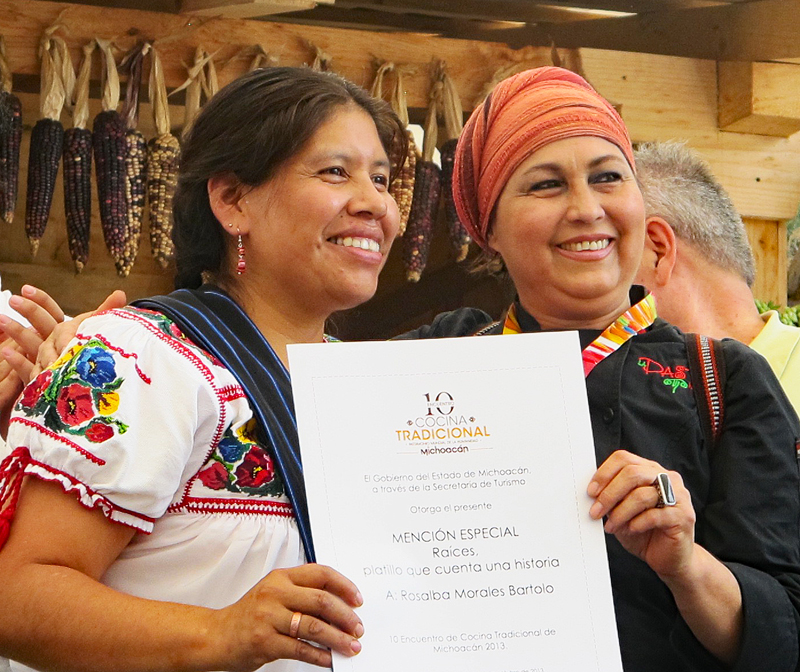
    In 2013, Rosalba won honorable mention in Raíces, Platillos que Cuentan Una Historia (Roots, Dishes Which Tell a Story) at the annual Encuentro de Cocineras Tradicionales de Michoacán (Meeting of Michoacán's Traditional Cooks).  Her first entry, in 2010, won her a first prize.

    Twice Rosalba entered the United States as an undocumented worker, each time laboring in Mexican restaurants and sending money back to her native San Jerónimo Purenchécuaro.  Over the course of 25 years, she was able to construct her own home, where she lives today and has made her "Cocina Tradicional Rosy" well known to Mexicans and foreigners who are intent on dining well in Michoacán. 

    Chile Pero?n Cut Open
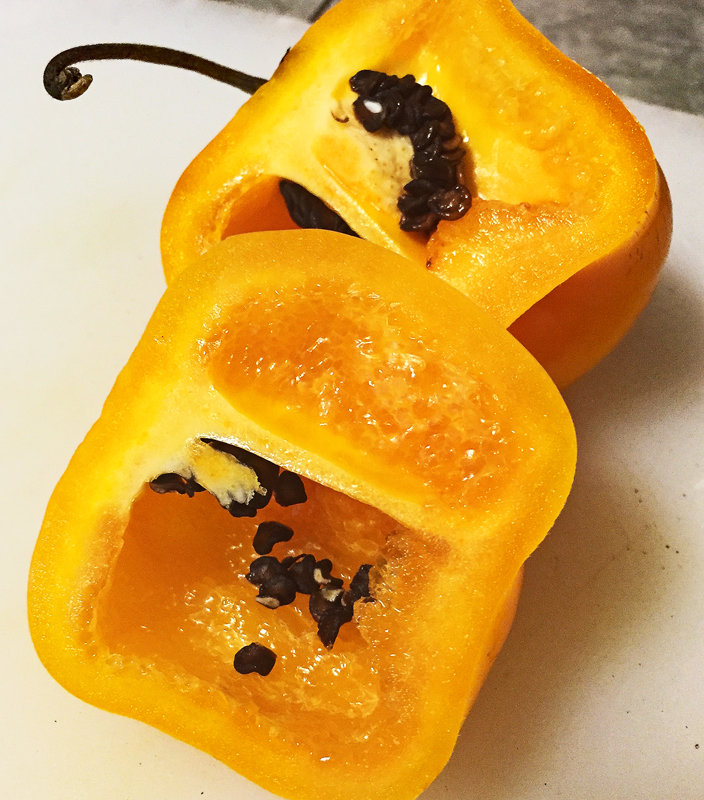
    Everybody's favorite chile in much of Michoacán: chile manzano, known in Michoacán as chile perón. Approximately 1.5"-2" in diameter, the perón is only chile in the world with black seeds.  It ranks between 30,000 and 50,000 'heat' units on the Scoville scale–about the same heat level as the chile de árbol.   "While I was living in the United States, I really missed caldo de trucha (trout soup) with chile perón," Rosalba reminisced.

    Rosalba con Aquiles 6-2016
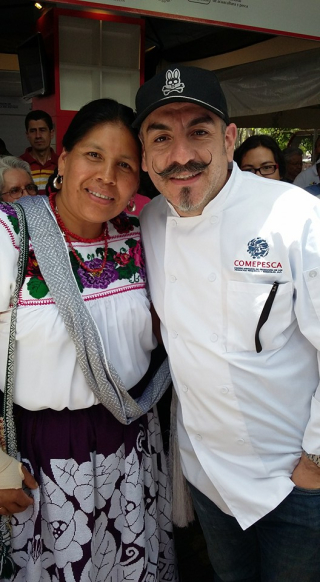
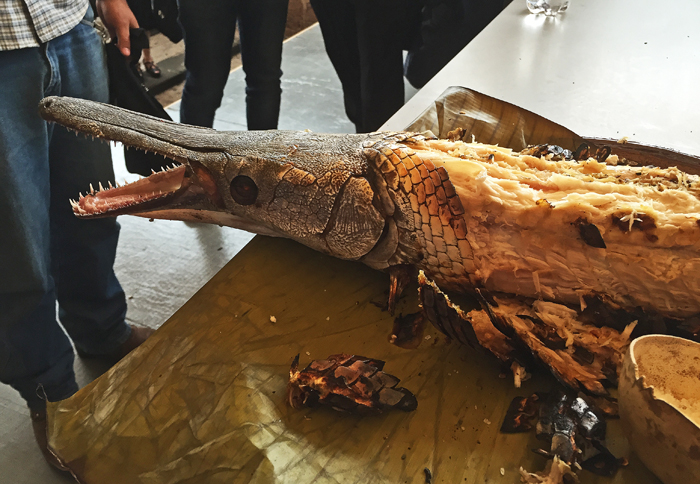
    Rosalba at Morelia en Boca 2015, with chef Aquiles Chávez of La Fishería Restaurant in Houston and Restaurante Sotero in Pachuca, Hidalgo, Mexico.  Morelia en Boca, an annual international high-end food and wine festival, featured a conference given by cocinera tradicional Rosalba together with chef Aquiles, demonstrating the preparation of Rosy's tiny charales and chef Aquiles' enormous pejelagarto (freshwater gar), native to the waters in chef Aquiles' home state, Tabasco. Their conference was so knowledgeable, so well-presented, and so funny that the huge and enthusiastic audience gave them a standing, cheering ovation at its end.

    Aquiles y Rosalba Pejelagarto 1
    Chef Aquiles roasted the pejelagarto over a charcoal fire; this photo shows only the head and a small portion of the giant fish's body.  To roast the fish, chef Aquiles inserted a broomstick into the gaping tooth-filled mouth; the broomstick stopped at the fish's tail.  With the end of the broomstick that protruded from the mouth, chef Aquiles was able to turn the fish as it roasted.

    Rosalbo Caldo de Pata de Pollo MC
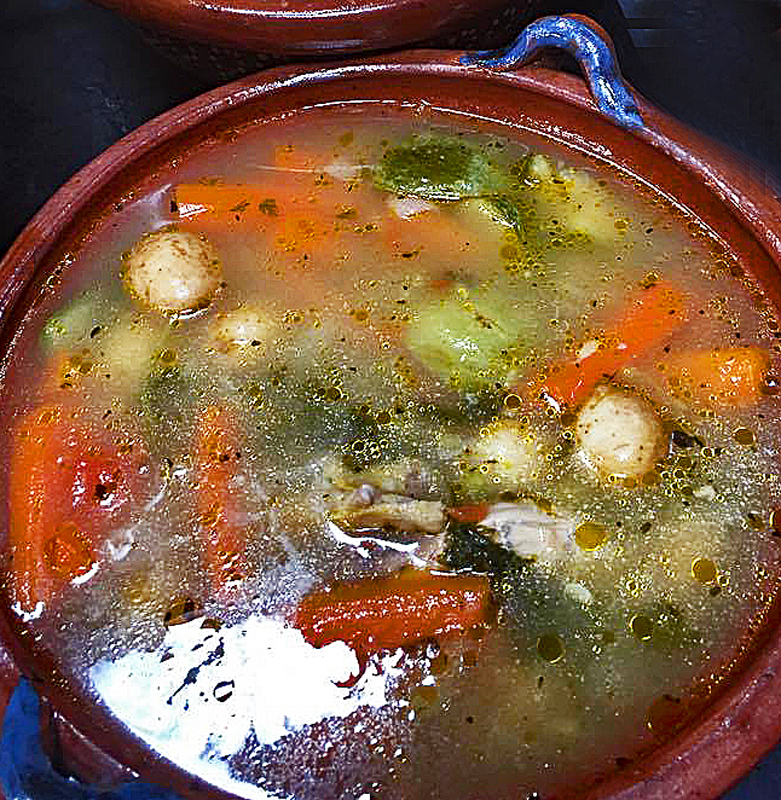
    Rosalba's caldo de pata de pollo.  She prepared this rich chicken broth using just chicken feet as the base.  She added fresh vegetables just prior to serving.

    Guiso de Nopales Calabacitas Etc 1
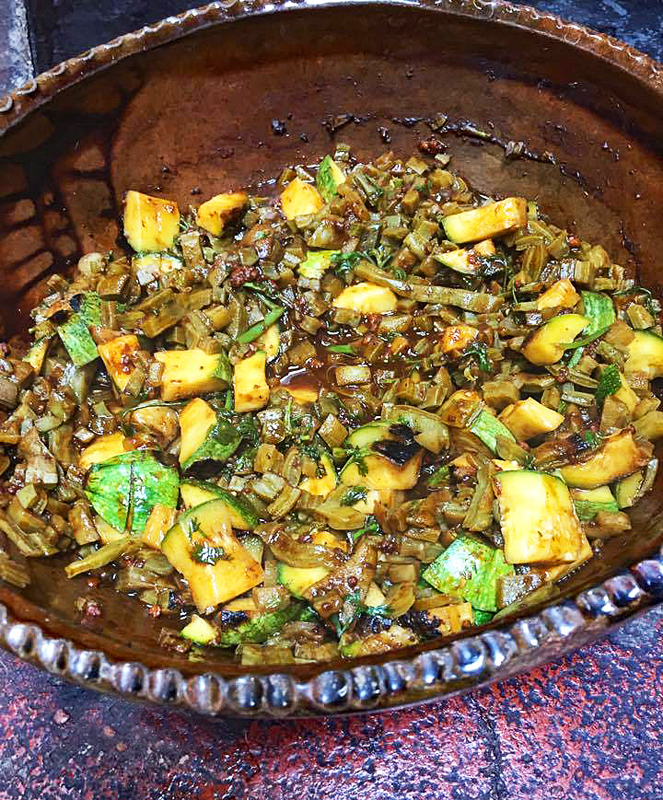
    Rosy's delicious guisado (a casserole or stewed dish) made with nopales (cactus paddles) and calabacitas (a squash similar to zucchini).

    Rosalba Salsa de Zarzamora 1
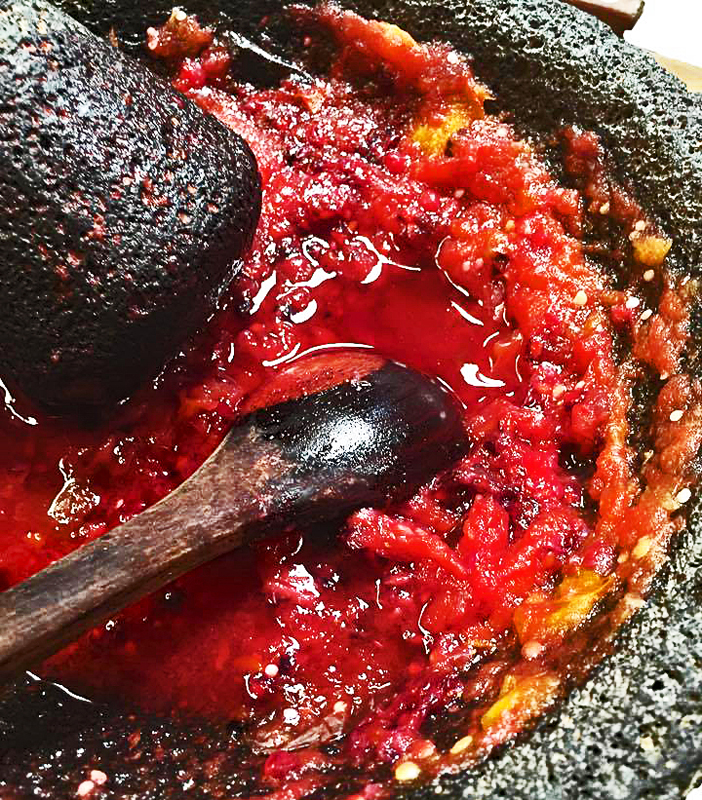
    One of Rosalba's many talents is the ability to create utterly wonderful food from whatever is seasonably available.  Salsa de zarzamora (blackberry sauce) is a molcajete-ground spicy, sweet, and savory concoction of roasted chile perón, roasted ripe tomatoes, and native Michoacán blackberries.  A pinch of salt, a moment's grinding in the volcanic stone mortar, and it's ready for the table.  I would cheerfully have eaten it with a spoon, it was so heavenly.

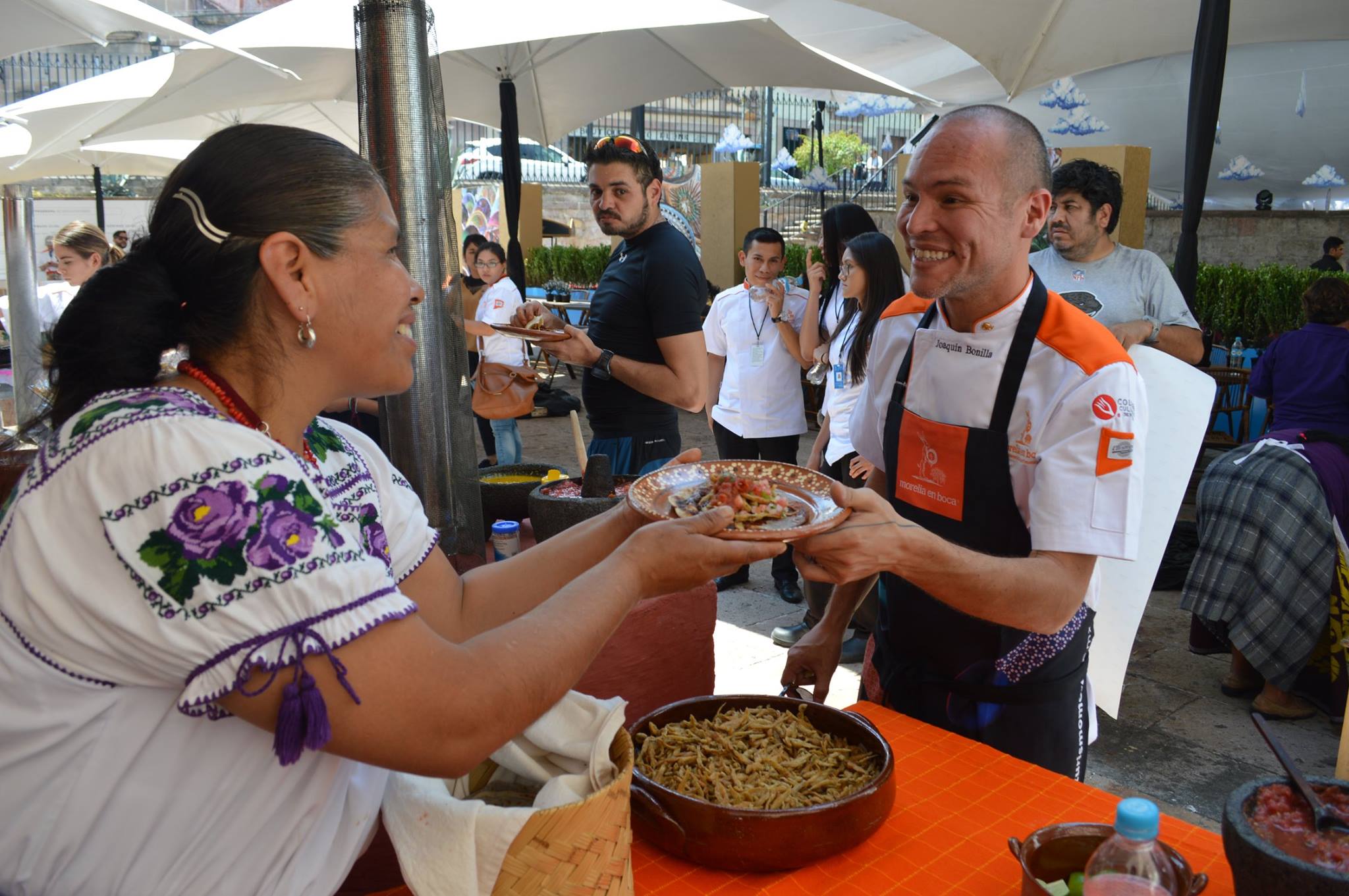
    Rosalba con Joaqui?n Bonilla MEB 2016
    Rosalba serves a taco de charales to chef Joaquín Bonilla, director of the Colegio Culinario de Morelia (Morelia's Culinary School).  Not only has Rosy prepared and served her extraordinary dishes all over Mexico, but she has traveled to a number of foreign destinations as well.  In 2016 alone, she thrilled Chicago, Illinois, for several weeks with her food. Later that year she participated in the Slow Food International Terra Madre event in Turin, Italy.  The current year has brought more much-deserved recognition throughout Mexico.

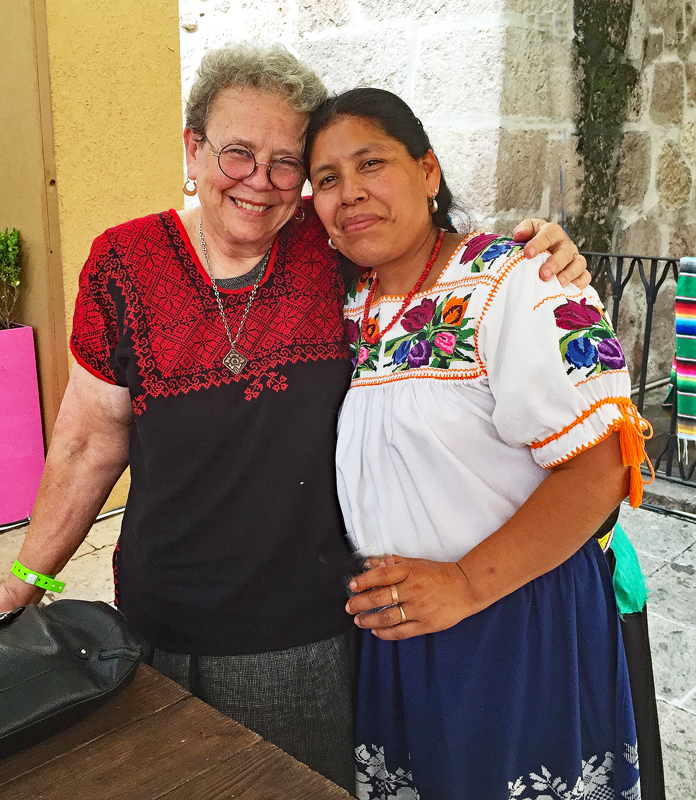
    Rosalba con Cristina 2014
    Please contact me if you'd like to visit Rosalba and enjoy a meal in her kitchen.  I'd be delighted to take you to meet my dear friend and talk with you about the food and its preparation.

    Looking for a tailored-to-your-interests specialized tour in Mexico? Click here: Tours. 
  • Kitchen Sayings, Part Two :: Mexico’s Dichos de la Cocina

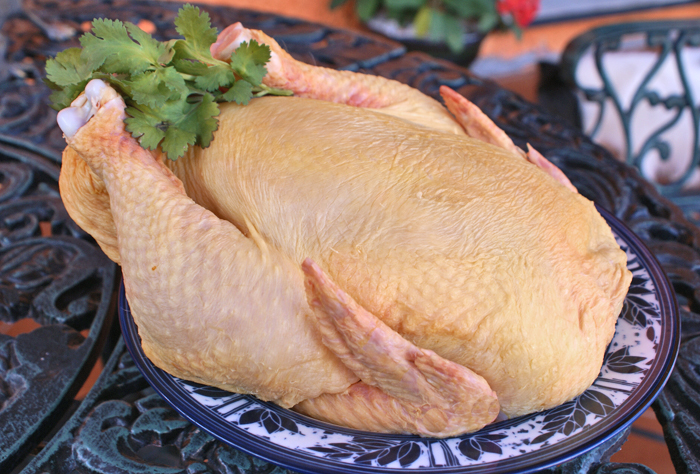
    Pollo Listo para Caldo
    A beautiful pink and golden Mexican chicken, ready for the soup pot.

    Last week's article about Mexico's dichos de la cocina (kitchen sayings) was just the tip of the iceberg.  I love them so much that I thought you might like to learn more of them!

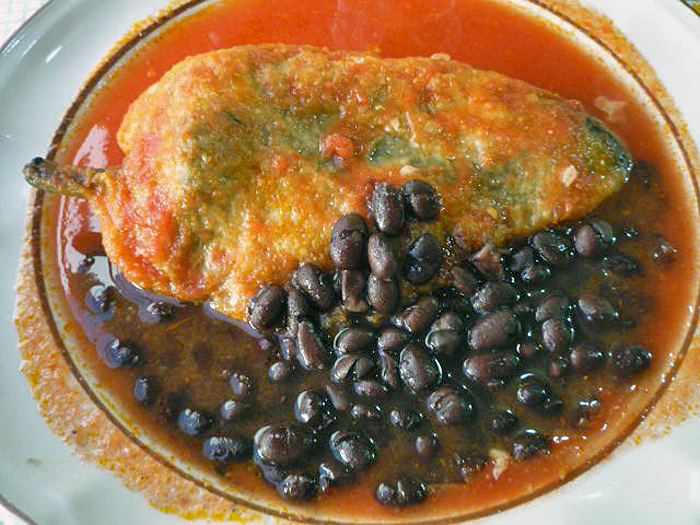
      Chiles Rellenos Conde Pétatl
    Chile relleno con frijoles negros de la olla (stuffed poblano chile served with freshly cooked black beans).  Photo courtesy Conde Pétatl.

    Mexico's dichos de la cocina (kitchen sayings) number in the hundreds, if not the thousands.  Just like sayings and proverbs in any language, Mexican dichos usually have a double meaning: what the words of the saying are, and then how they are interpreted.  In English, the phrase "the early bird catches the worm" make sense just as you read it, but it has a secondary import: if you start your endeavor sooner rather than later, you have a much better chance of success.  So it is with all of these!

    Hog Heaven Bouquet de Cabezas
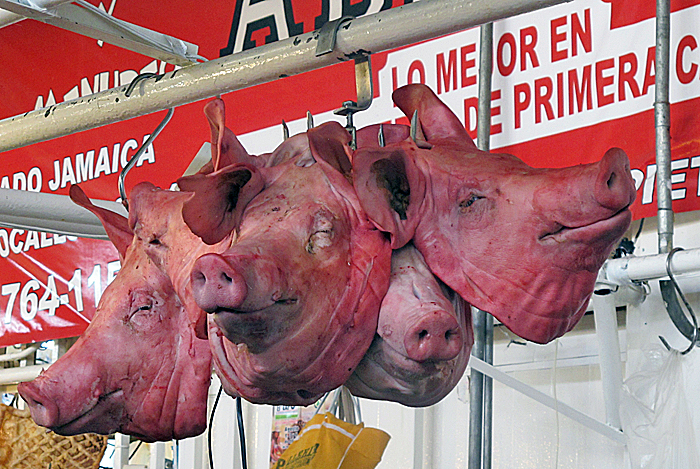
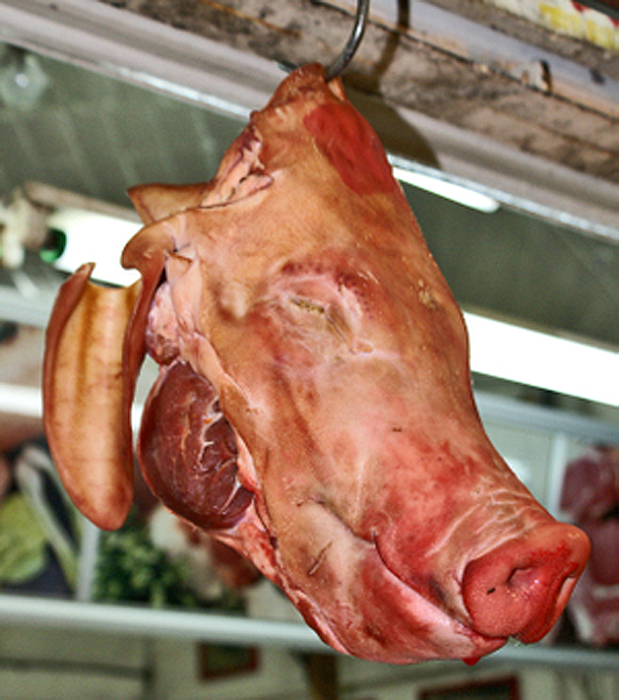
    Pig heads at a Mexico City market, ready to buy and take home to make pozole.

    Here are some of Mexico Cooks!' personal favorite kitchen sayings:

    –Vale más pan con amor, que gallina con dolor.  Bread eaten with love is worth more than chicken eaten with pain.
    –Se cambia mas fácilmente de religión que de café. 
    It's easier to change your religion than to change your coffee.
    –Quien hambre tiene, en pan piensa. 
    The hungry person thinks of bread. 

    Pan con Cafe
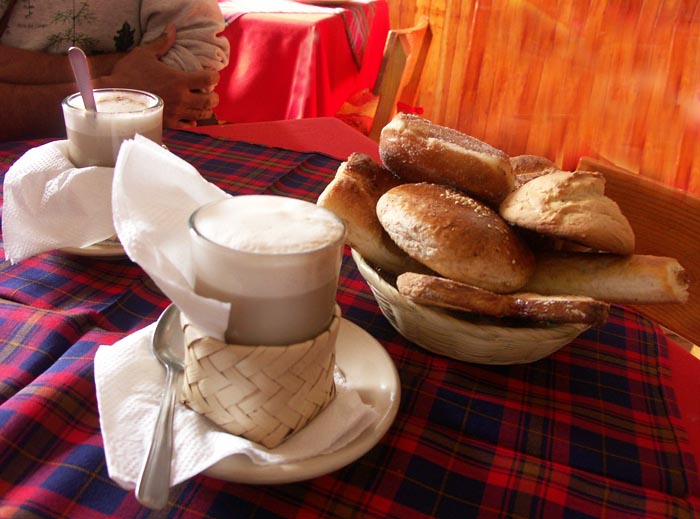
    Café con leche
    (coffee with milk) served with a basket of pan dulce (sweet Mexican breads).

    –El que parte y comparte, se queda con la mejor parte.  The one who portions and shares, gets the best part.
    –Al hablar, como al guisar, su granito de sal.  In speaking and cooking, a grain of salt.
    –Frutos y amores, los primeros son los mejores.  Fruits and loves–the first are the best.

    Paracho Fruta con Avejas
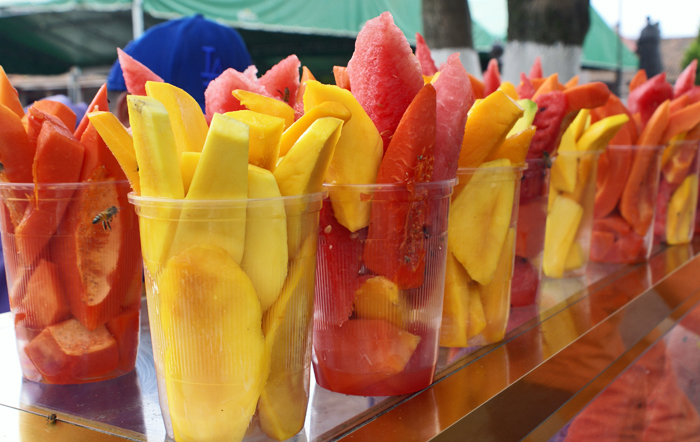
    A street vendor's fresh fruit in Paracho, Michoacán.  He sells seasonal fruits, including papaya, sandía (watermelon), and mango.  Enlarge any photo for better detail–in this photo, you'll see the bees.

    –Guajolote que se sale del corral, termina en mole.  The turkey that gets out of the yard ends up in mole.
    –La vida es como una cebolla, uno la pela llorando.  Life is like an onion, you cry while you peel it.
    –Mata el pollo y pon la mesa.  Kill the chicken and set the table.

    Frijol y Agua
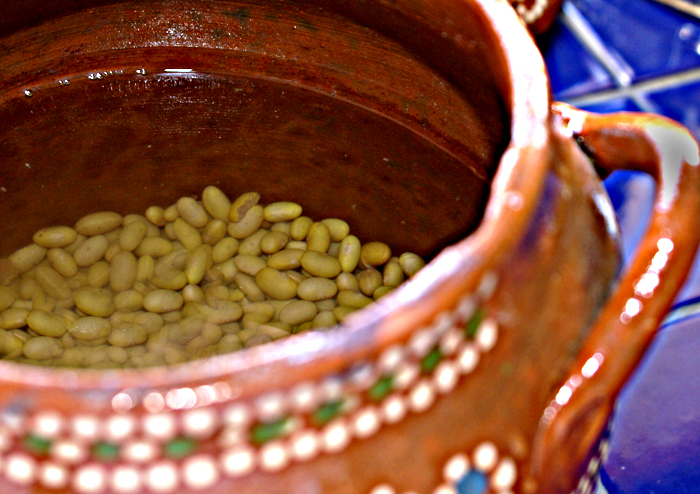
    Frijol peruano ('Peruvian' beans), ready to cook in a clay pot filled with water.

    –Mentir y comer pescado quieren cuidado.   Be careful when lying and eating fish.
    –Nunca falta un negrito en el arroz.  There is always a black speck in the rice.
    –Al hambre de siete días, no hay pan duro.  If you've been hungry for a week, there is no such thing as hard bread.

    Flor de Lis Champurrado
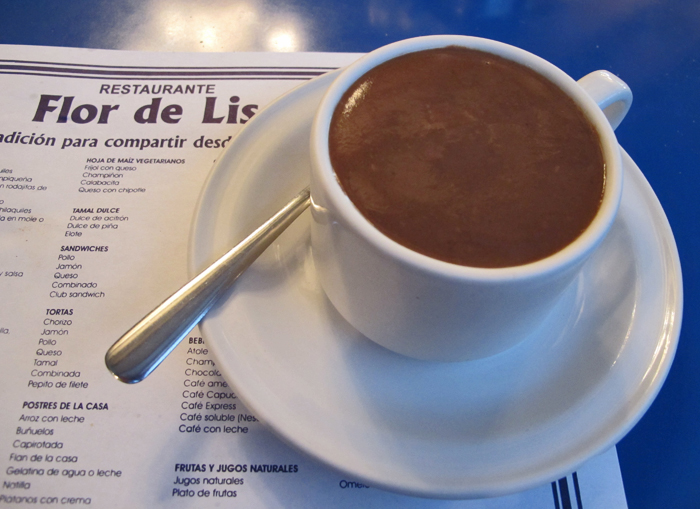
    Champurrado (chocolate atole) at Restaurant Flor de Lis, Mexico City. 

    –De golosos y tragones, están llenos los panteones.  Cemeteries are filled with gluttons and big eaters.
    En la forma de agarrar el taco, se conoce al que es tragón.  They can tell if you're a big eater by the way you hold your taco.
    La mujer y las tortillas, calientes han de ser.  Women and tortillas have to be hot.

    Carnitas Taco 1
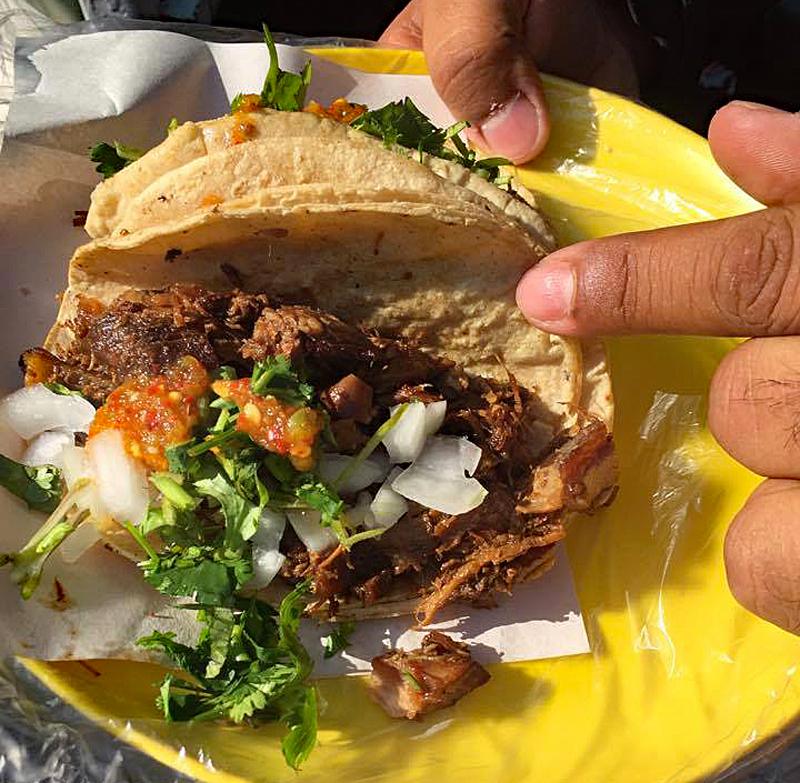
    Taco de carnitas at a Mexico City tianguis (street market).

    There are literally hundreds more Mexican kitchen sayings.  Sometime soon Mexico Cooks! will be back with more.   

    Looking for a tailored-to-your-interests specialized tour in Mexico? Click here: Tours.
  • Mexican Kitchen Sayings :: Dichos de la Cocina Mexicana

    Tzintzuntzan Frijolitos al Fogón
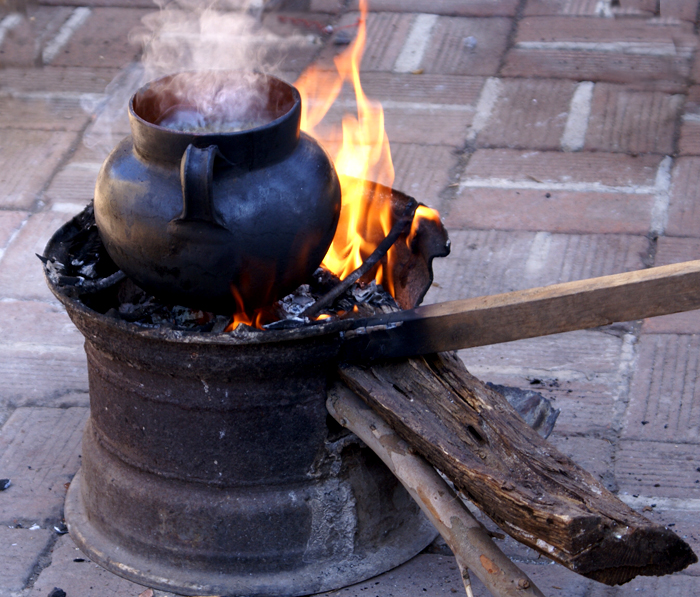
    Frijoles boil in a clay pot placed on a creative fogón (on-the-ground cooking fire).  The fire ring is the wheel rim of a truck, the wood is what was available.  The clay pot ensures old-fashioned flavor and Mexico Cooks!' interest in the cooking process ensured old-fashioned hospitality. "When will the beans be ready?" I asked.  "Come back at 1:30," the cook told us.  "They'll be ready, and I'll make some tortillas."

    Twenty or more years ago, Mexico Cooks! ate a once-in-a-lifetime meal in Mexico.  Simplicity itself, the comida (midday meal) consisted of steamed white rice piled with home-grown sliced bananas, homemade fresh cheese, frijoles de la olla (beans in their pot liquor, freshly cooked as in the photo above), and hand-patted tortillas, hot from the comal (griddle).  That meal, served in an outdoor kitchen, was our introduction to Mexican tradition, authenticity, and hospitality, all on a level we had never known before.

    Food, shared with friends and acquaintances, brings us together in elemental hospitality.  Food and the sharing of it in Mexico have, since earliest times, given rise to wonderful dichos (sayings) from the kitchen. 
    A Comer y a Misa...
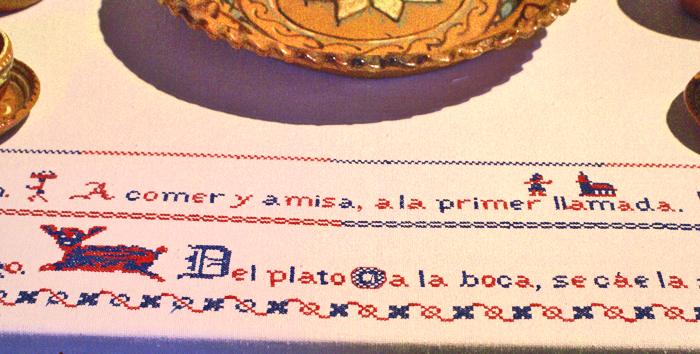
    This hand-embroidered tablecloth was made for display at Pátzcuaro's Museo Regional del Arte Popular (Regional Folk Arts Museum).  Every one of its many, many sayings stiched into the cloth is a dicho de la cocina The one closest to the bottom of the photo says, "Del plato a la boca, se cae la sopa." ("Between the plate and the mouth, the soup spills"–which means "between one's intention and one's accomplishment, a lot can go wrong".

    Quoting a dicho de la cocina always brings a smile.  Here are a few favorites:

    • Mujer que guisa, se casa a prisa.  (The woman who cooks is soon married.)
    • A comer y a misa, a la primer llamada.  (To eat and to Mass, go at the first call.)
    • Mejor llegar a tiempo que ser invitado.  (It's better to arrive on time than to be invited.)

    Mesa para Visitas
    Rich or poor, people always invite others to share their table.  It's seriously offensive to refuse an offered meal.

    • Al que nace para tamal, del cielo le caen las hojas.  If you're born to be a tamal, your corn husks will fall from heaven.
    • Come a gusto y placentero y que ayune tu heredero.  Eat what you like and at your pleasure–let your descendants fast!
    • Cuando el ratón está lleno, hasta la harina le sabe amarga.  When the mouse is full, even flour tastes bitter to him.

    Pozole Rojo
    Red pozole, made with pork, chiles, and nixtamal de maíz cacahuatzintle (a type of processed dried corn), is one of Mexico's most comforting meals.  For a wonderfully rich recipe, try this one from our friend Rolly's favorite cook, Doña Martha.

    • Desayunar como rey, comer como príncipe y cenar como mendigo.  Eat breakfast like a king, eat at midday like a prince, and have supper like a beggar.
    • El hambre es la buena, no la comida.  Hunger is the good thing, not the food.
    • El que parte y comparte, se queda con la mejor parte.  The one who cuts and serves the food gets the best part.

    Uchepos de Nata
    Uchepos de leche
    are a regional Michoacán specialty served for breakfast or supper.

    • Fuchi… ¡quiero más!  It's AWFUL…give me some more!
    • Gástalo en la cocina y no en medicina.  Spend it in the kitchen, not on medicine.
    • Invierno buen tiempo para el herrero, el panadero y el chocolatero.  Winter's a good time for the ironworker, the baker, and the chocolate maker.

    Caldo de Pollo Casera 1
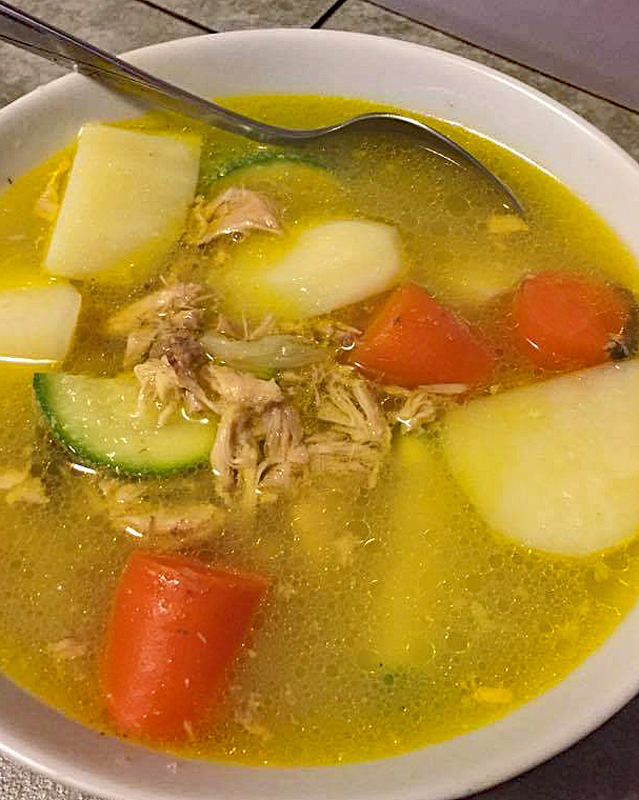
    Mexican caldo de pollo–traditional chicken soup–is hearty with shredded chicken, carrots, calabacita (similar to zucchini), potatoes, and chayote.  Dressed and seasoned at the table with a spritz of jugo de limón (Key lime juice), roughly chopped cilantro, minced onion, and a spoonful of spicy salsa, it's absolutely essential to one's comfort and well-being.

    • La comida entra por los ojos. Food comes in through the eyes.
    • La paciencia es amarga, pero sus frutos son dulces.  Patience is bitter, but its fruits are sweet.
    • La venganza es dulce al paladar, pero amarga para la garganta.  Vengance is sweet in the mouth, but bitter in the throat.

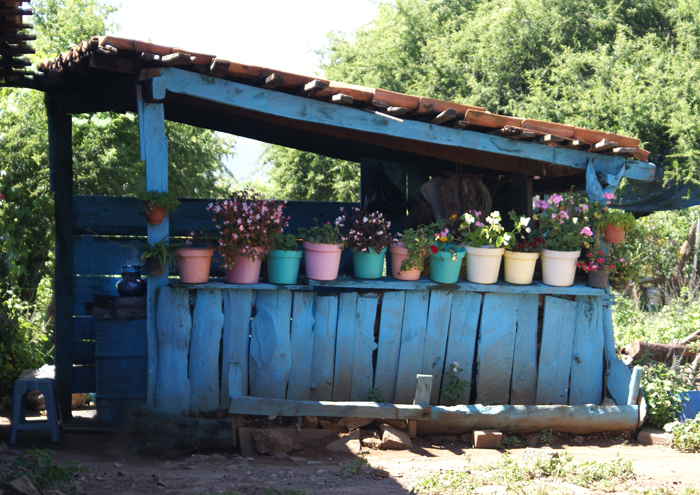
    Outdoor Kitchen
    An outdoor kitchen is still common in rural areas of Mexico.  This one is lovely, dressed in soft blue paint and flowers.

    Looking for a tailored-to-your-interests specialized tour in Mexico? Click here: Tours.
  • Old Kitchen Pals and Exotic New Friends :: Herbs from a Mexican Garden

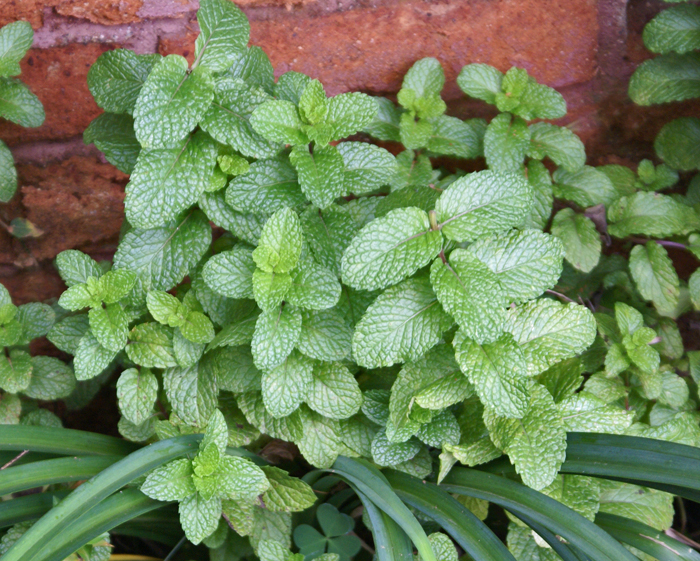
    Colegio Culinario Hierbabuena
    Fresh hierbabuena (mint) growing in a Morelia friend's garden.

    The  cuisines of Mexico–and you know that there are many–are a fantastic amalgam of indigenous corn-based food preparations with an overlay of Spanish ingredients, a strong influence of Moorish flavors, and a lagniappe of French artifice from the mid-19th Century. There is no one cuisine in this big country, although some popular dishes are found in every region. Not every cook prepares enchiladas with the same list of ingredients; tacos, although ubiquitous in Mexico, can be different at every crowded taco stand.

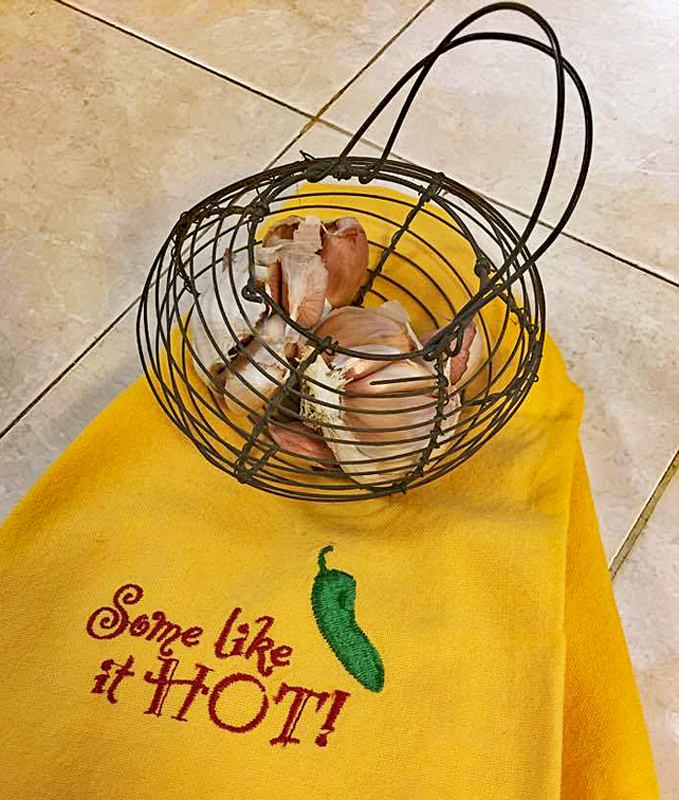
    Garlic in Wire Basket 1
    Mexico Cooks! stores garlic in this 3" diameter wire basket, hanging from a cup hook on the side of a cupboard.  Circulating air keeps the garlic fresh for quite a while.

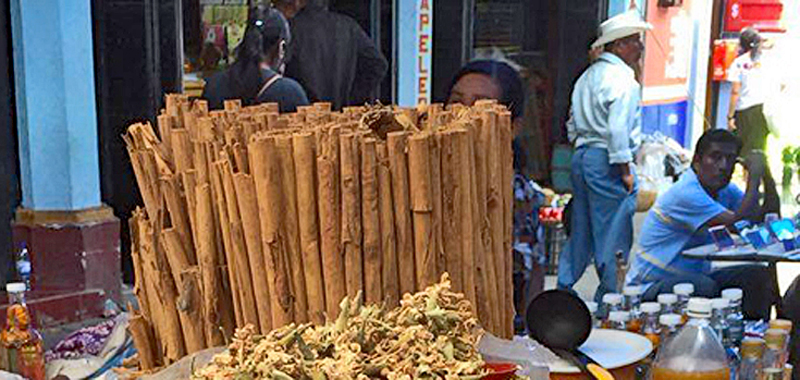
    Canela Mexicana 1
    Mexican canela (cinnamon), for sale in a Oaxaca market.  Mexican cinnamon sticks are usually about two feet long and, unlike the short, hard, nearly flavorless cinnamon sticks sold outside the country, are easily broken into the length piece you need for a recipe.  Grind it into horchata (usually a chilled rice drink), use it to flavor a comforting, sweet and hot atole (a thick corn drink), or use it for traditional seasoning in arroz con leche (Mexican rice pudding).  Naturally there are many other Mexican recipes that require canela.

    Many of the herbs and spices that you use in your own kitchen are also used in the Mexican kitchen. Garlic, cinnamon, oregano, and thyme are in widespread use here. Cumin, cloves, and mint show up frequently. Lemon grass, which we usually think of as an ingredient in Thai or Vietnamese dishes, is commonly grown in many parts of Mexico and is used to make tea.

    A good part of the differences in the regional cuisines of Mexico is each region's use of herbs. Some of those herbs are completely unknown to those of us whose familiarity with Mexican food stops with Pepe's Taco Hut on Main Street, USA. Pepe, whose mother's family emigrated to the USA from the Mexican state of Hidalgo, prepares the restaurant's platillos fuertes (main dishes) from recipes passed down from his abuelita (grandmother), who lived for 97 years in the same Hidalgo village. He's adapted those recipes to include the ingredients he can find in the States and to the palates of his customers.

    Orégano Orejón
    This herb, a large-leafed, strong-flavored variety of oregano called orégano orejón (big-ear oregano), is unusual even in Mexico.  Mexico Cooks! once had a pot of it, but it has unfortunately gone to the great beyond.  I'd love to have another pot of it.

    Oregano is quite common in Mexican cooking. It can be used either fresh or dried. A small pot of oregano in a sunny spot of your kitchen garden will usually be plenty for all your cooking needs. If you live in a place where the growing season is short, harvest oregano periodically through the summer, tie the stems in small bunches, and hang upside down in a dark place to dry. It dries very fast and retains most of its aroma and flavor. Discard the stems and store the crisp leaves in an airtight, lightproof containers.

    Because the growing season in many parts of Mexico is almost year-round, I can always cut a fresh sprig of oregano or two to use when making spaghetti sauce, pescado a la veracruzana, (fish prepared in the style of Veracruz) or other tomato-based sauces. I wash the sprigs and either strip off the leaves into the pot or put the entire sprig into the sauce for seasoning.

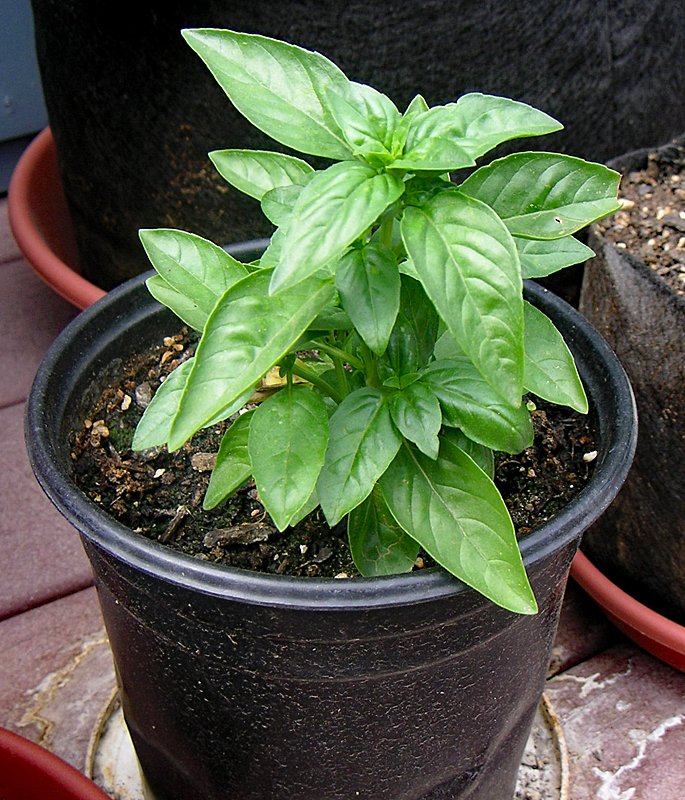
    Mexican Basil 1
    In Mexico, albahaca (basil) is used primarily in Italian food.  However, it's widely grown and used in an unusual way: many small businesses put a pot of growing basil just outside the door to their shops.  Why?  The creencia (belief) is that a flower pot of albahaca will draw clients and money to the business.

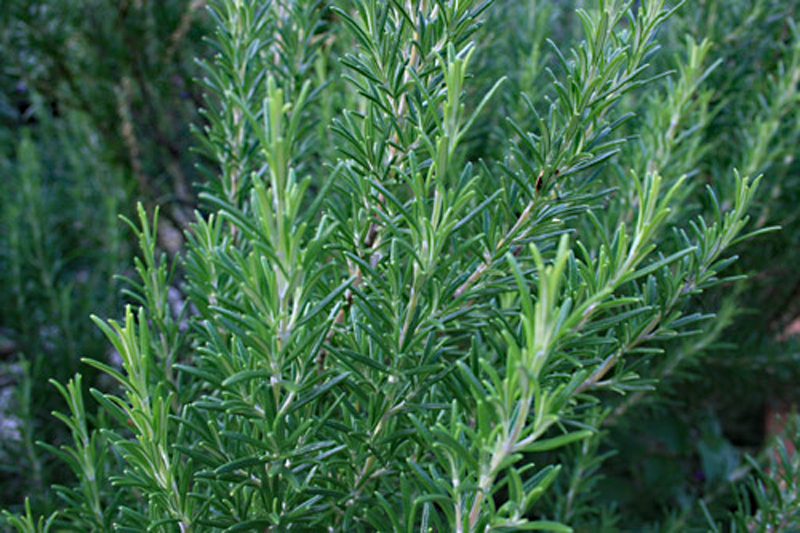
    Romero Rosemary 1
    Romero (rosemary).  This non-native herb is used very little in Mexico's cuisines.  However, some 'modern Mexican' chefs are making cold rosemary infusions to be drunk either before or with a meal.

    The Mexican kitchen uses a wide range of other herbs. The Spanish names read like a mysterious litany: albahaca, epazote, estragón, hoja santa, hierbabuena; comino, clavo, and romero. In English, they are (in order) basil, wormseed, tarragon, holy leaf, mint, cumin, cloves, and rosemary.

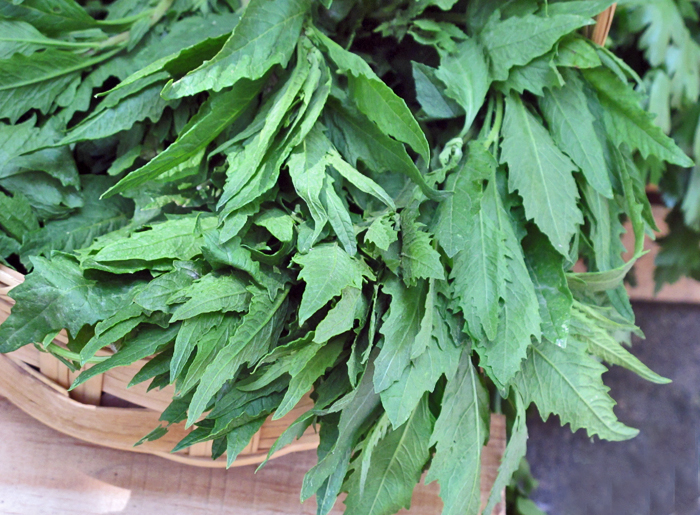
    Mercado 100 Epazote
    Epazote
     grows wild all over Mexico and in parts of the United States. Several months ago I paid ten pesos at a tianguis (street market) for a pot of it to plant in my garden. As I was carrying the pot home, my neighbor, Doña Mago, saw me and exclaimed, "Porque compraste eso?" ("Why did you buy that?").

    "Well, you know" I answered, "I like it to cook in my beans, to make quesadillas, for the flavor—"

    "No, no, no, amiga!" she cried, and pointed a finger toward the corner. "It grows up through the cracks in the sidewalk just down the street. You should have asked me to show you where to find it. You could have saved your money. When I want some, I just go over there and cut a piece." It's true. When I was out for a walk the next day, I noticed for the first time the epazote plant she had mentioned.

    Regardless of my profligate waste of ten pesos, I do like to cook a big sprig of epazote in a pot of beans. The herb is originally from Mexico and Central America. The indigenous language name that was given to epazote is derived from the Nahuatl words 'epti' and 'zotle': the combined word means 'skunk sweat'. As you can imagine, the herb has a very strong and distinctive flavor. According to Mexican kitchen lore, epazote also has anti-flatulent properties, which is why it might be smart to add it to the boiling bean pot.

    San Miguelito Pescado en Hoja de Plátano
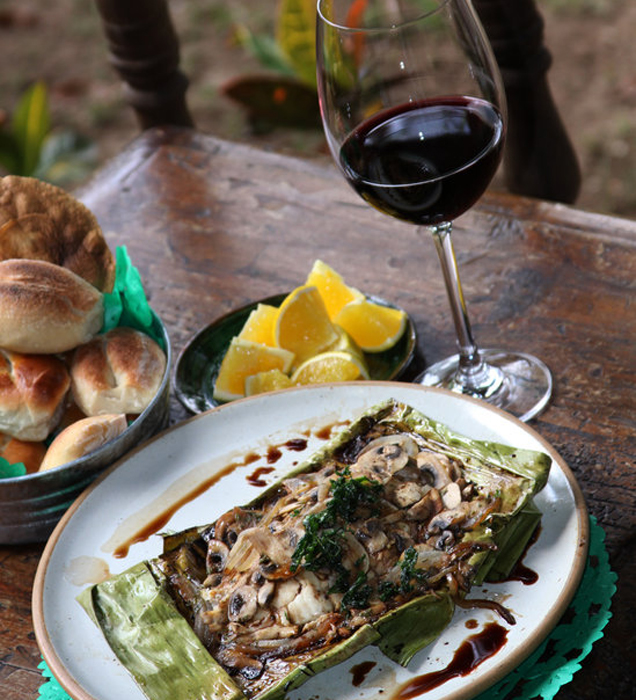
    Pescado en hoja de plátano (fish cooked in banana leaf). Restaurante San Miguelito, Morelia, Michoacán.

    Banana leaves are used for wrapping meats to prepare barbacoa (southeastern Mexican barbecue, cooked in a pit) and for wrapping and flavoring tamales from Oaxaca, in southeastern Mexico.  Another plant used to give uncommon seasonings to Oaxacan cuisine is hoja de aguacate (avocado leaf). You won't be able to run right out to your nearest Safeway or HEB store to find either of these. If you live in an area where there's a large Asian population, you'll find packages of frozen banana leaves in any well-stocked Asian food market. As for avocado leaves—well, the only avocado leaf that gives anise flavor to a dish is native to Mexico and doesn't grow elsewhere. Unfortunately there's no seasoning substitute for them; the Hass avocado leaf has no flavor.

    Hoja Santa
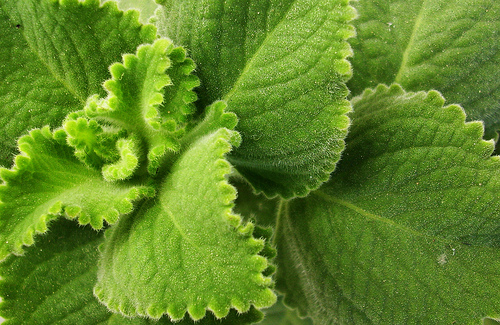
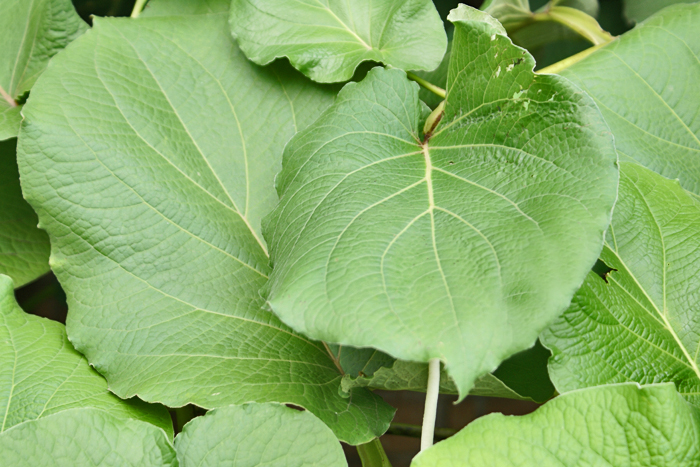
    Hoja santa
    (holy leaf) is also known as acuyo.

    Hoja santa is used extensively in Mexican cooking. It's a large, heart-shaped leaf that comes from a tall, bushy plant—a plant that will take over the garden space that it's planted in and then some, if you let it. It's a native of Mexico and has medicinal properties as well as seasoning uses. The flavor of hoja santa is reminiscent of anise, and it combines exceptionally well with fish or chicken. 

    As you can see, Mexican home cooking is far more than tacos and enchiladas. The more unusual kitchen herbs of Mexican cuisine add intense flavor without adding that blast of spiciness that we so often mistake for the only seasoning of Mexico.

    Looking for a tailored-to-your-interests specialized tour in Mexico? Click here: Tours.
  • Favorite Mexico City Delicacies, Catching Up: Late 2016 – Early 2017

    Pasillo de Humo Tamal de Chocolate 1
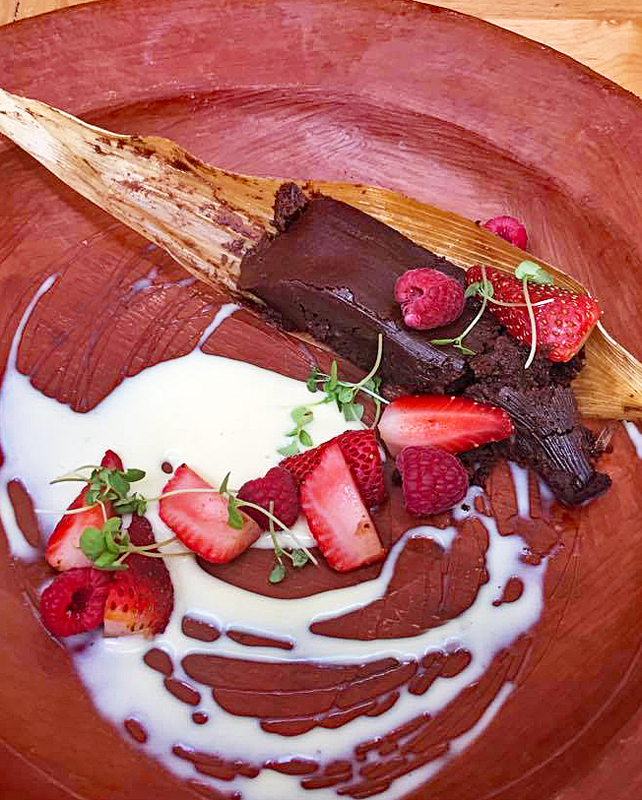
    You've heard that old saying, "Life is uncertain, eat dessert first…"?  Here we are, beginning at a meal's sweet ending with a tamal de chocolate (chocolate tamal) from Pasillo de Humo in Mexico City.  I've eaten others in the city that don't quite make the cut, since most are dry and not very chocolate-y.  This one, on the other hand, is more like a deeply rich yet still light-textured chocolate bar.  Two thumbs up!

    Quintonil Amuse 5-12-2016 1
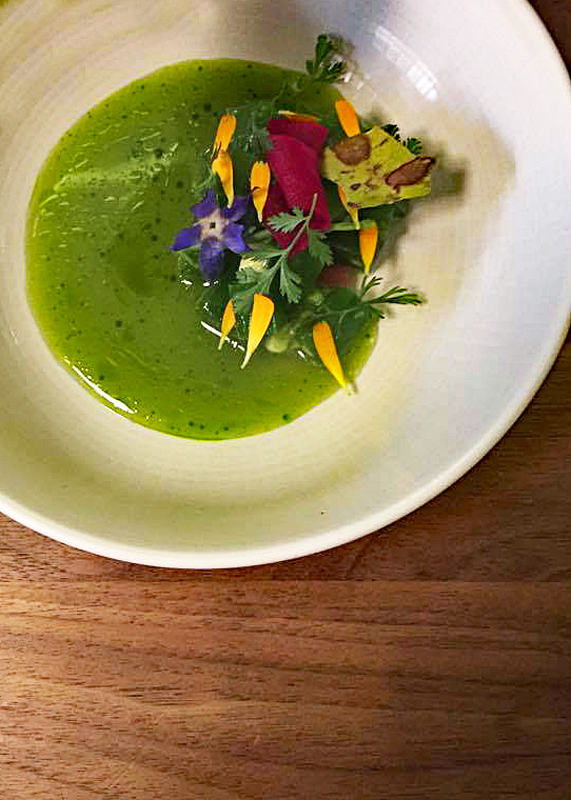
    In December 2016, it was my privilege to enjoy comida (Mexico's main meal of the day) at Restaurante Quintonil, invited by my dear friend, Pamela Gordon.  The Polanco restaurant, a superb effort by Jorge Vallejo and his team, met and surpassed our hopes and expectations. What a marvelous treat!  This charming amuse was only the beginning of a delicious meal.

    Torta Cubana Los Cun?ados 1
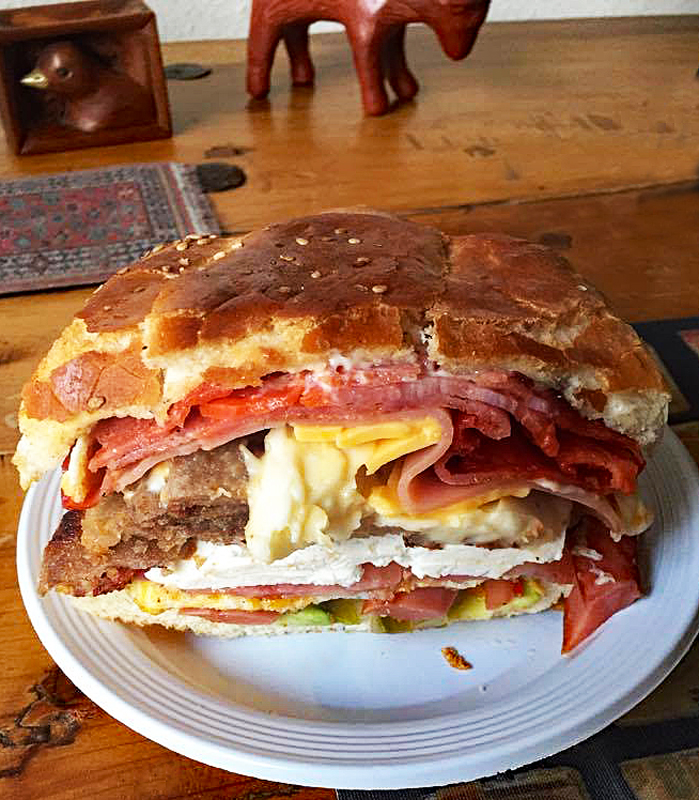
    Across the street from my Mexico City home is a tiny and extremely tempting torta stand.  Half of one of these tortas (Mexico's iconic sandwich) is almost enough, but the flavors are such that it's hard to stop without finishing the whole thing.  This particular sandwich is a torta cubana (Cuban style); if you look at the bottom corner of the left side, you can see the tell-tale sign of its identity: a torta cubana in this part of Mexico almost always includes a cut-up hot dog!

    Breakfast Taco de Charales Rosalba
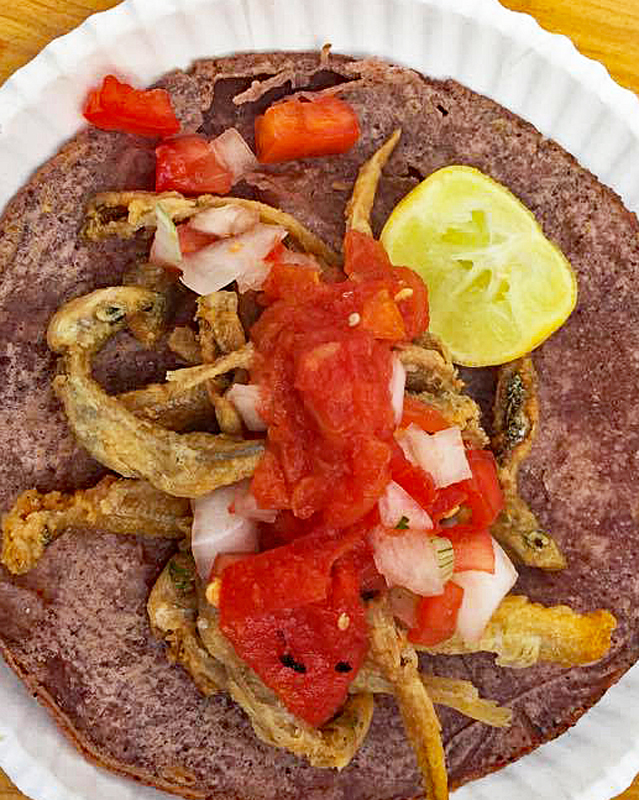
    My wonderful friend Rosalba Morales Bartolo, a skillful and well-known cocinera tradicional from the state of Michoacán, prepares tacos de charales (tiny fish) that changed my thinking about these lake fish.  There was a time when I wouldn't eat charales: they were inevitably extremely 'fishy' and very badly prepared.  When I met Rosalba, she insisted that I try just one of hers.  What a difference!  Rosalba pulls them from Lake Pátzcuaro in nets and uses a generations-old family method of preparing them; hers are cleaned and scaled, dusted with flour, fried in fresh oil, and are incredibly delicious. Whether I eat them as a a finger-food snack or as a taco, they're one of my favorite delicacies!
    Mia Domennica Pulpo 1
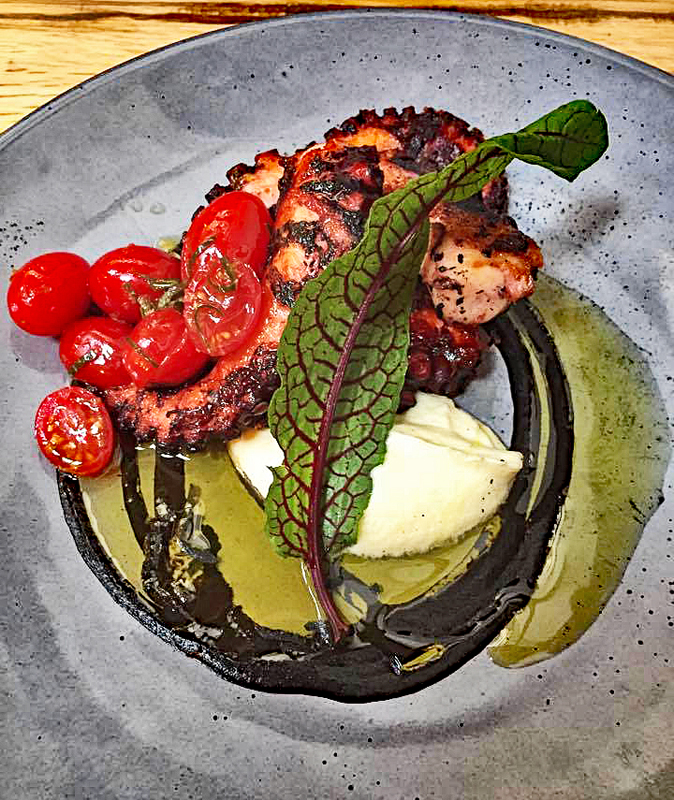
    From Restaurante Mia Domenicca in Mexico City's Colonia Roma, this grilled octopus is accompanied by its own ink, caramelized grape tomatoes, puréed cauliflower, and a mirror of fresh green olive oil. The inventive dish is beautifully cooked, beautifully presented, and a wonderful mix of flavors and textures.
    Vicky's Aporreadillo
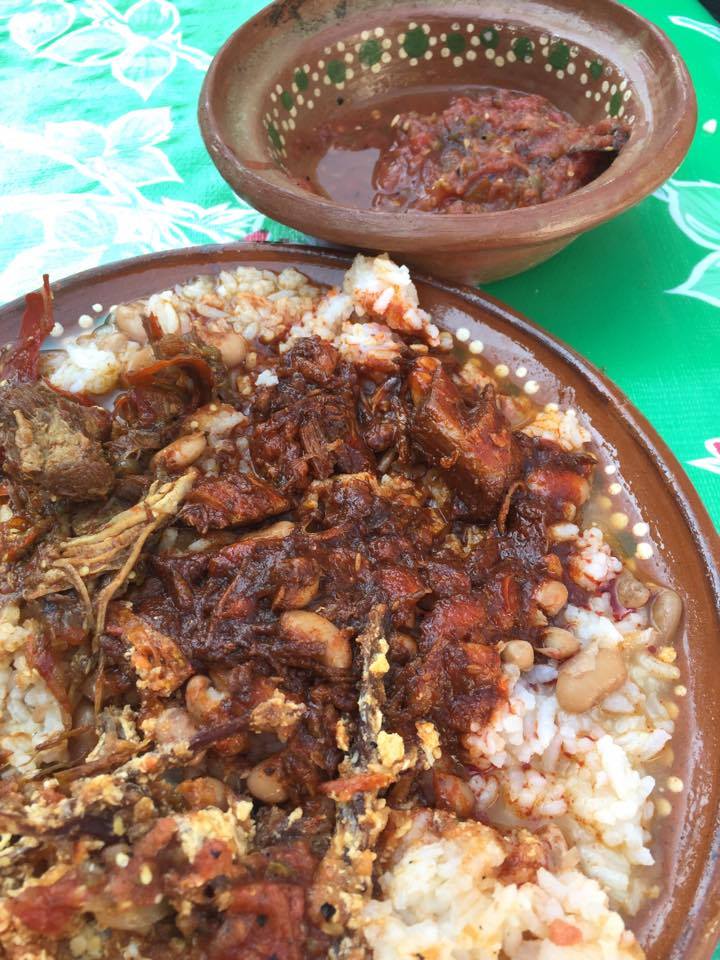
    From Restaurante La Tradición in Pátzcuaro, Michoacán–and from the hands and heart of my beloved Victoria González, another of Michoacán's extraordinary cocineras tradicionales–a plate of her fabulous aporreadillo, beans, and rice.  Aporreadillo is a specialty of Michoacán's Tierra Caliente; doña Vicky hails from Apatzingán, in the heart of those hot lands, and her preparation of the dish is exquisite. Made of dried beef, scrambled egg, tomatoes, and a delicious broth, I like it best served over rice.

    Rebecca San Diego Scone
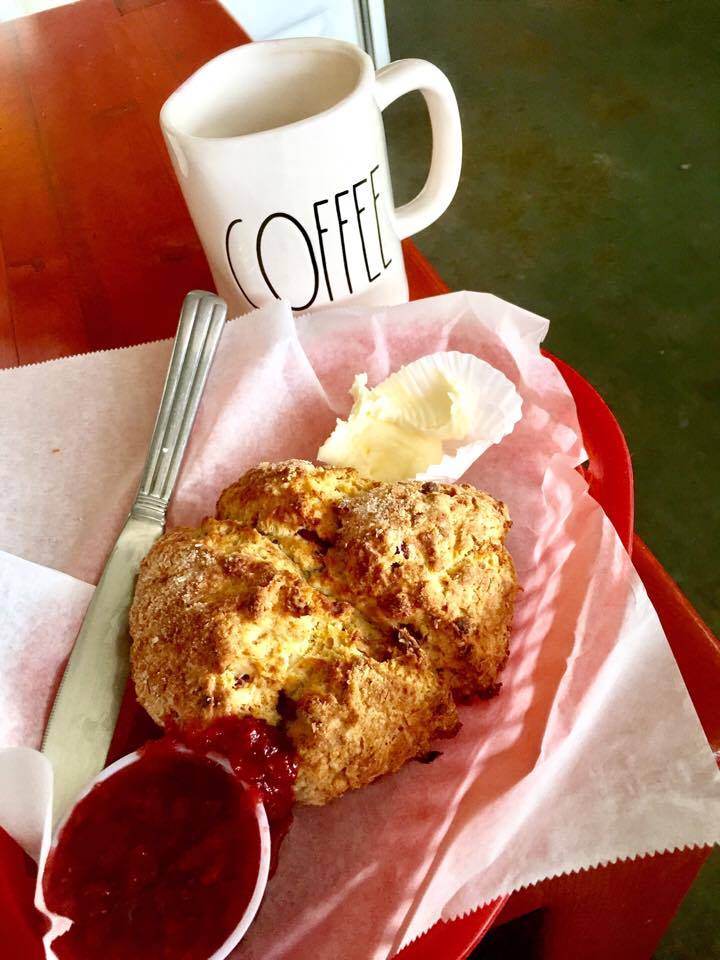
    Wait, this isn't from Mexico City!  But let me introduce you to one of the magnificent scones from Rebecca's Coffee House in the South Park neighborhood of San Diego.  Rebecca Zearing and her crew have been turning out hot scones, freshly made marmalades, and excellent coffee (among other things) for the last 25 years.  When Mexico Cooks! was in San Diego in February, we were lucky enough to catch Rebecca in the shop with an almost-ready batch of scones in the oven.  I'm not sure which was better: the welcoming hug from my old friend Rebecca, or this uniquely delicious scone!  When you're in San Diego, don't miss going.

    Caldo de Pollo Casera 1
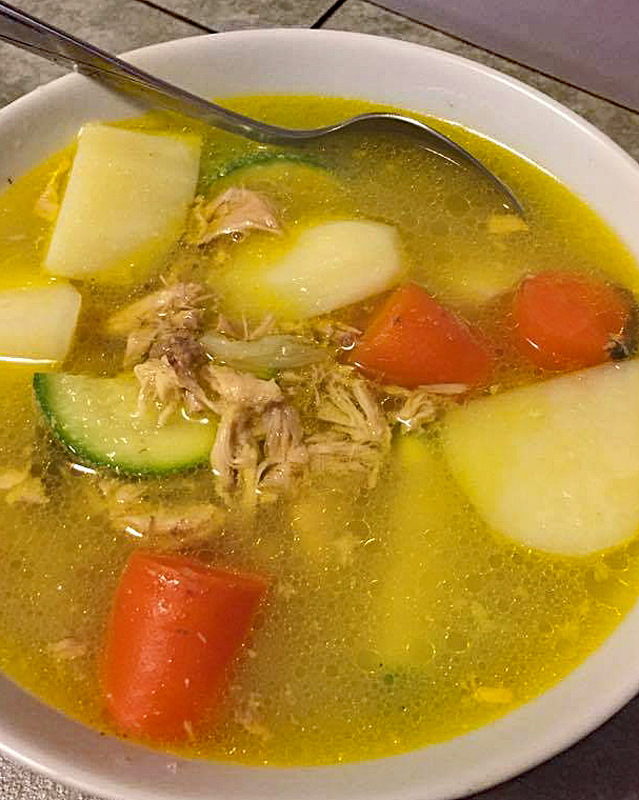
    Mexico Cooks! is particularly fond of Mexican caldo de pollo: chicken soup like I hope your Grandma used to make.  Based on a rich, long-simmered chicken broth, this soup is full of vegetables (in this batch: carrots, calabacitas [like zucchini], green beans, and potatoes). At table, a big squeeze of limón (Key lime), a dollop of whatever might be your favorite salsa picante, and some coarsely chopped cilantro give this dish a zing that you will crave after the first taste.  Add a big spoonful of Mexican red rice to the bowl; that's how we eat it in Mexico for simple, home made comfort.

    Agua de Pepino American School 1
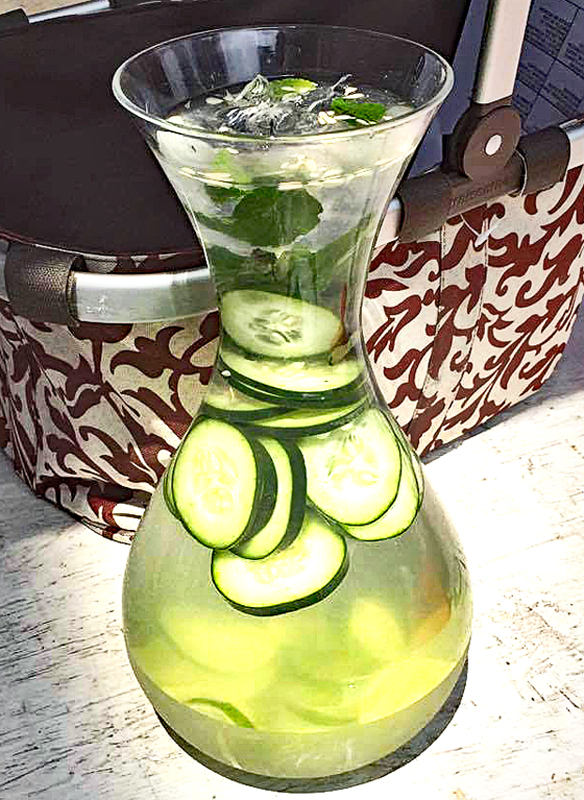
    Mexico is rightfully famous for its aguas frescas (fresh fruit waters), but this is one you might not yet have tried. Fresh cucumber combines with fresh mint and a little sugar to make a wonderfully cool and refreshing summer drink.  This particular agua de pepino (cucumber water) slaked our thirst at a culinary event at Mexico City's American School.  It was just right for a very warm spring day–and it looks so pretty in its jug.

    Sabina's Coctel
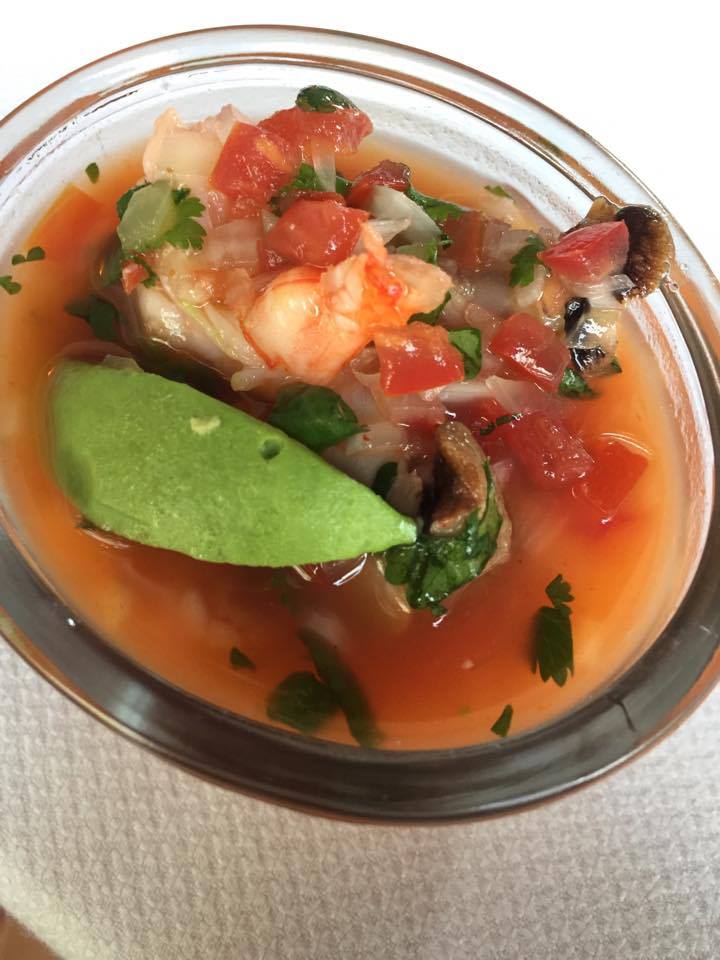
    One last dish: coctel de caracol, pulpo, and camarón (a cocktail of sea snail, octopus, and shrimp) from the incredible Ensenada cook Sabina Bandera, well-known everywhere as La Guerrerense.  Served in an immensely flavorful cold broth made from the seafood cooking stock, tomato, chile, and cilantro, this cocktail is perfection pure and simple.  I'd met doña Sabina a few years ago, but this past November was the first time I'd been able to taste her heavenly seafood tostadas, salads, and cocktails.  If you're ever in Ensenada, Baja California–or if you hear that she is going to be cooking where you are, hurry.  Get there.  You don't want to miss these briny wonders.

    Sabina con Cristina Nov 2016 1
    Mexico Cooks! with Sabina Bandera, La Guerrerense.

    Looking for a tailored-to-your-interests specialized tour in Mexico? Click here to see new information: Tours

  • Oaxaca Comida and Cena :: Main Meals and Light Suppers From the Primer Encuentro de Cocineras Tradicionales

    Oaxaca Restaurantes Catedral Buffet 1
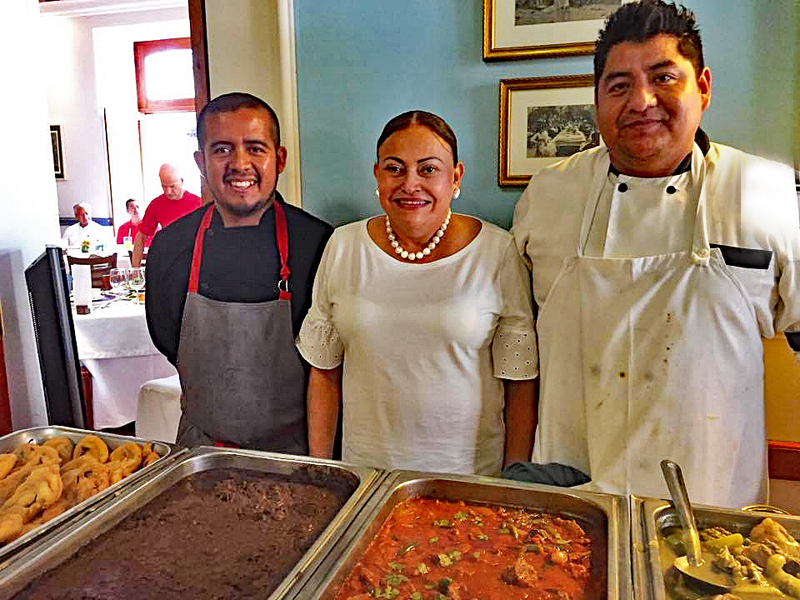
    Sra. Martina Escobar Montero, gracious owner at Restaurante Catedral, welcomed our press group to Oaxaca with the city's typical hospitality.  Pictured here at the bountiful buffet featured each Sunday at the restaurant, Sra. Escobar is flanked by (l) Carlos Contreras and (r) Faustino Hernández, both members of the restaurant team.  Catedral, which opened originally nearly 40 years ago, finds itself in an enviable position: one of the best traditional restaurants in Oaxaca.  Sra. Escobar has been at the helm for all those years.  Mexico Cooks! has eaten there many times, and knows that the food, service, and ambience are impeccable.

    Oaxaca Restaurantes Catedral Mole Negro
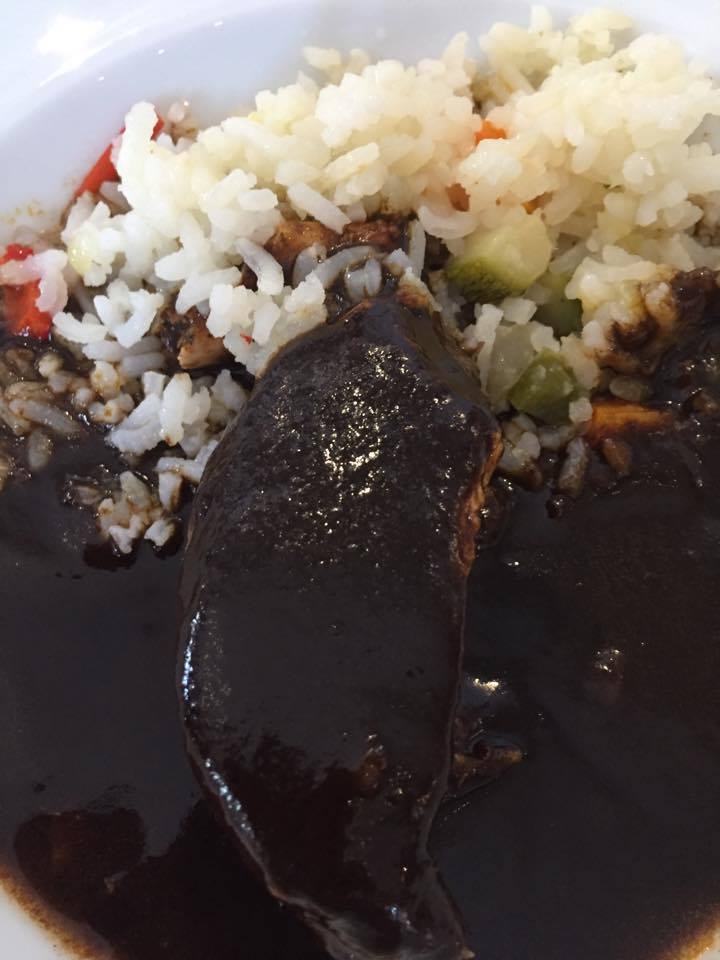
    The minute our press buses rolled into Oaxaca's Centro Histórico, we drove immediately to Restaurante Catedral, at the corner of Calles García Vigil and Morelos.   We were immediately seated for the Sunday buffet in one of the sunny dining rooms.  The mole negro (above), known in Mexico as el rey de los moles (the king of moles) was just one of the huge variety of dishes available from the buffet; Sra. Escobar told us that her delicious version is a generations-old family recipe; the layers of flavors in the mole combined to send us all to the moon.

    Oaxaca Restaurantes Catedral Mole Verde 1
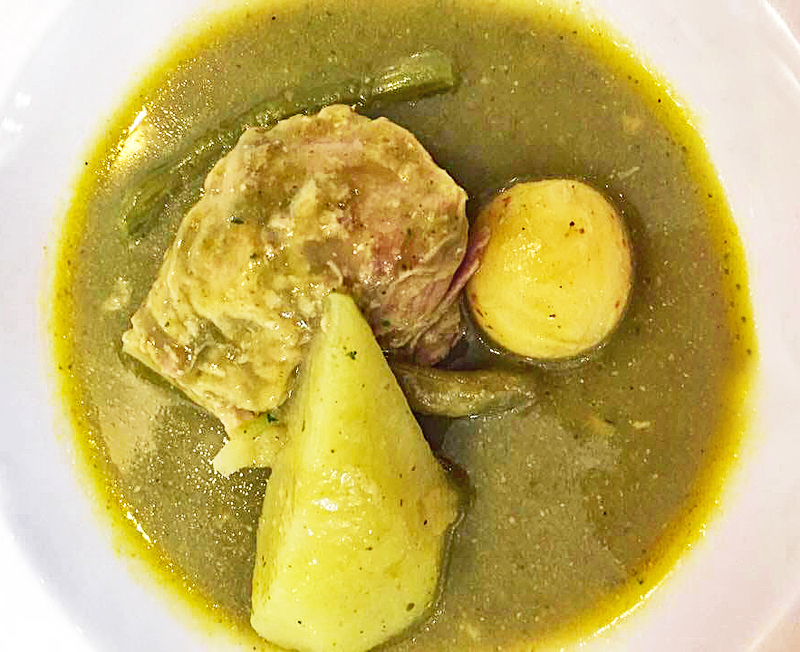
    Oaxaca's mole verde is one of my all-time favorite dishes, and the mole verde prepared at Restaurante Catedral is no exception.  In my opinion, it was tied for first place with the mole negro.  If you'd like to try making mole verde at home, you'll find a recipe in this Mexico Cooks! article from 2016.

    Oaxaca Don?a Flavia Tlayuda Bertha 1
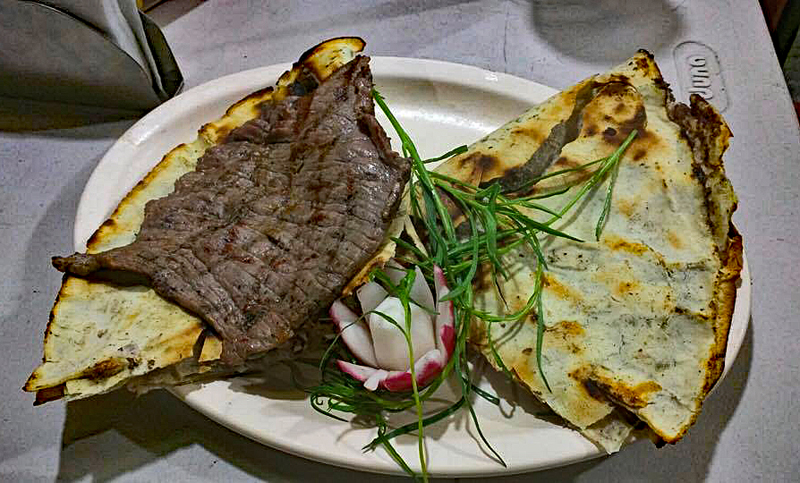
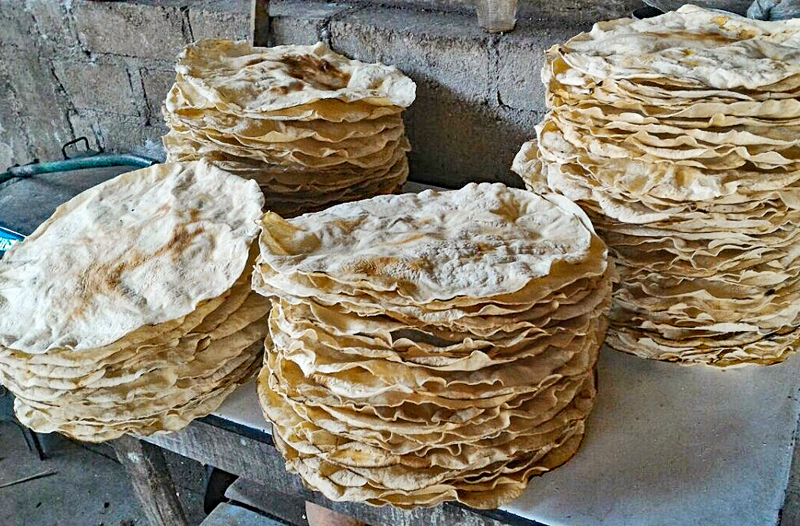
    After a full afternoon of press activities, our hosts took us all to the wonderful Tlayudas Doña Flavia, near Santa María de Tule, for tlayudas. The tlayuda is a very thin, large-diameter corn tortilla, specialty of Oaxaca.  The tlayuda is prepared by spreading it with a smallish amount of asiento (ah-see-EHN-toh, the fat that's left in the bottom of the pot after rendering fresh pork lard; asiento is thick, deep brown, and full of tiny crispy bits of pork); that layer is then smeared with cooked and smoothly ground black beans.  On top of that, you get a lot of quesillo (Oaxaca cheese).  The tlayuda with its layers is then folded in half and, in this case, toasted over wood fire.  If you've chosen a portion of meat to go with your tlayuda, it's also grilled and served on top.  The tlayuda is cut in half so it fits on your platter (yes, platter) and served to you with pipicha, a Oaxacan herb that is meant to be torn apart and stuffed into each half. Use table salsa–red or green–as much as you like, and a pinch of salt if needed–to boost the layers of flavor even further.  If you're in Oaxaca and hungry at night, Tlayudas Doña Flavia is the place to go.

    Tlayudas en venta oaxaca 1
    Each of these tlayudas measures approximately 12" to 14" in diameter.  They're ready to be prepared for desayuno (breakfast), comida (Mexico's main meal), cena (supper), or for a filling snack, any time of the day.

    The following two days, we of the press crew ate our comida at the Encuentro–which was, after all, why we were in Oaxaca. Please be sure to see some of the highlights of what we ate here.  Our second night in Oaxaca, our hosts had arranged a late-evening cena at Mezquite, a 'modern Mexican' restaurant, open just since February 2017, at García Vigil 601-A, Centro Histórico. The restaurant served us a variety of mezcales to taste, then a good selection of their appetizer/taco offerings.

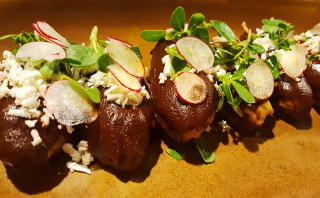
    Oaxaca Restaurantes Mezquite Molotes 1
    A platter of Mezquite's delicious molotes&#0160
    ;
    bathed in mole and topped with cheese, sprigs of beautiful green verdolagas (purslane), and thinly slice radishes. These molotes were made of partially ripe plátano macho (plaintain) that is cooked in its peel and then smashed into a purée. The cook then forms it into a slightly elongated oval, fills it with (in this case) quesillo (Oaxaca cheese), lightly flours each one, and fries each one until it is golden brown.  Are they delicious?  Yes, indeed they are!

    Encuentro Oaxaca Cena Mezquite
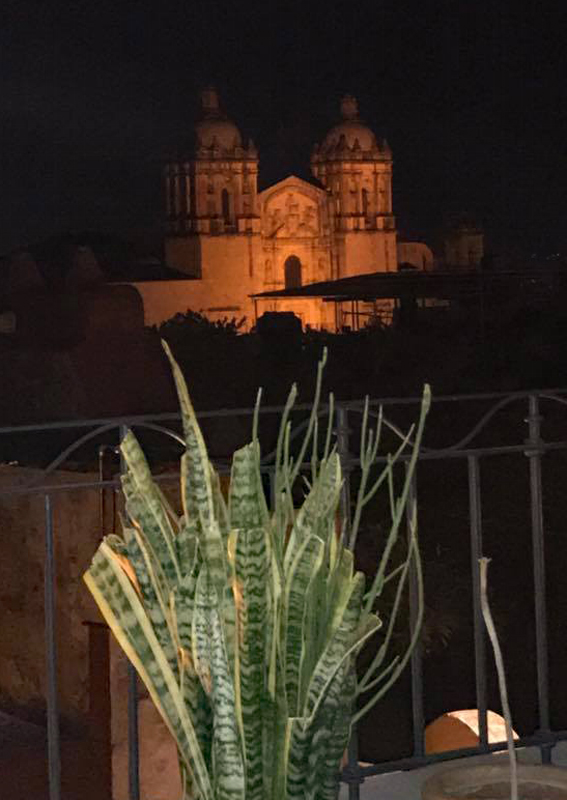
    Although we ate and drank on the rooftop at Mezquite for nearly two hours, some of the moments of looking at the glorious illumination of Oaxaca's Templo de Santo Domingo managed to distract me from so much food, delicious though it was.

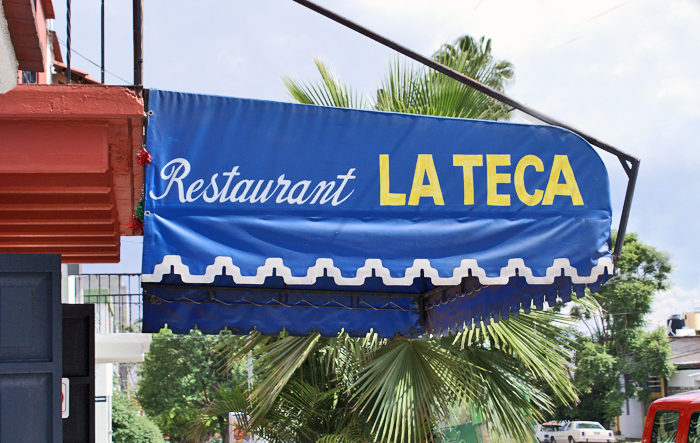
    Oaxaca Restaurante La Teca
    Sra. Deyanira Aquino, otherwise known as "La Teca" (a woman from the town of Juchitán, Isthmus of Tehuantepec, Oaxaca) and owner of the marvelous restaurant also called La Teca, talked with me for a few minutes after giving a conference on the last day of the Encuentro.  At the end of our chat, she said, "You mean you won't be able to come to the restaurant this time?"  I told her I'd try, but the chances were slim. Press time was almost entirely accounted for by Encuentro activities. How disappointing for both of us!  Shortly after our chat, though, a miraculous few hours opened up and I and a group of women friends from Mexico City were able to make the time to have cena at the restaurant with Sra. Deyanira.  Our time with her was the icing on the cake of our days in Oaxaca!

    Oaxaca La Teca Mezcal con Sal de Gusano
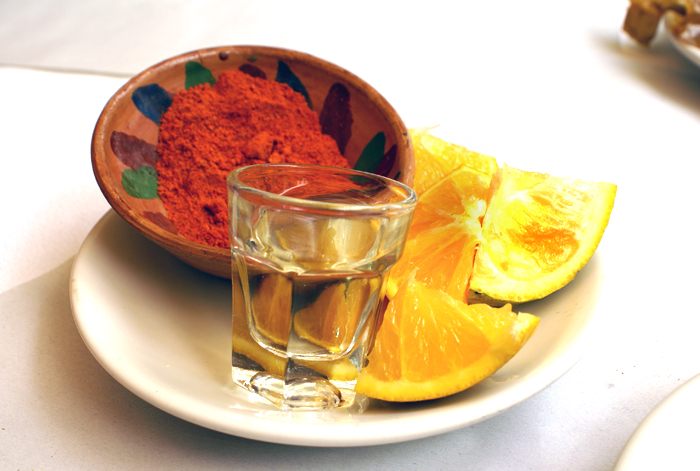
    We started as always with the fine mezcal served at La Teca.  It's traditionally accompanied by orange slices or chunks which one sprinkles with sal de gusano (the truly delicious sal de Colima [sea salt from the western coastal state of Colima] combined with a finely ground secret mix of hot red chiles plus roasted and ground red maguey cactus worms).  What, worms?  Yes, and if you ever have a chance to try sal de gusano, please don't look askance.  It's terrific and the flavors are all but addictive! 

    Oaxaca Restaurantes La Teca Tamal de Cambray 1
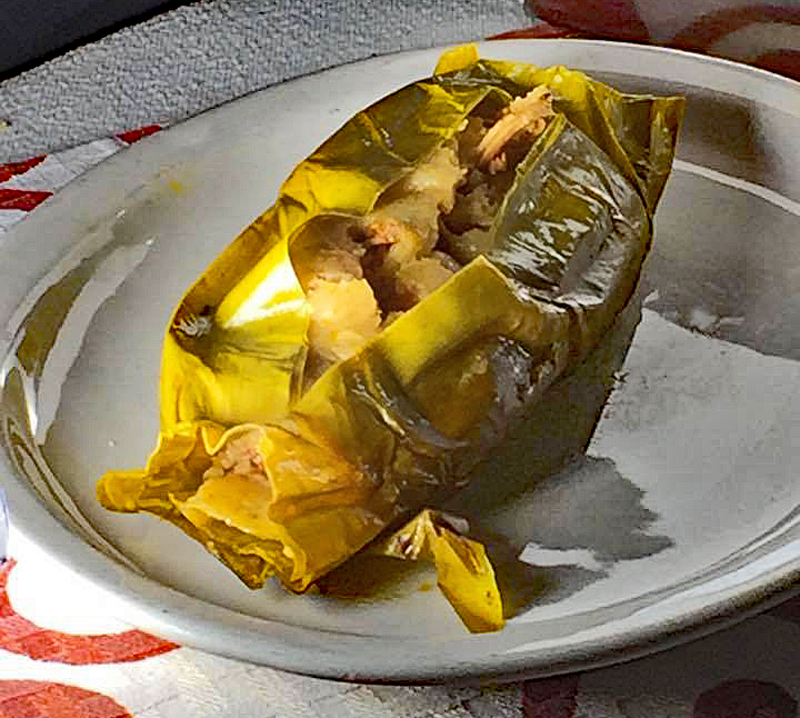
    Among a selection of seven or eight different and marvelous dishes that we ate, La Teca's tamales de cambray stand out in my mind.  These are a specialty of the Isthmus: filled with ground meats, potatoes, and a selection of fruits, the mixture moistened with mole and wrapped first in rich masa (corn dough) and then in banana leaves to steam, tamales de cambray are a delicacy not to miss.  Just writing about them makes my mouth water!

    Mexico Cooks! hopes you've enjoyed seeing the food, traditions, and people at the Encuentro de Cocineras Tradicionales de Oaxaca.  The minute I know the dates for 2018, I'll let you know–and anyone who wants to come along with me, please let me know!

    Looking for a tailored-to-your-interests specialized tour in Mexico? Click here: Tours.